
Led by Claire Stocks (@DrClaireStocks)
In this week’s #LTHEChat I’d like to explore how aspects of life-wide learning impact our practice as HE professionals – in particular, I’m interested in how our hobbies, leisure activities and/or exercise preferences might help us to think about teaching and/or supporting learning in HE. As we educate others, how does our life-wide learning help us advance or enhance our understanding and practice?
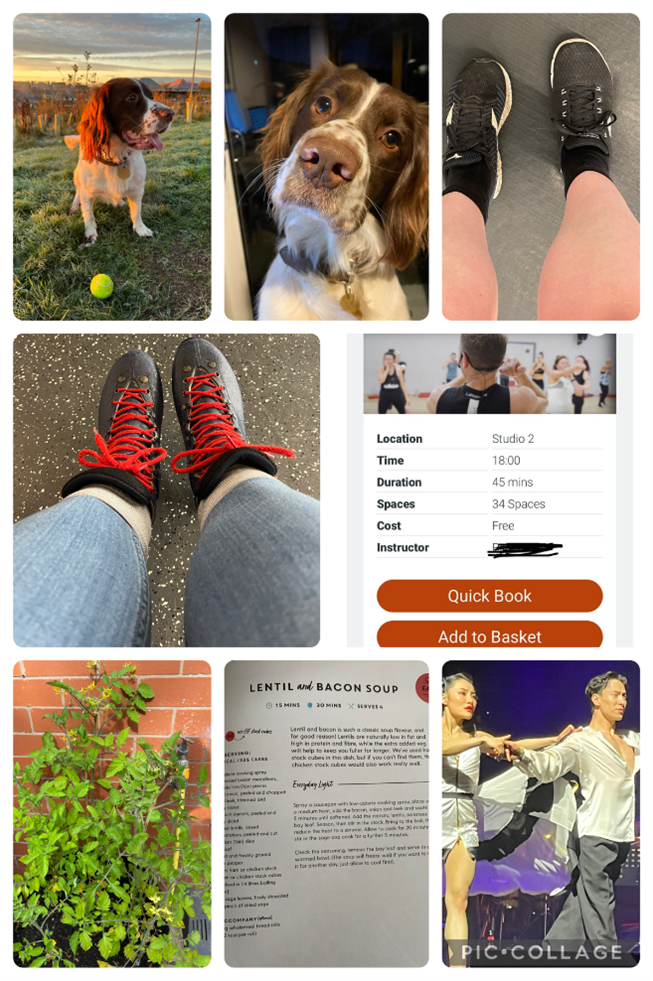
My interest in life-wide learning has grown from my reflections on how my hobbies and interests have positively contributed to my practice as an academic developer. For example, as a keen swimmer who has never had a formal swimming lesson, I had to find ways to improve without the support of a teacher. My approach, which used YouTube videos, peer feedback, observation and lots of deliberate practice, provided me with concrete examples of how these learning strategies play out in a real-world context that many others could relate to. Trying to help my partner improve his swimming also gave me a real-life example of a threshold concept in action (you can read more about that here), and observing a variety of approaches employed by fitness instructors as they lead group exercise sessions made me reflect on the strategies that they use to motivate people and deliver effective group feedback.
The concept of learning outside of formal study or education is not a new one, though, and in connection with HE, it goes back at least as far as 2008 when the term ‘life-wide learning’ was proposed by Norman Jackson (cited in Jackson, 2011). Ronald Barnett has gone on to define life-wide learning as “learning in different places simultaneously. It is literally learning across an individual’s lifeworld at any moment in time” (Barnett, 2010: 2). As Barnett suggests, life-wide learning can appear to be ubiquitous and can happen in many formal or informal ‘spaces’ at ‘any moment in time’. As such, it might be challenging to identify where this life-wide learning happens and what we are learning. These are two questions that I would like us to reflect on in this #LTHEChat.
Furthermore, the idea that learning can happen outside of formal teaching times and spaces might provide us with a productive way of challenging our established ideas about where and how our continuing professional learning could occur. Having supported many colleagues to achieve awards and recognition that rely, in part, on the applicant’s ability to articulate their approach to and the impact of their CPD, I would argue that many of us probably take a narrow view of what constitutes professional learning or development. We tend to focus on things like accredited schemes and programmes, webinars, workshops, talks and conferences – formal learning opportunities that are easy to identify and attend (especially when so many now take place online) but which don’t always result in an identifiable impact on practice.
However, by taking a more life-wide view, notions of CPD could be “burst open”, in Barnett’s words, by a consideration of the part that life-wide learning plays in our professional (as well as personal) development (2010: 1). We might, therefore, identify a much more comprehensive range of rich and impactful opportunities for developing our understanding and practice. For example, Jackson suggests that, in addition to curricular and co-curricular activity, HE students might also learn from ‘life in the wider world’, including travel, caring for others, creative enterprises like playing music, making videos for social media or participating in dramatic productions, and volunteering or entrepreneurship (2011: 249). To the extent that we are simultaneously learners and teachers – as we seek to enhance and develop our professional practice – the same might apply to staff.
These examples illustrate the effectiveness of life-wide professional learning, and I look forward to hearing how others combine personal and professional practice and interests in the chat this week.
References
Jackson, N (2011). Recognising a more complete education through a Lifewide Learning Award. Higher Education, Skills and Work Based Learning. 1 (3) pp. 247-261
Barnett, R. (2011). ‘Life-wide education: a new and transformative concept for higher education?’. A lifewide concept of learning, education and personal development, 22-38.
Author Biography
Claire Stocks
Dr. Claire Stocks is Head of Academic Practice and Development at the University of Chester. She has been an Advance HE Senior Fellow since 2016 and has a doctorate in American Literature (focused on representations of trauma in American War fiction). She is also Chair of the Supporting Professionals in(to) HE (SPiHE) network, which is focused on understanding and supporting the experiences of professionals who have moved from industry or practice into teaching in Higher Education. Claire is the proud owner of an extremely loopy Springer Spaniel, a Bodycombat enthusiast and a keen swimmer – all of which positively influence her academic practice.


 #LTHEchat