
Led by Pablo Dalby (@PabloDalby)

We need to talk about power.
Not just the kind of power that charges a television. I’m talking about the kinds of power relations, systems and structures that shape our world and our diverse experiences of it. Specifically, I’m talking about power in relation to formal education systems like higher education. This includes forms of power that perpetuate social injustices; that unfairly advantage some people and disadvantage others. But I’m also talking about the kinds of power that shape our agency to resist and transform inequities, the power of hope in higher education.
Yet, talking’s not enough. In my view, we need to do. We need to ‘talk the talk and walk the walk’. We need to teach and learn how to critique, challenge and change power structures. This is where my power-centred pedagogy – Powergogy – comes in. And that is what I’m looking forward to talking about with you at this week’s LTHE Tweetchat! But first, here’s a brief overview of some key ideas to set the scene ahead of our chat.
Challenging power in higher education
In some contemporary higher education (HE) contexts (e.g. in the United Kingdom) learning and teaching initiatives such as ‘peer learning,’ ‘students as partners’ and ‘inclusion’ have challenged lingering teacher-centred pedagogical orthodoxies. These learner-centred innovations make invaluable contributions. That said, I suggest that they have, for the most part, only implicitly and partially challenged relations, systems and structures of power that operate in and through HE. They don’t, I argue, amount to a concerted attempt to explicitly focus on power and place it at the centre of the process and content of teaching and learning.
What is ‘power’ (in relation to learning and teaching)?
Power is conceptualised in multiple ways. For instance, some commentators (e.g. see Lukes, 2005) have focused on forms of ‘power over’ that are exercised when a person or group has the capacity to impact other people against those peoples’ best interests. Other scholars (e.g. see VeneKlasen & Miller, 2002) remind us that power can also be understood and expressed in a less pernicious, more positive light; for example, as ‘power to’ (e.g. individual agency to do something a person wants to do) and ‘power with’ (collective agency to do something we want to do together). Theorists of power have debated the ways in which power is, for example, differently ‘possessed’ by people, ‘internalised’ by people, or better understood as an ‘authorless’ omnipresent force that flows through all aspects of our lives, shaping and being shaped by people (e.g. Foucault, 1980, Hayward, 1998). For instance, Hayward says:
Power’s mechanisms are best conceived, not as instruments powerful agents use to prevent the powerless from acting freely, but rather as social boundaries that, together, define fields of action for all actors. Power defines fields of possibility. It facilitates and constrains social action… (1998:12).
Other scholars have also discussed distinct forms, or ‘faces’, of power such as ‘visible’, ‘hidden’ and ‘invisible’ power (e.g. see Batliwala, 2019; Lukes, 2005) and the different levels and spaces power operates in (e.g. see Gaventa, 2006; Pettit, 2010). This Powercube resource visually integrates and explains more about notions of power I’ve only had time to briefly touch on here.
In terms of the relationship between power, learning and teaching, it can be argued that formal education systems like higher education are particularly influential as products and producers of social power dynamics, including inequities and inequalities. For example, some (e.g. Bourdieu and Passeron,1990) suggest that formal education functions as a mechanism for social class stratification, a way to order people hierarchically, both within education contexts and more broadly as learners and teachers take their learned ways of being (e.g. in relation to knowledge and power) into the world. My ethnographic research into how higher education contexts can reproduce inequities analyses how and why this can happen in forensic detail (Dalby, 2017). However, it also highlights the potential for pockets of space in which transformative pedagogy can provide alternatives. Enter Powergogy!
What is Powergogy?
Powergogy encompasses, builds on, and redresses the limitations of several contemporary HE initiatives (mentioned earlier) in terms of offering a means for how we can explicitly focus on power in HE and beyond. The Powergogy Framework (see the linked resources below) synthesises a set of principles and ‘big picture’ ideas about the social purpose of higher education with specific, practical activities for supporting learners and educators in developing the ‘power literacies’ to critique, challenge and change power dynamics.
For more information, here’s a short ‘Introducing Powergogy!’ YouTube vlog (video blog) for AdvanceHE, an ‘Overview of Powergogy’ on Microsoft Sway (including the Powergogy Framework) and an example of a practical activity from the Powergogy Framework in this short video on ‘Revolving Roles’ for Times Higher Education.
References
Batliwala, S. (2019). All About Power: Understanding Social Power and Power Structures. CREA.
Bourdieu, P., and Passeron, J. C. (1990). Reproduction in Education, Society and Culture (Second Edition). London: Sage Publications Ltd.
Dalby, T. P. (2017). Space for a change? An exploration of power, privilege and transformative pedagogy in a gap year education programme in South America (Doctoral dissertation, University of East Anglia).
Foucault, M. (1980). Power/Knowledge: Selected Interviews and Other Writings, 1972-1977. New York: Random House.
Gaventa, J. (2006). Finding the Spaces for Change: A Power Analysis. IDS Bulletin, 37(6), 23–33.
Hayward, C. R. (1998). De-Facing Power. Cambridge: Cambridge University Press.
Lukes, S. (2005). Power: A Radical View (2nd ed.). New York: Palgrave Macmillan.
Pettit, J. (2010). Multiple Faces of Power and Learning. IDS Bulletin, 41(3), 25–35.
VeneKlasen, L., & Miller, V. (2002). A New Weave of Power, People and Politics: The Action Guide for Advocacy and Citizen Participation. Oklahoma City, OK: World Neighbors.
Author Biography
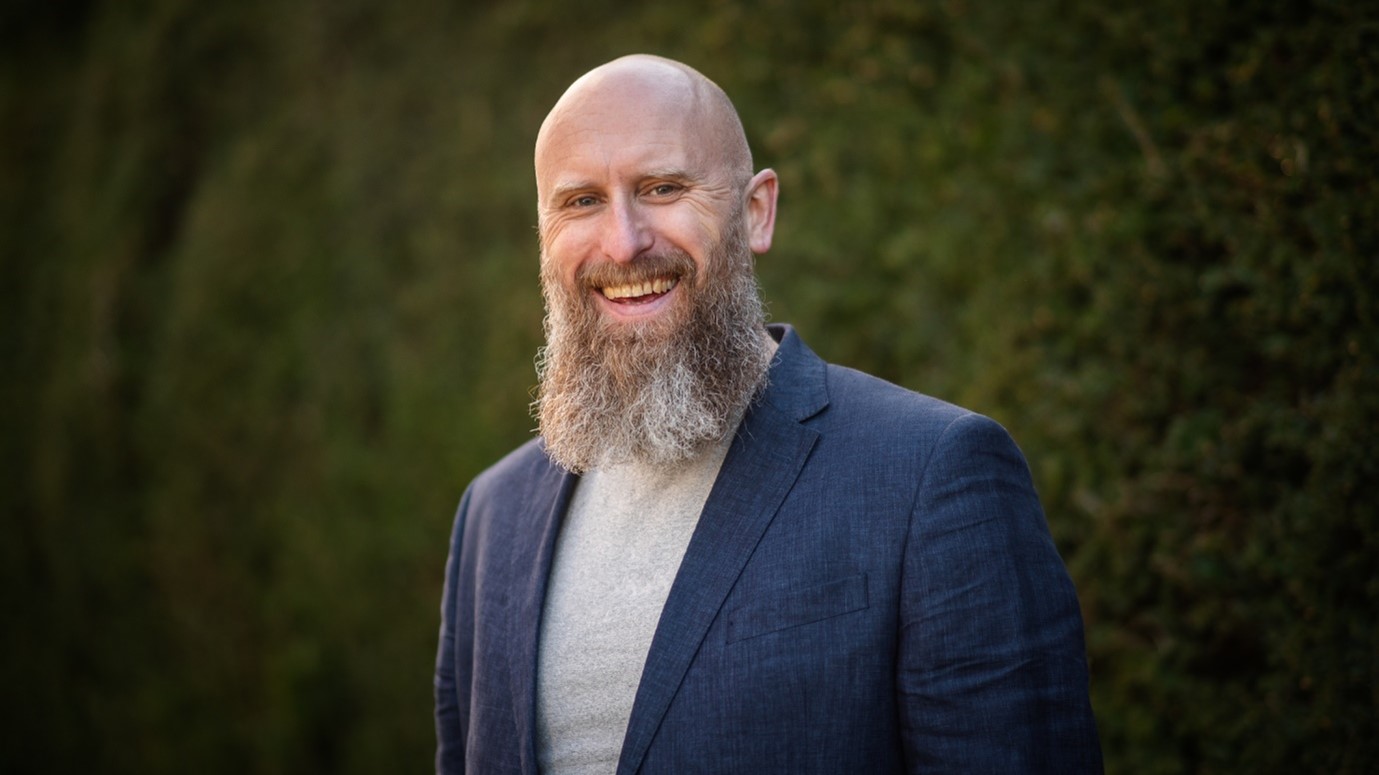
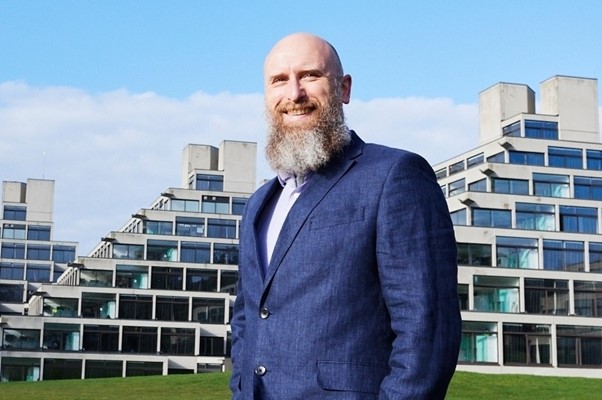
Dr Pablo Dalby is a National Teaching Fellow, Senior Fellow of the Higher Education Academy, and University Teaching Fellow at the University of East Anglia (UEA). As UEA’s Learning Enhancement Tutor for Inclusive Education, he founded and leads the cross-institutional Inclusivity Network (IN), providing continual professional development through training, guidance and support to help staff and postgraduate researchers enhance their inclusive practice.
Across 30+ years’ experience in inclusive teaching and learning for social change in multiple contexts, and a PhD in power and transformative pedagogy, Pablo has developed a signature power-centred pedagogy. ‘Powergogy’ equips learners to critique, challenge and change the power relations that produce social inequities. This work is close to Pablo’s heart and rooted in his upbringing in (pre-gentrified) Hackney, a richly diverse yet largely impoverished area of London. For more bio info, here’s Pablo’s AdvanceHE bio, here’s Pablo’s LinkedIN profile and here’s Pablo’s one-minute video intro/bio with sensory and social descriptions.


 #LTHEchat
Pingback: #LTHEChat 306: Together we thrive: exploring the impact of mentoring for higher education staff development | #LTHEchat