
Led by Ros Beaumont (@RosBeaumont), Emma McColloch (@EmmaMcC86075031) and Michelle Black (@black_sfhea)
In this week’s #LTHEChat we’d like to delve into the world of Education for Sustainable Development (ESD). Specifically, we are keen to hear what everyone’s already doing in this area (a chance to share practice, experience and useful resources) but to take the opportunity to ‘zoom out’ and look at the ESD landscape more broadly, and to identify any implications for educators and their students, for institutions, and for those who lead on academic and educational development in this area.
From reading our short biographies you’ll get the sense that we are passionate about ESD, and (when time allows), we’ve worked on a range of things – small and large in our respective contexts (and sometimes together!).
What do we understand by the term ‘ESD’?
One way of defining it is offered by UNESCO (2023):
“ESD gives learners of all ages the knowledge, skills, values and agency to address interconnected global challenges including climate change, loss of biodiversity, unsustainable use of resources, and inequality. It empowers learners of all ages to make informed decisions and take individual and collective action to change society and care for the planet. ESD is a lifelong learning process and an integral part of quality education. It enhances the cognitive, socio-emotional and behavioural dimensions of learning and encompasses learning content and outcomes, pedagogy and the learning environment itself.”
However, since work around ESD began it’s fair to say that there has been some ‘mission creep’ and having greater conceptual clarity around ESD is needed to allow its purpose and visibility to not be diluted (a key finding of Vogel et al’s (2023) AdvanceHE-funded literature review). A great research project there in the offing for someone!
In practice, the focus appears to have shifted from competency development towards a more holistic approach, integrating knowledge, competencies, values and ‘action-readiness’. This highlights a goal of empowering students to become as change agents, although more is needed around ‘behaviour change’ so that students feel prepared and able to effect change (e.g. Algurén, 2021), working in partnership with students, and within the academia, but the crucial need to involve external partners.
Interconnectedness
ESD would seem in essence to be about transformation for students, colleagues, and institutions. It encourages students to develop an appreciation for the complexity of interconnected and pressing societal and environmental issues at regional, national and global scales, and the multi-faceted ways required to understand and approach them (hence why drawing multi-inter- and trans-disciplinary learning and pedagogies can be useful in this space – e.g. Horn et al, 2022).
ESD also offers the opportunity for transformation in terms of institutional structures, including how to offer provision which draws on different disciplinary expertise within the constraints of how funding follows students within a particular context. This isn’t always an easy road and there are things to learn along the way. During the #LTHEChat, it would be great to hear the experience of others who are working on introducing and/ or embedding ESD within their context at scale, and also how it they feel it has impacted on them as individuals
Not a bolt-on
One of the wonderful aspects of ESD, which at the same time presents real challenges in terms of practice, is its potential to impact on across all learning, teaching and assessment activities. Smaller scale or one-off initiatives may not have longer lasting impact but they can provide opportunities for pilot projects which can then be scaled.
Due to its recognition of complexity and interconnection within and between society and environment, ESD invites itself (or perhaps demands) to be an integral thread through curriculum and educational practices, in a similar way to digital education, inclusive practice, or ‘employability’.
Through dialogue with colleagues across the sector, questions can be raised about the relevance of ESD within all disciplines are also raised. That said, there are examples of institutions who have embedded ESD and related practice into a range of disciplines (not necessarily the ones that first come to mind) or have developed an ESD-related module which is available (and possibly mandatory) for groups of students. As always, context is key.
How do we go about it though?
ESD approaches vary by context, with no standardised formula for pedagogical decisions. Vogel et al (2023:8) emphasise the educators’ role in selecting appropriate methods. For example, common approaches taken to develop sustainability competencies include “project- or problem-based learning across disciplines, projects with external partners, real-world examples and conceptual approaches such as environmental justice”. These approaches integrate complexity, purpose, and holistic development, but are they universally applicable across disciplines? Do they always focus on solutions, or is their scope broader?
The role of personal development and reflective practice
There’s been a growth in the use of reflection on personal/ academic/ professional experiences through the academy as a way to facilitate students’ individual development. Developing greater self-awareness through reflective practice offers students a way to not only develop on a personal level but to bring a greater sense of awareness to their interactions with others and of their surrounding context/ environment(s). We’d suggest this requires more emphasis in the ESD and related spaces as reflective practice can be a key enabler of much the transformative learning alluded to earlier.
To end, we leave you with a take on the why of ESD :
“ESD recognises that education in its current form is unsustainable and requires radical change. The goal here is large-scale collective transformation of a profound nature, beyond changing personal values and consumer behaviour. Universities are uniquely placed to bring this about, as collectivities of learners and researchers in a range of disciplines with a civic concern that connects them with their local communities and the world of work.” (Vogel et al, 2023:6)
This really brings focus to the question of what is (higher) education for, if not for the betterment (and preservation) of our world – environment and society? And if we buy in to that, is ESD an essential underpinning pedagogical approach to assist in the achievement of that aim? Discuss!
We look forward to hearing your thoughts on any of the above and in response to our #LTHEChat questions.
References
Advance HE and Quality Assurance Agency (2021) Education for sustainable development guidance. York: Advance HE; and Gloucester: The Quality Assurance Agency for Higher Education.
Algurén, B (2021) ‘How to bring about change – a literature review about education and learning activities for sustainable development’, Discourse and Communication for Sustainable Education, 12 (1): 5-21.
Gardiner, S and Rieckmann, M (2015) ‘Pedagogies of preparedness: use of reflective journals in the operationalisation and development of anticipatory competence’, Sustainability, 7 (8): 10554-10575.
Horn A, Scheffelaar A, Urias E and Zweekhorst M (2022) ‘Training students for complex sustainability issues: a literature review on the design of inter- and transdisciplinary higher education’, International Journal of Sustainability in Higher Education, 24 (1): 1-27.
UNESCO (2017) Education for Sustainable Development Goals: learning objectives. Paris: UNESCO. Available at: https://unesdoc.unesco.org/ark:/48223/pf0000247444
UNESCO (2023) What you need to know about education for sustainable development. Paris: UNESCO. Available at: https://www.unesco.org/en/sustainable-development/education/need-know
Vogel M, Parker L, Porter J, O’Hara M, Tebbs E, Gard R, He X, Gallimore J-B (2023) Education for Sustainable Development: a review of the literature 2015-2022. AdvanceHE. Accessed from: https://www.advance-he.ac.uk/knowledge-hub/education-sustainable-development-review-literature-2015-2022
Author Biographies
Rosalind Beaumont

Rosalind Beaumont is an educator, academic and leader in academic and researcher development, with expertise and research interests in inclusive doctoral education, professional learning for educators and researchers – around mentoring and reflective practice, digital education, and Education for Sustainable Development. She works across contexts and disciplines in her roles as Director of Education for School X (interdisciplinary school), Learning and Teaching Mentor, and module leader/ contributor to the Humanities and Social Sciences Faculty Researcher Education and Development Programme at Newcastle University. At Durham University she is leading the development of educational provision around interdisciplinary research.
Dr Emma McCulloch

Dr Emma McCulloch has 18 years of experience in teaching and Educational Professional Development. Emma is a Senior Fellow HEA and a Master of Education, with a particular interest in Learning and Teaching professional development. She taught for 12 years in secondary education, moving over to Higher Education 6 year ago. Her current role as lead in Academic Practice has enabled her to support colleagues thinking around curriculum design, assessment and feedback approaches and inclusive teaching approaches. More recently, Emma’s been involved with the Sustainable Development committee at Newcastle University focusing on how to embed the SDGs into curriculum across the university and develop colleague’s awareness and understanding of what this all means.
Michelle Black
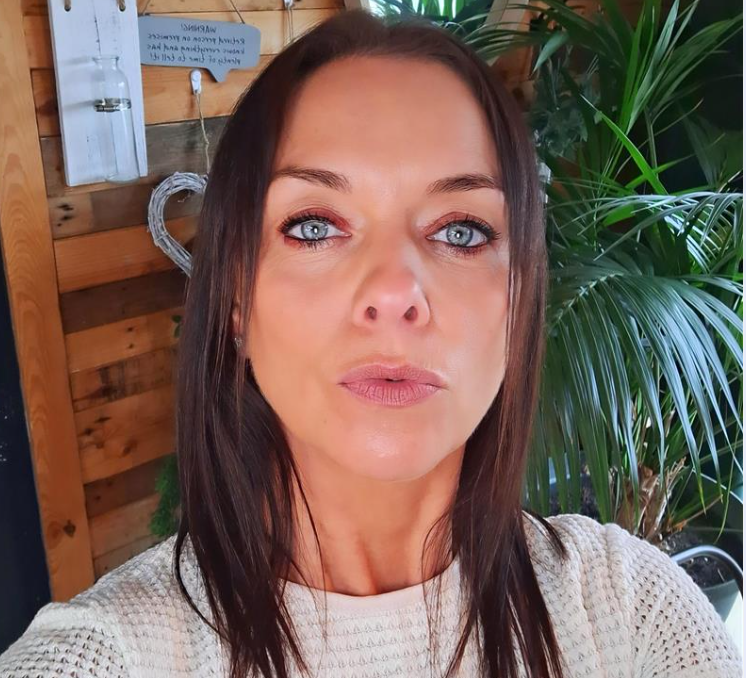
Michelle Black has more than 20 years of experience in professionally supporting and developing research, teaching and learning practices in higher education. Michelle is a Senior Fellow HEA and has a Master of Education, with a particular interest in learning design and curriculum development. Her role focuses on working in collaboration with colleagues to facilitate the design and development of quality educational practices, accessible and inclusive education. Along with focusing more recently on embedding SDGs in the curriculum and supporting students and colleagues to enhance SDG knowledge and skills development across the student journey.


 #LTHEchat