
Led by Professor Louise Younie, Institute of Health Sciences Education, Queen Mary University of London and Olumide Popoola, Queen Mary Academy, Queen Mary University of London
X: Professor Louise Younie @LouiseYounie
X: Olumide Popoola @OluPopoola3
Flourishing Oases in a Neoliberal Desert
The ‘Flourishing Spaces’ project has grown out of medical education and healthcare, where we are facing ‘moral injury’ and a growing ‘wellness crisis’ (1). Our work on #flourishingspaces involves a shift from the scarcity mindset to an abundance mindset, where resources like time and opportunities are viewed as shareable and regenerative. We have been supported by funding from a diverse range of sources including Advance HE. Our most recent funding has been from the inaugural President and Principal Educational Excellence Fund, administered by the Queen Mary Academy at our own institution – Queen Mary University of London – where the flourishing of staff and students is core to our stated mission
We are in VUCA times – Volatile Uncertain Complex Ambiguous. In higher education, where neoliberalism frames institutions as businesses and students as consumers, both students and educators are feeling overwhelmed and exhausted. The increase in burnout and impaired mental health is well-documented, yet solutions remain elusive. This competitive agenda prioritises measurable outputs—such as performance metrics over the cultivation of creativity, intellectual curiosity, and connection. The result is an erosion of spaces for humanity and flourishing. Medicine today similarly operates within a framework dominated by neoliberal principles, where science is prioritised over relationships and human connection is sidelined. This focus alongside the biomedical positivist framing of medical education contributes to a hidden curriculum shaped by ‘macho invulnerability’.
Although there are no quick fix answers to the challenges we are up against, we have been promoting Creative Agency and Flourishing Spaces as antidotes to the neoliberal principles which are compounding issues in both higher education and healthcare. As a core part of this we have been encouraging movement away from the development of ‘resilience’ towards the fostering of human flourishing, in higher education and healthcare (2, 3).
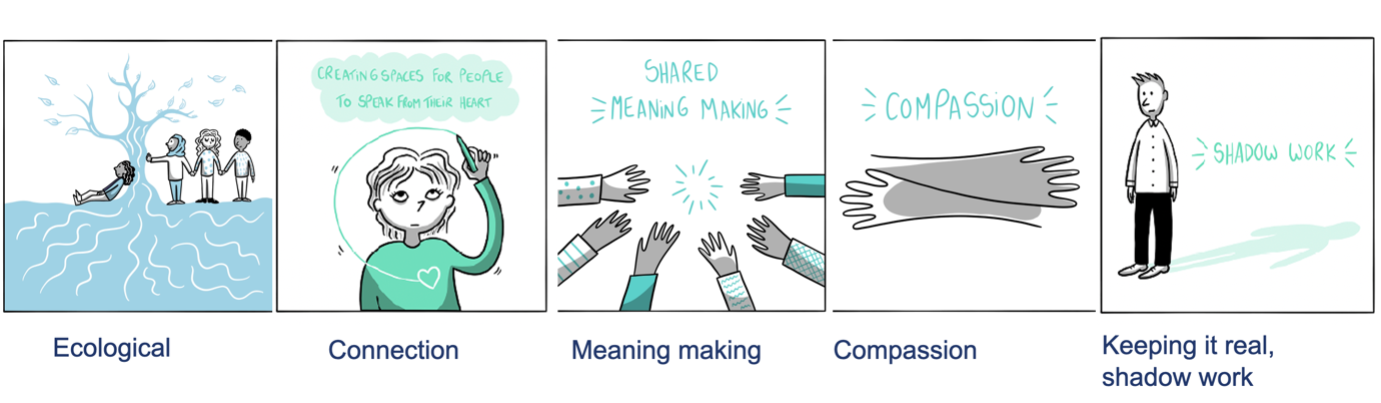
The emphasis on resilience training has grown exponentially, with thousands of published studies in recent decades on “resilience in healthcare”. The concept of resilience, while initially appealing, has started to face criticism for its overemphasis on the ability to “bounce back” from adversity (4, 5). The Latin root is ‘resilire’ to ‘spring back’ or ‘rebound’. In the physical sciences resilience indicates materials resuming their original shape after being bent or stretched. Translated to humans this suggests withstanding challenges and an individual capacity to be tough and unchanged through adversity. Resilience as a solution often places the burden on individuals rather than addressing the systemic failures. This can be damaging or even abusive, for example, expecting individual resilience in the face of systemic racism or injustice of any kind.
Flourishing is an old concept but also is receiving a resurgence of attention across political, cultural and educational spheres with for example the Templeton foundation in USA investing $100 million in the field of flourishing and starting in a new Global Flourishing Conference in 2022. It might be helpful to define flourishing as there are different conceptualisations emerging. By flourishing we mean enabling meaning, purpose, agency and growth in the lives of students and educators, drawing on Aristotle’s eudaimonia which can be juxtaposed with hedonia – the pleasure of the quick fix bar of chocolate, or purchase of luxury goods (6). Flourishing can be thought of as a noun and therefore measured – to what degree are we flourishing – see Harvard’s Flourishing Measure (7). This however risks again the attention on the individual rather than seeing the barriers faced by many towards flourishing, as found by research in the Mid-West US, where people of certain races and financial brackets were less likely to say they were flourishing (8). We focus on flourishing as a verb, and the ways in which we might support greater flourishing in our times of challenge and adversity.
We have been exploring two theoretical frameworks underpinning flourishing – Self-Determination Theory (SDT) and the Belonging Dignity Justice (BDJ) framework. SDT and flourishing align (9). SDT emphasizes autonomy, relatedness, and competence as key psychological needs and research supports the value of holding intrinsic aspirations like personal growth, community engagement, and meaningful relationships, as enhancing wellbeing in the workplace, compared to focus on extrinsic goals such as status or earnings (9).
The Belonging-Dignity-Justice framework has emerged in recent years as an alternative to the corporate EDI practices that have captured and somewhat constrained the original social justice aims of EDI. Belonging fosters open dialogue and mutual understanding. Dignity recognises individual worth, even in imperfection. Justice ensures equal voice and opportunity, challenging systemic inequities. Through creative enquiry and artistic exploration we have expanded the concept of flourishing by integrating belonging, dignity, and justice as foundational principles; this new Flourishing-Belonging-Dignity-Justice framework has been adopted by the Graduate Teaching Assistant (GTA) Developers network to bring social justice dimensions to the training and development of Postgraduate Researcher Educators.
Flourishing spaces are characterized by curiosity, creativity, compassion, and co-creation. They invite participants to engage with their humanity, challenge existing hierarchies, and imagine new possibilities for growth and connection. In order to support the creation of flourishing spaces and oases in our workplaces, we have created a Flourishing Spaces ‘ASK’ toolkit:
Attend: Attending involves being fully present with oneself and others, fostering mutual recognition and understanding.
Share stories and Shadow work: Sharing stories facilitates deeper connections and allows individuals to process and integrate their experiences.
Kindle hope: Kindling hope provides a sense of purpose and community, essential for navigating complex and challenging environments.
By fostering these spaces we enable the building of trust and connection as well as sharing the challenges we are facing which can be both deeply humanising and perhaps provide clarity on ways to move forward and further reclaim space for our humanity. In a world shaped by neoliberal values, the concept of flourishing offers a transformative alternative. By prioritising connection, creativity, and compassion, we can create spaces that nurture human potential and address the systemic challenges that undermine wellbeing. The vision and framework of our ‘Flourishing Spaces’ group provides a roadmap for building these flourishing oases, challenging us to imagine and realise a more equitable and just future.
Case study: Flourishing in Medical Education SSCS through Creative Enquiry
Student Selected Components (SSCs) in medical education have served as laboratories for exploring and nurturing flourishing (10). Feedback from participants reveals that these sessions provide a unique space for vulnerability, connection, and creative expression. One student described flourishing as “a kinder way to grow,” and reflected on how these sessions allowed her to embrace her struggles as part of her identity rather than flaws. Such reflections highlight the potential of flourishing to transform educational experiences and foster deeper human connections.
The transition to digital education during the COVID-19 pandemic highlighted challenges in preserving human connection, a core component of flourishing spaces. The elective course “Exploring the Creative Arts in Health and Illness,” which I (LY) has lead, serves as a case study for creating a flourishing space, even in virtual environments (11). This course integrated Noddings’ pedagogy of care, emphasising relational pedagogy and fostering a sense of connection, creativity, and compassion among medical students. Educators modelled care by building trust through vulnerable leadership, fostering psychological safety, and co-creating group rules. Dialogue was encouraged through interactive strategies like ‘kettle boiling’ breakout groups, where students shared personal reflections in small, informal settings, emulating the relational warmth of face-to-face interactions. These strategies illustrate the potential of relational pedagogies to transform digital spaces into flourishing environments.
Central to this flourishing space was creative enquiry—a pedagogical approach that uses the arts to explore lived experiences. Students engaged in creative activities, from poetry to visual art, enabling them to process and express complex emotions. Sharing their creations in a supportive environment nurtured trust, voice, and agency. The arts served as a bridge to deeper self-reflection and collective understanding, facilitating a holistic exploration of the human dimension in healthcare. Creative enquiry lies at the heart of flourishing pedagogy. By engaging with lived experiences through the arts—metaphor, storytelling, and visual expression—creative enquiry allows individuals to explore the complexities of their humanity. This approach humanises both practitioners and patients, fostering empathy and connection. Creative enquiry also serves as a form of social justice pedagogy, amplifying marginalized voices and creating spaces where diverse perspectives can be shared and valued.
References
1. Sinskey JL, Margolis RD, Vinson AE. The Wicked Problem of Physician Well-Being. Anesthesiol Clin. 2022;40(2):213-23.
2. Younie L. What does creative enquiry have to contribute to flourishing in medical education? In: Murray E, Brown J, editors. The mental health and wellbeing of healthcare practitioners: research and practice: Wiley-Blackwell; 2021. p. 14-27.
3. Younie L. How might we cultivate flourishing spaces? Journal of Holistic Healthcare. 2024;21(1):14 – 6.
4. McArdle S, Byrt R. Fiction, poetry and mental health: expressive and therapeutic uses of literature. Journal of Psychiatric and Mental Health Nursing. 2001;8(6):517-24.
5. Taylor RA. Contemporary issues: Resilience training alone is an incomplete intervention. Nurse Education Today. 2019;78:10-3.
6. Huta V. The Complementary Roles of Eudaimonia and Hedonia and How They Can Be Pursued in Practice. In: Joseph S, editor. Positive Psychology in Practice : Promoting Human Flourishing in Work, Health, Education, and Everyday Life: John Wiley & Sons, Inc; 2015. p. 159-82.
7. VanderWeele TJ. On the promotion of human flourishing. Proc Natl Acad Sci U S A. 2017;114(31):8148-56.
8. Willen SS, Williamson AF, Walsh CC, Hyman M, Tootle W. Rethinking flourishing: Critical insights and qualitative perspectives from the U.S. Midwest. SSM – Mental Health. 2022;2:100057.
9. Ryan RM, Current RR, Deci EL. What humans need: Flourishing in Aristotelian philosophy and self-determination theory. In: Waterman AS, editor. The best within us: Positive psychology perspectives on eudaimonia: American Psychological Association; 2013. p. 57-75.
10. Younie L. Arts-based inquiry and a clinician educator’s journey of discovery. In: C.L.McLean, editor. Creative Arts in Humane Medicine. Edmonton: Brush Education Inc.; 2014. p. 163-80.
11. Younie L, Adachi C. Nurturing the Human Dimension in Digital and Medical Spaces Through Pedagogy of Care – a Case of Creative Enquiry. Perspect Med Educ. 2024;13(1):307-12.
Author Biographies
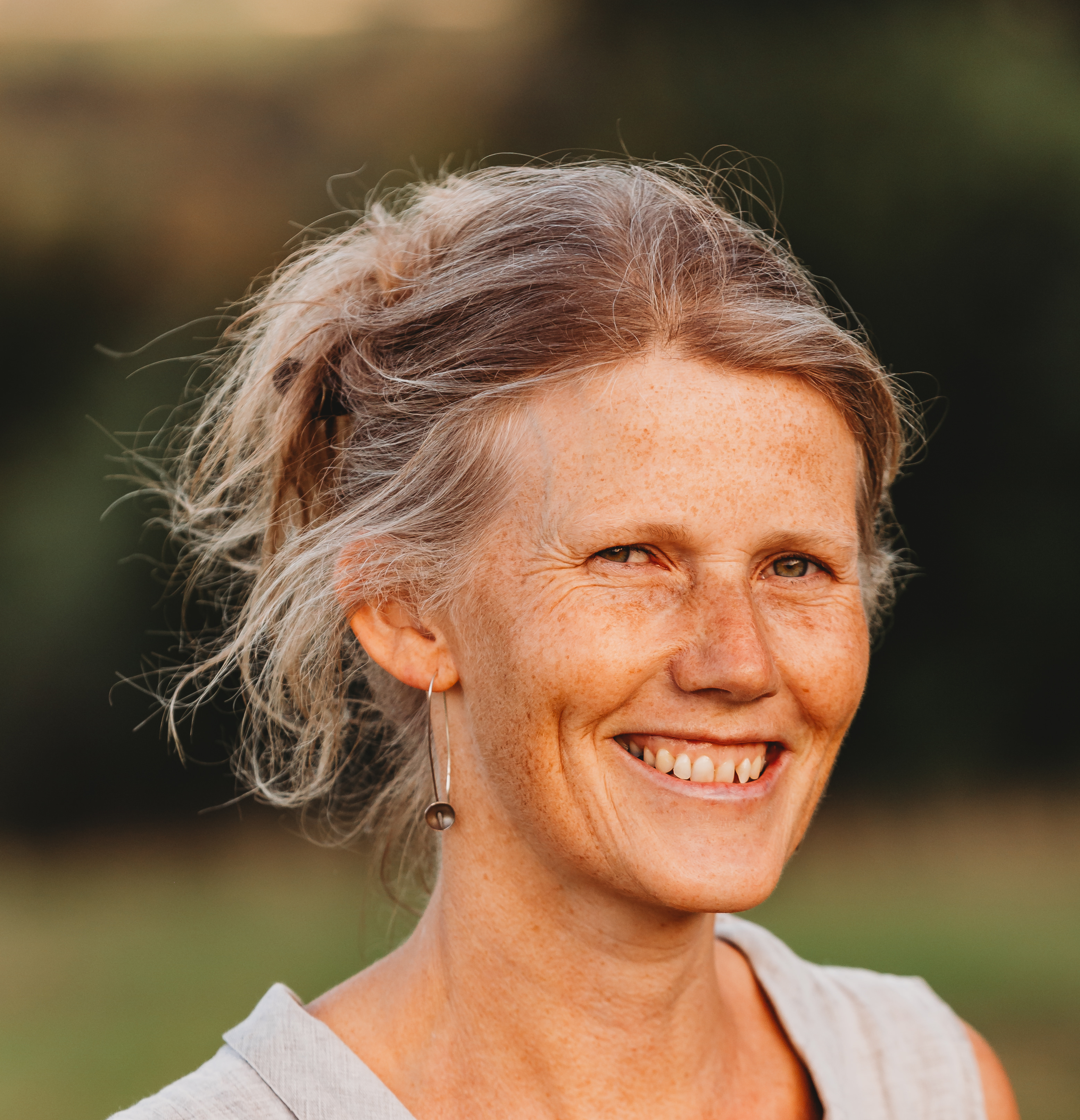
Professor Louise Younie:
Louise Younie (NTF, PFHEA, EdD) is a General Practitioner and Professor of Medical Education at Queen Mary University of London where she leads on faculty development, innovation and flourishing. She has extensive experience with creative enquiry methodologies in medical education for humanising medicine, professional identity formation and human flourishing. She is also co-lead for the QMUL co-creation student recognition SEED award. She is co-chair of the Royal College of GPs Creative Health Special Interest Group (SIG).
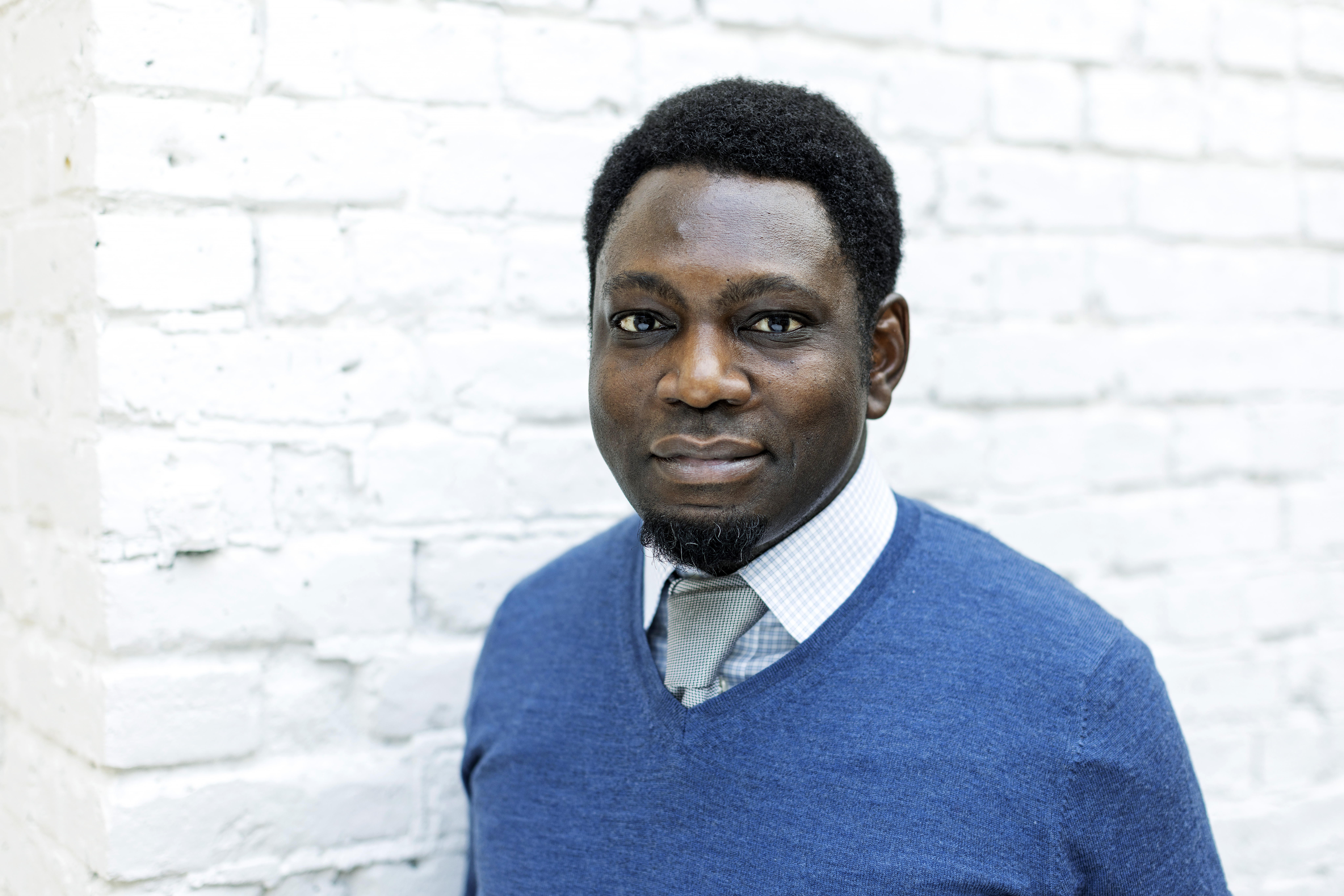
Olumide Popoola:
Olumide Popoola (LLB MSc FHEA) is an Education Developer (social justice pedagogies; assessment integrity) at QMUL’s Queen Mary Academy. He is a module leader on the PGCAP, a mentor for early career educators seeking teaching recognition and lead coordinator for the Queen Mary Postgraduate Researcher Educator Programme. He is also an active member of the GTA Developers Network, where he has launched the Flourishing-Belonging-Dignity-Justice Working Group to tackle EDI issues in GTA training. He has published research and scholarship applying forensic linguistic techniques to academic misconduct detection and is currently exploring the connections between academic integrity and social justice.


 #LTHEchat