This #LTHEChat took place on Bluesky on Wednesday 7th May 2025 at 2000 BST.
Led by Dominic Pates, Senior Educational Technologist at City St George’s, University of London, @dompates.bsky.social
If you can remember that far back (and dare to recall the moment), what barriers did you decide to cross during the first pandemic lockdown? For some of you, it might have been making minor transgressions to the litany of new rules that suddenly governed social behaviour, or perhaps not wearing any shoes for a year. For me, it was no longer being so insistent on maintaining the distance between the personal and the professional.
During the early weeks of the first Covid lockdown, by day I was a frontline Educational Technologist, playing my part in my living room with helping my institution to continue to function during the biggest professional crisis any of us had faced in living memory. By night, I was running a sudden hit online nightclub as people around the world who could no longer leave their homes found themselves roaming around online and finding a release from the pressures of the bizarre circumstances that we all found ourselves in.
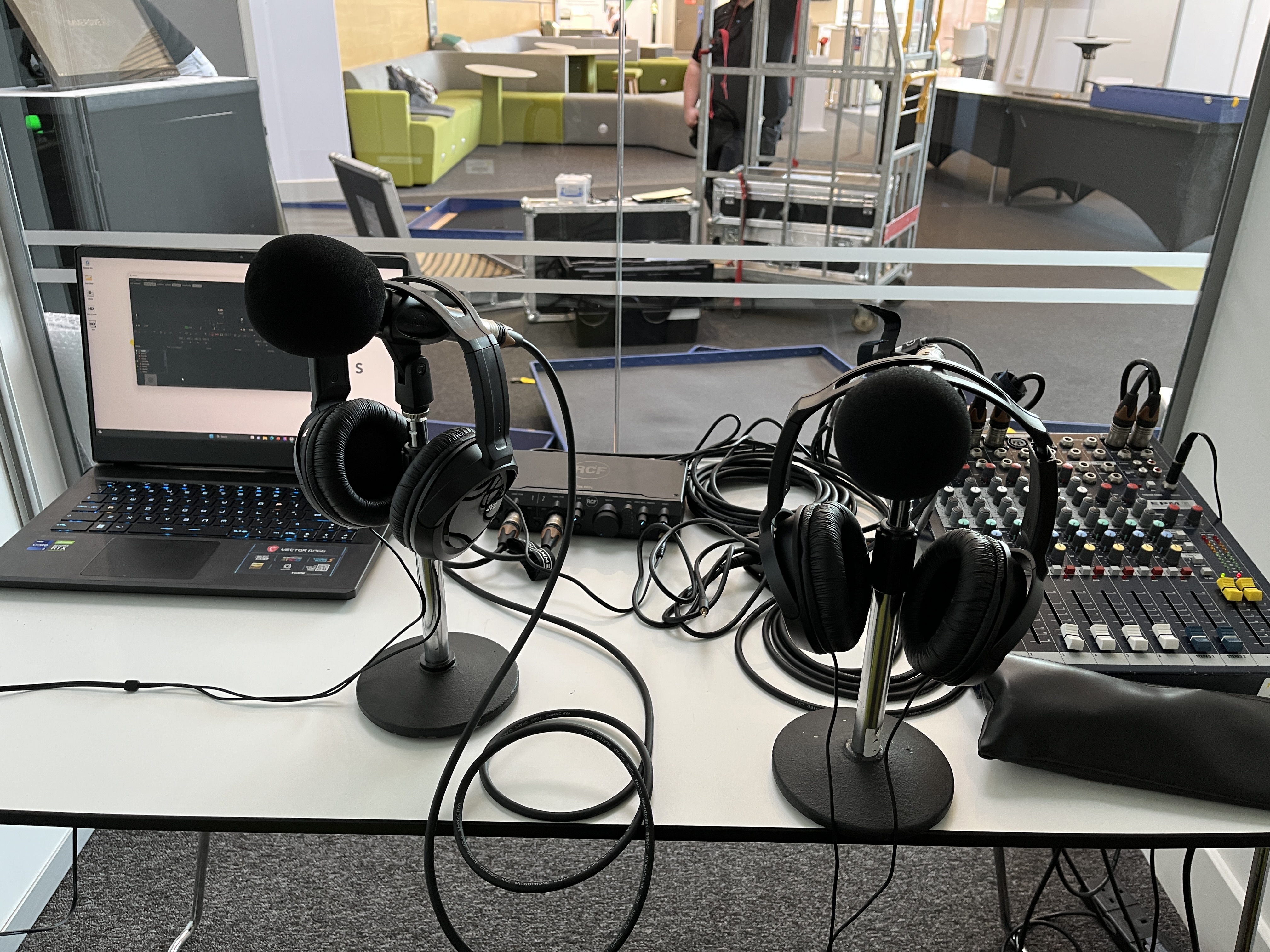
Since 2012, I’d been helping run an online radio station I co-founded with some friends, called The Thursday Night Show (TTNS), which gave live weekly broadcasts of an array of different DJs and broadcasters. Early in the first 2020 lockdown, we bolted a Zoom Meeting room onto the website, opened up the platform to more activity than just once a week, and saw our online audience suddenly spike as people came together to dance alone in their rooms. A nightclub in a browser was born.
After the novelty had worn off and things had settled down a little, I noticed that the Association for Learning Technology (ALT) – one of the key membership organisations for people that do the same work as I do – was putting an online version of its flagship conference ALTc together. ALT were also beginning to show other organisations how to do online conferencing well. I approached them and offered a radio component to the conference, as I thought that what I’d seen working with TTNS could apply in different ways in professional circumstances too. After all, one of the questions that many of us were struggling with at the time was how to encourage engagement in fully online (educational) contexts. This was the point where I chose to ‘cross the streams’ and collapse the strict boundaries I’d long maintained between what I did at work and what I did outside of work.
ALTc Radio was born that summer. I did a short show myself and made space for some others from within the community to play some songs and to gain some experience in broadcasting as a part of the overall conference programme. This worked well enough to repeat the experiment over a handful more of the online ALTc events that continued while the UK shimmied in and out of varying Covid lockdowns.
Then, in early 2023 and with memories of lockdowns fading, ALT invited me to join them at the University of Warwick for the 30th anniversary of the conference for a full parallel programme of conference radio. This meant bumping my operations up to 30 hours of radio programming. It meant gathering a variety of pre-recorded material together so that I could guarantee something to listen to throughout the event (whether people were there in person or not). It also meant inviting several sectoral colleagues to see radio as a vehicle for sharing their professional practice and therefore providing an alternative to the more usual methods like giving a presentation or running a workshop.
What surprised me most about this strange new medium of conference radio was the impact of introducing music to a conference environment and threading it throughout, as shows were broadcast live in the exhibition space as well as online. It was noticeable that some people arrived at the conference venue with a spring in their step as they heard a song that they liked when they walked through the doors of the venue. More than just the less formal nature of podcasting (to cite another audio-based medium), people could also use their radio shows to express themselves and their professional practice through the songs that they chose to play.
In 2024, ALTc came to Manchester and the radio component returned, having succeeded with the proof-of-concept the year before. This time, I put together 43 hours of original radio programming and had 20 new DJs from the learning technology community sharing their practice and playing their choices of songs to a distributed audience of their peers. After Manchester, I reached out to some of the sectoral broadcasters that had been part of ALTc Radio that year. I asked them what their experience was like and how they found radio as a medium for the expression and dissemination of their professional practice. This blog post shares some of those insights for the first time.
Mark Childs (Durham University) gave a combination of live online and pre-recorded shows, and had a variety of guests on:
‘It was an opportunity to get to know people better by inviting them on the show…I found using the music as a prompt for talking about people’s practice worked very well – not only did it give them a different lens to reflect on it through but it also got them talking because they were enthused by their music.’
Helen Greetham and Gemma Westwood from the University of Birmingham used a live broadcast slot from Manchester as a different way to talk about a project they’d been involved in on digital assessment. Helen:
‘It was the highlight of the conference for me!…thinking how to weave together the narrative of the project we’d worked on alongside music was a fun creative challenge’. Gemma: ‘It was a great way to share the research that we have been doing as a group, joining this up with careful music choices allowed to showcase the range of emotions in completing the research alongside the research itself, humanising the work that we have been doing’.
Jo Elliot (Queen Mary University of London) provided a pre-recorded show with Puiyin Wong:
‘Being part of the radio programme allowed me to still feel part of the conference. I loved being able to tune into the other shows and hear the discussions there as well as being able to join the social media chats…I had never used radio to talk about my work, or teaching and learning generally, before so this was a great introduction…the conversational nature of radio is ideal for talking about teaching and learning (and) unlike with a podcast for example, you knew people were listening live’.
In 2025, ALTc will be held in Glasgow, again along with the radio component. Will you lend us your ears?
Author Biography
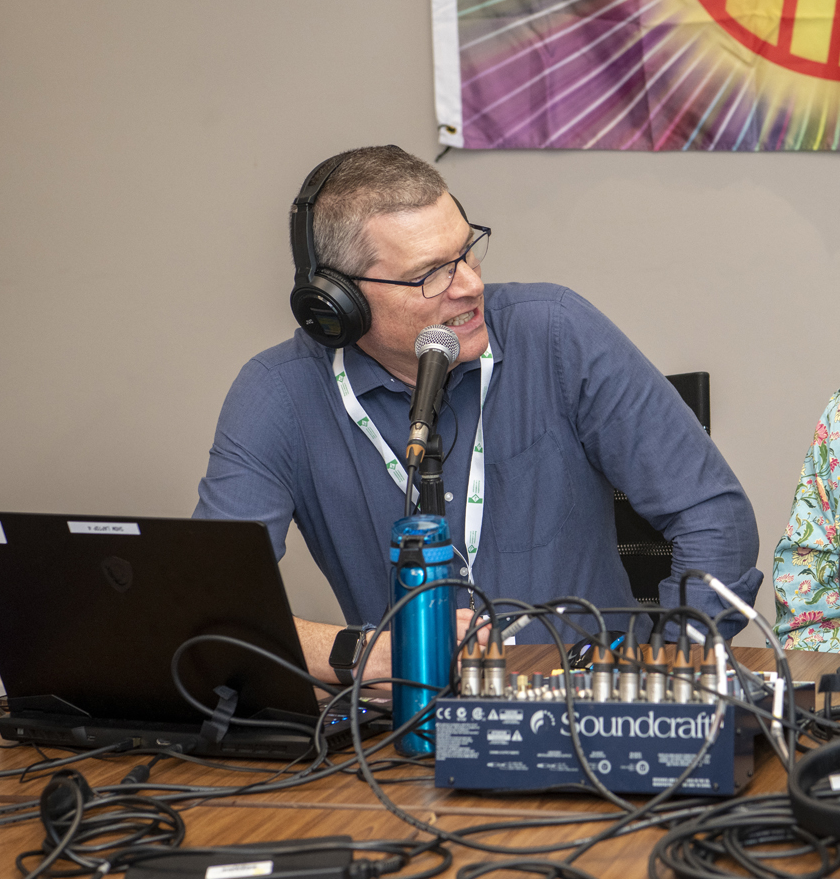
Dom Pates (MA SFHEA SCMALT) is a Senior Educational Technologist at City St George’s, University of London, where he manages the digital education relationship with three schools – Bayes Business School, The City Law School and the School of Science & Technology. Prior to joining City St George’s, Dom worked as an IT Trainer and as a teacher. He has worked in education for most of his career, which has included five years in Japan.
Specialising in learning design, use of multimedia in teaching and learning spaces, he also co-manages The Thursday Night Show, an internet radio station established in 2012. In 2025, Dom received a Jisc Community Champions award for his development of ALTc Radio.
Questions and chat
- Q1 What songs, albums, playlists or genres help you to get ‘in the zone’ in professional contexts like teaching, training, presenting, or writing? Feel free to share links.
- Q2 Where or when have you been prepared to ‘cross the line’ and bring your authentic self into the space of your professional identity?
- Q3 What examples have you seen of music being used effectively to support or enhance teaching and learning?
- Q4 How do you feel about music being a component of continuing professional development (CPD) activities (e.g. conferences, workshops or webinars)?
- Q5 What do you think radio can bring as a medium for CPD and the sharing of professional practice?
- Q6 If you had your own ideal radio show (for work), what would the short description of it be for potential listeners?


 #LTHEchat
Pingback: Tuning In To ALTc Radio 2025 : #ALTC Blog