
Join us on Bluesky on Wednesday 18th June 2025 at 2000 BST
Chat led by
- Dr Shaun Mudd, Head of Teaching Expertise Development, Bath Spa University, @shaunmudd.bsky.social
- Prof Helen King, Director of Learning Innovation, Development and Skills, Bath Spa University, @profhelenking.bsky.social
Blog by Shaun Mudd with contribution from Helen King

When I mention “Artistry of Teaching” to a room full of new colleagues, there’s typically a long silence.
I’ve taught about expertise in HE teaching on UK PGCerts (initial professional development programmes largely intended for new lecturers) for about seven years. It’s the model proposed by Helen King at a Symposium on this theme in 2020, and published in 2022, but I had a sneak peek having shared an office with Helen and seen early drafts pinned to the wall. The model comprises three elements which describe the HE teacher who takes an expertise-based approach. The scenario usually goes like this…
The first element I introduce is “Professional Learning”. I might ask someone to define this; other times it’s irrelevant as the session is focused on this topic. Either way, it’s obvious for colleagues engaged in a PGCert: a type of professional learning which usually dwells repeatedly on this topic.
Next, I turn to “Pedagogic Content Knowledge” (PCK). Sometimes there’s a probationary Lecturer in Education who can define this precisely. Other times there’s a slight hesitation and the group then start to pick it apart. Some Socratic Questioning can usually get them to the point where they understand it as a teacher’s knowledge both of pedagogy and of their discipline, and the interlacing of both.
We’re then on to the “Artistry of Teaching”. I ask if anyone knows what this refers to, and almost every time there’s a lengthy pause before someone hesitantly responds.
What is the Artistry of Teaching?
A participant in a PGCert session once provided a useful analogy. They suggested we could apply this model to stand-up comedy. Someone could learn the foundational knowledge and skills of standup comedy (akin to PCK) and work on honing their craft through development and reflection (akin to professional learning). The artistry element would encompass the difference between a successful professional comedian who can read the room and adapt their set to enthral the audience, compared with me doing the same set. (I try not to be offended.)
Artistry is notoriously difficult to define (King et al. 2024, pp.4-6). But as a starter, effective artistry of teaching in HE can involve:
- Adaption (adaptive expertise), flexibility and improvisation in the moment to changing circumstances
- Rapid problem-solving and almost-instantaneous reflection-in-action (Schön 1982)
- The personal and emotional elements of teaching, including empathy and care, and the ability to build a learning community
- Authenticity in teaching, recognising our own limitations, and drawing upon the expertise of others
- The practical and performative elements of teaching, such as vocal skills and body language
This list is far from exhaustive. By its very nature it varies according to context and inevitably will evolve and change over time.
Why Should we Focus on Artistry?
Artistry is frequently appreciated as a core element of successful HE teaching. It is also an area where colleagues appreciate development opportunities. Anxieties raised by colleagues new to teaching in HE frequently surround topics such as preparation and rehearsal, communication and expression, and confidence and identity (Bale 2020, pp.22-23). Yet artistry is rarely an explicit and sustained focus of HE professional learning (e.g. Petrova and Mudd 2024, King et al. 2024 p.5, Bale 2020 pp1-2, King 2022 p.9). The sector’s interventions instead have traditionally focused more on reflective practice, pedagogy and situating this in one’s own practice and discipline – principally aligning to PCK and professional learning. It is interesting to note that the dimensions of the Professional Standards Framework (2023) include explicit focus on professional learning (V3 and A5) and PCK (K1 and K2). Artistry is less explicitly a focus of descriptions and dimensions (though Advance HE’s Guides to each Dimension do include guidance prompting applicants to include evidence aligning to artistry).
I believe it is essential to support colleagues through explicit and sustained focus on the artistry of teaching in initial and continuous professional learning. If we omit to do this, we’re setting up (at least some) colleagues to fail by neglecting a significant part of what it means to take an expertise-based approach to teaching in HE. My suggestion therefore is for us to reflect on the support we already offer which aligns to artistry and consider how this could be enhanced further. We could usefully think about our own and other colleagues’ professional learning, double checking how prominent artistry is in:
- Professional learning programmes such as PGCerts, wider workshops and formal interventions
- The inductions of new colleagues
- Mentoring, coaching and supporting ongoing professional learning
- Communities of practice, conferences, networking
More on Expertise and Artistry
- For examples of interventions on the artistry of teaching, see Petrova and Mudd 2024, and Bale 2020.
- Videos from the 2020 Symposium on “Exploring Expertise in Teaching in Higher Education” and the 2022 Symposium on “The Artistry of Teaching” can be found here: https://www.youtube.com/@academicpracticeuwe7888/playlists
- A third Expertise Symposium will be hosted as an “unconference” by the University of Queensland, Australia in October this year. This in-person event will be supplemented with a separate online element to engage an international audience. More details coming soon!
References
Bale, R. (2020) Teaching with Confidence in Higher Education: Applying Strategies from the Performing Arts. Routledge: London.
King, H. (2022) Developing Expertise for Teaching in Higher Education. Routledge: London.
King, H. R. Bale, E. Corradini, P. Fossey, D. Gannaway, L. Morantes-Africano, S. Mudd and J. Potter (2024) The Artistry of Teaching in Higher Education: Practical Ideas for Developing Creative Academic Practice. Routledge: London.
Petrova, P., S. Mudd, I. Palmer and S. Brown (2024) ‘Developing the Artistry of Teaching and Approaches to Learning: What we can Learn from those Teaching Theatre Improvisation’, in: H. King, R. Bale, E. Corradini, P. Fossey, D. Gannaway, L. Morantes-Africano, S. Mudd and J. Potter eds. (2024) The Artistry of Teaching in Higher Education: Practical Ideas for Developing Creative Academic Practice. 163-177. Routledge: London. Schön, D. (1982) The Reflective Practitioner: How Professionals Think in Action. Routledge: Abingdon.
Guest Biographies

Dr Shaun Mudd is Head of Teaching Expertise Development at Bath Spa University. This team facilitates professional learning for all staff who teach and support learning at Bath Spa, particularly in relation to pedagogy, professional learning and curriculum design/enhancement. Immediately before joining Bath Spa University, Shaun was Senior Lecturer in Academic Practice at the University of the West of England, and Programme Leader of their Academic Professional Programme (including the Postgraduate Certificate in Academic Professional Practice, and Academic Professional Apprenticeship). Shaun is co-editor of The Artistry of Teaching in Higher Education (2024).
https://www.bathspa.ac.uk/our-people/shaun-mudd/; @shaunmudd.bsky.social
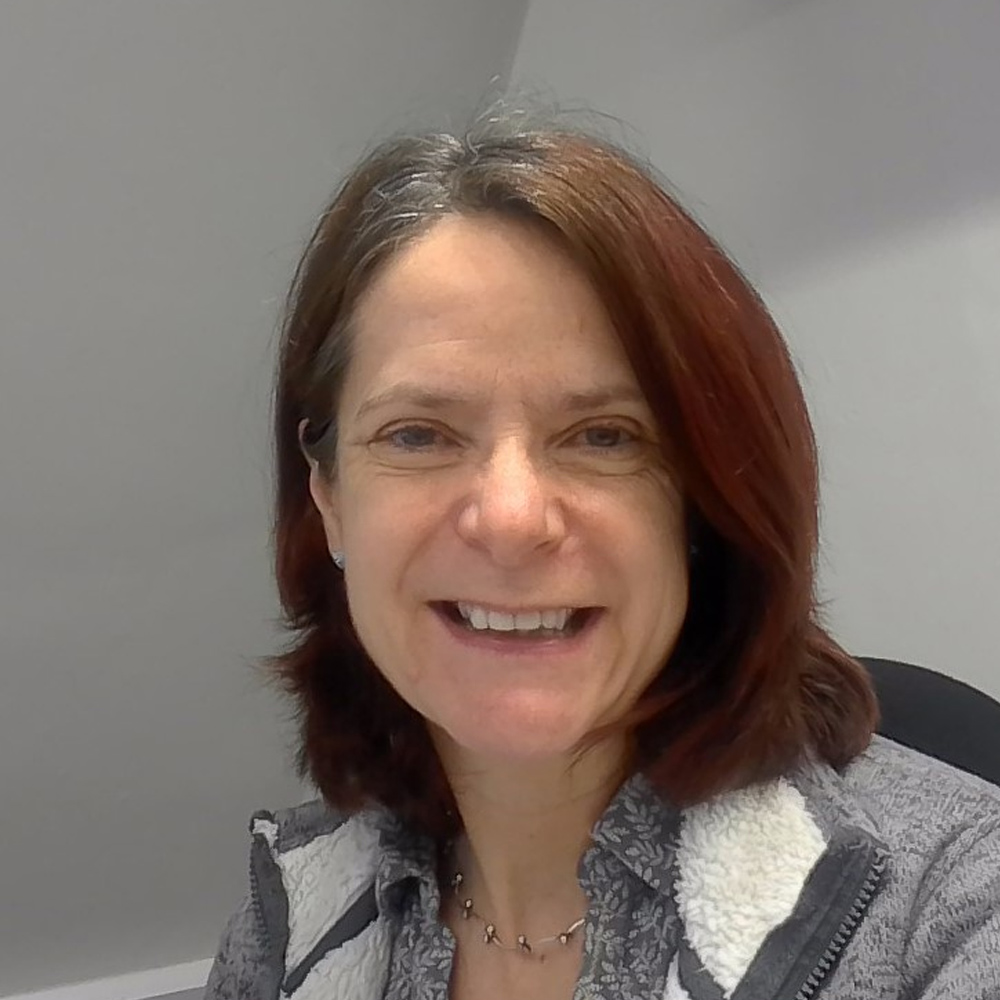
Prof. Helen King is Professor and Director of Learning Innovation, Development & Skills at Bath Spa University, UK. Her career in educational development spans three decades and has included leading roles in UK–wide learning and teaching enhancement projects and organisations, as an independent consultant collaborating with colleagues internationally, and university-based senior leadership. Her role supports a range of learning, teaching and assessment themes but her passion is supporting colleagues’ professional learning and development. She holds a senior fellowship of the Staff & Educational Development Association (SFSEDA), is a UK National Teaching Fellow (NTF), Principal Fellow of the Higher Education Academy (PFHEA) and Honorary Professor at the University of Queensland. She also thoroughly enjoys trail running and playing Bluegrass banjo (not necessarily at the same time). Helen is editor of Developing Expertise for Teaching in Higher Education (2022) and The Artistry of Teaching in Higher Education (2024).
https://www.bathspa.ac.uk/our-people/helen-king/; @profhelenking.bsky.social
Questions and chat
- Q1 What does the “Artistry of Teaching” mean to you?
- Q2 What elements of artistry do you think new colleagues tend to struggle with the most?
- Q3 How have you been supported to develop your own artistry?
- Q4 What opportunities do you think we (as a sector) could pursue to support colleagues to develop further their artistry of teaching?
- Q5 Do you think there’s a stigma against considering Higher Education teaching as (to some extent) performative?
- Q6 If you had to pick just one aspect of your teaching artistry to work on over the next year, what would it be?


 #LTHEchat
Pingback: The Artistry of Teaching « Dr David T Evans, OBE NTF PFHEA QN