
Join us on Bluesky with guest Professor David T Evans @david-t-evans.bsky.social on Wednesday 29th October 2025 at 20:00 GMT
Superpowers? I understand not everyone in Higher Education appreciates the notion of ‘superpowers’ in relation to academia. I adapt it, playing on a term proposed by Emilee Wapnick (2019; 2021), regarding the superpowers of multipotentialities.
Transitioning students
My novel session focused on Superpowers for Level 7 Learning. The audience, healthcare students transitioning into post graduate studies or returning for subsequent years. I used the term ‘superpowers’ to ignite their curiosity, combat the oft-present ‘imposter syndrome’ and, hopefully, inspire them into a love of curiosity (enquiry) in learning.
Level 7 is ‘hard’
At the start of each academic year, I ask students two questions. “What do you understand by level 7?” and “how do these studies differ from what you did at level 6?” The typical answer is “level 7 is just harder!” That begs the question: how harder? What do they mean by ‘hard’ and ‘harder’? They reply “Well, deeper; more analytical; you’ve got to read more; sleep less; long words; my boss sent me; it’s just harder!”
To be fair, no one can blame them. How often do teachers explore intricacies of academic descriptors with students? We embed descriptors into learning outcomes, but how often do we spend time clarifying what the descriptors mean or how to achieve and demonstrate them? Confusingly, several descriptors span levels 6, 7, 8 but with additional and weightier meanings. For example, we talk in terms of critical / analysis, synthesis, reflection, evaluation, complexity. So how would a new post graduate student know how hard is hard, in relation to those descriptors from levels 6, through 7, to 8?
The three superpowers
Like other professional post-grad students, ours on health programmes are already working in advanced and ever-increasing roles of seniority, collaborating multi-professionally, often with leadership decision-making responsibilities. So, exploring superpowers, I wanted to elaborate on three I consider most important, running throughout their learning. I encourage students to unpack, embrace and develop these skills further, as key aids to maximising learning potential and increasing academic outputs. The superpowers are criticality in learning, reflexivity and academic citizenship. Of course, there are more, but I postulate that these three underpin so many others, the ‘mastery’ of which is essential for their post graduate learning and success.
Unpacking superpowers
The Adobe Express resource accompanying this blog contains the video of my on-line session. The presentation was on an Induction Day for post grad students in health. My session followed an excellent presentation, delivered by an Academic Skills Tutor, demonstrating a wide range of skills and resources for learning. Keen not for my delivery to be a repeat of that person’s work, I honed in exclusively on qualities of these learning superpowers, exploring how they underpin studying at level 7, forming its essence, the under-utilisation of which would be detrimental for further learning potential.
The three superpowers, I suggest, work best in synergy one with the other. To elaborate further:
Criticality in thinking: Like Thomson (2025), I clarify why I use the term “criticality”, not the more traditional “critical”. One reason is that many students often associate “critical” with making a criticism or judgment on something, which often implies negativity. Then I examine three core aspects of criticality in thinking, for the learners’ use. 1) At the heart of it all: enhancing decision-making. 2) As a higher-level cognitive skill: improving problem-solving, and 3), for greater ideas synthesis, sharpening analytical abilities.
Reflexivity: Health Care Professionals (HCPs) are expected to be experts in critical reflection, especially, as Donald Schön promoted (1983, cited in Holton, Robinson and Caraccioli, 2025), in practice as well as on practice. But the notion of reflexivity is often new to many HCPs. At level 7, reflexivity situates them in the wider or meta-domains of their clinical, professional, personal, academic and leadership roles, all informed by research, with an imperative to disseminate.
Boosting (wider / associated) Academic Citizenship. Traditional academic citizenship in Higher Education includes university engagement, peer review, fellowships and research / outputs. For students, studying but not working in HE, the wider or associated notions involve further collaboration and networking across their professional arenas. For example, students share their higher-level cognitive skills for advancement of (work / professional) fields of practice. Essentially, they share such advancements through collegiality, bridging the gap between academic and multi-professional peers, especially through publishing, promoting (e.g. via social media) and performing their studies to wider strategic audiences.
How might talking in terms of academic superpowers aide students in their studies?
This blog has outlined a personal view on promoting the notion of “superpowers” for academic learning at level 7. Clarifying three core superpower skills that underpin post graduate learning, I have opened up the skills for scrutiny, demonstrating their relevance to ignite learner curiosity, combat ‘imposter syndrome’ and, hopefully, inspire students into a love of curiosity (enquiry) in their learning. This light-hearted play on ‘superpowers’ has serious overtones, to empower students through their studies and advance their further professionality.
Resources
Superpowers for Level 7 Learning – in health care and advanced practice, full Adobe Express page, with video: https://new.express.adobe.com/webpage/fhJz7cgNuC1M6 Prezi only version:https://prezi.com/view/wLToiyDTiderlxeCpvhI/?referral_token=JlSMvPlnB3FN
Bibliography
Evans, D.T. (2025) AI: Avoiding Academic Cheating and Mistakes, cited at: AI: Academic cheating and mistakes – Vivat Academia! Vivant Professores! cited on 03/10/2025
Evans, D.T. (2021) Boosting TEL Capabilities – AdvanceHE Torch Bearers’ ‘Elevator Pitch’, cited at: https://express.adobe.com/page/2xaKUsgTCAq6S cited on 03/10/2025
Evans, D.T. (2021) Don’t just think outside the box … exploring e-learning ~ologies in light of Covid-19 cited at https://express.adobe.com/page/HJXwxytPOXUYH cited on 04/10/2025
Hayes, C. (2019) The Art of Critical Thinking, Texas, M & M Limitless Online Inc.
Houlton, E.F., Robinson, P., Caraccioli, C. (eds) (2025) Andragogy in Practice, New York, Routledge
Thomson, P. (2025) What is criticality? Patter: research education, academic writing, public engagement, funding, other eccentricities, cited at: https://patthomson.net/2025/09/12/what-is-criticality/ cited on: 13/09/2025
Wapkik, E. (2019) Why some of us don’t have one true calling, cited at: https://www.ted.com/talks/emilie_wapnick_why_some_of_us_don_t_have_one_true_calling cited on 15/09/2025
Wapnik, E. (2021) The ‘7’ Multipotentialite Super Powers. The Knox School of Santa Barbara, cited at: https://www.knoxschoolsb.org/post/the-7-multipotentialite-super-powers cited on 04/09/20254
Guest Biography
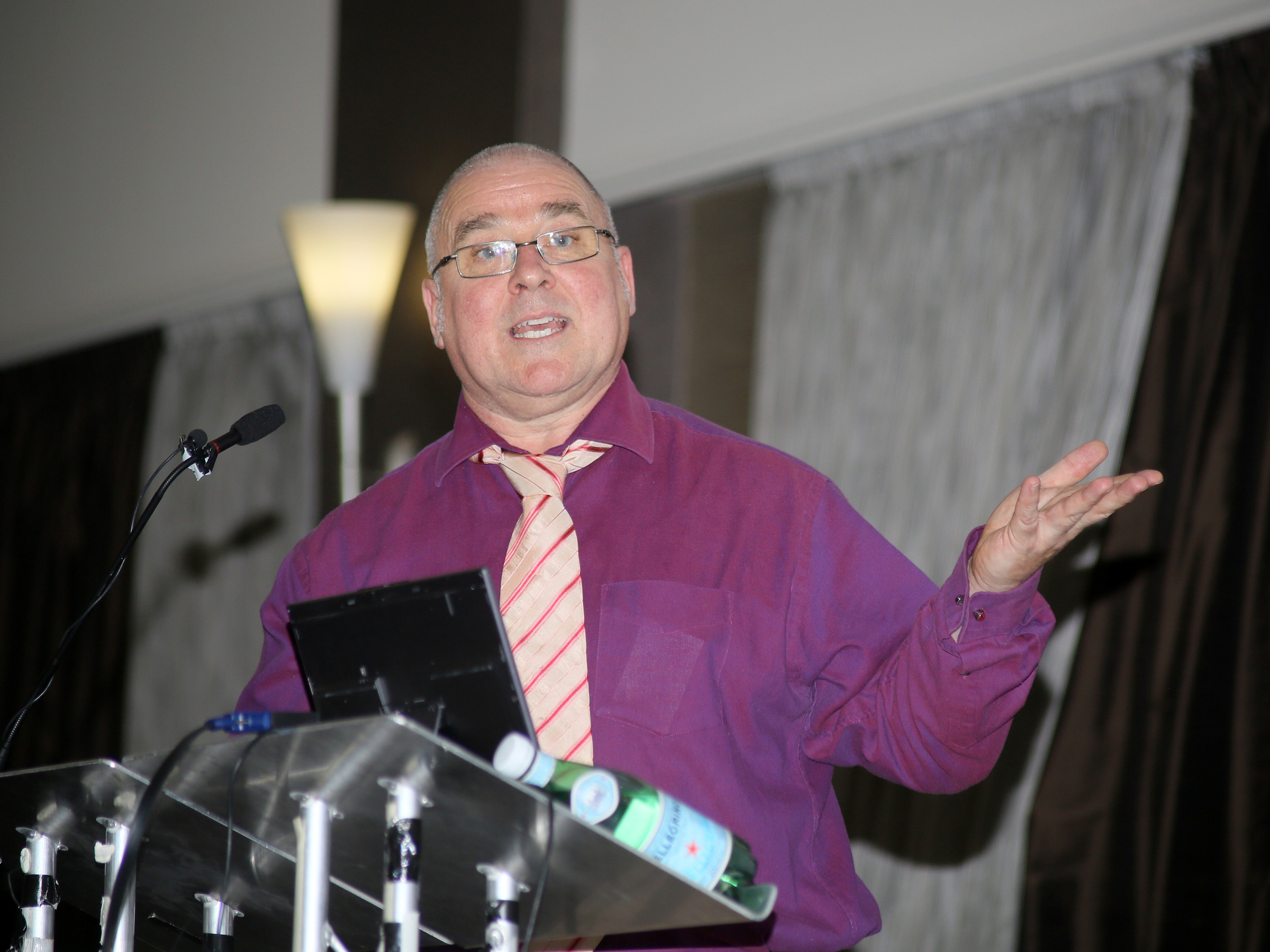
David Evans has been interested in the notion of ‘superpowers’ since he first realised he was as multipotentialite, on watching Emilee Wapnik’s TEDtalk, in 2019! His career trajectories include nursing, the Roman Catholic priesthood, then teaching nurses and allied health professionals, especially on matters of sexual health and well-being, for almost 36 years. He is passionate about life-long learner development, especially – in the case of health care professionals – how transformative learning enables them to ask of themselves “What difference can I make?”
David became a National Teaching Fellow in 2014; appointed an OBE “for services to nursing and sexual health education” in 2017; PFHEA and Professor in Sexualities and Genders: Health and Well-being, 2018; a Queen’s Nurse in 2022, and Fellow of the Faculty of Nursing and Midwifery of the Royal College of Surgeons in Ireland ad eundem in 2023. David was a finalist in the ‘University Educator of the Year’ category, Student Nursing Times Awards 2025 #SNTA25; he is a professor at the University of Greenwich, in the School of Health Sciences.
Questions and chat
Q1 – How might the use of creative metaphors, such as “superpowers,” reframe students’ perceptions of their academic capabilities and ease imposter syndrome in postgraduate learning?
Q2 – To what extent do educators explicitly teach the meaning and progression of academic descriptors (e.g., criticality, synthesis, evaluation, complexity) rather than assuming students understand them?
Q3 – How can “criticality” be differentiated pedagogically from “critical thinking”, encouraging students to engage in deeper andragogical enquiry rather than surface-level critique?
Q4 – In which ways can reflexivity be embedded across curricula to help postgraduate learners navigate and integrate their professional and academic identities?
Q5 – How can higher education institutions better cultivate “academic citizenship” among professional postgraduate learners whose roles extend beyond traditional academic spaces?
Q6 – What evidence or feedback mechanisms might be used to evaluate the impact of innovative teaching conceptualisations – such as “superpowers” – on learner confidence, engagement, and academic output?


 #LTHEchat
Pingback: Crynodeb Wythnosol o Adnoddau – 3/11/2025 |
Pingback: Weekly Resource Roundup – 3/11/2025 |