
Led by Prof. Kay Sambell @kaysambell.bsky.social and Prof. Sally Brown @profsallybrown.bsky.social, Independent consultants
We’ve been thinking a lot about feedback recently, preparing some new workshop materials and especially trying to unpack how we can make feedback a more interactive dialogic process that helps with real student learning. We are privileged therefore to be leading the first #LTHEchat that is exclusively on BlueSky.
In recent years, we see that feedback in higher education has undergone a significant shift in both theory and practice—a Copernican revolution putting the students at the centre of the experience. Researchers (including us) argue that feedback can no longer be seen merely as a set of teacher-generated comments delivered to students after assessment. Emerging perspectives now emphasize that feedback is not a static product but rather an active process, where students must engage, interact, and act for learning to occur. As Winstone and Carless (2019) argue, feedback involves much more than delivering performance-related information; it requires students to make sense of, process, and apply that information.
This conceptual shift is powerfully captured by Henderson et al. (2019), who define feedback as “processes where the learner makes sense of performance-relevant information to promote their learning” (p. 268). Feedback, therefore, is incomplete unless some form of learning or action takes place as a result. Simply put, comments alone do not constitute feedback unless they stimulate improvement and growth.
The Limitations of Traditional Feedback
We note that the traditional model of feedback in universities is often linear and detached: students produce work, tutors respond with comments (sometimes weeks later), and students are left to interpret and act on this information in isolation. While improving the timing or quality of these comments is beneficial, there are limits to how far this conventional model can stretch. Importantly, such approaches risk positioning students as passive recipients rather than active agents in their own learning. As Sadler (1989) observes, without students’ ability to make sense of educators’ comments and act upon them, feedback input remains little more than “dangling data” (p. 121).
This challenge is compounded by practical realities that we hear about weekly, such as educators’ workloads and institutional constraints. Increasing the volume of feedback provided by teachers is neither sustainable nor reflective of real-world environments, where graduates must develop agency and independence in using feedback (Molloy et al., 2020). Instead of “doing more assessment,” which is just not feasible, we must rethink feedback as an embedded process—an integral part of the curriculum that builds students’ capacity to evaluate their own progress and act on insights in meaningful ways.
Reframing Feedback: A Social, Dialogic Process
To move beyond traditional feedback models, we can adopt complementary strategies that foster interaction, dialogue, and student agency. Black and McCormack suggest that a broader repertoire of feedback practices—many of which are already common in schools and professional settings—can offer inspiration. These include:
• Oral feedback and classroom dialogue
• Peer-to-peer feedback
• Student collaboration in group work
• Opportunities for immediate, task-based feedback
Importantly, feedback should not be “principally about teachers informing students” but rather about “building feedback opportunities and processes into courses” (Boud and Molloy, 2013). Creating structured activities where students engage in dialogue, self-evaluation, and collaborative meaning-making can help them see where they stand, understand what’s expected, and explore actionable next steps.
Informal Feedback as a Tool for Learning
One particularly effective approach is fostering informal feedback, which occurs naturally as part of ongoing teaching and learning activities. In thinking about assessment for learning, Sambell, McDowell, and Montgomery (2013) suggest that feedback does not always have to be delivered as a separate, formal act; it can be an integrated outcome of well-designed subject-related tasks and interactions. For instance, simulations, group activities, or live problem-solving exercises can provide immediate and intuitive insights into performance. Students can see the consequences of their actions in real time, making feedback active, timely, and impactful.
As co-blogger Sambell and colleagues (2013: 101) illustrate:
“A lecturer might set up an online simulation exercise which enables students to realise immediately what consequences their actions have had by seeing whether their intentions ‘work out’ effectively or not.”
Through such approaches, educators shift their role from feedback providers to facilitators of meaningful learning experiences. Rather than simply giving students “answers,” teachers create environments that foster exploration, interaction, and reflection. Shared dialogue within a learning community strengthens the feedback process, allowing students to gain “feedback-like effects” through participation, collaboration, and social interaction.
Moving Forward: Rethinking Feedback Practices
So how can we, as educators, design feedback processes that encourage student participation, promote self-efficacy, and remain manageable? How can we ensure that feedback prepares students for authentic challenges—both in academic settings and professional contexts? These are the questions we aim to tackle in this discussion over the course of a lively interactive hour this Wednesday, 8th January 2025 at 8pm.
By reimagining feedback as an active, social, and embedded process, we are sure we can better equip students to understand their learning journeys, develop critical self-evaluation skills, and engage meaningfully with feedback. Let’s explore these challenges—and opportunities—together.
Author Biographies
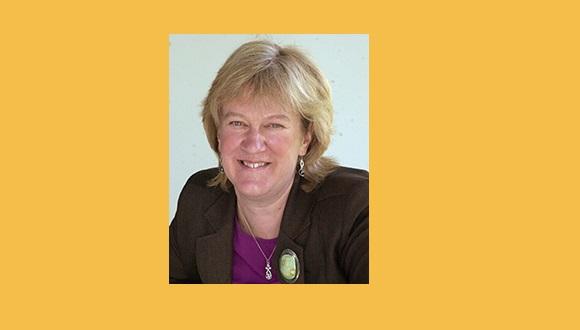
Sally Brown is an Independent Consultant in Learning, Teaching and Assessment and Emerita Professor at Leeds Beckett University where she was, until 2010,
Pro-Vice-Chancellor. She is also Visiting Professor at Edge Hill University and formerly at the Universities of Plymouth, Robert Gordon, South Wales and Liverpool John Moores and at Australian universities James Cook, Central Queensland and the Sunshine Coast. She holds Honorary Doctorates from the universities of Plymouth, Kingston, Bournemouth, Edinburgh Napier and Lincoln. She is a Principal Fellow of the Higher Education Academy, a Staff and Educational Development Association (SEDA) Senior Fellow and a National Teaching Fellow.

Kay Sambell is widely known internationally for her contributions to the Assessment for Learning (AfL) movement in Higher Education, which seeks to emphasize the ways in which assessment processes can be designed to support and developing students’ learning, as well as measure it. For over two decades she has spearheaded a range of pragmatic innovations, research projects and initiatives focused on improving university student learning via assessment. She co-led the pioneering Centre for Excellence in Assessment for Learning during her time at Northumbria University. She is a UK National Teaching Fellow (2002) and a Principal Fellow of the Higher Education Academy. She is currently an independent consultant and Visiting Professor of Assessment for Learning at the University of Sunderland and the University of Cumbria.
Kay also helped to establish and support a series of international conferences aimed at rethinking assessment practice. She is currently President of the vibrant Assessment in Higher Education (AHE) conference series, ( https://ahenetwork.org/.) which leads the development of assessment for learning.


 #LTHEchat