This month marks an incredible milestone for #LTHEchat as we celebrate 10 years of insightful conversations, global connections, and professional growth. What began as a simple idea to bring educators together for an hour each week to discuss the challenges and innovations in higher education, has now blossomed into a thriving community. Over the past decade, we’ve hosted more than 300 chats, collaborated with educators across the globe, and provided a platform for educators to learn, share, and lead.
A Look Back: 10 Years of Impact
Since its launch in 2014, #LTHEchat has become much more than just a weekly Twitter chat. It’s a place where educators from around the world can connect with peers, share resources, and explore the future of teaching and learning in higher education. Each week, we discuss topics that matter from student engagement to digital learning, inclusive teaching practices, and the future of higher education. With guest experts contributing their knowledge and participants sharing their experiences, every chat offers something valuable.
We’ve also built lasting relationships with educational organisations such as Advance HE and the Association for Learning Technology, engaging in collaborative chats that broaden perspectives; introduce new learning and teaching approaches and resources; and extend our community. These partnerships have enriched our discussions and highlighted the strength of collaboration between educators in higher education.
The Organising Team: Behind the scenes
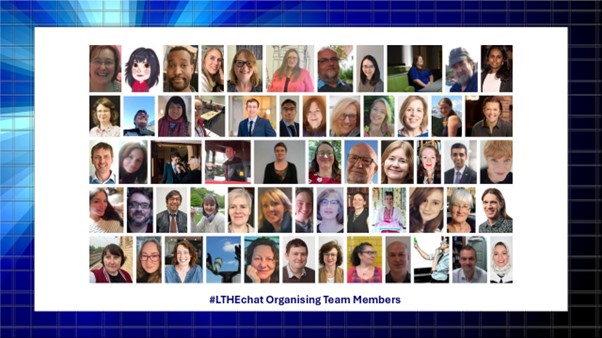
Our success wouldn’t be possible without the dedicated team of volunteers who manage each chat. The organising team works tirelessly behind the scenes, from reaching out to guest speakers to publishing blog posts, designing promotional tweets, and managing the live chat itself. These educators donate their time and energy to ensure that #LTHEchat continues to run smoothly, week after week.
A big thank you to the amazing volunteers and mentors who have contributed their time as members of the organising groups so far.
Many volunteers who have been part of the organising team have found it to be an opportunity for leadership and professional development, providing evidence for SFHEA, NTF and CMALT applications. Team members gain valuable experience in event planning, digital communication, and even mentorship, as they guide new members through the process. To recognise these contributions, we offer open badges to our organising team members, mentors, and guest speakers. These certifications can proudly be added to professional profiles, portfolios and CVs.
We introduced the #LTHEchat Golden Tweeter Award in 2015 for colleagues who have shown sustained engagement, commitment, insight and open sharing to the LTHEchat community. There is no fixed number of award winners per year and individuals can be nominated by the community and are also selected by the LTHEchat team.
At its heart, #LTHEchat is about learning together. Each week, participants bring their ideas, experiences, and resources to the table, contributing to a collective pool of knowledge. It’s not just about answering questions, it’s about creating dialogue, sparking new ideas, and applying what we’ve learned to our own learning and teaching practices. The real value of the chat lies in its ability to bring together educators who, despite their diverse backgrounds and roles, share a common goal to improve teaching and learning for their students.
Over the years, #LTHEchat has provided a space where professional development happens organically, and a place to create a learning community. Whether it’s discovering a new resource, finding a solution to a challenge, or connecting with a peer in another part of the world, our participants frequently share the value they gain from joining the chat.
Looking ahead: The Future of #LTHEchat
As we celebrate our 10th anniversary, we’re not just reflecting on the past, we’re looking toward the future. What new trends will shape higher education in the next decade? How can we continue to foster innovation, collaboration, and leadership through this chat? These are the questions that will guide us as we enter the next chapter of #LTHEchat.
We invite all of you – whether you’re a longtime participant or someone new to our community to join us in celebrating this special milestone. We’re planning a special anniversary chat, where we’ll reflect on the journey so far and look ahead to the future of higher education. Keep the date in your diary and please share your favourite moments using the #LTHEchat hashtag.
Here’s to the next decade of learning, leading, and connecting!
Volunteering as a guest or member of the organising team
If you would like to volunteer for a future #LTHEchat organising team please complete this expression of interest
In this week’s #LTHEChat we’d like to delve into the world of Education for Sustainable Development (ESD). Specifically, we are keen to hear what everyone’s already doing in this area (a chance to share practice, experience and useful resources) but to take the opportunity to ‘zoom out’ and look at the ESD landscape more broadly, and to identify any implications for educators and their students, for institutions, and for those who lead on academic and educational development in this area.
From reading our short biographies you’ll get the sense that we are passionate about ESD, and (when time allows), we’ve worked on a range of things – small and large in our respective contexts (and sometimes together!).
What do we understand by the term ‘ESD’? One way of defining it is offered by UNESCO (2023):
“ESD gives learners of all ages the knowledge, skills, values and agency to address interconnected global challenges including climate change, loss of biodiversity, unsustainable use of resources, and inequality. It empowers learners of all ages to make informed decisions and take individual and collective action to change society and care for the planet. ESD is a lifelong learning process and an integral part of quality education. It enhances the cognitive, socio-emotional and behavioural dimensions of learning and encompasses learning content and outcomes, pedagogy and the learning environment itself.”
However, since work around ESD began it’s fair to say that there has been some ‘mission creep’ and having greater conceptual clarity around ESD is needed to allow its purpose and visibility to not be diluted (a key finding of Vogel et al’s (2023) AdvanceHE-funded literature review). A great research project there in the offing for someone!
In practice, the focus appears to have shifted from competency development towards a more holistic approach, integrating knowledge, competencies, values and ‘action-readiness’. This highlights a goal of empowering students to become as change agents, although more is needed around ‘behaviour change’ so that students feel prepared and able to effect change (e.g. Algurén, 2021), working in partnership with students, and within the academia, but the crucial need to involve external partners.
Interconnectedness ESD would seem in essence to be about transformation for students, colleagues, and institutions. It encourages students to develop an appreciation for the complexity of interconnected and pressing societal and environmental issues at regional, national and global scales, and the multi-faceted ways required to understand and approach them (hence why drawing multi-inter- and trans-disciplinary learning and pedagogies can be useful in this space – e.g. Horn et al, 2022).
ESD also offers the opportunity for transformation in terms of institutional structures, including how to offer provision which draws on different disciplinary expertise within the constraints of how funding follows students within a particular context. This isn’t always an easy road and there are things to learn along the way. During the #LTHEChat, it would be great to hear the experience of others who are working on introducing and/ or embedding ESD within their context at scale, and also how it they feel it has impacted on them as individuals
Not a bolt-on One of the wonderful aspects of ESD, which at the same time presents real challenges in terms of practice, is its potential to impact on across all learning, teaching and assessment activities. Smaller scale or one-off initiatives may not have longer lasting impact but they can provide opportunities for pilot projects which can then be scaled.
Due to its recognition of complexity and interconnection within and between society and environment, ESD invites itself (or perhaps demands) to be an integral thread through curriculum and educational practices, in a similar way to digital education, inclusive practice, or ‘employability’.
Through dialogue with colleagues across the sector, questions can be raised about the relevance of ESD within all disciplines are also raised. That said, there are examples of institutions who have embedded ESD and related practice into a range of disciplines (not necessarily the ones that first come to mind) or have developed an ESD-related module which is available (and possibly mandatory) for groups of students. As always, context is key.
How do we go about it though? ESD approaches vary by context, with no standardised formula for pedagogical decisions. Vogel et al (2023:8) emphasise the educators’ role in selecting appropriate methods. For example, common approaches taken to develop sustainability competencies include “project- or problem-based learning across disciplines, projects with external partners, real-world examples and conceptual approaches such as environmental justice”. These approaches integrate complexity, purpose, and holistic development, but are they universally applicable across disciplines? Do they always focus on solutions, or is their scope broader?
The role of personal development and reflective practice There’s been a growth in the use of reflection on personal/ academic/ professional experiences through the academy as a way to facilitate students’ individual development. Developing greater self-awareness through reflective practice offers students a way to not only develop on a personal level but to bring a greater sense of awareness to their interactions with others and of their surrounding context/ environment(s). We’d suggest this requires more emphasis in the ESD and related spaces as reflective practice can be a key enabler of much the transformative learning alluded to earlier.
To end, we leave you with a take on the why of ESD :
“ESD recognises that education in its current form is unsustainable and requires radical change. The goal here is large-scale collective transformation of a profound nature, beyond changing personal values and consumer behaviour. Universities are uniquely placed to bring this about, as collectivities of learners and researchers in a range of disciplines with a civic concern that connects them with their local communities and the world of work.” (Vogel et al, 2023:6)
This really brings focus to the question of what is (higher) education for, if not for the betterment (and preservation) of our world – environment and society? And if we buy in to that, is ESD an essential underpinning pedagogical approach to assist in the achievement of that aim? Discuss!
We look forward to hearing your thoughts on any of the above and in response to our #LTHEChat questions.
References
Advance HE and Quality Assurance Agency (2021) Education for sustainable development guidance. York: Advance HE; and Gloucester: The Quality Assurance Agency for Higher Education.
Algurén, B (2021) ‘How to bring about change – a literature review about education and learning activities for sustainable development’, Discourse and Communication for Sustainable Education, 12 (1): 5-21.
Gardiner, S and Rieckmann, M (2015) ‘Pedagogies of preparedness: use of reflective journals in the operationalisation and development of anticipatory competence’, Sustainability, 7 (8): 10554-10575.
Horn A, Scheffelaar A, Urias E and Zweekhorst M (2022) ‘Training students for complex sustainability issues: a literature review on the design of inter- and transdisciplinary higher education’, International Journal of Sustainability in Higher Education, 24 (1): 1-27.
Rosalind Beaumont is an educator, academic and leader in academic and researcher development, with expertise and research interests in inclusive doctoral education, professional learning for educators and researchers – around mentoring and reflective practice, digital education, and Education for Sustainable Development. She works across contexts and disciplines in her roles as Director of Education for School X (interdisciplinary school), Learning and Teaching Mentor, and module leader/ contributor to the Humanities and Social Sciences Faculty Researcher Education and Development Programme at Newcastle University. At Durham University she is leading the development of educational provision around interdisciplinary research.
Dr Emma McCulloch
Dr Emma McCulloch has 18 years of experience in teaching and Educational Professional Development. Emma is a Senior Fellow HEA and a Master of Education, with a particular interest in Learning and Teaching professional development. She taught for 12 years in secondary education, moving over to Higher Education 6 year ago. Her current role as lead in Academic Practice has enabled her to support colleagues thinking around curriculum design, assessment and feedback approaches and inclusive teaching approaches. More recently, Emma’s been involved with the Sustainable Development committee at Newcastle University focusing on how to embed the SDGs into curriculum across the university and develop colleague’s awareness and understanding of what this all means.
Michelle Black
Michelle Black has more than 20 years of experience in professionally supporting and developing research, teaching and learning practices in higher education. Michelle is a Senior Fellow HEA and has a Master of Education, with a particular interest in learning design and curriculum development. Her role focuses on working in collaboration with colleagues to facilitate the design and development of quality educational practices, accessible and inclusive education. Along with focusing more recently on embedding SDGs in the curriculum and supporting students and colleagues to enhance SDG knowledge and skills development across the student journey.
When I open this blog post by stating “generative AI has taken the world by storm”, then I’m sure that you have heard (or read) that before. A whirlwind of hype, hope, and fear has swept not only through higher education, but society at large. In the AI-related trainings, workshops, and talks I run for my fellow educators, I often come across the same set of pervasive ‘myths’ – or rather persistent statements – about AI’s impact on teaching and learning, amidst the frenzy and the “fast-paced developments in the realm of education” (if I mimic a typical GenAI-generated phrase). In this post, I will briefly examine six of these ‘myths’ and reflect on a more nuanced reality, in hopes of triggering reflections, challenging assumptions, and – hopefully – alleviating concerns. Disclaimer at this point: When I write ‘AI’ in this blog post, I mean ‘generative AI’ (as technically speaking, the two terms are not synonymous, but often synonymously used).
About the Capabilities and Limitations of Generative AI
One seemingly common misconception I come across in my training participants is that ‘AI is the same as ChatGPT’. Of course, OpenAI has kicked off the AI-wave when launching ChatGPT in November 2022, so it’s unsurprising that “ChatGPT” is equated widely to “AI” (or rather “Generative AI”), similar to “hoover” being used synonymously with “vacuum cleaner” – first-mover advantage and good branding. However, while ChatGPT is currently the most well-known generative AI tool, it is far from the only one. A vast ecosystem of AI models with diverse capabilities is rapidly expanding – Microsoft Copilot, Anthropic’s Claude, Perplexity, Midjourney, Adobe Firefly – I could go on and on. Equating all generative AI with ChatGPT only ignores this kaleidoscope of AI tools, from varying capabilities (text, images, audio, etc.) to availability (closed and open source) to training data and use cases.
About the Impact of Generative AI on Education
There are some concerns that generative AI will stifle student creativity (Atkinson and Barker, 2023). After all, just ask it to perform a task for you, and it does it, right? No more creativity needed, then? Not quite! At the end of the day, it is a question of ‘how’ it is being used. If GenAI is stifling student creativity – we’re doing it wrong. AI can inspire – not stifle – creativity by exposing learners to diverse ideas and prompting original thinking (Inie et al., 2023). Sure, using it as an essay-spewing machine, accepting its output uncritically, won’t achieve this. But using it as an ideation facilitator, a brainstorming tool, to support and trigger creative thinking processes, and it’s a different story. The key is how we use technology – for evil or for good. Teaching students to use AI as a brainstorming tool, not a crutch, is paramount, and it falls back on the human educator to be in charge of the AI (Mollick, 2024a).
Closely related to this comes the perception that critical thinking skills may no longer be relevant if students and educators can just ask an AI tool to do the thinking for them. Again, here is a reminder that it’s ‘how’ – not ‘that’ – AI is used. Of course, it can provide quick answers and seemingly well-crafted arguments, but it is crucial to recognize that these outputs are based on patterns in the AI’s training data, not genuine understanding or reasoning (Prade, 2016). Responses may not be the final article, and blindly accepting AI-generated responses without critical evaluation can lead to the perpetuation of biases and inaccuracies present in the training data, and shallow thinking in students and educators alike.
However, when used as a tool to augment and enhance human critical thinking, generative AI can facilitate sharpening these essential skills. By presenting diverse perspectives and prompting students to interrogate the logic and evidence behind AI-generated arguments, educators can create valuable opportunities for critical analysis and debate (Berg and Plessis, 2023). The key is to teach students to approach AI outputs with a critical lens, asking questions like: What assumptions underlie this argument? What evidence supports or refutes it? What perspectives might be missing? By engaging in this type of critical dialogue with AI, students can develop a deeper understanding of the complexities and nuances of the topics they are studying, ultimately strengthening their own critical thinking abilities.
About Strategies for Engaging with Generative AI
Although becoming less and less prevalent since early 2023, the belief that banning AI is advisable and possible is still widely found amongst educators (Xiao et al., 2023), seemingly often born out of hope that ‘this soon will be over’. However, it still rings true today as it did in early 2023, what proponents for ‘engaging’ (rather than ‘embracing’ – thank you, Martin Compton) have been repeating time and again – that prohibition is neither practical nor beneficial in the long run (Volante et al., 2023). As these tools become ubiquitous, students need to learn to use them responsibly, and outright banning them rather would drive many into the very thing a ban aims to avoid – unethical uses, cheating, and added to that, poor AI literacy. Like it or not, but engaging thoughtfully with AI, rather than futile bans, raising AI literacy and critical exposure to it is the path forward.
Closely linked to this is the misconception (I daresay – hope) that so-called AI detectors can reliably distinguish AI-generated text from human writing. The bad news is that there is no such app for that. As studies (e.g., Liang et al., 2023; Sadasivan et al. 2024) and thought leaders (Furze, 2023; Mollick, 2024b) have shown, these tools largely overstate their success rates, whilst remaining opaque about their approaches and methods. These detectors often produce false positives, disadvantage non-English native speakers, and struggle to keep up with the sheer speed AI is developing (Furze, 2023). Not only are these detectors unreliable, but relying on them is outright dangerous and does a disservice to the students, unfairly penalizing them.
About the Future of Generative AI in Higher Education
Despite sensational predictions, AI will not render human educators obsolete. Yes, the technology has the potential to enhance learning with personalized feedback and content; AI avatars based on especially trained large-language models can interact with students already (Fink et al., 2024), but it cannot replace the nuance, intrinsic experience, empathy, mentorship, and adaptability of skilled teachers (Pila, 2023). After all, we are talking about sophisticated algorithms, not self-aware AI that is at the time of writing still the fabric of science fiction. It may replace tasks and run processes it can do better in the future, but replacing human educators altogether? Not anytime soon! The future lies in human-AI collaboration and ‘co-intelligence’ (Mollick, 2024a), not replacement; in enhancement through technology, not elimination.
Now what?
Of course, many more myths and misconceptions need critical discourse and debate. We are all together in largely uncharted waters. Generative AI has moved past the Peak of Inflated Expectations in Gartner’s Hype Cycle for Emerging Technologies and is at the brink of the Trough of Disillusionment, where the hype is starting to cool down. It seems that every day, there are quantum leaps in what ‘AI’ can do. But as we grapple with real-world challenges and limitations of the technology and its impact on sustainability and the environment, we must steer clear of these often-simplistic myths. The reality is more complex and filled with both challenges and opportunities. Neither must we be completely for or against AI. By engaging critically, cautiously, but optimistically, teaching responsible use, and leveraging them to augment rather than replace human instruction, I hope we can harness GenAI’s potential to enhance learning for all our students and us.
Berg, G., & Plessis, E. (2023). ChatGPT and Generative AI: Possibilities for Its Contribution to Lesson Planning, Critical Thinking and Openness in Teacher Education. Education Sciences. https://doi.org/10.3390/educsci13100998.
Fink, M.C., Robinson, S.A., and Ertl, B. (2024). AI-based avatars are changing the way we learn and teach: benefits and challenges. Frontiers in Education. 9. https://doi.org/10.3389/feduc.2024.1416307
Inie, N., Falk, J., & Tanimoto, S. (2023). Designing Participatory AI: Creative Professionals’ Worries and Expectations about Generative AI. Extended Abstracts of the 2023 CHI Conference on Human Factors in Computing Systems. https://doi.org/10.1145/3544549.3585657.
Liang, W., Yuksekgonul, M., Mao, Y., Wu, E., and Zou, J. (2023). GPT detectors are biased against non-native English writers. Patterns. 4:7. https://doi.org/10.1016/j.patter.2023.100779
Mollick, E. (2024a). Co-Intelligence: Living and Working with AI. New York, New York: Penguin Publishing Group
Prade, H. (2016). Reasoning with Data – A New Challenge for AI?. In: Schockaert, S., Senellart, P. (eds) Scalable Uncertainty Management. SUM 2016. Lecture Notes in Computer Science(), vol 9858. Springer, Cham. https://doi.org/10.1007/978-3-319-45856-4_19
Sadasivan, V.S., Kumar, A., Balasubramanian, S., Wang, W., and Feizi, S. (2024). Can AI-Generated Text be Reliabliy Detected? ArXiv, abs/2303.11156. https://doi.org/10.48550/arXiv.2303.11156
Xiao, P., Chen, Y., & Bao, W. (2023). Waiting, Banning, and Embracing: An Empirical Analysis of Adapting Policies for Generative AI in Higher Education. ArXiv, abs/2305.18617. https://doi.org/10.2139/ssrn.4458269.
Author Biography
Dr Gerhard Kristandl is a National Teaching Fellow and an Associate Professor in Accounting and Technology-Enhanced Learning at the University of Greenwich. He has 18 years of experience in higher education across the UK, Canada, and Austria, focusing on learning technologies in HE. He is the chair of the University’s AI Special Interest Group and has talked internationally on various aspects of Generative AI in HE. He is the university lead for Mentimeter, a Senior Fellow of the Higher Education Academy, and a former management consultant. He blogs about Generative AI on LinkedIn and Medium, and runs his own YouTube channel, with recent videos around generative AI and its applications in education. He is passionate about creating engaging and innovative learning experiences for his students and is a strong believer that generative AI makes and will make human educators even more important than ever before.
Not just the kind of power that charges a television. I’m talking about the kinds of power relations, systems and structures that shape our world and our diverse experiences of it. Specifically, I’m talking about power in relation to formal education systems like higher education. This includes forms of power that perpetuate social injustices; that unfairly advantage some people and disadvantage others. But I’m also talking about the kinds of power that shape our agency to resist and transform inequities, the power of hope in higher education.
Yet, talking’s not enough. In my view, we need to do. We need to ‘talk the talk and walk the walk’. We need to teach and learn how to critique, challenge and change power structures. This is where my power-centred pedagogy – Powergogy – comes in. And that is what I’m looking forward to talking about with you at this week’s LTHE Tweetchat! But first, here’s a brief overview of some key ideas to set the scene ahead of our chat.
Challenging power in higher education
In some contemporary higher education (HE) contexts (e.g. in the United Kingdom) learning and teaching initiatives such as ‘peer learning,’ ‘students as partners’ and ‘inclusion’ have challenged lingering teacher-centred pedagogical orthodoxies. These learner-centred innovations make invaluable contributions. That said, I suggest that they have, for the most part, only implicitly and partially challenged relations, systems and structures of power that operate in and through HE. They don’t, I argue, amount to a concerted attempt to explicitly focus on power and place it at the centre of the process and content of teaching and learning.
What is ‘power’ (in relation to learning and teaching)?
Power is conceptualised in multiple ways. For instance, some commentators (e.g. see Lukes, 2005) have focused on forms of ‘power over’ that are exercised when a person or group has the capacity to impact other people against those peoples’ best interests. Other scholars (e.g. see VeneKlasen & Miller, 2002) remind us that power can also be understood and expressed in a less pernicious, more positive light; for example, as ‘power to’ (e.g. individual agency to do something a person wants to do) and ‘power with’ (collective agency to do something we want to do together). Theorists of power have debated the ways in which power is, for example, differently ‘possessed’ by people, ‘internalised’ by people, or better understood as an ‘authorless’ omnipresent force that flows through all aspects of our lives, shaping and being shaped by people (e.g. Foucault, 1980, Hayward, 1998). For instance, Hayward says:
Power’s mechanisms are best conceived, not as instruments powerful agents use to prevent the powerless from acting freely, but rather as social boundaries that, together, define fields of action for all actors. Power defines fields of possibility. It facilitates and constrains social action… (1998:12).
Other scholars have also discussed distinct forms, or ‘faces’, of power such as ‘visible’, ‘hidden’ and ‘invisible’ power (e.g. see Batliwala, 2019; Lukes, 2005) and the different levels and spaces power operates in (e.g. see Gaventa, 2006; Pettit, 2010). This Powercube resource visually integrates and explains more about notions of power I’ve only had time to briefly touch on here.
In terms of the relationship between power, learning and teaching, it can be argued that formal education systems like higher education are particularly influential as products and producers of social power dynamics, including inequities and inequalities. For example, some (e.g. Bourdieu and Passeron,1990) suggest that formal education functions as a mechanism for social class stratification, a way to order people hierarchically, both within education contexts and more broadly as learners and teachers take their learned ways of being (e.g. in relation to knowledge and power) into the world. My ethnographic research into how higher education contexts can reproduce inequities analyses how and why this can happen in forensic detail (Dalby, 2017). However, it also highlights the potential for pockets of space in which transformative pedagogy can provide alternatives. Enter Powergogy!
What is Powergogy?
Powergogy encompasses, builds on, and redresses the limitations of several contemporary HE initiatives (mentioned earlier) in terms of offering a means for how we can explicitly focus on power in HE and beyond. The Powergogy Framework (see the linked resources below) synthesises a set of principles and ‘big picture’ ideas about the social purpose of higher education with specific, practical activities for supporting learners and educators in developing the ‘power literacies’ to critique, challenge and change power dynamics.
Batliwala, S. (2019). All About Power: Understanding Social Power and Power Structures. CREA.
Bourdieu, P., and Passeron, J. C. (1990). Reproduction in Education, Society and Culture (Second Edition). London: Sage Publications Ltd.
Dalby, T. P. (2017). Space for a change? An exploration of power, privilege and transformative pedagogy in a gap year education programme in South America (Doctoral dissertation, University of East Anglia).
Foucault, M. (1980). Power/Knowledge: Selected Interviews and Other Writings, 1972-1977. New York: Random House.
Gaventa, J. (2006). Finding the Spaces for Change: A Power Analysis. IDS Bulletin, 37(6), 23–33.
Hayward, C. R. (1998). De-Facing Power. Cambridge: Cambridge University Press.
Lukes, S. (2005). Power: A Radical View (2nd ed.). New York: Palgrave Macmillan.
Pettit, J. (2010). Multiple Faces of Power and Learning. IDS Bulletin, 41(3), 25–35.
VeneKlasen, L., & Miller, V. (2002). A New Weave of Power, People and Politics: The Action Guide for Advocacy and Citizen Participation. Oklahoma City, OK: World Neighbors.
Author Biography
Dr Pablo Dalby is a National Teaching Fellow, Senior Fellow of the Higher Education Academy, and University Teaching Fellow at the University of East Anglia (UEA). As UEA’s Learning Enhancement Tutor for Inclusive Education, he founded and leads the cross-institutional Inclusivity Network (IN), providing continual professional development through training, guidance and support to help staff and postgraduate researchers enhance their inclusive practice.
Across 30+ years’ experience in inclusive teaching and learning for social change in multiple contexts, and a PhD in power and transformative pedagogy, Pablo has developed a signature power-centred pedagogy. ‘Powergogy’ equips learners to critique, challenge and change the power relations that produce social inequities. This work is close to Pablo’s heart and rooted in his upbringing in (pre-gentrified) Hackney, a richly diverse yet largely impoverished area of London. For more bio info, here’s Pablo’s AdvanceHE bio, here’s Pablo’s LinkedIN profile and here’s Pablo’s one-minute video intro/bio with sensory and social descriptions.
There is a vast literature demonstrating that the best way to learn and retain information is by retrieving that information from memory (Yang, Luo, Vadillo, Yu, & Shanks, 2021). I like to think of memory as any other skill that you develop. If you want to learn to play an instrument or play a sport well, you practice. If you want to remember well, you have to practice (see Burgess, 2024a, for further information about how and why it works).
Beyond learning and remembering more (e.g., Yang et al., 2021), regular retrieval through testing (e.g., by answering multiple choice questions) has a range of benefits to the learner. For example, testing is more likely to lead to long-term memories (Roediger & Karpicke, 2006), it helps to identify how well students remember the information and increases their awareness of their learning (Ariel & Karpicke, 2018), boosts learning of new information presented after the test (Yang, Potts, & Shanks, 2018), reduces test anxiety (Yang et al., 2023), and enhances problem-solving (e.g., Agarwal, 2019; Wong, Ng, Tempel, & Lim, 2017).
However, there is a knowledge-practice gap, which shows that most students tend to use other learning strategies such as re-reading notes, re-watching lecture recordings, note-taking and highlighting. In a recent survey at Cardiff University, 87% of 226 first-year psychology students noted that they wanted to use retrieval practice in their learning, but that retrieval makes some students feel anxious, and many struggle to find time in their own learning to engage with it.
I recently argued how educators can help support students to allay both issues by including retrieval practice as a regular part of their teaching, and by making a safe space for students to make mistakes (Burgess, 2024b). My experience of both formative and low-stakes summative quizzing in lecture settings is that students really enjoy the opportunity, and particularly value getting live feedback to support their learning. Students learn a lot from making mistakes (Gartmeier, Bauer, Gruber, & Heid, 2008), and often learn more than if they never make mistakes (Huelser & Metcalfe, 2012; Kornell, Hays, & Bjork, 2009; Metcalfe, 2017; Potts & Shanks, 2006).
However, there are numerous ways to provide retrieval opportunities, and different formats may work better for different subjects and courses. This tweet chat will encourage people to think about how their might embed retrieval practice in their context, and how they can support their students to use this fantastic learning strategy.
References
Agarwal, P. K. (2019). Retrieval practice & Bloom’s taxonomy: Do students need fact knowledge before higher order learning? Journal of Educational Psychology, 189-209.
Ariel, R., & Karpicke, J. (2018). Improving self-regulated learning with a retrieval practice intervention. Journal of Experimental Psychology: Applied, 43-56.
Gartmeier, M., Bauer, J., Gruber, H., & Heid, H. (2008). Negative Knowledge: Understanding Professional Learning and Expertise. Vocations and Learning, 87-103.
Huelser, B. J., & Metcalfe, J. (2012). Making related errors facilitates learning, but learners do not know it. Memory and Cognition, 514-527.
Kornell, N., Hays, M. J., & Bjork, R. A. (2009). Unsuccessful retrieval attempts enhance subsequent learning. Journal of Experimental Psychology: Learning Memory and Cognition, 989-998.
Metcalfe, J. (2017). Learning from errors. Annual Review of Psychology, 465–489.
Potts, R., & Shanks, D. R. (2006). The benefit of generating errors during learning. Journal of Experimental Psychology: General, 644-667.
Roediger, H., & Karpicke, J. D. (2006). Test-enhanced learning: Taking memory tests improves long-term retention. Psychological Science, 249–255.
Wong, S. S., Ng, G. J., Tempel, T., & Lim, S. W. (2017). Retrieval Practice Enhances Analogical Problem Solving. The Journal of Experimental Education, 128–138.
Yang, C., Li, J., Zhao, W., Luo, L., & Shanks, D. R. (2023). Do Practice Tests (Quizzes) Reduce or Provoke Test Anxiety? A meta-analytic review. Educational Psychology Review, 35-87.
Yang, C., Luo, L., Vadillo, M. A., Yu, R., & Shanks, D. R. (2021). Testing (quizzing) boosts classroom learning: A systematic and meta-analytic review. Psychological Bulletin, 399-435.
Yang, C., Potts, R., & Shanks, D. (2018). Enhancing learning and retrieval of new information: a review of the forward testing effect. NPJ Sci Learn., 1-9.
Author Biography
Katy Burgess
Katy Burgess (SFHEA) is a Senior Lecturer in Psychology at Cardiff University. Katy focuses on applying findings from cognitive psychology in the classroom, ensuring we can support students in learning and remembering information in efficient and enjoyable ways. Katy’s current work is focused on the inclusivity of learning and teaching methods and aims to improve the student experience by combining student voice and evidence-based strategies.
Katy advocates for teaching-focused careers and co-leads two networks for Teaching and Scholarship staff. One network is aimed at staff in psychology and related disciplines (T-FUN), and the other is for all teaching-focused staff (The National Learning and Teaching Focused Network). Feel free to join these networks to meet like-minded people and gain support in developing your teaching-focused career!
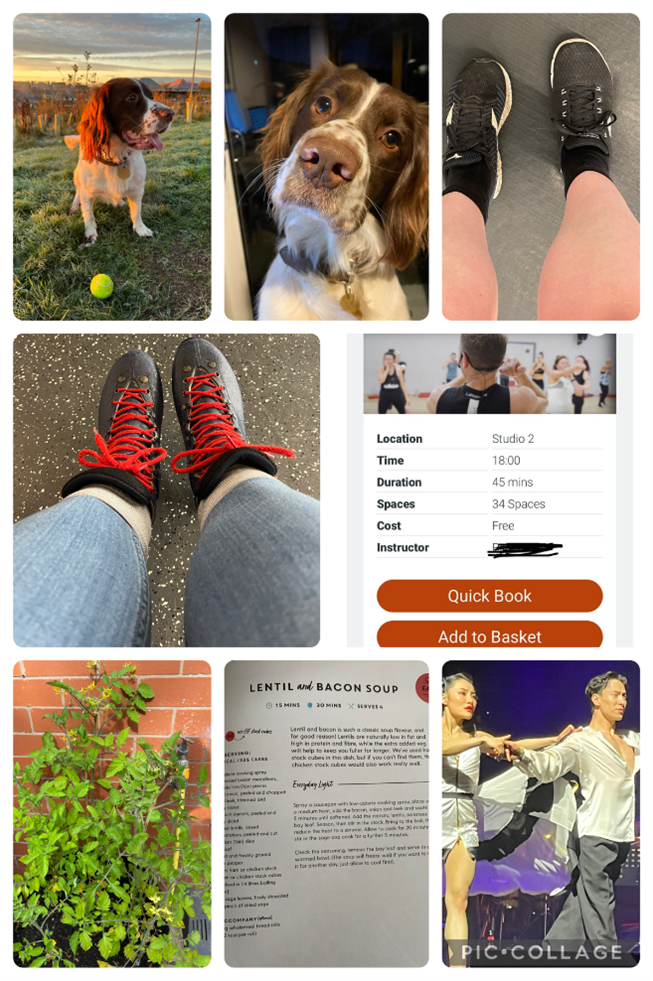
In this week’s #LTHEChat I’d like to explore how aspects of life-wide learning impact our practice as HE professionals – in particular, I’m interested in how our hobbies, leisure activities and/or exercise preferences might help us to think about teaching and/or supporting learning in HE. As we educate others, how does our life-wide learning help us advance or enhance our understanding and practice?
My interest in life-wide learning has grown from my reflections on how my hobbies and interests have positively contributed to my practice as an academic developer. For example, as a keen swimmer who has never had a formal swimming lesson, I had to find ways to improve without the support of a teacher. My approach, which used YouTube videos, peer feedback, observation and lots of deliberate practice, provided me with concrete examples of how these learning strategies play out in a real-world context that many others could relate to. Trying to help my partner improve his swimming also gave me a real-life example of a threshold concept in action (you can read more about that here), and observing a variety of approaches employed by fitness instructors as they lead group exercise sessions made me reflect on the strategies that they use to motivate people and deliver effective group feedback.
The concept of learning outside of formal study or education is not a new one, though, and in connection with HE, it goes back at least as far as 2008 when the term ‘life-wide learning’ was proposed by Norman Jackson (cited in Jackson, 2011). Ronald Barnett has gone on to define life-wide learning as “learning in different places simultaneously. It is literally learning across an individual’s lifeworld at any moment in time” (Barnett, 2010: 2). As Barnett suggests, life-wide learning can appear to be ubiquitous and can happen in many formal or informal ‘spaces’ at ‘any moment in time’. As such, it might be challenging to identify where this life-wide learning happens and what we are learning. These are two questions that I would like us to reflect on in this #LTHEChat.
Furthermore, the idea that learning can happen outside of formal teaching times and spaces might provide us with a productive way of challenging our established ideas about where and how our continuing professional learning could occur. Having supported many colleagues to achieve awards and recognition that rely, in part, on the applicant’s ability to articulate their approach to and the impact of their CPD, I would argue that many of us probably take a narrow view of what constitutes professional learning or development. We tend to focus on things like accredited schemes and programmes, webinars, workshops, talks and conferences – formal learning opportunities that are easy to identify and attend (especially when so many now take place online) but which don’t always result in an identifiable impact on practice.
However, by taking a more life-wide view, notions of CPD could be “burst open”, in Barnett’s words, by a consideration of the part that life-wide learning plays in our professional (as well as personal) development (2010: 1). We might, therefore, identify a much more comprehensive range of rich and impactful opportunities for developing our understanding and practice. For example, Jackson suggests that, in addition to curricular and co-curricular activity, HE students might also learn from ‘life in the wider world’, including travel, caring for others, creative enterprises like playing music, making videos for social media or participating in dramatic productions, and volunteering or entrepreneurship (2011: 249). To the extent that we are simultaneously learners and teachers – as we seek to enhance and develop our professional practice – the same might apply to staff.
These examples illustrate the effectiveness of life-wide professional learning, and I look forward to hearing how others combine personal and professional practice and interests in the chat this week.
References
Jackson, N (2011). Recognising a more complete education through a Lifewide Learning Award. Higher Education, Skills and Work Based Learning. 1 (3) pp. 247-261
Barnett, R. (2011). ‘Life-wide education: a new and transformative concept for higher education?’. A lifewide concept of learning, education and personal development, 22-38.
Author Biography
Claire Stocks
Dr. Claire Stocks is Head of Academic Practice and Development at the University of Chester. She has been an Advance HE Senior Fellow since 2016 and has a doctorate in American Literature (focused on representations of trauma in American War fiction). She is also Chair of the Supporting Professionals in(to) HE (SPiHE) network, which is focused on understanding and supporting the experiences of professionals who have moved from industry or practice into teaching in Higher Education. Claire is the proud owner of an extremely loopy Springer Spaniel, a Bodycombat enthusiast and a keen swimmer – all of which positively influence her academic practice.
In the fast-paced world of higher education, where efficiency and measurable outcomes often take centre stage, there is a quieter, yet equally powerful, tool available to educators: poetry. This might seem an unexpected ally in the realm of academia, but poetry offers unique opportunities for enhancing teaching and learning across disciplines.
Poetry is not just for literature classes. It can be a versatile method of engaging students, encouraging deeper reflection, and fostering creativity, no matter the subject. For instance, using poetry in scientific disciplines helps to communicate complex ideas in more relatable and emotionally resonant ways, as evidenced in studies where poetry has been used to teach topics as varied as sustainable development (Walshe, 2017) and chemistry (Furlan, 2007). Poetry can also be instrumental in developing empathy and critical thinking, skills that are crucial in fields such as healthcare and management (Jack and Illingworth, 2024).
The process of writing and reflecting on poetry allows students to connect with their learning on a personal level. For example, when nursing students were encouraged to write poems reflecting on their clinical experiences, it not only enhanced their reflective skills but also helped them process the emotional aspects of their work (Jack and Illingworth, 2017). Similarly, in law education, poetry has been used to humanise abstract concepts, making them more accessible and memorable for students (Manley, 2018).
Despite the clear benefits, integrating poetry into non-literary disciplines can be challenging. Resistance often comes from a perception that poetry is irrelevant or too abstract for certain fields. However, the evidence suggests otherwise. When properly introduced, poetry can complement traditional teaching methods, providing a richer, more holistic educational experience (Donaldson, 2001; Chan, 2013).
Incorporating poetry into higher education does not require students or educators to become poets. Rather, it is about using poetry as a tool for exploration, expression, and understanding. By doing so, educators can create more inclusive and engaging learning environments, where students feel more connected to both the material and to each other. Further, poetry can support educators to learn more about themselves to enhance self-connection, awareness and growth.
In our book Poetry and Pedagogy in Higher Education (Illingworth and Jack, 2024) we hope to inspire educators across disciplines to explore the transformative potential of poetry in their teaching practices. We aim to provide practical strategies and authentic examples that demonstrate how poetry can enrich learning experiences and foster a more empathetic and reflective academic environment. In this Tweetchat, we look forward to engaging with you, hearing your experiences, and discussing how we can collectively harness the power of poetry to create more dynamic and inclusive classrooms.
References
Chan, Z.C., 2013. Exploring creativity and critical thinking in traditional and innovative problem‐based learning groups. Journal of clinical nursing, 22(15-16), pp.2298-2307. https://doi.org/10.1111/jocn.12186
Furlan, P.Y., Kitson, H. and Andes, C., 2007. Chemistry, poetry, and artistic illustration: an interdisciplinary approach to teaching and promoting chemistry. Journal of Chemical Education, 84(10), pp.1625-1630. https://doi.org/10.1021/ed084p1625
Illingworth, S. & Jack, K., 2024. Poetry and Pedagogy in Higher Education: A Creative Approach to Teaching Learning and Research. Bristol: Policy Press
Jack, K. and Illingworth, S., 2017. ‘Saying it without saying it’: using poetry as a way to talk about important issues in nursing practice. Journal of Research in Nursing, 22(6-7), pp.508-519. https://doi.org/10.1177/1744987117715293
Manley, S., 2018. Home-made poetry as pedagogical tool: an experience from the law classroom. English in Education, 52(3), pp.213-224. https://doi.org/10.1080/04250494.2018.1508324
Walshe, N., 2017. An interdisciplinary approach to environmental and sustainability education: Developing geography students’ understandings of sustainable development using poetry. Environmental Education Research, 23(8), pp.1130-1149. https://doi.org/10.1080/13504622.2016.1221887
Author Biographies
Sam Illingworth
Sam Illingworth is a Professor of Creative Pedagogies at Edinburgh Napier University, where his work involves using poetry, games, and GenAI to explore staff and student belonging. You can find out more about his work via his website www.samillingworth.com and chat with him on Twitter / X @samillingworth.
Kirsten Jack
Kirsten Jack is a creative psychotherapist and writing for wellbeing facilitator, working with individuals and groups, using poetry to support emotional wellbeing. Before that, she was Professor of Nursing Education at Manchester Metropolitan University, where her work with students involved the use of poetry to explore the emotional aspects of health and social care practice. You can learn more about Kirsten via her website www.kirstenjack.co.uk or talk with her on Twitter / X @Heijinxs.
This term we have had the pleasure of being the organising team for #LTHEChat. As we sign off from our tenure, we have composed some reflections on our individual and collective learning, gleaned from across the programme this term.
Are you interested in becoming a member of a future organising team?
We are looking for open practitioners, educators and students, who would be interested in joining a future organising team. If this is you, please complete this expression of interest.
The theme also organically emerged in a number of discussions, and this has made me ponder as to whether we are starting to see a more wholesale, mainstream shift towards critical reflection beyond the subject areas we might expect (e.g. Health Sciences, Social Sciences) in a response to the rise and prevalence of Generative AI. Aligned to this, I have noticed lots of talk around the value of cultivating ‘meta’ skills such as self-efficacy and feedback literacy.
New ‘norms’ in practice, and critical discourses around technology
It feels like we’ve had a number of big triggers of change in Higher Education over the last few years – COVID-19 being, of course, a significant one. With that said, there’s always been a sense in some quarters that changes in practice were just temporary accommodations, and that a return to ‘normal’ would inevitably be somewhere around the corner. With respect to the particular example of COVID-19, I do think it is fair to suggest that we haven’t entirely embraced certain aspects – such as online learning – in some of the wholesale ways once predicted. While this perhaps owes much to the difficult experiences of both and staff and students who grappled with ‘emergency remote teaching’, it is notable that many Universities have since gone in the complete opposite direction with strategic pushes that ‘double down’ on identities as ‘campus-based’ providers of education.
With Generative AI, however, I feel that this really is different, and that has been apparent in some of the #LTHEChat discussions this term.
I feel that even the most reluctant corners of our sector are now really engaging with the notion of authentic assessment (Sambell et al, 2013). This was apparent in some of the creative approaches to assessment which have been discussed this term, such as podcasts in #LTHEChat 290 and digital escape rooms, which we explored in #LTHEChat296. I’ve also noticed that there is now a broader awareness and recognition of concepts such as assessment ‘for’ (Boud, 2010) and ‘as’ (Dann, 2014) learning. This has also been evident this term in the rich dialogue which has emerged around topics such as compassionate assessment in #LTHEChat 291 and the invaluable provocation to think more squarely from a student-first perspective in #LTHEChat 293.
Operationalising some of these things in the present climate really does mean that we must engage with more fundamental epistemological questions about knowledge creation, about skills development, about ownership, about digital identity, about ‘what is plagiarism’, about the climate impact of some of these tools, and (quite importantly) the business practices of those who vend them. These topics emerged, as you might expect, in a number of discussions this term, but I felt they reached a crescendo in #LTHEChat 298:” What does good HE look like?”. For me, these discourses place into the spotlight the wider purpose of HE as a developer of critical thinkers and as a creator of global citizens at a time when the current UK Government (although for how much longer, one can only speculate) are questioning the purpose of some forms of degree education using politically charged language (Gov.UK). Such agendas attempt to encapsulate the ‘worth’ of a degree within short-term (and convenient to quantify) metrics such as employment outcomes, over long term, more holistic values, which inevitably are much more complex to capture (and, if I am being cynical) sensationalise. As such, I enjoyed engaging with discussions around these points in #LTHEChat 292: “Employability Strategies: Going Beyond The Metrics”.
When you conflate 'quality' with short term economics you devalue (and do an utter disservice) to the purpose of an education.
But of course, the people writing these policies don't come from the sorts of backgrounds where a University education is needed to open doors for them.
I get the sense that many of these discussions which explore assessment and the perceived ‘value’ of HE are being underpinned by genuine considerations around how changes in learning outcomes may reflect ‘new norms’ of a world that is shaped ever more by developments in technology and decisions made by large and powerful venture capitalist actors. While these influences cannot be denied, a pedagogic future determined by technology has always felt uncomfortable to me as an educator – and in many ways the pressures underscoring this are more the case now with Generative AI than they have ever been. As such, to me, some of the #LTHEChat discussions this term have helped to embolden my belief that the role of the generalist educator is evolving (or will need to evolve) to reflect the implications on academic practice and the graduate workplace in a world where the capabilities of Generative AI are expanding more rapidly than we can account for. Critical digital pedagogy discourses are now more relevant than ever as we grapple with – and indeed help our learners to navigate – this new terrain. I accept, however, that this is not a universally-held opinion, and I have enjoyed engaging with peers who take a far less skeptical view of the technologies, and question whether the generalist educator is equipped with the expertise to embed these sorts of discussions into mainstream teaching.
A5.
I think critical digital pedagogy needs to go mainstream and be embedded in every discipline. We should be equipping learners to engage with this new landscape.
What is knowledge? What is truth? What has value? What is ethical? What has climate impact in mind?#LTHEChat
For me, though, that’s indicative of what we need to do next. The challenge is on for academic development provision to meet these needs, and as the discussions in #LTHEChat 297 outlined, the key to this being a success is collaboration with peers and experts across a range of academic disciplines.
What makes a good #LTHEChat question?
One of the great joys of mentoring the #LTHEChat initiative this term has been the peer review process. I think peer review and peer feedback are beneficial for every party involved. It’s a wonderful way of breaking down disciplinary barriers, creating a collaborative dialogue and, ultimately, improving the quality of the discussion in each #LTHEChat.
To give and to act upon feedback, it doesn’t matter whether you are an experienced practitioner or a more early-career professional. To make this work, however, the process must be scaffolded and managed well. As such, I really wanted to try and get it right this term, and the key tenets to making that work were to create time and to set expectations.
Some of our fantastic guest hosts this term may have wondered why I was contacting them specifying deadlines for materials over a month in advance of their chat (sorry) but I value a policy of ‘no surprises’, and that means deadlines which are clear. This allowed me to create a review window where materials could be considered by the team, where I could anonymise the feedback and return it to the guest host, and where the guest host had the time to engage with the feedback and make any changes they wished to make. All of this was done with the aim of allowing us to have the materials ready to go in good time to promote each #LTHEchat from the Thursday morning ahead of the week to come, to ultimately give the chat participants a whole week to read the blog.
My advice for the next team mentor is: draw up a project plan, set deadlines, create a healthy review window for each chat, and communicate the process to the guest hosts well in advance.
References
Boud, D. and Associates (2010). Assessment 2020: Seven propositions for assessment reform in higher education, Sydney: Australian Learning and Teaching Council.
Dann, R (2014) Assessment as learning: blurring the boundaries of assessment and learning for theory, policy and practice, Assessment in Education: Principles, Policy & Practice, 21:2, 149-166, DOI: 10.1080/0969594X.2014.898128
Sambell, K., McDowell, L. and Montgomery, C. (2013) Assessment for learning in higher education. Abingdon, Oxon: Routledge.
Ben’s Retrospective
Reflecting on reflecting
Some common themes emerged either as wholesale topics of the #LTHEchat evenings – as individual questions and prompts for response – or organically in responses from participants during the hour discussion. Chief amongst these themes was undoubtedly reflection: as a means of assessment, as learning activities, and as a means of self-development and evaluation.
Attending the Assessment in Higher Education Conference 2024 also highlighted the emphasis which is being placed on reflective practice by many in the pedagogic sphere. Reflecting on this burgeoning drive for reflection raises a couple of key questions for me:
In drivng for inclusive practice, we should remember that reflection does not come easily to some, and can be a completely foreign concept for many?
As Ian Wilson’s SMOR model encapsulates well – there is no one size fits all model of reflection, and we should encourage learners to find / develop / ‘frankenstein’ a reflective approach which works for them, and encourages them to learn and develop practice as opposed to aiming for strict models which must be followed.
And finally, playing a joker role: are we in danger of forming our own reflective echo chamber? Everyone must reflect because we say it is good to do so. We keep telling ourselves this, and many of our colleagues and peers through conferences, networking events and training sessions. Do we need to get out there and talk to others about what they would expect to see instead of reflective assessments and assignments? Do PSRBs recognise or believe such emphasis on reflection to be valuable at the cost of other ‘academic’ content? Will learners ever really use reflection in their career path? Some provocative musings, as much for myself as anyone else to consider when, designing course content.
“I’d like to but …”
Another common theme which came out across the term has been limitations on people’s ability to incorporate new ideas, aspects, etc in to teaching activities and practice – commonly amongst which has been “I don’t have time”. This is a line I have often used myself in responses, and is totally true. Time is incredibly squeezed for everyone involved in HE, and it doesn’t look like that is going to change anytime soon. Staff need the freedom to develop learning materials and approaches which can have positive impact, with the assurance that it is okay for things to not work as envisaged – unforeseen or unintended outcomes are not failures and wasted time, but part of a supported development process.
Hopes for the future
The final #LTHEchat on: ‘What does good HE look?’ like offered glimpses of what we would like for the future of Higher Education. As James succinctly reflected above, the role of HE is much broader than pure education delivery.
But again, playing the Devil’s Advocate role: is it? To be brutally honest, I’d like my optician, ophthalmologist, vet, doctor, pharmacist etc to have spent ALL of their degree learning about correct medicines, diseases, cures, etc rather than learning how about reflective practice, ethics in a global context, or other soft ‘social skills‘.
And this is why Higher Education is special. It is the place to build global citizens, it is the place to learn ethics. But in the same way that the 1990s push for ever more school leavers in the U.K. to study a degree at University (of which I am a product) created different social problems to those than it intended to resolve and highlighted that there is no single form of education which can be used for everything, maybe we need to consider that actually, not all degrees are the same. There is place and need for the more traditional liberal arts degrees which have come under so much pressure in recent years which (who can forget the Government advertising campaign “Give up on art, retrain in computer tech”), as there is place and need for degrees which have a different emphasis and focus in following solid skills based approaches with less focus on softer skills.
Certainly, the current political climate in the U.K. could place the future of the HE system at (or at least rapidly approaching) a cross roads. Perhaps what we all, generally need to remember are those three words from a 1996 political party conference: “Education, Education, Education.”?
They should be our top three priorities. But Higher Education is not alone in fulfilling that role, and must enmesh within wider educational settings to enable and facilitate learner growth and development.
As you can probably tell from these reflections, they are still in process of full digestion and consideration of the provocative questions and comments across the last twelve weeks of #LTHEchat.
Apart from meta-cognition, that’s gone straight into inclusion for September.
The final reflection turns to what makes 50% of the role of educators: colleagues. They support and inspire. Networks like #LTHEchat can open our eyes to new ideas, and provide reassurance that we are not alone – either in our thinking or our challenges. Keep on #LTHEchatting!
John’s Retrospective
Reflection again!
Like the two previous reflections by my organising teammates, reflection came across as a recurring theme cross the different chats. While reflection was explicitly mentioned in several topics, it was a theme occurring across many weeks. It might be taken as granted, but posts from folks #LTHEchatting were filled with reflections on current practice. I could see from responses the extent to which reflectivity is embedded in teaching practice as well as the work of those working in higher education.
Generative AI isn’t going anywhere!
We all remember the shock, horror and / or excitement of the launch of ChatGPT. Generative AI is not a flash in the pan trend but something that is here to stay and is affecting so much of our practice, teaching and learning in higher education. It is affecting so many strands of work and it feels like we are only just starting to come to terms with the potential of Generative AI.
Positive collegiality
As a newcomer to #LTHEChat, I was impressed with the collegiate nature of the initiative. It was great to see colleagues from across the higher education sector sharing ideas and experiences. This sharing showed high levels of similarities in practice across institutions, but also nuggets of ideas which could be used by others. While X / Twitter is often portrayed as an echo chamber of similar ideas with unpleasant disagreements flourishing, the #LTHEChat community showed that colleagues can share ideas and disagree amicably with one another.
Tips for future #LTHEChat organising teams
One aspect of being an #LTHEChat organising team member that I particularly enjoyed was the peer review of blogs and questions for the weekly chat. This process helped me develop my understanding of numerous different higher education topics. When thinking about questions for the #LTHEChat, my biggest pieces of advice would be to make sure questions are open-ended and that all questions will be clear and approachable to folks from different disciplines joining the #LTHEChat.
Team Profiles
April 2024- June 2024 Organising Team
Ben Jennings
Ben Jennings (SFHEA) is an Associate Professor in Archaeology at the University of Bradford, and Director of Studies in the School of Archaeological and Forensic Sciences. As a programme and module leader, he focusses on inclusivity in teaching practice, while his oversight of programmes brings interests in assessment and feedback methodologies, literacy, and professional standards benchmarking in to focus. His current pedagogic research focusses on feedback dissemination to and reception by student cohorts. You can connect with Ben at b.r.jennings@bradford.ac.uk and on Twitter @benrjen.
John Parkin
John Parkin is an academic employability consultant at Anglia Ruskin University. In this role, John works with academic staff and external organisations to embed employability into degree programmes. Before starting this position, he was a senior lecturer practitioner in education and led the BA Primary Education Studies programme. John’s research interests include examining how playful learning supports higher education learning and how more men can be encouraged to become primary school teachers.
James Youdale (Mentor)
James Youdale (SFHEA) is a Senior Digital Education Consultant at the Durham Centre for Academic Development (DCAD) at Durham University. James has worked in Higher Education in learning technology, learning design and learning systems service management roles for over 10 years, with previous roles at The University of Huddersfield and the University of York prior to joining Durham University in 2020. Before moving into education, James began his career in music technologies and web development, and completed an undergraduate degree in Music.
James is active in pedagogic research into learning technologies, and has previously presented and disseminated findings relating to how students study with lecture capture, the impact of introducing a new virtual learning environment (VLE) during the COVID-19 global pandemic, dual-mode teaching, and how virtual reality (VR) technology can be used to teach drama to English undergraduate students.
James has a specific research interest in Flexible Learning Spaces (FLS) in a HE context, and is currently a PhD student at Newcastle University.
Faced with the breakdown of HE sectors in so many countries, educators all over the world have grappled with keeping afloat, managing despair and finding hope. From Ireland and South Africa respectively, editors Catherine Cronin and Laura Czerniewicz put out a global call to contribute to lighting candles of optimism, imagining alternatives, shaping better futures for teaching and learning.
The result is a recently published open access book, Higher Education for Good: Teaching and Learning Futures in which over 70 educators from almost 30 countries express thoughts and articulate imaginaries about good HE in the future. They confront the bad in order to outline the traces of the good, they share stories of resistance and resilience, they offer inspiring examples of context-based accounts. They speak systemically and at the most local of levels.
The book is divided into five sections:
Finding fortitude & hope
Making sense of the unknown & emergent
Considering alternative futures
Making change through teaching, assessment & learning design
(Re)making HE structures & systems
All in all, the book aims to answer the question “What can be done”? It aims to foster hope.
This #LTHEChat is not a book review, although we do invite you to review the table of contents and read the chapters that speak most immediately to you.
This #LTHEchat post and associated tweetchat aims to explore the new professional value in the revised Professional Standards Framework 2023: V5 “Collaborate with others to enhance practice” by considering some examples of what collaboration may look like, how collaboration might enhance practice and consider what challenges collaboration might bring.
Collaboration within Higher Education
First, what does it mean to collaborate? The Cambridge dictionary defines it as a verb, ‘to work with someone else for a special purpose”. The act of collaboration is a noun and not a value and so trying to demonstrate the value to enhance one’s practice within fellowship claims could be tricky!
There are lots of other forms of collaboration in higher education – for research, industry purposes and inter-institutional benefit, but this blogpost focuses on collaboration between individuals and others to enhance the practice of supporting HE learners.
Increasing collaboration within Higher Education teaching/learning support
Parker Palmer in his book “Courage to Teach” noted that teaching can be a lonely profession, which historically has represented the individual teacher supporting the learning of one or a group of students. And more recently, Holley commented that “Learning is often presented as an individualistic and even competitive pursuit, much like university teaching…” (Holley, D. 2023, page 234 – emphasis added.)
Both authors encourage collaboration and discussion between educators to strengthen identity and enhance practice.
‘Academic’ staff are not the only ones supporting learning. “Third space” professionals (a term often attached to those staff whose role in supporting student learning spans academic departments and professional services), technicians, industry experts etc often provide a key role in the learning process with collaborative ventures between academic and professional services units for example demonstrating great value (see McIntosh and Nutt, 2022; Veles, Graham and Ovaska,2023). Collaborative ventures can bridge academic and administrative or professional services departments (e.g. Atkinson, 2019).
Traditionally there were individual reward and recognition opportunities available within institutions and across the sector, but there are also a range of funding streams for collaborative initiatives through Advance HE, QAA and team recognition such as CATE awards, or ALT for example.
And collaboration can also be with students which bring an essential viewpoint into learning, assessment and quality assurance arenas. Initiatives such as “Students as Partners”, (e.g. Advance HE, 2014) those which promote student engagement and belonging (e.g. RAISE, Advance HE, 2019) or involve students actively in quality assurance or on specific initiatives e.g. education on global citizenship and inter-cultural awareness often bring fresh perspectives and result in an enriched knowledge and skill basis for the staff involved. Additionally, students can gain recognition for their collaboration through the SEDA – Student Partnership Impact Award.
And we know that learner collaboration, through groupwork, is a cornerstone in strengthening graduate employability and is a key feature across most, if not all, programmes of study. Despite the many benefits of collaborative-based group work tasks within HE (see McKay and Sridharan, 2024), students dislike groupwork and perhaps this is reflected in employer opinion that collaborative working remains an under-developed skill in graduates (CMI, 2021).
Collaboration embedded in the Professional Standards Framework (2023)
Despite a perhaps individualistic view of teaching, collaborative activities have been undertaken for a long time in education. Maha Bali (2016) discusses this in an early Teaching in Higher Education podcast which is well worth a listen. In the 2023 Professional Standards Framework, the new value of V5 “Collaborate with others to enhance practice” was introduced and is explained in broad terms in fellowship applicant material. ‘Others’ can include students, colleagues, peers or external partners, depending upon individual context.
For those seeking Advance HE Associate Fellowship or Fellowship recognition, some of the suggested examples include team teaching, through networks to enhance learning resources for students, or working with students to co-create learning activities or to contribute to enhancement activities. For Senior Fellowship, examples can range from leading or guiding pedagogical research groups to undertaking reviews of services. There are many examples for the diverse range of staff contexts who teach or support learning.
Challenges in working collaboratively
But the crux is evidencing how this collaborative activity has enhanced one’s practice and/or leadership. And what can we do for staff or others involved who may find collaborative activities challenging?
With the diversity of students and staff in higher education, and indeed some of the dislike of students to undertake group work, enabling effective collaboration with others might provide some additional considerations and planning. During the consultation process for the PSF 2023, some participants commented that for some neurodiverse learners or staff, the collaborative process can cause further stress, and so, would they be able to evidence meeting the new V5 professional value? In developing inclusive working environments, we acknowledge that self-disclosure of disability represents a smaller percentage of staff than the reality. What accommodations might need to be considered?
Providing Examples of Collaborative Practice and evidencing enhancement on practice
From my experience of supporting staff to gain recognition – through an experienced route and taught programme, participants appreciate examples that are relevant to them, especially if they are from their own institution. Abegglen et al.’s (2023) edited volume of examples of collaboration is an excellent resource! But to provide that local context, I invited colleague Ellen Spender to collaborate with me on this blogpost, sharing what she has gained from her collaborative activities and to inspire others of the range of possibilities. Through this, we hope to prompt consideration of possible obstacles to collaboration and consider how this value can indeed be evidenced through enhancements to one’s practice.
Ellens’ collaborative practices
In the HE setting there are many opportunities for collaboration amongst both academic and professional services colleagues to positively impact our students learning experience. Indeed, such collaborations can bring numerous benefits for both the students we teach and our colleagues. As an experienced lecturer with over 20 years teaching experience, I have benefitted from such collaborations through colleagues’ support and feedback, the sharing of knowledge, receiving different perspectives on my teaching methods, and sharing strategies and approaches to various student engagement approaches.
The benefits of sharing good practice
The impact of sharing good practice is particularly beneficial as it becomes another tool to support both my students and my colleagues as well as informing my own practice. In our university, peer observation of our colleagues is mandatory and a useful exercise which enables educators to share effective teaching strategies. In recent years, I have extensively used Game-Based Learning Platforms in my classes and the impact of being peer observed resulted in several of my colleagues introducing various game-based interactive learning platforms such as Kahoot! in their teaching. This further led to a collaboration with colleagues in relation to the use of Kahoot! to enhance the student experience and I was then requested by the Head of Professional Services to speak at an in-house event where we could share our knowledge and expertise more widely in the University.
Collaboration can also result in networking opportunities as there can be a sharing of knowledge. Collaborating with colleagues with a shared interest has led to several new opportunities for research which has resulted in conference presentations and other research outputs.
Building a Community of Practice
Collaborating with colleagues can also contribute to the wider academic community as it enables colleagues to assess their own skills and develop their own strategy for their career path in line with university objectives. This is not just limited to academic colleagues as my invitation to collaborate is often extended to the Professional Services team which aids their understanding of the role of an academic member of staff. I am the Student Engagement Partner for the School of Management, and, in my role, I work closely with the Professional Services Student Experience Officer. The role of the SEO is crucial in enhancing the overall student experience and, since 2021, our collaborations have resulted in the introduction of new approaches which have enhanced student engagement, built an inclusive community through the introduction of regular social events, and other engagement opportunities to help students overcome obstacles and fully immerse themselves in both academic and social environments.
This proves beneficial during our regular Community of Practice events where, as described by Etienne and Beverly Wenger-Trayner (2015), we can share both best practice and learn how to do it better by interacting regularly.
Overcoming Barriers to Collaboration with Colleagues
The main barriers to collaborations in higher education stems from the very nature of job of a lecturer: we work primarily in isolation with very little need for interaction with our colleagues regarding our teaching unless we are team teaching. This, coupled with personal barriers such as differing personalities and individual mindsets, means that a lack of structures such as Communities of Practice and other team building events, may increase the preference for working independently.
The resistance to change is also a challenge faced when attempting to foster collaborations especially where there is lack of clear roles and responsibilities as this can also lead to a cautious approach to sharing ideas with colleagues. This is where training and professional bodies such as Advance HE is successful in demonstrating the value of continuous learning and development. These organisations offer guidance to individuals who may be struggling with initiating collaborations with colleagues.
Why collaboration is not widely used
The main barriers to collaboration are time, communication and trust. It is a challenge to fit in meetings, and it is likely that there will be more than one opinion and differing personalities during the collaboration which may cause disharmony and disagreements. There is also the trust element as when we collaborate, we are sharing our experiences and best practice which may not be appreciated by our colleagues. In any group there is usually a leader, and this may cause friction with colleagues who may not want to express their opinions and concerns. It can also be difficult to encourage open communication with members who have not previously collaborated.
Why collaboration should be encouraged in Higher Education
Collaboration in higher education should aim to bring people together in an environment conducive to fostering a sense of belonging to enable a safe space for the sharing of ideas to improve the learning experience of students. Collaboration across different faculties, programmes, and Schools may result in innovative teaching methods and the sharing of ideas and expertise. People who collaborate are working towards common goals and this, in turn, can create a sense of community and help build professional networks.
Collaborations with Students
Lecturers collaborate with students to enhance their learning experience by creating an interactive learning environment which should help create a more engaged experience for both student and educator. There are many benefits for the student who can collaborate with their lecturer as it can help improve their communication skills and help them to work as part of a team. Collaborations can also make the learning process more enjoyable and, as a result, increase motivation.
Through collaborations with students, I witness at first-hand the challenges students face and through collaborations with Student Reps and Interns I can work with students to overcome issues experienced by the diverse range of international and home students. I can build relationships and hear directly from students regarding issues such as loneliness and the difficulties faced when trying to integrate into the student community.
Overcoming Barriers to Collaborations with Students
Students may have difficulty in collaborating for several reasons which may include social and psychological factors. Students may be naturally introverted which may impede their confidence when taking part in a collaborative experience and extrovert students tend to take control during discussions. Most higher education programmes comprise students from diverse backgrounds and, for students for whom English may not be their first language, they may have difficulty in communicating in a collaborative setting.
Supporting neuro-diverse students can also be a challenge in collaborations where the educator may not be aware of unique needs. To help address this I often create an anonymous questionnaire with a new class of students and invite students to record a particular need if applicable. I also invite students to speak to me privately and confidentiality so that I can help address those needs and implement strategies to provide an inclusive learning environment.
To further help address the issues student face when collaborating with each other and their educators, I regularly collaborate with student information officers, student experience officers and student reps at Student Staff Forums and through the creation of focus groups. The benefits of being involved and collaborating with groups of students, away from the classroom in an informal environment, positively produces useful information regarding their expectations. The impact of these collaboration means I can share this feedback with my colleagues so that they can utilise this feedback to create teaching strategies to improve the student experience.
When students are included in collaborations it prepares those students for their future professional environment where, instead of working primarily in isolation, those students will become part of their professional environment where they will be expected to work in teams. Collaboration should be an integral part of everyone’s working life as it aids personal development which should ultimately lead to professional success.
Collaboration – conveying the benefits…benefits for all?
In Ellen’s examples, you can consider collaboration as a verb, as a noun and also as a value. Who though might struggle with collaboration? How can individuals be supported: staff, learners, peers and external contacts? How can we help foster reflection on the influence of collaboration on practice? Are there any downsides to collaboration?
We invite you to join the TweetChat to discuss this further.
Atkinson J. (2019) “Collaboration by academic libraries: what are the benefits; what are the constraints, and what do you need to do to be successful”, New Review of Academic Librarianship, Vol 25(1), pp 1 – 7 Editorial https://doi.org/10.1080/13614533.2019.1575016
Bali M. (2016) Collaboration – Teaching in HigherEd podcast: https://teachinginhighered.com/podcast/collaboration/ Maha outlines a vast number of positive outcomes from the collaborations she’s been involved with.
Holley D. (2023) “Afterword: Collaboration, Community-building and ‘brokering’”, pp 234- 240. In Abegglen, S., Lowe T. and S. Sinfield (eds) (2023) Collaboration in Higher Education: a New Ecology of Practice, Open Access: https://library.oapen.org/handle/20.500.12657/63691
McIntosh E. and D. Nutt (Eds) (2022) The Impact of the Integrated Practitioner in Higher Education: Studies in Third Space Professionalism, Routledge. Also their blog: Third Space Perspectives – Exploring Integrated Practice)
McKay, J., & Sridharan, B. (2024). Student perceptions of collaborative group work (CGW) in higher education. Studies in Higher Education, 49(2), 221–234. https://doi.org/10.1080/03075079.2023.2227677
Veles, N., Graham, C., & Ovaska, C. (2023). University professional staff roles, identities, and spaces of interaction: systematic review of literature published in 2000–2020. Policy Reviews in Higher Education, 7(2), 127–168. https://doi.org/10.1080/23322969.2023.2193826
Louise has worked at Swansea University since 2000, initially in the area of quality assurance/enhancement overseeing the QA functions for taught programmes and coordinated the preparations for Institutional Review Preparations and was secretary to the University’s Learning and Teaching Committee and sub groups. It was during that time, in writing policies for learning teaching and assessment and in trying to guide programme directors through their challenging role, that Louise’s attention turned towards academic development.
In 2015, Louise took on the role of Senior Academic Developer at Swansea University’s Academy for Learning and Teaching (SALT). She leads on the internally accredited programme for Advance HE Fellowship recognition for experienced staff and teaches on their PG Cert in teaching in Higher Education regarding professional identity for HE educators and in assisting participants reflect on their PG Cert journey.
Initially a self-confessed technophobe, Louise has (largely) embraced technology enhanced learning solutions for students and her own professional learning whilst still valuing more traditional CPD forms, e.g. reading groups and use of POSTits! She enjoys active approaches to support student learning and is developing confidence in using creative approaches. She is a certified online learning facilitator with the Learning Performance Institute, which was very helpful during 2020! She is an Advance HE Senior Fellow and can be contacted at @LJ_Rees or via LinkedIn
Ellen Spender, Associate Professor
At Swansea University Ellen is an Associate Professor, Accounting and a module co-ordinator for several undergraduate and postgraduate modules and the School of Management Student Engagement Partner. Ellen is also an Advance HE Senior Fellow and a UKAT Recognised Practitioner in Advising.
During her 20+ years as a qualified lecturer Ellen has delivered a variety of subjects in several educational establishments. Her career path as a professional educator has always focused on enhancing the student experience by delivering quality teaching and engaging successfully with students to motivate them to fulfil their individual educational potential.
Ellen has received several commendations by students for the quality of her teaching and her constructivist approach to teaching comes from her personal-professional interest in and passion for student engagement.
During her time at the University, Ellen has mentored several members of staff providing support on issues relating to preparation and supporting them through their induction and probation based on her own teaching strategies so that they are able to develop their knowledge, skills, and behaviours so that they can reach their full potential.
Ellen’s current research focuses on student engagement and the use of game-based learning platforms in the higher education teaching environment as a teaching strategy to engage students. In particular, she is currently conducting research in educational technology and the critical role technology plays in the student–lecturer relationship.