In the fast-paced world of higher education, where efficiency and measurable outcomes often take centre stage, there is a quieter, yet equally powerful, tool available to educators: poetry. This might seem an unexpected ally in the realm of academia, but poetry offers unique opportunities for enhancing teaching and learning across disciplines.
Poetry is not just for literature classes. It can be a versatile method of engaging students, encouraging deeper reflection, and fostering creativity, no matter the subject. For instance, using poetry in scientific disciplines helps to communicate complex ideas in more relatable and emotionally resonant ways, as evidenced in studies where poetry has been used to teach topics as varied as sustainable development (Walshe, 2017) and chemistry (Furlan, 2007). Poetry can also be instrumental in developing empathy and critical thinking, skills that are crucial in fields such as healthcare and management (Jack and Illingworth, 2024).
The process of writing and reflecting on poetry allows students to connect with their learning on a personal level. For example, when nursing students were encouraged to write poems reflecting on their clinical experiences, it not only enhanced their reflective skills but also helped them process the emotional aspects of their work (Jack and Illingworth, 2017). Similarly, in law education, poetry has been used to humanise abstract concepts, making them more accessible and memorable for students (Manley, 2018).
Despite the clear benefits, integrating poetry into non-literary disciplines can be challenging. Resistance often comes from a perception that poetry is irrelevant or too abstract for certain fields. However, the evidence suggests otherwise. When properly introduced, poetry can complement traditional teaching methods, providing a richer, more holistic educational experience (Donaldson, 2001; Chan, 2013).
Incorporating poetry into higher education does not require students or educators to become poets. Rather, it is about using poetry as a tool for exploration, expression, and understanding. By doing so, educators can create more inclusive and engaging learning environments, where students feel more connected to both the material and to each other. Further, poetry can support educators to learn more about themselves to enhance self-connection, awareness and growth.
In our book Poetry and Pedagogy in Higher Education (Illingworth and Jack, 2024) we hope to inspire educators across disciplines to explore the transformative potential of poetry in their teaching practices. We aim to provide practical strategies and authentic examples that demonstrate how poetry can enrich learning experiences and foster a more empathetic and reflective academic environment. In this Tweetchat, we look forward to engaging with you, hearing your experiences, and discussing how we can collectively harness the power of poetry to create more dynamic and inclusive classrooms.
References
Chan, Z.C., 2013. Exploring creativity and critical thinking in traditional and innovative problem‐based learning groups. Journal of clinical nursing, 22(15-16), pp.2298-2307. https://doi.org/10.1111/jocn.12186
Furlan, P.Y., Kitson, H. and Andes, C., 2007. Chemistry, poetry, and artistic illustration: an interdisciplinary approach to teaching and promoting chemistry. Journal of Chemical Education, 84(10), pp.1625-1630. https://doi.org/10.1021/ed084p1625
Illingworth, S. & Jack, K., 2024. Poetry and Pedagogy in Higher Education: A Creative Approach to Teaching Learning and Research. Bristol: Policy Press
Jack, K. and Illingworth, S., 2017. ‘Saying it without saying it’: using poetry as a way to talk about important issues in nursing practice. Journal of Research in Nursing, 22(6-7), pp.508-519. https://doi.org/10.1177/1744987117715293
Manley, S., 2018. Home-made poetry as pedagogical tool: an experience from the law classroom. English in Education, 52(3), pp.213-224. https://doi.org/10.1080/04250494.2018.1508324
Walshe, N., 2017. An interdisciplinary approach to environmental and sustainability education: Developing geography students’ understandings of sustainable development using poetry. Environmental Education Research, 23(8), pp.1130-1149. https://doi.org/10.1080/13504622.2016.1221887
Author Biographies
Sam Illingworth
Sam Illingworth is a Professor of Creative Pedagogies at Edinburgh Napier University, where his work involves using poetry, games, and GenAI to explore staff and student belonging. You can find out more about his work via his website www.samillingworth.com and chat with him on Twitter / X @samillingworth.
Kirsten Jack
Kirsten Jack is a creative psychotherapist and writing for wellbeing facilitator, working with individuals and groups, using poetry to support emotional wellbeing. Before that, she was Professor of Nursing Education at Manchester Metropolitan University, where her work with students involved the use of poetry to explore the emotional aspects of health and social care practice. You can learn more about Kirsten via her website www.kirstenjack.co.uk or talk with her on Twitter / X @Heijinxs.
This term we have had the pleasure of being the organising team for #LTHEChat. As we sign off from our tenure, we have composed some reflections on our individual and collective learning, gleaned from across the programme this term.
Are you interested in becoming a member of a future organising team?
We are looking for open practitioners, educators and students, who would be interested in joining a future organising team. If this is you, please complete this expression of interest.
The theme also organically emerged in a number of discussions, and this has made me ponder as to whether we are starting to see a more wholesale, mainstream shift towards critical reflection beyond the subject areas we might expect (e.g. Health Sciences, Social Sciences) in a response to the rise and prevalence of Generative AI. Aligned to this, I have noticed lots of talk around the value of cultivating ‘meta’ skills such as self-efficacy and feedback literacy.
New ‘norms’ in practice, and critical discourses around technology
It feels like we’ve had a number of big triggers of change in Higher Education over the last few years – COVID-19 being, of course, a significant one. With that said, there’s always been a sense in some quarters that changes in practice were just temporary accommodations, and that a return to ‘normal’ would inevitably be somewhere around the corner. With respect to the particular example of COVID-19, I do think it is fair to suggest that we haven’t entirely embraced certain aspects – such as online learning – in some of the wholesale ways once predicted. While this perhaps owes much to the difficult experiences of both and staff and students who grappled with ‘emergency remote teaching’, it is notable that many Universities have since gone in the complete opposite direction with strategic pushes that ‘double down’ on identities as ‘campus-based’ providers of education.
With Generative AI, however, I feel that this really is different, and that has been apparent in some of the #LTHEChat discussions this term.
I feel that even the most reluctant corners of our sector are now really engaging with the notion of authentic assessment (Sambell et al, 2013). This was apparent in some of the creative approaches to assessment which have been discussed this term, such as podcasts in #LTHEChat 290 and digital escape rooms, which we explored in #LTHEChat296. I’ve also noticed that there is now a broader awareness and recognition of concepts such as assessment ‘for’ (Boud, 2010) and ‘as’ (Dann, 2014) learning. This has also been evident this term in the rich dialogue which has emerged around topics such as compassionate assessment in #LTHEChat 291 and the invaluable provocation to think more squarely from a student-first perspective in #LTHEChat 293.
Operationalising some of these things in the present climate really does mean that we must engage with more fundamental epistemological questions about knowledge creation, about skills development, about ownership, about digital identity, about ‘what is plagiarism’, about the climate impact of some of these tools, and (quite importantly) the business practices of those who vend them. These topics emerged, as you might expect, in a number of discussions this term, but I felt they reached a crescendo in #LTHEChat 298:” What does good HE look like?”. For me, these discourses place into the spotlight the wider purpose of HE as a developer of critical thinkers and as a creator of global citizens at a time when the current UK Government (although for how much longer, one can only speculate) are questioning the purpose of some forms of degree education using politically charged language (Gov.UK). Such agendas attempt to encapsulate the ‘worth’ of a degree within short-term (and convenient to quantify) metrics such as employment outcomes, over long term, more holistic values, which inevitably are much more complex to capture (and, if I am being cynical) sensationalise. As such, I enjoyed engaging with discussions around these points in #LTHEChat 292: “Employability Strategies: Going Beyond The Metrics”.
When you conflate 'quality' with short term economics you devalue (and do an utter disservice) to the purpose of an education.
But of course, the people writing these policies don't come from the sorts of backgrounds where a University education is needed to open doors for them.
I get the sense that many of these discussions which explore assessment and the perceived ‘value’ of HE are being underpinned by genuine considerations around how changes in learning outcomes may reflect ‘new norms’ of a world that is shaped ever more by developments in technology and decisions made by large and powerful venture capitalist actors. While these influences cannot be denied, a pedagogic future determined by technology has always felt uncomfortable to me as an educator – and in many ways the pressures underscoring this are more the case now with Generative AI than they have ever been. As such, to me, some of the #LTHEChat discussions this term have helped to embolden my belief that the role of the generalist educator is evolving (or will need to evolve) to reflect the implications on academic practice and the graduate workplace in a world where the capabilities of Generative AI are expanding more rapidly than we can account for. Critical digital pedagogy discourses are now more relevant than ever as we grapple with – and indeed help our learners to navigate – this new terrain. I accept, however, that this is not a universally-held opinion, and I have enjoyed engaging with peers who take a far less skeptical view of the technologies, and question whether the generalist educator is equipped with the expertise to embed these sorts of discussions into mainstream teaching.
A5.
I think critical digital pedagogy needs to go mainstream and be embedded in every discipline. We should be equipping learners to engage with this new landscape.
What is knowledge? What is truth? What has value? What is ethical? What has climate impact in mind?#LTHEChat
For me, though, that’s indicative of what we need to do next. The challenge is on for academic development provision to meet these needs, and as the discussions in #LTHEChat 297 outlined, the key to this being a success is collaboration with peers and experts across a range of academic disciplines.
What makes a good #LTHEChat question?
One of the great joys of mentoring the #LTHEChat initiative this term has been the peer review process. I think peer review and peer feedback are beneficial for every party involved. It’s a wonderful way of breaking down disciplinary barriers, creating a collaborative dialogue and, ultimately, improving the quality of the discussion in each #LTHEChat.
To give and to act upon feedback, it doesn’t matter whether you are an experienced practitioner or a more early-career professional. To make this work, however, the process must be scaffolded and managed well. As such, I really wanted to try and get it right this term, and the key tenets to making that work were to create time and to set expectations.
Some of our fantastic guest hosts this term may have wondered why I was contacting them specifying deadlines for materials over a month in advance of their chat (sorry) but I value a policy of ‘no surprises’, and that means deadlines which are clear. This allowed me to create a review window where materials could be considered by the team, where I could anonymise the feedback and return it to the guest host, and where the guest host had the time to engage with the feedback and make any changes they wished to make. All of this was done with the aim of allowing us to have the materials ready to go in good time to promote each #LTHEchat from the Thursday morning ahead of the week to come, to ultimately give the chat participants a whole week to read the blog.
My advice for the next team mentor is: draw up a project plan, set deadlines, create a healthy review window for each chat, and communicate the process to the guest hosts well in advance.
References
Boud, D. and Associates (2010). Assessment 2020: Seven propositions for assessment reform in higher education, Sydney: Australian Learning and Teaching Council.
Dann, R (2014) Assessment as learning: blurring the boundaries of assessment and learning for theory, policy and practice, Assessment in Education: Principles, Policy & Practice, 21:2, 149-166, DOI: 10.1080/0969594X.2014.898128
Sambell, K., McDowell, L. and Montgomery, C. (2013) Assessment for learning in higher education. Abingdon, Oxon: Routledge.
Ben’s Retrospective
Reflecting on reflecting
Some common themes emerged either as wholesale topics of the #LTHEchat evenings – as individual questions and prompts for response – or organically in responses from participants during the hour discussion. Chief amongst these themes was undoubtedly reflection: as a means of assessment, as learning activities, and as a means of self-development and evaluation.
Attending the Assessment in Higher Education Conference 2024 also highlighted the emphasis which is being placed on reflective practice by many in the pedagogic sphere. Reflecting on this burgeoning drive for reflection raises a couple of key questions for me:
In drivng for inclusive practice, we should remember that reflection does not come easily to some, and can be a completely foreign concept for many?
As Ian Wilson’s SMOR model encapsulates well – there is no one size fits all model of reflection, and we should encourage learners to find / develop / ‘frankenstein’ a reflective approach which works for them, and encourages them to learn and develop practice as opposed to aiming for strict models which must be followed.
And finally, playing a joker role: are we in danger of forming our own reflective echo chamber? Everyone must reflect because we say it is good to do so. We keep telling ourselves this, and many of our colleagues and peers through conferences, networking events and training sessions. Do we need to get out there and talk to others about what they would expect to see instead of reflective assessments and assignments? Do PSRBs recognise or believe such emphasis on reflection to be valuable at the cost of other ‘academic’ content? Will learners ever really use reflection in their career path? Some provocative musings, as much for myself as anyone else to consider when, designing course content.
“I’d like to but …”
Another common theme which came out across the term has been limitations on people’s ability to incorporate new ideas, aspects, etc in to teaching activities and practice – commonly amongst which has been “I don’t have time”. This is a line I have often used myself in responses, and is totally true. Time is incredibly squeezed for everyone involved in HE, and it doesn’t look like that is going to change anytime soon. Staff need the freedom to develop learning materials and approaches which can have positive impact, with the assurance that it is okay for things to not work as envisaged – unforeseen or unintended outcomes are not failures and wasted time, but part of a supported development process.
Hopes for the future
The final #LTHEchat on: ‘What does good HE look?’ like offered glimpses of what we would like for the future of Higher Education. As James succinctly reflected above, the role of HE is much broader than pure education delivery.
But again, playing the Devil’s Advocate role: is it? To be brutally honest, I’d like my optician, ophthalmologist, vet, doctor, pharmacist etc to have spent ALL of their degree learning about correct medicines, diseases, cures, etc rather than learning how about reflective practice, ethics in a global context, or other soft ‘social skills‘.
And this is why Higher Education is special. It is the place to build global citizens, it is the place to learn ethics. But in the same way that the 1990s push for ever more school leavers in the U.K. to study a degree at University (of which I am a product) created different social problems to those than it intended to resolve and highlighted that there is no single form of education which can be used for everything, maybe we need to consider that actually, not all degrees are the same. There is place and need for the more traditional liberal arts degrees which have come under so much pressure in recent years which (who can forget the Government advertising campaign “Give up on art, retrain in computer tech”), as there is place and need for degrees which have a different emphasis and focus in following solid skills based approaches with less focus on softer skills.
Certainly, the current political climate in the U.K. could place the future of the HE system at (or at least rapidly approaching) a cross roads. Perhaps what we all, generally need to remember are those three words from a 1996 political party conference: “Education, Education, Education.”?
They should be our top three priorities. But Higher Education is not alone in fulfilling that role, and must enmesh within wider educational settings to enable and facilitate learner growth and development.
As you can probably tell from these reflections, they are still in process of full digestion and consideration of the provocative questions and comments across the last twelve weeks of #LTHEchat.
Apart from meta-cognition, that’s gone straight into inclusion for September.
The final reflection turns to what makes 50% of the role of educators: colleagues. They support and inspire. Networks like #LTHEchat can open our eyes to new ideas, and provide reassurance that we are not alone – either in our thinking or our challenges. Keep on #LTHEchatting!
John’s Retrospective
Reflection again!
Like the two previous reflections by my organising teammates, reflection came across as a recurring theme cross the different chats. While reflection was explicitly mentioned in several topics, it was a theme occurring across many weeks. It might be taken as granted, but posts from folks #LTHEchatting were filled with reflections on current practice. I could see from responses the extent to which reflectivity is embedded in teaching practice as well as the work of those working in higher education.
Generative AI isn’t going anywhere!
We all remember the shock, horror and / or excitement of the launch of ChatGPT. Generative AI is not a flash in the pan trend but something that is here to stay and is affecting so much of our practice, teaching and learning in higher education. It is affecting so many strands of work and it feels like we are only just starting to come to terms with the potential of Generative AI.
Positive collegiality
As a newcomer to #LTHEChat, I was impressed with the collegiate nature of the initiative. It was great to see colleagues from across the higher education sector sharing ideas and experiences. This sharing showed high levels of similarities in practice across institutions, but also nuggets of ideas which could be used by others. While X / Twitter is often portrayed as an echo chamber of similar ideas with unpleasant disagreements flourishing, the #LTHEChat community showed that colleagues can share ideas and disagree amicably with one another.
Tips for future #LTHEChat organising teams
One aspect of being an #LTHEChat organising team member that I particularly enjoyed was the peer review of blogs and questions for the weekly chat. This process helped me develop my understanding of numerous different higher education topics. When thinking about questions for the #LTHEChat, my biggest pieces of advice would be to make sure questions are open-ended and that all questions will be clear and approachable to folks from different disciplines joining the #LTHEChat.
Team Profiles
April 2024- June 2024 Organising Team
Ben Jennings
Ben Jennings (SFHEA) is an Associate Professor in Archaeology at the University of Bradford, and Director of Studies in the School of Archaeological and Forensic Sciences. As a programme and module leader, he focusses on inclusivity in teaching practice, while his oversight of programmes brings interests in assessment and feedback methodologies, literacy, and professional standards benchmarking in to focus. His current pedagogic research focusses on feedback dissemination to and reception by student cohorts. You can connect with Ben at b.r.jennings@bradford.ac.uk and on Twitter @benrjen.
John Parkin
John Parkin is an academic employability consultant at Anglia Ruskin University. In this role, John works with academic staff and external organisations to embed employability into degree programmes. Before starting this position, he was a senior lecturer practitioner in education and led the BA Primary Education Studies programme. John’s research interests include examining how playful learning supports higher education learning and how more men can be encouraged to become primary school teachers.
James Youdale (Mentor)
James Youdale (SFHEA) is a Senior Digital Education Consultant at the Durham Centre for Academic Development (DCAD) at Durham University. James has worked in Higher Education in learning technology, learning design and learning systems service management roles for over 10 years, with previous roles at The University of Huddersfield and the University of York prior to joining Durham University in 2020. Before moving into education, James began his career in music technologies and web development, and completed an undergraduate degree in Music.
James is active in pedagogic research into learning technologies, and has previously presented and disseminated findings relating to how students study with lecture capture, the impact of introducing a new virtual learning environment (VLE) during the COVID-19 global pandemic, dual-mode teaching, and how virtual reality (VR) technology can be used to teach drama to English undergraduate students.
James has a specific research interest in Flexible Learning Spaces (FLS) in a HE context, and is currently a PhD student at Newcastle University.
Faced with the breakdown of HE sectors in so many countries, educators all over the world have grappled with keeping afloat, managing despair and finding hope. From Ireland and South Africa respectively, editors Catherine Cronin and Laura Czerniewicz put out a global call to contribute to lighting candles of optimism, imagining alternatives, shaping better futures for teaching and learning.
The result is a recently published open access book, Higher Education for Good: Teaching and Learning Futures in which over 70 educators from almost 30 countries express thoughts and articulate imaginaries about good HE in the future. They confront the bad in order to outline the traces of the good, they share stories of resistance and resilience, they offer inspiring examples of context-based accounts. They speak systemically and at the most local of levels.
The book is divided into five sections:
Finding fortitude & hope
Making sense of the unknown & emergent
Considering alternative futures
Making change through teaching, assessment & learning design
(Re)making HE structures & systems
All in all, the book aims to answer the question “What can be done”? It aims to foster hope.
This #LTHEChat is not a book review, although we do invite you to review the table of contents and read the chapters that speak most immediately to you.
This #LTHEchat post and associated tweetchat aims to explore the new professional value in the revised Professional Standards Framework 2023: V5 “Collaborate with others to enhance practice” by considering some examples of what collaboration may look like, how collaboration might enhance practice and consider what challenges collaboration might bring.
Collaboration within Higher Education
First, what does it mean to collaborate? The Cambridge dictionary defines it as a verb, ‘to work with someone else for a special purpose”. The act of collaboration is a noun and not a value and so trying to demonstrate the value to enhance one’s practice within fellowship claims could be tricky!
There are lots of other forms of collaboration in higher education – for research, industry purposes and inter-institutional benefit, but this blogpost focuses on collaboration between individuals and others to enhance the practice of supporting HE learners.
Increasing collaboration within Higher Education teaching/learning support
Parker Palmer in his book “Courage to Teach” noted that teaching can be a lonely profession, which historically has represented the individual teacher supporting the learning of one or a group of students. And more recently, Holley commented that “Learning is often presented as an individualistic and even competitive pursuit, much like university teaching…” (Holley, D. 2023, page 234 – emphasis added.)
Both authors encourage collaboration and discussion between educators to strengthen identity and enhance practice.
‘Academic’ staff are not the only ones supporting learning. “Third space” professionals (a term often attached to those staff whose role in supporting student learning spans academic departments and professional services), technicians, industry experts etc often provide a key role in the learning process with collaborative ventures between academic and professional services units for example demonstrating great value (see McIntosh and Nutt, 2022; Veles, Graham and Ovaska,2023). Collaborative ventures can bridge academic and administrative or professional services departments (e.g. Atkinson, 2019).
Traditionally there were individual reward and recognition opportunities available within institutions and across the sector, but there are also a range of funding streams for collaborative initiatives through Advance HE, QAA and team recognition such as CATE awards, or ALT for example.
And collaboration can also be with students which bring an essential viewpoint into learning, assessment and quality assurance arenas. Initiatives such as “Students as Partners”, (e.g. Advance HE, 2014) those which promote student engagement and belonging (e.g. RAISE, Advance HE, 2019) or involve students actively in quality assurance or on specific initiatives e.g. education on global citizenship and inter-cultural awareness often bring fresh perspectives and result in an enriched knowledge and skill basis for the staff involved. Additionally, students can gain recognition for their collaboration through the SEDA – Student Partnership Impact Award.
And we know that learner collaboration, through groupwork, is a cornerstone in strengthening graduate employability and is a key feature across most, if not all, programmes of study. Despite the many benefits of collaborative-based group work tasks within HE (see McKay and Sridharan, 2024), students dislike groupwork and perhaps this is reflected in employer opinion that collaborative working remains an under-developed skill in graduates (CMI, 2021).
Collaboration embedded in the Professional Standards Framework (2023)
Despite a perhaps individualistic view of teaching, collaborative activities have been undertaken for a long time in education. Maha Bali (2016) discusses this in an early Teaching in Higher Education podcast which is well worth a listen. In the 2023 Professional Standards Framework, the new value of V5 “Collaborate with others to enhance practice” was introduced and is explained in broad terms in fellowship applicant material. ‘Others’ can include students, colleagues, peers or external partners, depending upon individual context.
For those seeking Advance HE Associate Fellowship or Fellowship recognition, some of the suggested examples include team teaching, through networks to enhance learning resources for students, or working with students to co-create learning activities or to contribute to enhancement activities. For Senior Fellowship, examples can range from leading or guiding pedagogical research groups to undertaking reviews of services. There are many examples for the diverse range of staff contexts who teach or support learning.
Challenges in working collaboratively
But the crux is evidencing how this collaborative activity has enhanced one’s practice and/or leadership. And what can we do for staff or others involved who may find collaborative activities challenging?
With the diversity of students and staff in higher education, and indeed some of the dislike of students to undertake group work, enabling effective collaboration with others might provide some additional considerations and planning. During the consultation process for the PSF 2023, some participants commented that for some neurodiverse learners or staff, the collaborative process can cause further stress, and so, would they be able to evidence meeting the new V5 professional value? In developing inclusive working environments, we acknowledge that self-disclosure of disability represents a smaller percentage of staff than the reality. What accommodations might need to be considered?
Providing Examples of Collaborative Practice and evidencing enhancement on practice
From my experience of supporting staff to gain recognition – through an experienced route and taught programme, participants appreciate examples that are relevant to them, especially if they are from their own institution. Abegglen et al.’s (2023) edited volume of examples of collaboration is an excellent resource! But to provide that local context, I invited colleague Ellen Spender to collaborate with me on this blogpost, sharing what she has gained from her collaborative activities and to inspire others of the range of possibilities. Through this, we hope to prompt consideration of possible obstacles to collaboration and consider how this value can indeed be evidenced through enhancements to one’s practice.
Ellens’ collaborative practices
In the HE setting there are many opportunities for collaboration amongst both academic and professional services colleagues to positively impact our students learning experience. Indeed, such collaborations can bring numerous benefits for both the students we teach and our colleagues. As an experienced lecturer with over 20 years teaching experience, I have benefitted from such collaborations through colleagues’ support and feedback, the sharing of knowledge, receiving different perspectives on my teaching methods, and sharing strategies and approaches to various student engagement approaches.
The benefits of sharing good practice
The impact of sharing good practice is particularly beneficial as it becomes another tool to support both my students and my colleagues as well as informing my own practice. In our university, peer observation of our colleagues is mandatory and a useful exercise which enables educators to share effective teaching strategies. In recent years, I have extensively used Game-Based Learning Platforms in my classes and the impact of being peer observed resulted in several of my colleagues introducing various game-based interactive learning platforms such as Kahoot! in their teaching. This further led to a collaboration with colleagues in relation to the use of Kahoot! to enhance the student experience and I was then requested by the Head of Professional Services to speak at an in-house event where we could share our knowledge and expertise more widely in the University.
Collaboration can also result in networking opportunities as there can be a sharing of knowledge. Collaborating with colleagues with a shared interest has led to several new opportunities for research which has resulted in conference presentations and other research outputs.
Building a Community of Practice
Collaborating with colleagues can also contribute to the wider academic community as it enables colleagues to assess their own skills and develop their own strategy for their career path in line with university objectives. This is not just limited to academic colleagues as my invitation to collaborate is often extended to the Professional Services team which aids their understanding of the role of an academic member of staff. I am the Student Engagement Partner for the School of Management, and, in my role, I work closely with the Professional Services Student Experience Officer. The role of the SEO is crucial in enhancing the overall student experience and, since 2021, our collaborations have resulted in the introduction of new approaches which have enhanced student engagement, built an inclusive community through the introduction of regular social events, and other engagement opportunities to help students overcome obstacles and fully immerse themselves in both academic and social environments.
This proves beneficial during our regular Community of Practice events where, as described by Etienne and Beverly Wenger-Trayner (2015), we can share both best practice and learn how to do it better by interacting regularly.
Overcoming Barriers to Collaboration with Colleagues
The main barriers to collaborations in higher education stems from the very nature of job of a lecturer: we work primarily in isolation with very little need for interaction with our colleagues regarding our teaching unless we are team teaching. This, coupled with personal barriers such as differing personalities and individual mindsets, means that a lack of structures such as Communities of Practice and other team building events, may increase the preference for working independently.
The resistance to change is also a challenge faced when attempting to foster collaborations especially where there is lack of clear roles and responsibilities as this can also lead to a cautious approach to sharing ideas with colleagues. This is where training and professional bodies such as Advance HE is successful in demonstrating the value of continuous learning and development. These organisations offer guidance to individuals who may be struggling with initiating collaborations with colleagues.
Why collaboration is not widely used
The main barriers to collaboration are time, communication and trust. It is a challenge to fit in meetings, and it is likely that there will be more than one opinion and differing personalities during the collaboration which may cause disharmony and disagreements. There is also the trust element as when we collaborate, we are sharing our experiences and best practice which may not be appreciated by our colleagues. In any group there is usually a leader, and this may cause friction with colleagues who may not want to express their opinions and concerns. It can also be difficult to encourage open communication with members who have not previously collaborated.
Why collaboration should be encouraged in Higher Education
Collaboration in higher education should aim to bring people together in an environment conducive to fostering a sense of belonging to enable a safe space for the sharing of ideas to improve the learning experience of students. Collaboration across different faculties, programmes, and Schools may result in innovative teaching methods and the sharing of ideas and expertise. People who collaborate are working towards common goals and this, in turn, can create a sense of community and help build professional networks.
Collaborations with Students
Lecturers collaborate with students to enhance their learning experience by creating an interactive learning environment which should help create a more engaged experience for both student and educator. There are many benefits for the student who can collaborate with their lecturer as it can help improve their communication skills and help them to work as part of a team. Collaborations can also make the learning process more enjoyable and, as a result, increase motivation.
Through collaborations with students, I witness at first-hand the challenges students face and through collaborations with Student Reps and Interns I can work with students to overcome issues experienced by the diverse range of international and home students. I can build relationships and hear directly from students regarding issues such as loneliness and the difficulties faced when trying to integrate into the student community.
Overcoming Barriers to Collaborations with Students
Students may have difficulty in collaborating for several reasons which may include social and psychological factors. Students may be naturally introverted which may impede their confidence when taking part in a collaborative experience and extrovert students tend to take control during discussions. Most higher education programmes comprise students from diverse backgrounds and, for students for whom English may not be their first language, they may have difficulty in communicating in a collaborative setting.
Supporting neuro-diverse students can also be a challenge in collaborations where the educator may not be aware of unique needs. To help address this I often create an anonymous questionnaire with a new class of students and invite students to record a particular need if applicable. I also invite students to speak to me privately and confidentiality so that I can help address those needs and implement strategies to provide an inclusive learning environment.
To further help address the issues student face when collaborating with each other and their educators, I regularly collaborate with student information officers, student experience officers and student reps at Student Staff Forums and through the creation of focus groups. The benefits of being involved and collaborating with groups of students, away from the classroom in an informal environment, positively produces useful information regarding their expectations. The impact of these collaboration means I can share this feedback with my colleagues so that they can utilise this feedback to create teaching strategies to improve the student experience.
When students are included in collaborations it prepares those students for their future professional environment where, instead of working primarily in isolation, those students will become part of their professional environment where they will be expected to work in teams. Collaboration should be an integral part of everyone’s working life as it aids personal development which should ultimately lead to professional success.
Collaboration – conveying the benefits…benefits for all?
In Ellen’s examples, you can consider collaboration as a verb, as a noun and also as a value. Who though might struggle with collaboration? How can individuals be supported: staff, learners, peers and external contacts? How can we help foster reflection on the influence of collaboration on practice? Are there any downsides to collaboration?
We invite you to join the TweetChat to discuss this further.
Atkinson J. (2019) “Collaboration by academic libraries: what are the benefits; what are the constraints, and what do you need to do to be successful”, New Review of Academic Librarianship, Vol 25(1), pp 1 – 7 Editorial https://doi.org/10.1080/13614533.2019.1575016
Bali M. (2016) Collaboration – Teaching in HigherEd podcast: https://teachinginhighered.com/podcast/collaboration/ Maha outlines a vast number of positive outcomes from the collaborations she’s been involved with.
Holley D. (2023) “Afterword: Collaboration, Community-building and ‘brokering’”, pp 234- 240. In Abegglen, S., Lowe T. and S. Sinfield (eds) (2023) Collaboration in Higher Education: a New Ecology of Practice, Open Access: https://library.oapen.org/handle/20.500.12657/63691
McIntosh E. and D. Nutt (Eds) (2022) The Impact of the Integrated Practitioner in Higher Education: Studies in Third Space Professionalism, Routledge. Also their blog: Third Space Perspectives – Exploring Integrated Practice)
McKay, J., & Sridharan, B. (2024). Student perceptions of collaborative group work (CGW) in higher education. Studies in Higher Education, 49(2), 221–234. https://doi.org/10.1080/03075079.2023.2227677
Veles, N., Graham, C., & Ovaska, C. (2023). University professional staff roles, identities, and spaces of interaction: systematic review of literature published in 2000–2020. Policy Reviews in Higher Education, 7(2), 127–168. https://doi.org/10.1080/23322969.2023.2193826
Louise has worked at Swansea University since 2000, initially in the area of quality assurance/enhancement overseeing the QA functions for taught programmes and coordinated the preparations for Institutional Review Preparations and was secretary to the University’s Learning and Teaching Committee and sub groups. It was during that time, in writing policies for learning teaching and assessment and in trying to guide programme directors through their challenging role, that Louise’s attention turned towards academic development.
In 2015, Louise took on the role of Senior Academic Developer at Swansea University’s Academy for Learning and Teaching (SALT). She leads on the internally accredited programme for Advance HE Fellowship recognition for experienced staff and teaches on their PG Cert in teaching in Higher Education regarding professional identity for HE educators and in assisting participants reflect on their PG Cert journey.
Initially a self-confessed technophobe, Louise has (largely) embraced technology enhanced learning solutions for students and her own professional learning whilst still valuing more traditional CPD forms, e.g. reading groups and use of POSTits! She enjoys active approaches to support student learning and is developing confidence in using creative approaches. She is a certified online learning facilitator with the Learning Performance Institute, which was very helpful during 2020! She is an Advance HE Senior Fellow and can be contacted at @LJ_Rees or via LinkedIn
Ellen Spender, Associate Professor
At Swansea University Ellen is an Associate Professor, Accounting and a module co-ordinator for several undergraduate and postgraduate modules and the School of Management Student Engagement Partner. Ellen is also an Advance HE Senior Fellow and a UKAT Recognised Practitioner in Advising.
During her 20+ years as a qualified lecturer Ellen has delivered a variety of subjects in several educational establishments. Her career path as a professional educator has always focused on enhancing the student experience by delivering quality teaching and engaging successfully with students to motivate them to fulfil their individual educational potential.
Ellen has received several commendations by students for the quality of her teaching and her constructivist approach to teaching comes from her personal-professional interest in and passion for student engagement.
During her time at the University, Ellen has mentored several members of staff providing support on issues relating to preparation and supporting them through their induction and probation based on her own teaching strategies so that they are able to develop their knowledge, skills, and behaviours so that they can reach their full potential.
Ellen’s current research focuses on student engagement and the use of game-based learning platforms in the higher education teaching environment as a teaching strategy to engage students. In particular, she is currently conducting research in educational technology and the critical role technology plays in the student–lecturer relationship.
The teaching, learning and assessment of reflection – is it time for change?
Over the last 18 months, I have been developing, applying and evaluating work around the learning, teaching and assessment of reflection. Specifically, I have developed the Synthesised Model of Reflection (Wilson, 2023) to change the way reflection is approached.
So why is reflection important to focus upon?
It is widely recognised that reflection contributes to a variety of positive outcomes, such as improved emotional intelligence (e.g., Gill, 2014), developing skills (e.g., Harvey, Walkerden, Semple, McLachlan and Lloyd, 2019), and the ability to transfer knowledge across situations (Perkins and Salomon, 1992), to name a few. It is also being recognised as a method to support learning for employability (Cole and Coulson, 2022) which in turn is hoped to improve metrics such as the Graduate Outcomes Survey.
So far so good, but why do we need a new approach?
Yes, there are already plenty of models out there which can be used to structure reflection (e.g., Rolfe, Freshwater and Jasper, 2001; Gibbs, 1988), however, these are not without their problems. For example, Maguire, Evans and Dvans (2001) highlighted that reflective assessments are often written to please the marker and therefore are not authentic. In addition, Thompson and Pascal (2012) discussed their experiences of marking and moderating reflective assessments and expressed concern for the amount which were descriptive and not critically reflective. Furthermore, reflection is a westernised concept, and international students, such as those from parts of Africa, may struggle to engage in reflection in the way that we teach and assess reflective practice (Mugumbate, Nyoni and Maushe, 2021).
These are mostly old citations, are they still relevant?
Unfortunately so. I have marked a lot of reflective assessments in my time and I have observed these issues, despite trying to change my teaching practices. I have also heard anecdotes from colleagues expressing similar concerns with their students in different disciplines and varying levels of experience too.
So what do you suggest?
Despite teaching practices changing and improving over time, issues like those described above are frequently seen and reported. The thing that doesn’t change though is how reflections are assessed – 20-40 year old models dominate reflective assessment domain (e.g., Rolfe et al., 2001; Gibbs, 1988). Whilst these have their value, I asked the question “are they enough?”.
This has led me to developing the Synthesised Model of Reflection (SMoR; Wilson 2023) as a potential solution. Unlike other models, which focus on how to reflect, the SMoR provides a process for selecting meaningful experiences to engage learners in the practice of reflection. This proactive approach requires teachers to facilitate reflections over time, as recommended by Corker and Holland (2015). There are 4 main stages – see Figure 1 (examples based on Wilson, 2023a):
Self-evaluation – examine baseline strengths, identify development needs and use these to inform development goals. For example, examining your strengths and gaps in practice against the Professional Standards Framework 2023 (PSF2023).
Appropriate experiences – engage in multiple experiences which will address the development goals appropriately. Such as, selecting specific, targeted experiences, to evidence how you are effectively supporting the use of technologies to support learning (K4).
Synthesised analyses – two stages of analysing the experiences. First reflect on the self – the activities that you have completed which have influenced others’ practice. Second, reflect on the context – this could be considerations including how the Department and/or Institute has supported your practice; staff workload to understand uptake; etc. These will help synthesise learnings across the experiences and how the learner interacts with their context because experience does not occur in a vacuum.
Re-evaluate the self – revisit the baseline evaluation to examine the progression, based on the experiences. The development goals may or may not have been achieved but progression can still be observed. New strengths and development needs inform new development goals to start the process again. This would involve revisiting the criteria from the PSF2023 to demonstrate how you are a leader across all areas of activity. As reflection is a continuous process, gaining an award is not the end and practice can be considered for continuous improvement,
Figure 1: Diagram of the Synthesised Model of Reflection
In the words of Rolfe et al. (2001), “What next?”
Reflective practice is essential for students’ development, not just during their academic studies, but holistically (e.g., Cole and Coulson 2022). My recommendations are:
Reflection requires explicit teaching to support students’ learning.
Culture and context needs to be considered within reflection to understand learning in practice.
Models are tools – they have to be used effectively.
Reflections need to be authentic and meaningful to the learner.
Reflective assessments are assessments for learning.
To conclude, reflection should be an essential skill integrated into HE courses. Before it is, careful consideration should be taken to ensure good quality teaching is in place and an appropriate assessment has been designed. The SMoR offers a clear and systematic structure which can guide learners through the process, as well as provides a structure for staff to assess against. We have been using the similar approaches to the learning, teaching and assessment for years, and we are seeing the same issues over and over. I think that it is time for a change. I look forward to hearing your thoughts.
The development and evaluation of the SMoR was part of a Scholarship Sabbatical project which was funded by NTU Psychology in the form of 50% buy-out of workload. My thanks extend to NTU Psychology and my mentors Prof. Julie Hulme, Dr Richard Remedios and Prof. Maria Karanika-Murray. Many thanks also to my collaborators and critical friends who have also supported me, enabling this projects’ success. You can find free resources on my National Teaching Repository profile, and I am happy to receive feedback and be a critical friend if you use any of these.
Biography
Dr Iain Wilson is a Senior Lecturer in Social Sciences (Learning and Teaching) and teaches on modules in NTU Psychology, at Nottingham Trent University. He is the creator of the Synthesised Model of Reflection (SMoR). Iain’s current work focuses on supporting the development of learning and teaching practices across the School of Social Sciences. He leads on the support for APA/PGCert mentors and candidates, HEA fellowship applications and mapping training and development opportunities around learning and teaching in the School of Social Sciences. Iain also teaches on the MSc/PGDip Psychology Conversion course as well as the Occupational Psychology module on the BSc Psychology courses. Iain’s Scholarship activities and interests focus on enhancing reflective writing and practice, capturing impact in scholarship practice.
References
Cole, D., & Coulson, B. (2022). Through and Beyond COVID-19, Promoting Whole Person, Lifelong and Life Wide Learning. Journal of Innovation in Polytechnic Education, 4(1), 45-50.
Corker, C. and Holland, S., 2015. Introducing students to employability, skills and reflection: A case study from history. Student Engagement and Experience Journal, 4(1), pp.1-16.
Dacre Pool, L. and Sewell, P., 2007. The key to employability: developing a practical model of graduate employability. Education+ Training, 49(4), pp.277-289.
Gibbs, G., 1988. Learning by Doing: A guide to teaching and learning methods. Further Education Unit. Oxford Polytechnic: Oxford.
Gill, G. S. (2014). The Nature of Reflective Practice and Emotional Intelligence in Tutorial Settings. Journal of Education and Learning, 3(1), 86-100.
Maguire, S., Evans, S. E., & Dyans, L. (2001). Approaches to learning: A study of first year geography undergraduates. Journal of Geography in Higher Education, 25(1), 95-107.
Mugumbate, R. J., Nyoni, C. and Maushe, F. (2021). African university students’ struggle with the western approach to reflection: experiences from a multilevel mentoring project at Bindura University, Zimbabwe. Journal of Development Administration (JDA), 6(2), 80-88.
Perkins, D. N., & Salomon, G. (1992). Transfer of learning. International encyclopaedia of education, 2, 6452-6457.
Rolfe, G., Freshwater, D., & Jasper, M. (2001). Critical reflection for nursing and the helping professions a user’s guide. Palgrave Macmillan.
Thompson, N. and Pascal, J., 2012. Developing critically reflective practice. Reflective Practice, 13(2), pp.311-325.
Wilson, I. (2023a). Using the Synthesised Model of Reflection (SMoR) for my SFHEA application (Version 1). National Teaching Repository. https://doi.org/10.25416/NTR.23944509.v1
Escape rooms can be immersive environments where players or teams of players work together to find clues, solve puzzles to achieve a goal (usually escaping) before time runs out. Escape rooms can be traced back to Japan in the early 2000s, Lama and Martín (2021) reflect on the spectacular growth of the escape room sector over the past decade, recognizing the popularity of escape rooms culturally for recreation and as a profitable part of the leisure market. Worldwide, escape rooms popularity and growth has shone a light on their educational potential as tools for supporting learning. Over the past decade the increased popularity of escape room and puzzle-based activities has seen them used in many educational contexts for activities, assessments as well as student centered learning opportunities. Many influences have come together to create what we understand as and describe as escape rooms, and these come from many different contexts.
In understanding the pedagogic basis for escape rooms, it’s important to recognise their interdisciplinary nature and origins as a form of commercial entertainment (Rawlinson and Whitton 2024) and more recent alignment to pedagogy and positioning as learner-centred active learning opportunities (Adams et al., 2018). Escape rooms have been praised for providing a context for learning through failure (Rawlinson and Whitton, 2024) as well as supporting soft skill development such as communication and teamworking skills (Veldkamp et al., 2020) as well as problem solving and lateral thinking.
Digital escape rooms adapt aspects of physical escape rooms and augment these practices using digital tools in online environments. The shift to online interaction in 2020 saw different low-cost implementations and explorations of such tools used in an educational context, which has disrupted and demonstrated the potential of digital escape rooms as educational opportunities. Using readily accessible tools such as OneNote, Google Forms, Twine and the Virtual Learning Environment (VLE) used by a university, as proven popular because of their low-cost adaptability and potential to engage and include players across demographics. Such open access has meant that educators and students alike can experiment with, design and learn with escape rooms.
Where do we start?
Different aspects of popular culture demonstrate aspects of escape rooms that we may encounter everyday without realising. Some examples are listed below, there are plenty more though, what can you think of that could be considered a puzzle or escape room? Tell me in the run up to the chat use using the hashtag #LTHEchat
TV – there are shows such as Crystal Maze, Knightmare and Fort Boyard to name a few.
Books – Masquerade by Kit Williams, choose your own adventure books as well as puzzle books such as crosswords, wordsearches and magic eye books.
Popular culture – we can also look towards the world of magic (such as sleight of hand and conjuring) and illusions, and make use of elements such as surprise.
Games – such as cluedo, physical escape rooms, escape room card games, Minecraft (yes, you can make escape rooms in here!), Mouse Trap, The Room, and many more.
Or ‘easter eggs’ – a hidden message, image or feature in a video game, commonly associated with electronic mediums but in reality can be found everywhere. Think of secret menus – do you know how to order a Kinder Bueno latte in Starbucks? Or animal style fries in in ‘n’ out burger?
It’s safe to say we can find inspiration for playful activities such as escape rooms anywhere. The challenge tends to be knowing how to adapt such inspirations to a learning, teaching and assessment context and to understand and evaluate how effective this might be for your role, or if indeed it’s something you want to engage with at all. It’s important to remember that these kinds of activities aren’t for everybody.
Create your own escape room blueprint
This #LTHEchat will work a little differently and additionally to the questions on X you will be provided with prompts to help you think through and develop a blueprint for your own digital escape room. You can engage with these prompts on a Padlet board we will share during the chat. This has been set up with a view to you referring back to it later. It is entirely up to you if you decide to engage with this activity.
Below you will find below three options of engagement which outline how you can participate with this chat. Feel free to mix and match and do whatever suits you. The Padlet will remain live, so this is something you could come back to at a later date.
How to engage with this LTHEchat
We’re experimenting a little during this #LTHEchat and it will be a multillayered experience and it’s up to you how you choose to engage. You have three options here.
You can answer just the questions as you normally would on X. Start your answer with A1, A2, A3 etc.
We will be sharing a Padlet board with you containing prompts to build your own escape room blueprint. These will be shared 5 minutes after each question and you will be directed to respond to these on Padlet. I’d encourage you to engage with others and feedback on their ideas. This is a resource you can come back to.
You can answer both the questions as you normally would AND the Padlet prompts.
If you choose to take on the challenge, you can use the prompts to help you gather the components you need to think through and create your own digital escape room or puzzle based activity blueprint. Whether that be for use in the classroom, as part of an assessment, as a challenge for your children (I use escape rooms for my nieces and nephew to earn their Christmas and birthday gifts!) is entirely up to you.
If you want to reach out for support after the chat, please do so.
Rachelle Emily Rawlinson (was O’Brien) has worked in the education sector for more than 10 years as a volunteer, independent consultant, in higher education and the commercial sector. Rachelle is passionate about transforming education through developing playful and inclusive learning opportunities which prioritise access for all. In her role as a Senior Learning Designer at Durham Centre for Academic Development at Durham University, Rachelle champions the integration of digital pedagogy, inclusivity and playfulness into curricula. Rachelle became a National Teaching Fellow in 2023 in recognition for her work in playfulness and inclusivity. She won a CATE award with the #creativeHE team. She is a Senior Fellow of the HEA (SFHEA), a Certified Member of the Association of Learning Technologists (CMALT) and a Microsoft Innovative Education Expert (MIEE).
Her research interests include digital education, digital games and escape rooms, surprise and playfulness in Higher Education. Rachelle is a PhD student at Northumbria University in Newcastle where she is researching the educational potential of digital escape rooms in Higher Education.
Want to know more? Places I’ve talked about Escape Rooms:
Adams, V., Burger, S., Crawford, K. and Setter, R., 2018. Can You Escape? Creating an Escape Room to Facilitate Active Learning. Journal for Nurses in Professional Development, 34(2), pp.E1 – E5. DOI: 10.1097/NND.0000000000000433
Lama, A., and Martín, M. 2021. Decoding escape rooms from a tourism perspective: A global scale analysis. Moravian Geographical Reports, 29(1): 2–14. Doi: https://doi.org/10.2478/mgr-2021-0001
As an academic developer, I have long espoused the power of reflection to transform teaching experiences, actions and thoughts. As I introduce creative arts teaching colleagues to various theoretical concepts for reflection, I also encourage dialogue on the connections between reflective theory and practice. The rich discussions that follow suggest a keenness to engage with models and frameworks for reflection, but a hesitancy on how these might be worked into busy teaching routines. One also detects a reluctance around the language of reflective teaching, especially from dual professionals who may not have received formal training in pedagogy. These observations have led me on a quest in my own research to locate more meaningful forms of teacher reflectivity, which encourage creative arts faculty to make positive associations, connections and applications to enhance pedagogic practices. This investigation culminated in an EdD research study (An exploration of how creative arts lecturers talk about reflection in their teaching – see Figure 1) to explore the social and cultural components influencing reflection in teaching.
Figure 1: Analysis of reflective teaching talk in the creative arts
What might we learn from talking to creative arts lecturers?
It was through my analysis of lecturers’ talk that I gleaned understandings of the strategies developers might employ to enable meaningful reflectivity. These insights are encapsulated as a set of ‘Oblique strategies for reflecting on teaching’ (Table 2) for lecturers undertaking professional development in teaching.
Use your own ideas
Apply reflective practices that are personally meaningful and that connect with the realities of your educative context. These might include reflective thinking tools that consider other creative pathways and modalities.
State the problem in words as clearly as possible
Talk through your educative challenges with your colleague (s) aiming to distill from each other’s dialogue, your understanding of the problem. This might involve asking powerful questions to enrich understanding and challenge assumptions.
Work at a different speed
Put your teaching into slow motion to locate previously unconscious material or see familiar aspects in fresh ways. For example, you might consider engaging in a teaching observation with an academic colleague outside of your discipline or working with a librarian or technician.
Turn it upside down
Disrupt reflection on your educational practices by thinking about it as a provocation, a story, poem or a metaphor. Narrative techniques to help you do this could include the use of free writing, writing a postcard to self, or telling the story through your students’ viewpoints.
Don’t avoid what is easy
Set up safe spaces to deconstruct teaching terms, experiment with educative technology and “un-learn” practices. These might include setting up a ‘sandpit’ to play with pedagogy or creating a ‘what if’ forum to discuss links between disciplinary practice and inclusive pedagogy.
Use an old idea
Locate an idea from your disciplinary practice to put a fresh perspective on your reflection as an educator. Your discipline, for example, may be more receptive to radical pedagogies, which embrace social justice or social purpose, and which by nature are more dialogic and interrogative.
Table 2: Oblique strategies for reflecting on your teaching.
My findings suggest that how creative arts lecturers talk about reflecting on their teaching might be better understood through their dual identities and disciplinary practices in the creative arts (Drew, 2004; Orr and Shreeve, 2017; Shreeve et al, 2010). The lecturers I interviewed talked about the social and interactive nature of their teaching and learning contexts and their tendencies to contest reflective practices that do not take account of their workplace contexts.
‘What is this about, what is the inspiration, what’s the research behind this, why does it look this way? You need to know where you are coming from.’ (Participant A)
My study also highlights the tendency of lecturers to more likely accept as legitimate reflective activities that emerge from everyday work, and which potentially connect with colleagues’ values because they concern teaching practices that make a difference (Loads and Campbell, 2015; Roxa and Martensson, 2009):
When, it’s not that the whole thing is new, it’s just understanding “oh, all right, okay, there’s something theoretically that supports what I’m doing there. (Participant E)
These insights suggest that rather than struggling to engage busy teaching staff with unrelatable educational schemas and frameworks, developers might utilise a combination of ‘oblique strategies for reflecting on teaching’ (McKie, 2022) to evolve a more meaningful development of criticality and reflectivity. By working with faculty in this way, another route is offered to integrate reflective teaching practices into local pedagogies and shift mindsets for positive improvements in learning and teaching.
Guest Biography
Annamarie is Associate Dean Student Experience at London College of Fashion, University of the Arts London. She is a mentor for the UAL Professional Recognition Scheme and also leads university work in student transition and retention. Prior to this, Annamarie was Interim Head of Learning, Teaching and Student Engagement at the University for the Creative Arts, where she attained Principal Fellowship of Advance HE for her work in the student experience and reshaping teaching and learning development. With over twenty years leadership, educational enhancement and research experience in further and higher education she has led, developed, and managed, dispersed professional teams in libraries, academic support and educational development.
Resources and further reading.
Drew, L. (2004) The Experience of Teaching Creative Practices: Conceptions and Approaches to Teaching in the Community of Practice Dimension in 2nd CLTAD International Conference, Enhancing Curricula: The Scholarship of Learning and Teaching in Art and Design, April 2004, Barcelona. Available at: https://ualresearchonline.arts.ac.uk/id/eprint/644/
Loads, D. and Campbell, F. (2015) Fresh thinking about academic development: authentic, transformative, disruptive? International Journal for Academic Development, 20 (4), pp. 355-369.
Orr, S. and Shreeve, A. (2017) Art and Design Pedagogy in the Creative Curriculum. London: Routledge.
Roxa, T. and Martensson, K. (2009) ‘Teaching and learning regimes from within: Significant networks as a locus for the social construction of teaching and learning’, in: Kreber, C. (ed.) (2009) The university and its disciplines: Teaching and learning within and beyond disciplinary boundaries. London and New York: Routledge.
Shreeve, A., Simms, E. and Trowler, P. (2010) A Kind of Exchange: Learning from Art and Design Teaching, Journal of Higher Education Research and Development, 29 (2), pp. 125-138.
Led by Emma Yhnell (Twitter: @EmmaYhnell) and EmmaJane Milton (Twitter: @EmmajaneMilton1)
We were delighted to be invited to contribute this blog and questions to the LTHE chat on the back of our recent SEDA blog of the same title and précised here …..
Teaching in any context requires careful thought and preparation. But how often do we ask ourselves how much we really care about both our content and our learners’ needs?
Teaching typically means that content is taught by experts who are familiar with the complexities of their field so there is often a temptation to want to include too much in the limited time available. It is easy to forget how difficult it was to learn about the complexities of a topic for the first time. Caring is exactly about getting the balance right – of understanding, appreciating and adapting the amount and level of content so that learners are not overwhelmed but are appropriately challenged.
Caring deeply about the content alongside how to present it clearly is vital and requires a highly sophisticated understanding and level of expertise. Starting from the basics and never assuming prior knowledge is essential, as learners come with a wide range of prior educational experiences, and perceptions layered on top of varied cultural, social and linguistic backgrounds which inevitably influence them and their learning.
Clarity in content is about making content explicitly clear and accessible for the audience, which means presenting it in varied ways with plenty of genuine opportunities for questions. You need to understand your learners, to know where their starting point is and regularly check-in with them to ensure they understand and you are being clear. But this will only work if learners can be honest and you actively demonstrate to them that you:
genuinely care about,
want to know and
will listen to their responses.
It’s also absolutely ‘okay’ to tell learners that you are unsure about the answer to a question, following up with a commitment to get back to them once you’ve been able to look into their question further. Responding in this vein models behaviours that educators should want to instil – honesty, a curiosity to learn more, commitment and mutual respect towards each other and the shared endeavour of learning.
To teach well demands care for both content and learners, and a commitment to modify your content to meet your learners where they are. At the end of the day, your work as an educator and your content can only ever be as good as your learners’ understanding of it. So, remember, teaching is not about you … it’s all about your learners and supporting them to learn.
Author biographies
Emma Yhnell
Twitter: @EmmaYhnell
Emma is currently a Senior Lecturer in Neuroscience at Cardiff University. As a multi-award-winning educator and science communicator, she is a proud teaching and scholarship academic who enjoys supporting others in Higher Education. Emma has an infectious enthusiasm for creating more engaging, inclusive and accessible learning opportunities for students which enhance their learning outcomes. She is also a regular media commentator, willing to share her expertise and change the minds of those who nervously think that science isn’t for them by actively challenging commonly held perceptions of who scientists are and what they do.
Emmajane Milton
Twitter: @EmmajaneMilton1
Emmajane is currently a Professor in Educational Practice in Cardiff University. She is deeply committed to thinking about learner experience and how we can best support and enable learning in both schools and HE. Her interests are focused around: professional learning; educational practice, enabling leadership practices, adopting a learner-centred orientation and educative mentoring. Given her varied and diverse career prior to working in Higher Education she often describes herself as an ‘accidental’ academic :-)
In an ever-changing world where uncertainty is the only constant how can we prepare our students for the future? This is the challenge that many institutions are grappling with. As higher education professionals we are committed to enabling our students to succeed in their future careers. However, what is success and how and why do we measure it? The core Higher Education measure of success we have currently is the Office for Student’s (OfS) definition, which is articulated through B3 student outcomes metrics. These metrics may define success at an institutional level but how do we balance this with what it means to an individual or to us as professionals?
The landscape in higher education has shifted significantly from when I moved into the sector in 2005 fresh from 10 years’ experience nationally and internationally in Human Resources roles at Marks and Spencer. Looking back, I do not ever remember anyone mentioning the words value for money in the context of careers service provision; Now the words metrics, outcomes and satisfaction are high on the agenda and are becoming increasingly synonymous with the word employability. This can be largely attributed to the maturity of the OfS and the transition to the revised Teaching Excellence Framework. The B3 Student Outcomes metrics with minimum numerical thresholds require institutions to be transparent about graduate outcomes. Being someone who likes data and meticulously working through it to find a narrative, I find myself overwhelmed with the sheer scale and complexity of information that is now available to institutions, so much so that I do wonder whether it is even possible to ever get to grips truly with everything available.
I moved into the world of employability to inspire and empower others to succeed in whatever they choose to do; without judgement I coach amazing individuals to identify their talents and articulate them to others. Reflecting as I write this blog, I realise that my true passion and drive in all of this is to ensure students receive a high-quality student experience, constantly pushing the boundaries of what is possible to remove the inequalities that exist in higher education and society today. As a girl born in Newcastle, first in family to go to university I can identify with many of the challenges our students face today. I can also recognise the added value of having a holistic one stop shop approach to delivering student support, co-creating and signposting to development pathways that can truly make a difference.
So, what should leaders do? I suggest we collaborate across professional services and academic schools; we share innovative ideas and more than ever we gather momentum and energy in institutions to face the future world of work together. Our value proposition as communities is that by joining forces, we become powerful changemakers, making a difference to all our students, sparking their curiosity in continuous learning and opening doors to employers and sectors they did not even know existed.
Using our collective passion and enthusiasm to encourage others to succeed I suggest we create employability strategies that are used in parallel with Access and Partnership Plans that are complementary, fit for purpose and more importantly are genuinely seen as a priority by institutions.
Strategies can’t however be built solely on shared values and promising ideas. As a leader I recognise the need to continually face the challenge of adapting our work to meet evolving demands. To measure, articulate and share the success of our interventions, we must embrace the new world of data informed decision making, by using robust mechanisms to gather feedback and evaluation on what works.
As the needs of the student body evolve and universities digital maturity transformation continues this requires teams to adopt a more agile approach to delivering services to students. The emergence of artificial intelligence, together with significant societal changes and an increase in students with poor mental health, calls for a regular re-evaluation and enhancement of all institutional employability strategies.
To set the scene for our upcoming LTHEchat where we will delve into some of the most pressing issues surrounding student futures, I propose that a strong employability strategy would need to consider integrating several key elements:
1. Technological innovation: Our strategies must equip students with the AI and data literacy skills needed within the workplace and the confidence to continuously learn and adapt to using technology to leverage career success.
2. Inclusive and accessible pedagogy: Providing a diverse portfolio of equitable opportunities within the curriculum so that all students can engage will ensure that graduates are future ready. To achieve this, we must influence our networks to understand and address the unconscious barriers and bias that may exist within the workplace.
3. Career preparedness: By integrating and scaffolding employability skills in the curriculum, we can empower all students to make informed choices about their future and thrive post-graduation.
4. Scalable provision: As student populations expand and become more diverse, emerging holistic university operating models and underpinning systems and processes must adapt accordingly. We require scalable solutions that do not compromise personalised guidance quality while leveraging technology to enhance student engagement.
5. Mental health support: The link between mental health and employability is undeniable. All universities have been strongly urged to sign up to the Student Minds Mental Health Charter Programme by September 2024, signalling now more than ever institutions are being encouraged to make cultural changes so that all aspects of university life support mental health. This support and learning can only have a positive influence on students transitioning into the labour market.
6. Evidence informed practice: Our continuous evolution of employability strategies should be grounded in rigorous research that elevates graduate outcomes for all. This collaborative research should inform our practice as professionals and enable us to create personalised pathways that meet the specific diverse needs of learners.
To explore these themes in depth, I invite you to participate in our upcoming LTHEchat, designed to engage participants in a meaningful dialogue about shaping the future of employability. I look forward to an evening of rich exchange of ideas, sharing of best practices, and collaborative problem-solving.
References
Evans, C., and Yusof, Z. (2020). The importance of parttime work to UK university students. Industry and Higher Education, 35(6), 725-735.
Lyden, T (2020). Raising undergraduate aspirations through career mentoring. [blog]
TASO (2022). What works to reduce equality gaps in employment and employability?
TASO (2022). What works to tackle mental health inequalities in higher education?
Guest Biography
Emma Vincent has been Deputy Director at Teesside University since 2021. She is a senior leader within the Student and Library Services directorate with specific responsibility for Student Futures. Prior to joining Teesside Emma spent 16 years at York St John University in a variety of roles, most latterly as Head of Student Success and Widening Participation. Prior to joining the sector Emma held of several leadership roles within Human Resources both nationally and internationally with Marks and Spencer.
She recently led on the creation of Teesside 2027 Student Futures Strategy, voted by experts and employers as the winner of the targetjobs Best University Strategy of the Year Award 2024.
In recognition of her work as a strong advocate for creating accessible opportunities that address the progression gaps that exist for students Emma won the Fair Career Progression award at The Purpose Coalition Levelling Up Universities Awards 2021. She has used this passion and knowledge to collaborate with colleagues at Teesside to create the university’s new Access and Participation Plan (2024-2028).
Since the pandemic, there has been a growing interest in compassionate pedagogy and assessment. The pandemic highlighted the urgency of responding to student wellbeing and discussions on how to support students during this challenging time, leading to critical reflections in the sector about how we might “reimagine assessment for good” (Sambell and Brown, 2021 p.11). Compassionate pedagogy is one of relational education, building relationships with students to notice distress and oppression, and take action to reduce harm. However, the idea of compassionate pedagogy and compassionate assessment are challenging concepts, both conceptually and as something to implement in practice. Quality assurance and regulatory pressure as well as institutional and disciplinary cultures present significant barriers. Andrew et. al. (2023) provide a useful framing of these issues in their editorial ‘The role of compassion in higher education practices’, highlighting the gap between wanting an ethos of compassion and the reality of practice and policy.
Fairness or equity
A significant problem with Higher education (HE) assessment policy is that we apply blanket, identical rules that need to cover a wide range of diverse students. When university students were largely homogeneous (many years ago now) this was fine. However, these inflexible approaches based on fairness disadvantage many. As an example, consider policies or practices about giving feedback on draft work. Institutional or local policies often dictate the number of drafts allowed for feedback and the need to apply this ‘fairly’ across the cohort. Below are some anonymous quotes from university policies:
“Feedback should be constrained by a specific word limit…unit tutors must consistently apply the agreed approach.”
“Formative feedback on students’ learning is an integral part of the curriculum and its assessment, and contributes to ensuring the integrity of the assessment process. However, only one instance of feedback on any final piece of work for submission is permissible.”
Some students arrive at university with a good grounding in academic writing and they are likely to need far less help than students who lack confidence and skill in academic writing. Is it fair that everyone gets one chance at feedback regardless of actual need?
Where is our time, as academics, and our limited resource best spent? This is an example of where fairness gets in the way of equity and consistency overrides compassion. A compassionate approach to assessment would recognise difference and be flexible to the needs of students.
Stress, anxiety and wellbeing
A second concern is about the stress and anxiety caused by assessments and how we might mitigate this. The purpose of awarding degrees is that we are certifying that students have learnt certain knowledge and skills but I feel that HE assessment regimes have lost sight of the human element of learning.
In research we conducted at the University of the Arts London, assessment stress and anxiety was the most prominent feature described by students when talking about assessment and grading. This at a university which had very few exams! Exams seem to create an extra level of stress and anxiety. The recent exam issue at Bath University (not that Bath is doing anything different to any other university) gives an insight into this. Note the contrast in the student concerns and the university concerns:
Student: “I think the university needs to understand the stress and anxiety, performances are definitely going to fall”
University: “To ensure quality standards are met…to uphold the quality and integrity of their degree.”
Where is the acknowledgement of the human cost and distress? Given the growing concerns of the mental wellbeing of students and data that shows that university students have a higher incidence of mental health conditions than the general population, should this be addressed through assessment policy and processes? Assessment policies and practices often do not address wellbeing and mental health. There are some policies which might be considered more compassionate. For example, many universities, allow self-certification for late assessment submission. This reduces the need for students to evidence a short-term illness when that evidence may be difficult to obtain. However, the circumstances in which students can use self-certification are often very limited. Might it not be better to think about more flexibility of deadlines rather than rely on short-term mitigation? Or challenge the assumption that every student should get the same amount of time regardless of need? Is now the time to take a more radical approach to policy and challenge taken for granted assumptions in order to create a more compassionate approach to assessment?
Is this too radical?
Our sense of the sector through the work we have been doing on compassion suggests that introducing the compassionate, human element to assessment policy and practice to be on an equal footing to the quality and standards element seems a radical step too far. Please join us in trying to convince our colleagues otherwise!
Thanks to funding from the QAA, we, have set up a network of colleagues interested in compassionate assessment. The network aims to support each other in bringing about more compassionate practices and policies in assessment in the HE sector. We want to share good practice, resources and policy innovations. If you are interested in joining us please join the JISCmail list We are also hosting regular online events. The next event is the 10th of May 12noon-1pm (online), click on the booking link to attend.
References
Andrew, M.B., Dobbins, K., Pollard, E., Mueller, B., & Middleton, R. (2023). The role of compassion in higher education practices. Journal of University Teaching & Learning Practice, 20(3), 1-12. https://doi.org/10.53761/1.20.3.01
Sambell, K. and Brown, S. (2021). ‘Changing assessment for good: building on the emergency switch to promote future-oriented assessment and feedback designs.’
Team biographies
Dr Neil Currant, Senior Lecturer, University of Bedfordshire:
Neil has been supporting teaching, learning and assessment practices in higher education since 2005. Neil’s doctoral study was on the experiences of belonging for global ethnic majority students in predominately white universities. Neil’s research interests include belonging, assessment, educational leadership, and inclusion. Most recently they were part of a QAA-funded project Belonging through Assessment: pipelines of compassion which led to the current project to build a network for those interested in compassionate assessment.
Liz Bunting
Liz is an Educational Developer in the Academic Enhancement team at University of the Arts London, where she supports socially just experiences and outcomes for students. She has an interest in nurturing ecologies of belonging in Higher Education, through relational, compassionate and trauma informed policies and practices. She is a Senior Fellow HEA and a recipient of an Advance HE CATE Award 2020.
Vikki Hill, Senior Lecturer, Queen Margaret University:
Vikki is a Senior Lecturer in Learning Enhancement and Academic Development. Vikki has over 20 years’ experience in education and leadership and works with staff and students to develop pedagogy and support equitable outcomes. Much of her academic development practice focuses on compassionate pedagogies, practices and policies. She is a Senior Fellow HEA and a recipient of an Advance HE CATE Award 2020.







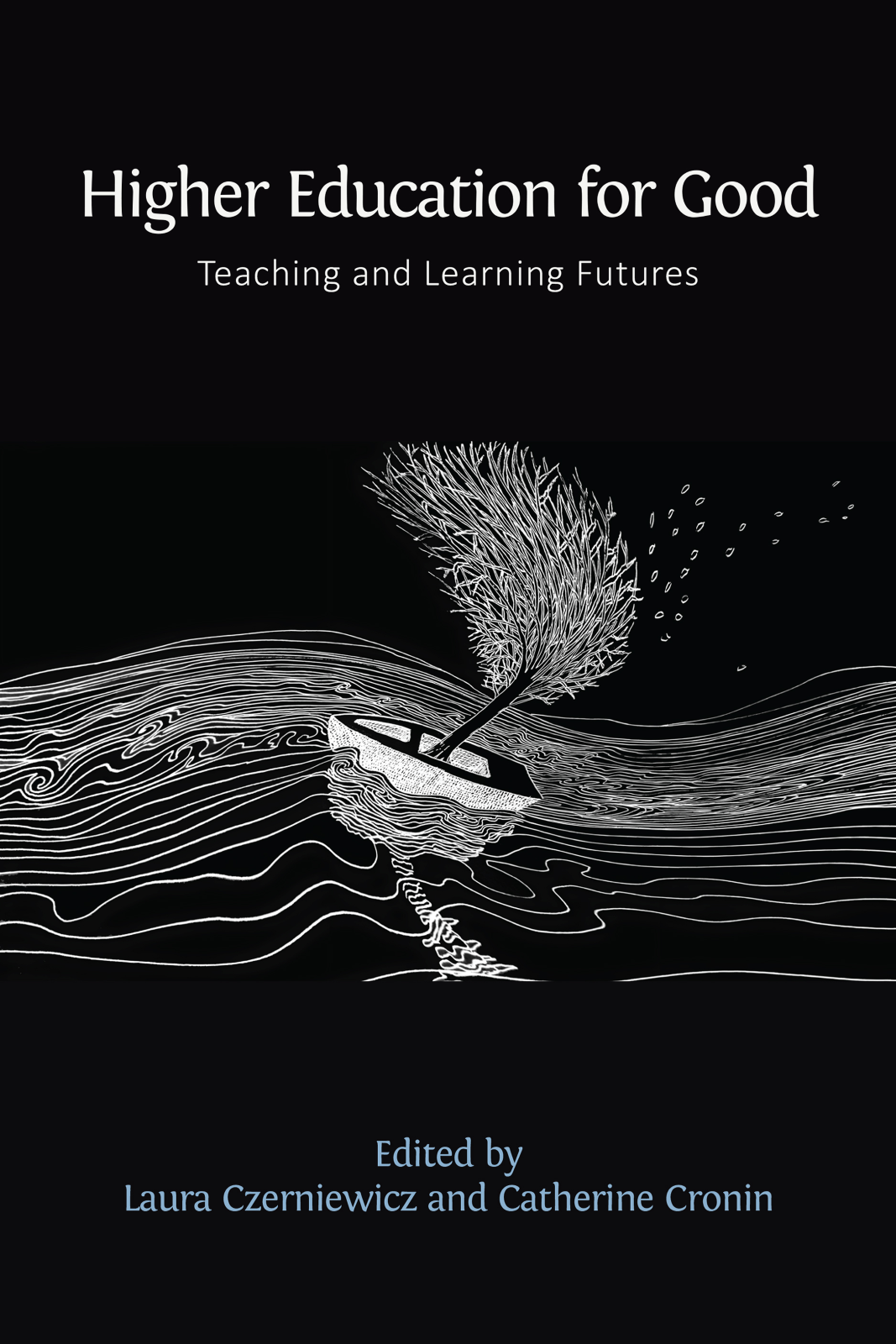
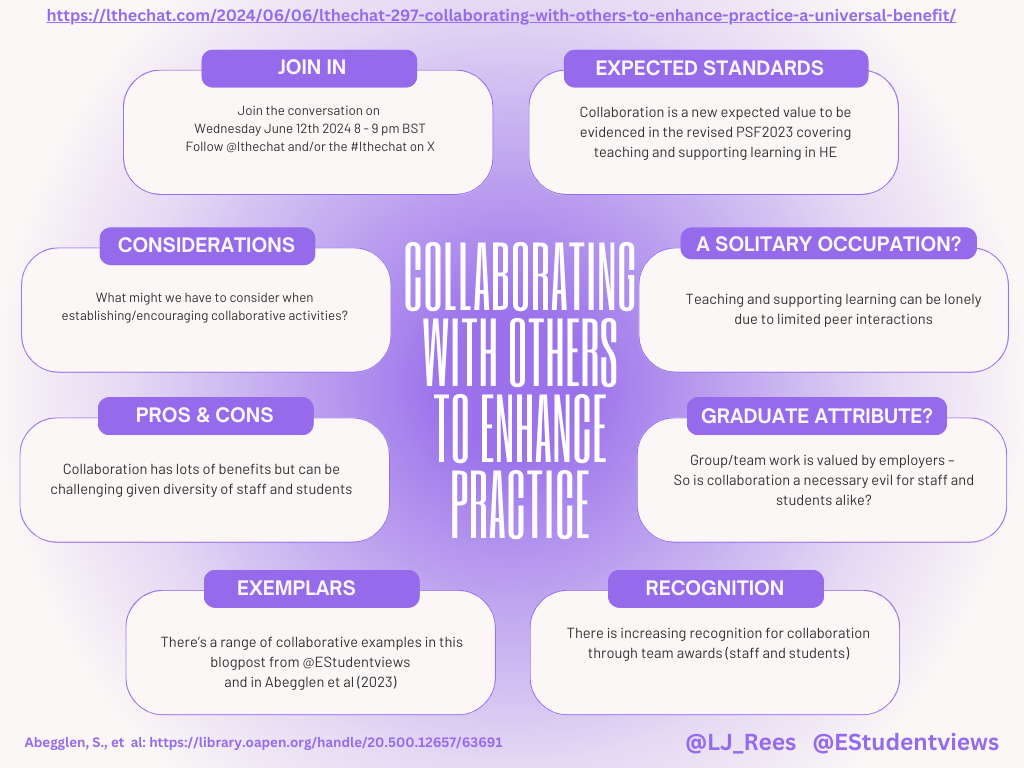













 #LTHEchat