
This #LTHEChat took place on Bluesky on Wednesday 28th May 2025 at 2000 BST
Led by Paul Driver, Director of Simulation-Based Learning in the Faculty of Health, Medicine and Social Care at Anglia Ruskin University, Cambridge. @pauldriver.bsky.social
Introduction
We (learning designers, educators, librarians, learners…) are often required to navigate the space between pedagogy and innovation—balancing tried-and-tested methods with emerging technologies and pedagogic approaches. Among these innovations, immersive learning has emerged as a powerful paradigm, transforming how learners engage with content, each other, and the world beyond the classroom.
What Is Immersion?
At its core, immersion refers to the psychological sensation of “being there”—the feeling of stepping into a new reality that envelops the senses and demands attention. Whether achieved through high-end virtual reality, mixed-reality immersive rooms, narrative simulations, or well-crafted game-based learning environments, immersion aims to create a state where learners feel physically and cognitively involved in the experience.
The Immersive Room Best Practice Guide (shared below) captures this well through the lens of simulation-based learning (S-BL), noting the constructivist framing of learners as “not mere spectators but active participants,” engaged in environments that are spatial, tangible, social, and embodied. Immersion isn’t just a technical effect—it’s a cognitive and emotional state that can be purposefully leveraged to promote learning and engagement.
Immersive Rooms: A Physical Space for Embodied Learning
Immersive rooms (sometimes referred to as VR Caves), offer one of the most accessible forms of high-impact immersive learning in higher education today. These spaces are designed to blend digital projection, 3D modelling, interactivity (with peers, interfaces and physical objects) to simulate real-world environments. Crucially, they support constructivist learning: students actively manipulate scenarios, collaborate with peers, and reflect on experiences to build knowledge.
The Best Practice Guide emphasises that such simulations must be grounded in clear educational objectives—whether developing affective skills, procedural knowledge, or competencies required by professional bodies. Interactivity, multimodality, and narrative all play essential roles in driving learner engagement.
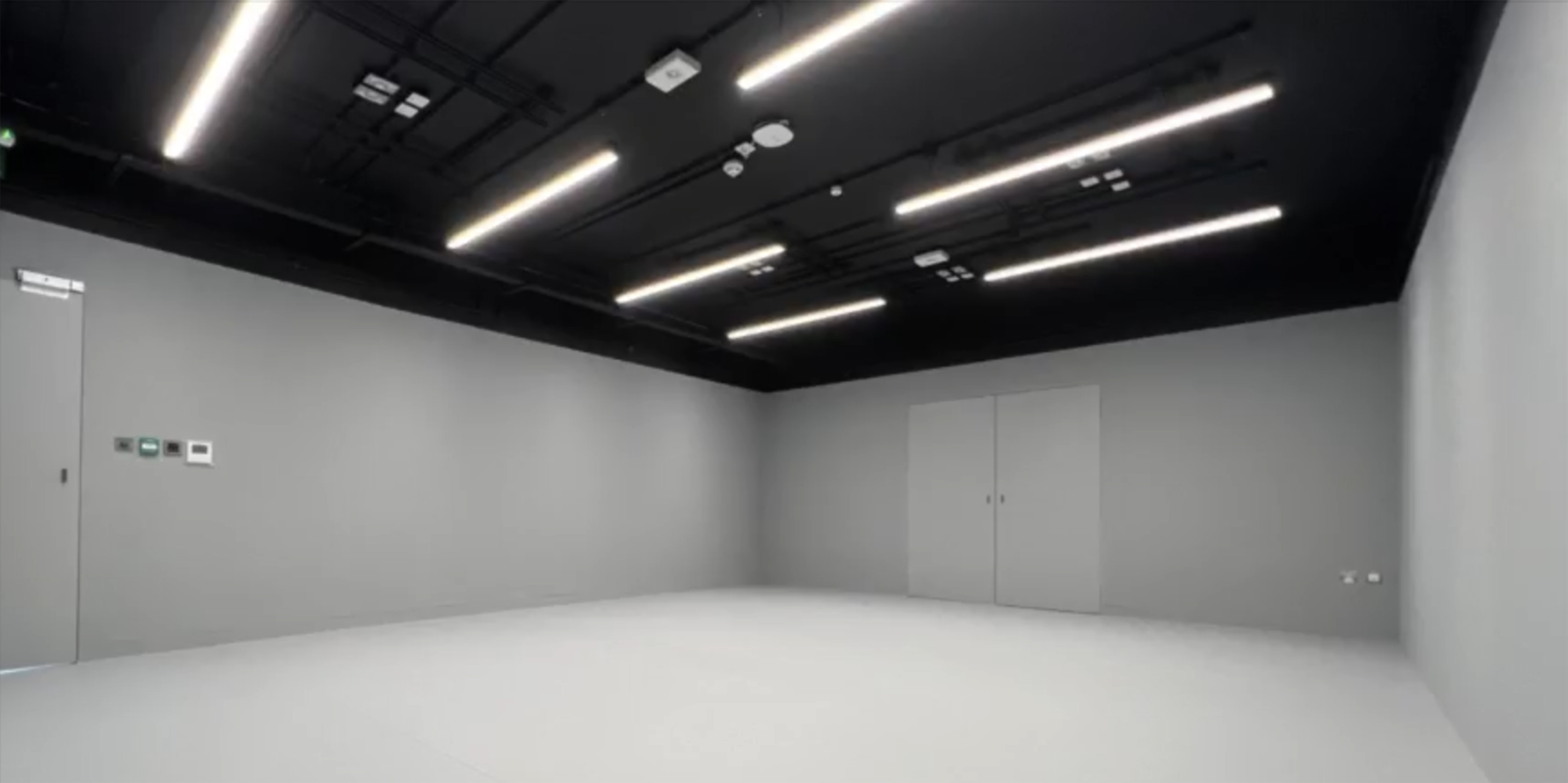
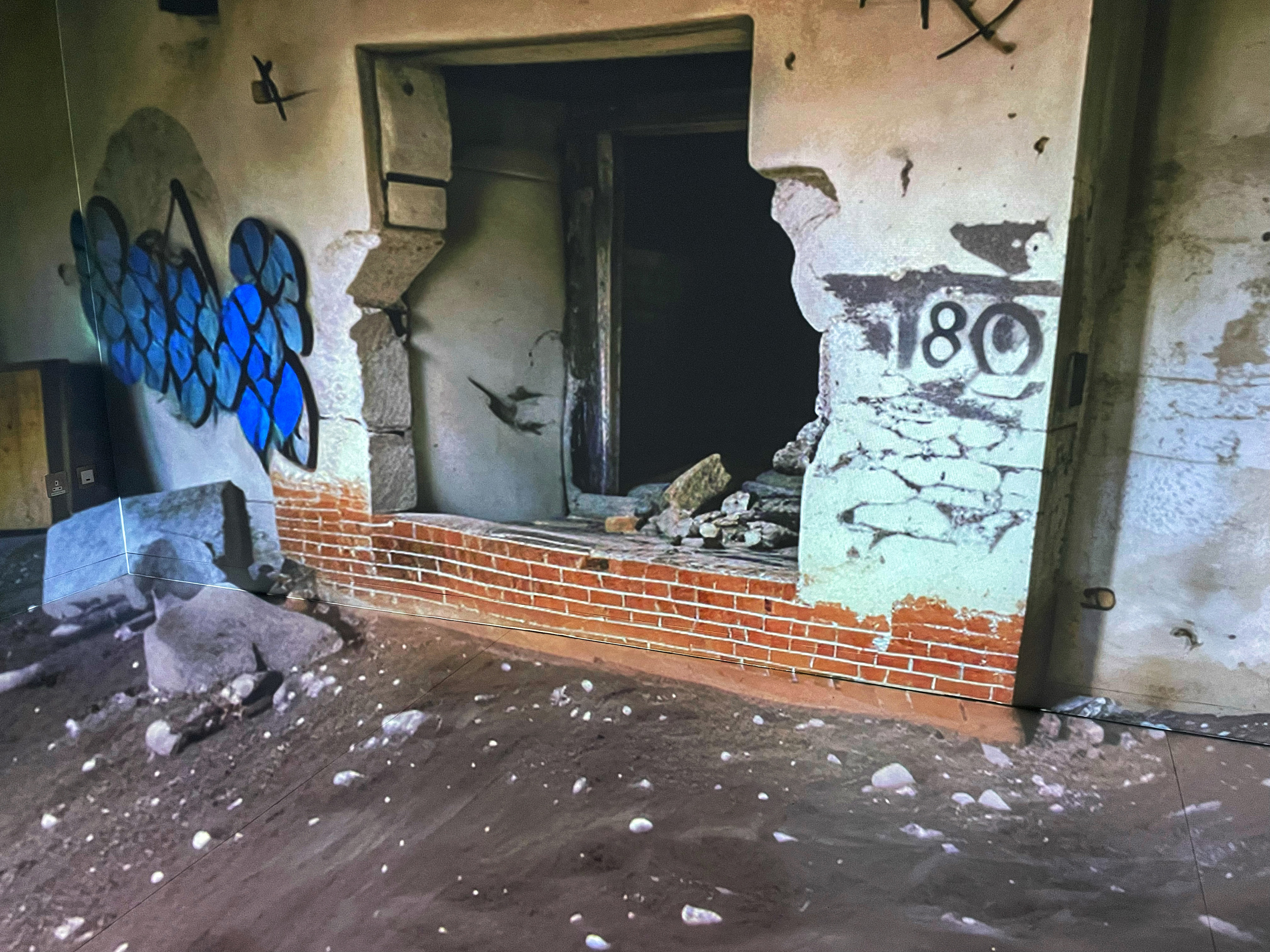
The images below show an example empty immersive room and inside one with the projections active (derelict building):
Narratives as Anchors for Immersion
One of the most effective, and often underestimated, tools for immersive learning is narrative. Jesse Schell, in The Art of Game Design, argues that story is a “lens” through which we understand our experiences. A compelling narrative structure can serve as both motivation and guide, helping learners make sense of complex or abstract content.
Narratives create emotional hooks, define goals, introduce context and provide a reason to psychologically invest—all of which enhance immersion. James Paul Gee suggests that well-designed video games teach not through didactic instruction but through situated learning, where players learn by doing within meaningful contexts. This insight is directly applicable to immersive learning environments, where storytelling can frame challenges and anchor new knowledge.
Beyond the Room: Other Modalities of Immersive Learning
While immersive rooms are exciting and fertile ground for both practical and theoretical experimentation, they are part of a broader ecosystem of immersive approaches:
- Virtual Reality (VR): Fully digital environments accessed via headsets, offering high sensory immersion. VR is particularly effective for simulating high-risk scenarios (e.g., medical procedures or hazardous environments).
- Augmented Reality (AR): Layers digital information over the real world. AR is powerful for contextual learning—enhancing fieldwork, museum visits, or architectural studies.
- Mixed Reality (MR): Blends digital and physical environments in real time. MR is still evolving but holds great promise for embodied, location-based interactive and collaborative learning projects.
- Game-Based Learning: Interactive, rule-based “ludic” environments that provide feedback and encourage problem-solving. Ian Bogost emphasises how procedural rhetoric—the practice of using the rules and mechanics of a system, particularly in games, can be used to persuade, express ideas, or make arguments about how things work in the world. This emergent rhetoric can be designed to promote reflection and critical thinking about real systems and specific themes (e.g. mental health, capitalism, sustainability). Mary Flanagan, in her work on critical play, also highlights how games can challenge assumptions, promote empathy, and open space for reflection—all vital aspects of deep learning.
- Alternate Reality Games (ARGs): These combine physical and digital media to create narratives that unfold over time, often involving collaboration and investigation. In another life (and a couple of careers ago) I used to design this type of game as a strategy for teaching English as foreign language (EFL), e.g., https://digitaldebris.info/spywalk-porto.
Designing for Immersion: Considerations and Challenges
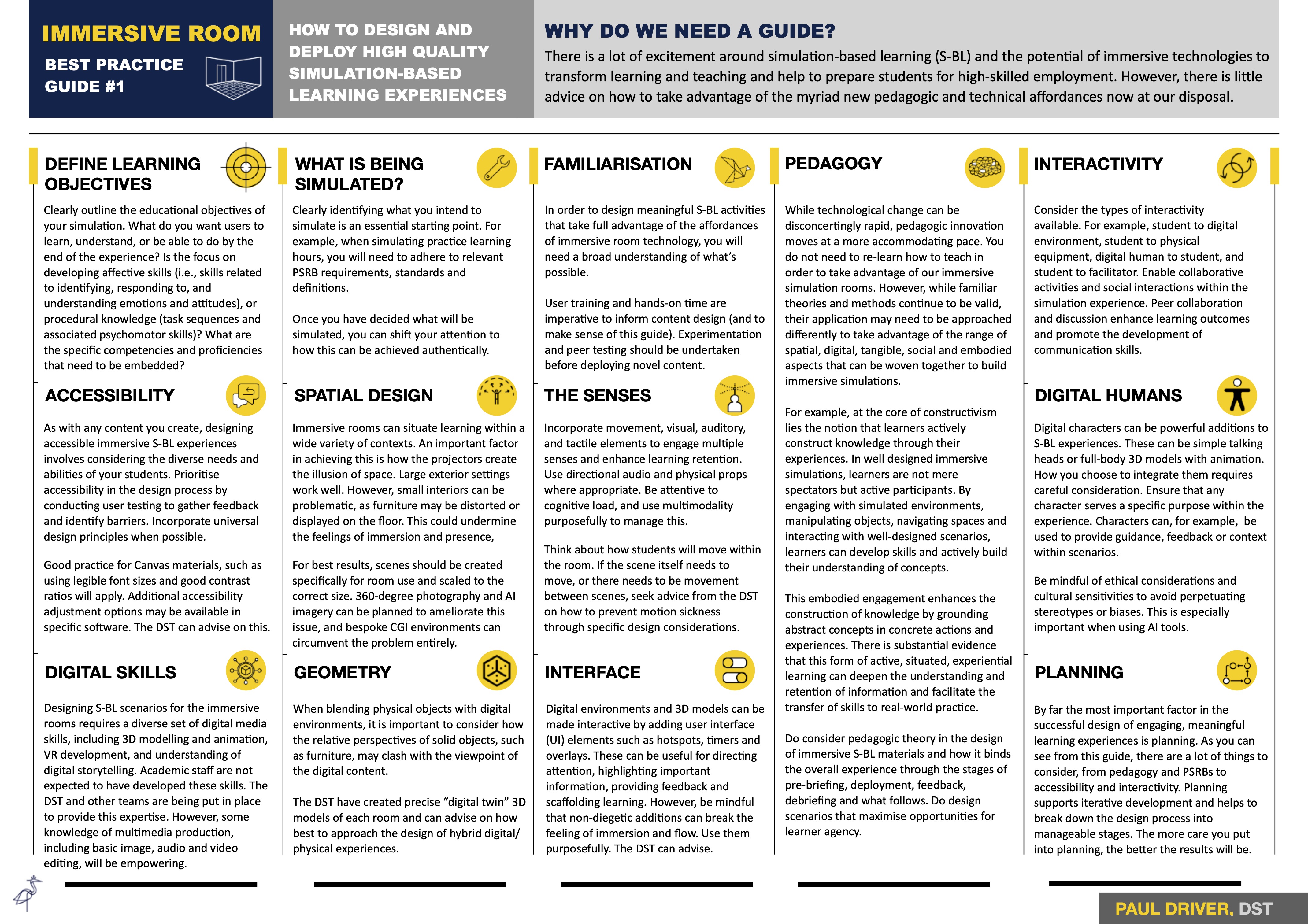
Immersion doesn’t happen by accident. It requires intentional design, interdisciplinary collaboration, and a grounding in pedagogic theory. As an illustration, in my Immersive Room Best Practice Guide (see image below) I outline 13 areas educators must consider, including cognitive load, multimodality, Interface design, accessibility and, of course, pedagogy. I created this as a quick-starter guide-on-a-page, so it is far from comprehensive.
The Future of Immersive Learning
We are at a turning point. The technology is increasingly accessible, the pedagogic rationale is strong, and the student appetite for experiential, relevant learning is growing. But to move from novelty to impact, we must focus on design, evaluation, and integration. Immersive learning isn’t about replacing existing methods—it’s about enhancing and extending them.
Flanagan’s and Bogost’s framing of play as a non-neutral activity (especially collaborative, locative play) align well with immersive learning, where scenarios can simulate not only environments but ethical dilemmas, power structures, and social dynamics. Immersive learning can offer this bounded rehearsal in powerful new ways. By embedding learners in well-designed stories, environments, and systems, we equip them not just with knowledge, but with the insight and agency to apply it, and apply it in a low-stakes, scaffolded and repeatable way.
Final Thoughts
Immersive learning is more than just a buzzword—it’s a reimagining of how we teach and how students learn. Whether through VR, narrative simulations, or the carefully designed spaces of an immersive room, the goal remains the same: to foster active, situated, and meaningful learning experiences.
As education professionals, we’re in a unique position to lead this transformation—bringing together pedagogy, technology, and creativity to craft experiences that truly engage and inspire.
References
Bogost, I. (2007) Persuasive games: the expressive power of videogames. Cambridge, MA: MIT Press.
Driver, P. (2024) Immersive Room Best Practice Guide. ARU Digital Simulation Team.
Flanagan, M. (2009) Critical play: radical game design. Cambridge, MA: MIT Press.
Gee, J.P. (2003) What video games have to teach us about learning and literacy. New York: Palgrave Macmillan.
Schell, J. (2008) The art of game design: a book of lenses. Burlington, MA: Morgan Kaufmann.
Author Biography

Paul is Director of Simulation-Based Learning in the Faculty of Health, Medicine and Social Care at Anglia Ruskin University, Cambridge. His current research spans immersive technology, applied game design, generative AI, embodied cognition, and pedagogical theory, with a focus on how these intersect to shape innovative teaching and learning practices. He can be reached on Bluesky @pauldriver.bsky.social.
Questions and chat
- Q1 How can immersive learning be meaningfully scaled, or is it inherently suited to small-group contexts?
- Q2 What kinds of assessment strategies align best with immersive or simulation-based learning experiences?
- Q3 How do we avoid ‘tech-first’ thinking and ensure pedagogy drives the design of immersive learning?
- Q4 What role should Learning Designers and Learning Technologists play in co-creating or curating immersive learning content and how can learners be involved as co-designers?
- Q5 How do we ensure accessibility and inclusivity in immersive learning environments, both digital and physical?
- Q6 What types of support or training would academic staff need to confidently adopt immersive approaches?


 #LTHEchat