Happy new (academic) year! Something old and something new.

An image of a person stood off to the side of a path looking out over a lake and hills in the distance
Photo by Maxio Aeson on Pexels.com

We hope you have had a restful summer and are raring and ready to go for the academic year ahead. We have a really exciting programme coming up this term and are looking forward to connecting with old friends and hopefully meeting new friends as the term progresses! One of the best things about this wonderful LTHEchat community is the way in which it grows and evolves.

As well as preparing an exciting programme for you this term, we’ve decided to be creative and explore some new options for hosting our chats, you will see these pop up as the weeks progress, of course we’ll always seek your feedback on this to see how you find the experience. We’re excited to see how things evolve over time and with old technologies making way for new technologies and new ways of working, we think it’s important to explore and experiment to find a good fit, and hopefully give people different ways of engaging!

For example, the first chat this year, we are collaborating with the wonderful Edge Hill LTD team to move away from Twitter and host their chat on Padlet. We have pre-prepared the Padlet board as you’ll see, we are just putting some finishing touches to usage instructions for those of you who are new to the tool and these will be populated over the coming days.

Rather than the chat taking place on Twitter, we will share the link to the Padlet board and the questions will be released on Wednesday 13th September from 8pm on Padlet itself, we will be giving plenty of directions and instructions as this happens, don’t worry. We’re really excited for this creative experiment and trying something new and we hope that you will join us to try it out!

I (Rachelle) am back to mentor the team this term, and just in case we haven’t met before I thought I’d introduce myself!

I’m Rachelle O’Brien, I work at Durham University as a Senior Learning Designer. I’m a remote worker and actually live on the opposite side of the country right on the coast not far from Liverpool. I’m really passionate about digital education, playfulness and inclusivity and have recently been awarded an NTF for my work in this area. I’m a PhD student transitioning at the minute to Northumbria University in Newcastle where I’m researching Escape Rooms. On social networks you’ll likely find lots of pictures of my dogs Luna and Stella and me sharing my love of gardening.

An image of two dogs a labrador (Luna) and golden retriever (Stella) sitting on a black deck. The image looks out over a garden but the dogs are looking to the same side showing their side profiles.

More information will be shared about the organising team as the term progresses, I’m excited to be able to introduce them to you.

We can’t wait to see you on Wednesday and get stuck into a new term.

Posted in announcement | Tagged , , , , | Leave a comment

ALT 30th Anniversary LTHEChat – Remembering 30 years of educational / learning technology #altc23 ALT @ 30 #LTHEchat

On Wednesday 30th August at 8pm LTHEchat will host a summer special chat led by #altc23 Conference Chairs Santanu Vasant and Lawrie Phipps. Dual hashtags will be used #altc23 and #LTHEchat.

This special summer special takes a look back at 30 years of educational technology as the Association for Learning Technology (ALT) celebrates 30 years, as do Jisc, and the Staff and Educational Developers Association (SEDA). 

Educational or Learning Technologies have shaped higher education, especially in recent years during the pandemic, but the history of educational technology goes way back. 

In this LTHEchat, we ask you to remember your first experiences of learning technology in a work setting, what learning technology might be, if we had unlimited financial resources, what new ‘next big things’ didn’t take off and what do you remember from previous ALT Conferences?

If this is making you nostalgic, then don’t forget to register for the 30th Anniversary ALT Conference – 5 – 7 September at the University of Warwick. We have a great programme including 2 great keynotes for anyone interested in educational / learning technology! 

Register Today


Santanu Vasant is the Head of Educational Development and Digital Education at London Metropolitan University with over 16 years of experience in higher education including 4 years in senior management roles. He is a Principal Fellow of the Higher Education Academy and a trained Agile Project Management Practitioner. Santanu is also the driving force behind the “Talking HE podcast” providing insights from a range of roles across the higher education sector. @santanuvasant

Lawrie Phipps is the Senior Research Lead at Jisc and a Professor of Digital Education and Leadership at Keele university. His portfolio includes research into institutional digital practices, digital leadership, and issues impacting digital experiences in education and digital transformation. Lawrie is a qualified executive coach who has worked with various individuals and teams to support change initiatives in universities for over 25 years. @lawrie

About the conference

The ALT Annual Conference is back and it’s bigger and better than ever! Join us and over 500 learning technologists for our first fully-fledged Annual Conference since 2019. This year, our Annual Conference will be held from 5-7 September 2023 at the University of Warwick.

The ALT Annual Conference is the UK’s foremost conference for Learning Technologists and one of the largest conferences of its kind, attracting around 500 participants each year. This year, we are celebrating three decades since ALT was established in 1993 with our 30th annual conference.

This year’s conference theme, “Looking through the digital lens: 30 years of Leading People, Digital and Culture”, will celebrate our 30th anniversary and the phenomenal changes in the sector over this time.

The conference will critically examine the organisations and practices we work in through a digital lens, fostering a community of future leaders and innovators in the digital space, who come together to exchange ideas, collaborate, and drive change.

Community in this context also means thinking about what expertise is needed – well beyond the educational technology and technical expertise: organisational change leadership and management, business analysis, and the student voice.

This year’s conference themes:

  • Leading People in a time of complexity: How have individuals and teams driven change to solve complex and difficult problems?  How have individuals and teams been rewarded and recognised in their institutions for being experts and leaders in digital learning?
  • Diversity and Inclusion: How are the most precarious and disadvantaged people being supported and empowered through technology? What future exclusions must we fight? 
  • Sustainability and Social Justice: How green is your educational technology? How will we model green and sustainable practices in the field of educational technology and what does it mean for institutions? How do you make decisions about tech that proactively care for the most vulnerable people among us?  How should we model practices that account more for the health and well-being of people than that of businesses trying to sell technology to the education sector?  
  • Emerging technologies and behaviours: How are emerging technologies, or new uses for existing technologies changing behaviours and practices? What do emerging technologies mean for learning, teaching and assessment? How do we prepare students and staff to critically face the hype cycles around tools such as Machine Learning, and teach them to sift through what companies are claiming, to find the truth?

You can meet the full 2023 Conference Committee here

Posted in announcement | Leave a comment

#LTHEChat 268: Getting the recognition you deserve with Debbie Baff @Debbaff and Teresa MacKinnon @WarwickLanguage

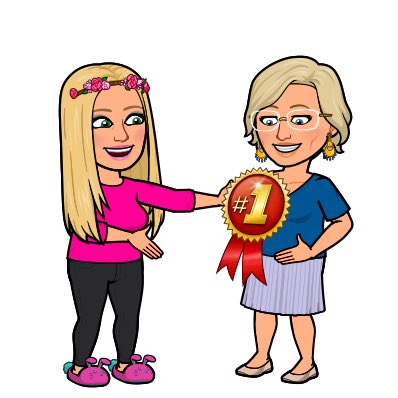
A bitmoji (cartoon avatars) of Debbie pinning a rosette that reads "#1" to Teresa's chest.

“How we feel when we experience any activity is widely accepted to have a bearing on our learning experience” (Hauck and MacKinnon, 2016). In the days of computer-mediated learning, hugely expanded since the covid pandemic, keeping a track of what you have learned and how that learning has impacted upon our professional skills can pose a serious challenge. Where were you in cyberspace when you had that last lightbulb moment, acquired a new skill or found a helpful network?

In our #LTHEchat this evening we would like to discuss how webinar attendance, open sharing and contribution to informal learning such as this chat can be recognised using open badges and how such badge use could facilitate the task of evidencing learning. According to Halavais (2012) the implementation of digital badges can be “a clear way of expressing what is valued by a community” 

Open badge use has become more widespread of late, especially in the area of professional development in education. If this is not an area that is familiar to you check out the Badge Wiki. Creating and issuing an open badge from one of the many platforms that exist offers the chance for the awardee to take ownership of their evidence, curating their collection and annotating to make explicit the value of the learning experiences they have engaged in. The badges carry data about how, where and when the activity happened and can easily be shared online, though social media and reflected upon using an e-portfolio or personal website/blog. Further evidence or reflection can easily be added to contextualise that experience. 

This session’s leaders Debbie Baff @debbaff and Teresa MacKinnon @warwicklanguage have long advocated for greater awareness of the potential of open badges and strongly support a call for open recognition which can build our learning networks and empower us to reflect upon our experiences. Recognition which reflects both formal and informal learning. Check out their video “There’s a badge for that” and their Open Badge profiles in their bios!

Teresa maintains that open badges are more than just an opportunity for collection, to realise their potential for your professional development you have to get active. At the heart of badge earning is the agency of the badge owner, the more one actively curates and intentionally makes use of one’s badges the more one takes control of one’s digital presence and learning. Activity is a vital part of the process. As Nardi put it (1996): “you are what you do.” Seen through the lens of Activity Theory as Vygotsky interpreted it, the use and construction of artefacts are part of human development: the mind is developed through activity (Vygotsky, 1978). Intentionally collecting, curating and contextualising one’s badges online supports double-loop learning and is particularly suited to online and distance education as explained by Blaschke (2012) 

Join us to share your experiences and help shape the future of #LTHEchat.

References

Blaschke, L. M. (2012). Heutagogy and lifelong learning: A review of heutagogical practice and self-determined learning. The International Review of Research in Open and Distributed Learning, 13(1), 56-71. Available 

https://www.irrodl.org/index.php/irrodl/article/view/1076/2113

Hauck, M., & MacKinnon, T. (2016). A new approach to assessing online intercultural exchange: soft certification of participant engagement. In Online Intercultural Exchange (pp. 209-232). Routledge.

Halavais, A. M. (2012). A genealogy of badges: Inherited meaning and monstrous moral hybrids. Information, Communication & Society, 15(3), 354-373. 

Nardi, B. A. (Ed.). (1996). Context and consciousness: Activity theory and human-computer interaction. MIT Press. Vygotsky, L. S., & Cole, M. (1978). Mind in society: Development of higher psychological processes. Harvard university press.

Bios

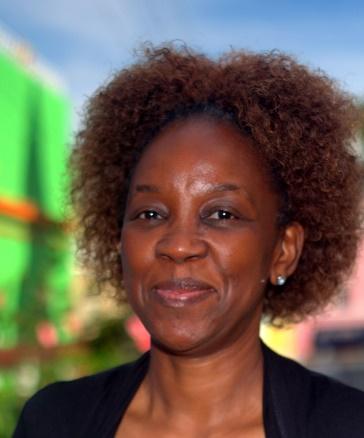
Profile photo of Teresa McKinnon.

Teresa MacKinnon @WarwickLanguage

Teresa is an open educator, an award-winning language teacher with a wealth of expertise in online delivery. Experienced in education management and course design in secondary and higher education, Senior Fellow of the Higher Education Academy and Certified Member of the Association for Learning Technology (ALT).

Teresa has extensive experience of the integration of computer-mediated communication in learning design. She retired in January 2021 from her post as Associate Professor at the University of Warwick but remains active online as @WarwickLanguage where she enjoys connecting educators internationally across sectors. She advocates open educational practice, and is active in the areas of virtual exchange, professional development and open badges. You can see a collection of her open badges here.

A profile photo of Deb Baff.

Deb Baff @Debbaff

Debbie Baff is a Subject Specialist (Leadership and Culture) at Jisc focusing on the Digital Leaders Programme and has over 25 years experience of working in Higher Education & the voluntary sector. An Open Educational Practitioner and PhD Student in E Research and TEL. Her research interests are in online social support and the impact on wellbeing for educators. She is co-chair of the Open Education Special Interest Group and contributes to several committees and groups at the Association for Learning Technology. Debbie is a Fellow of Advance HE (FHEA), a Certified Online Learning Facilitator (COLF) and a Certified Member of the Association for Learning Technology (CMALT). She is also on the editorial board for the Research in Learning Technology Journal and the Journal of Social Media for Learning.

An open digital badge enthusiast and keen sketchnoter, Debbie has a creative approach to learning, teaching and building communities both online and in person. She has been involved with open digital badges since 2014 and was a member of the planning committee for the first Open Badges in Higher Education conference held at the University of Southampton in 2016. She has implemented open badge initiatives at the University of South Wales, Swansea University and the Association for Learning Technology. She is now working on a project at Jisc to review the use of badges across the organisation. A badge earner herself, Debbie’s badges are available on her Open Badge Passport. She blogs at debbaff.com.

Here is the Wakelet where you can revisit the tweets from this chat. Enjoy!

Posted in announcement | Tagged | Leave a comment

#LTHEChat 267: Making Assessment Briefs More Inclusive: Enhancing Tasks, Design, and Delivery with Virna Rossi @VirnaRossi, Alice S. N. Kim @AliceSNKim, Nokuthula Vilakati @NokuthulaVila16, Charles Wachira @charlestwachira, Rebecca C Thomas @rcthomasUEA

Wooden alphabet tiles spelling 'Assess'

Inclusive learning design to meet the diverse needs of all learners concerns all aspects of learning, from the set-up of the physical and digital space(s) to the module/course ‘content’, ‘delivery’, feedback and assessment. 

When it comes to assessments, creating inclusive assessment briefs (the documents used to share the assignment instructions, success criteria and other relevant information) is crucial for ensuring equal opportunities and promoting student success. Rather than the often dry and factual documents used as assessment briefs, by focusing on three key areas— (1) assessment tasks, (2) assessment brief design, and (3) assessment brief delivery—we can enhance assessment briefs, making them more accessible, culturally relevant, engaging, and meaningful for all students (Gilbert and Maguire 2014).

  1. Assessment Tasks: varied, relevant outputs

To foster inclusivity, teachers/staff facilitating learning should design tasks that allow for multiple means of expression. By accommodating diverse strengths and abilities, students can demonstrate their knowledge through various mediums. Beyond written assignments, other assessment outputs are oral presentations, debates, visual projects, vlogs, podcasts, posters, practical demonstrations and more. Offering choice and flexibility promotes inclusivity by valuing diverse forms of expression which can also prove to be culturally responsive. 

In Section 4 of her book Inclusive Learning Design, Rossi (2023) highlights three interrelated approaches to create more inclusive assessment

  • ‘Choice, voice and authentic’ – which highlights the way we promote students’ agency through the design of varied outputs, useful beyond the course
  • ‘Reflective and formative’ – about developing the key capabilities of self-reflection and self-regulation through formative tasks for students to gauge the quality of their own progress)
  • ‘Self-and peer assessment and feedback’ – about developing students’ metacognition, inner feedback voice and peer learning throughout the course, not simply at the end of it.

Try this: rather than presenting the assessment assignment(s) to the students by means of a ‘polished’ assessment brief, co-design or re-design the assessment task(s) with students, especially alumni, to ensure their ‘voice’ feeds into each iteration of the module or course.

2. Assessment Brief Design: accessible and engaging briefs

The design of assessment briefs (the layout and presentation of the actual document shared with students) is paramount to their inclusivity, accessibility and effectiveness. Clear headings, bullet points, and relevant images can aid comprehension for students with different learning needs. Culturally respectful visual elements and multimedia components, such as videos or audio recordings, can foster a sense of belonging as well as engage students with diverse abilities.

Try this: turn the assessment brief content into an infoposter visual ‘re-presentation’ with a time-line (which can be digital and interactive), expected progression and key learning points to support student’s time-management and self-efficacy.

3. ‘Delivery’: briefing the students effectively

The way assessment briefs are introduced and used with students also contributes to their inclusivity. Teachers/staff facilitating learning should strive for clarity and transparency when presenting briefs. Oral explanations, visual aids, and concrete examples help students comprehend expectations and requirements. Once the assessment brief is introduced and discussed, it needs regular revisiting. Ongoing support is crucial to ensure inclusivity and accessibility throughout the learning process. Regular check-ins, clarification sessions, and additional resources can help students overcome any obstacles they may encounter on their learning journey. 

Try this: print a few copies of the assessment brief on A3 sheets, hang them around the classroom and ask students in small groups to discuss their understanding of various aspects of the brief, writing questions on post-its which you can then gather and discuss in a plenary. This can also be done in live online lessons using breakout rooms.

Conclusion:

Making assessment briefs more inclusive is essential to enhance students’ self-efficacy and success. By focusing on the assessment brief (1) tasks, (2) design, and (3) delivery, educators can create a learning environment that caters to diverse student needs and fosters inclusivity. 
In our live #LTHEchat on Wed 14th June, we are looking forward to participants’ ideas about the three aspects of assessment briefs discussed above.

References:

Gilbert, F. and Maguire, G. (2014). Developing academic communication in assignment briefs to enhance the student experience in assessment: https://assignmentbriefdesign.weebly.com/ 

Rossi, V. (2023) Inclusive Learning Design in Higher Education – A Practical Guide to Creating Equitable Learning Experiences. London: Routledge 

Authors

By Virna Rossi 

Virna, a white woman with shoulder length brown hair, glasses and a magenta cardigan smiles at the camera.

@VirnaRossi

Virna is Associate Professor at Ravensbourne University London where she leads the PGCert.

A passionate teacher since 1999, she has worked in all educational sectors and has been a teacher educator since 2009. Her research focuses around the challenges of implementing more inclusive learning design and the use of threshold concepts in learning design. She is the author of an innovative book: Rossi, V. (2023) Inclusive Learning Design in Higher Education. London: Routledge. and its companion website: https://inclusivelearningdesign.com/ 

The live #LTHEchat is in collaboration with:

Alice S. N. Kim (Canada) 

@AliceSNKim 

Alice, with shoulder length hair looking at camera

Alice is the Managing Director of Teaching and Learning Research In Action, a not-for-profit research organization focused on conducting and publicly disseminating research on teaching and learning. Her research is focused on factors that impact students’ learning trajectories, including application of cognitive learning principles in course design. Her research is focused on factors that impact students’ learning trajectories, including student engagement, and application of cognitive learning principles in course design. 

Nokuthula Vilakati (Eswatini)

Nokuthula facing the camera and smiling

@NokuthulaVila16

Nokuthula Vilakati is currently undertaking PhD in Education research with the Centre for Innovation in Learning and Teaching, University of Cape Town. Her research focus is on academic staff development in curriculum design for distance and blended learning environments. She works for the University of Eswatini, where she has been part of a team undertaking a cross-national research project on rural student transition into higher education. 

Charles Wachira (USA)

Charles looking at the camera

@charlestwachira

Charles is the Director of Teaching & Learning at the Johns Hopkins Carey Business School. He focuses on online learning, including course development, program production, and project management. His interests include exploring how education drives technology innovations and the impact that emerging technologies have on teaching, learning, and research.

Rebecca C. Thomas

Rebecca, facing the camera

@rcthomasUEA 

Lecturer Academic Practice University East Anglia

Missed the chat?

No problem, here’s a curated collection of the tweets so you can review and participate at a time that suits you.

Posted in announcement | Tagged , , , | Leave a comment

LTHEchat 266: Sketchnoting in education with Suzanne Faulkner @SFaulknerPandO

Sketchnoting – Ideas, not art!

In this upcoming #LTHEchat, we will explore sketchnoting. This may also be referred to as visual note taking or graphic recording. Whatever term you chose to use, it is frequently described as a non-linear visual representation of ideas and concepts using a mixture of text, visuals, shapes, and arrows (Rohde, 2013). Mike Rohde coined the term sketchnoting around 2007 after becoming frustrated by the arduous task of note taking.

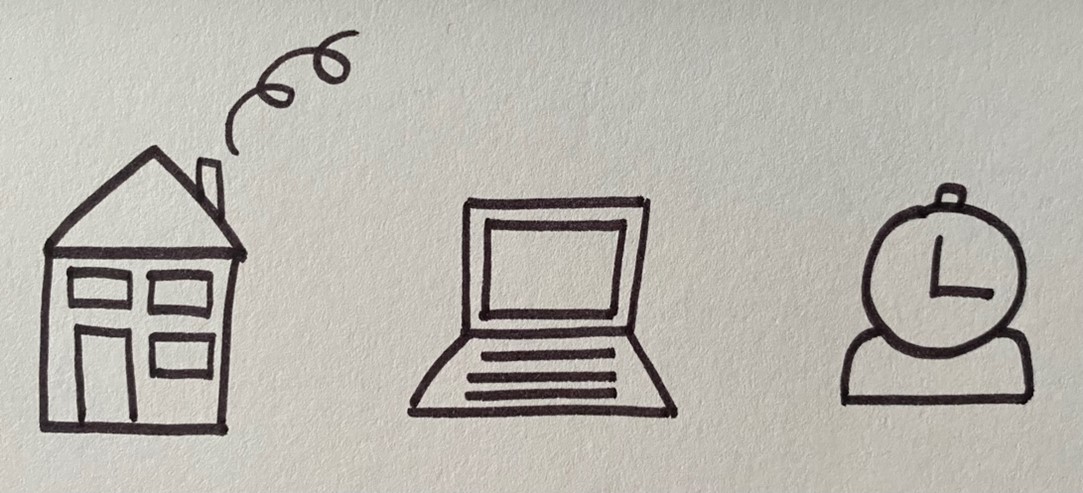
Contrary to many people’s beliefs, you do not have to be ‘good’ at drawing to produce a sketchnote. When you stop to consider that the aim of sketchnoting is to convey ‘ideas, not art’ (Rohde, 2013) this can help to relieve some of the pressure you may feel committing pen to paper! If you can draw lines, arrows, squares, triangles and circles you have the basic skill set required for sketchnoting. This point is nicely illustrated in figure 1 below where the images of the house, laptop and alarm clock have all been constructed using simple shapes.

Figure 1 Sketches of a house, laptop and alarm clock using a combination of simple shapes.

Why sketchnote?

Sketchnoting is reported to improve recall and promotes active learning through a process of dual coding, as outlined by Paivio (1986). Dual coding is when words and images are combined effectively to facilitate learning, with an additive effect. That is, when information is conveyed verbally and visually students are more likely to be able to retain and recall that information more effectively. Using both modes, verbal and visual, helps to create a visual map in your mind. To enable this, visual images should be simple and clear with little background information.

The six benefits of dual coding to students’ learning, outlined by Clark and Lyons (2004) are:

  1. Direct attention.
  2. Trigger prior knowledge.
  3. Manage cognitive load.
  4. Build schema.
  5. Transfer to working memory.
  6. Motivate.

Sketchnotes can be created in real-time, during lectures (to produce more useful, interesting notes), in a conference setting, or to capture important points in meetings. Tidy et al (2022) explored the use of sketchnoting as a revision aid in higher education and reported a marked increase in the lower grade boundaries of those students who participated in the sketchnote exercise.

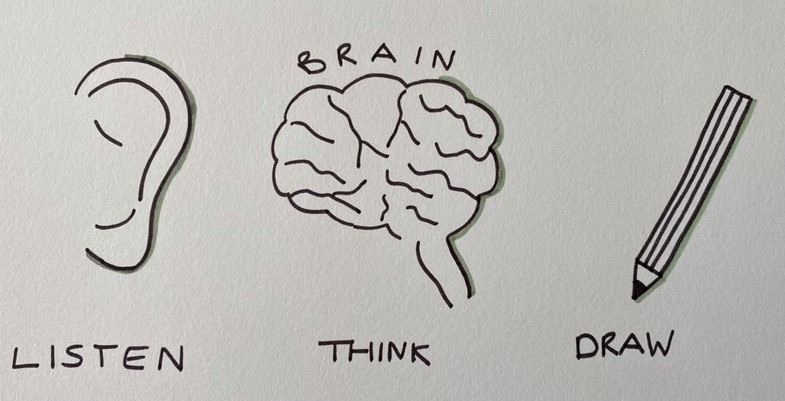
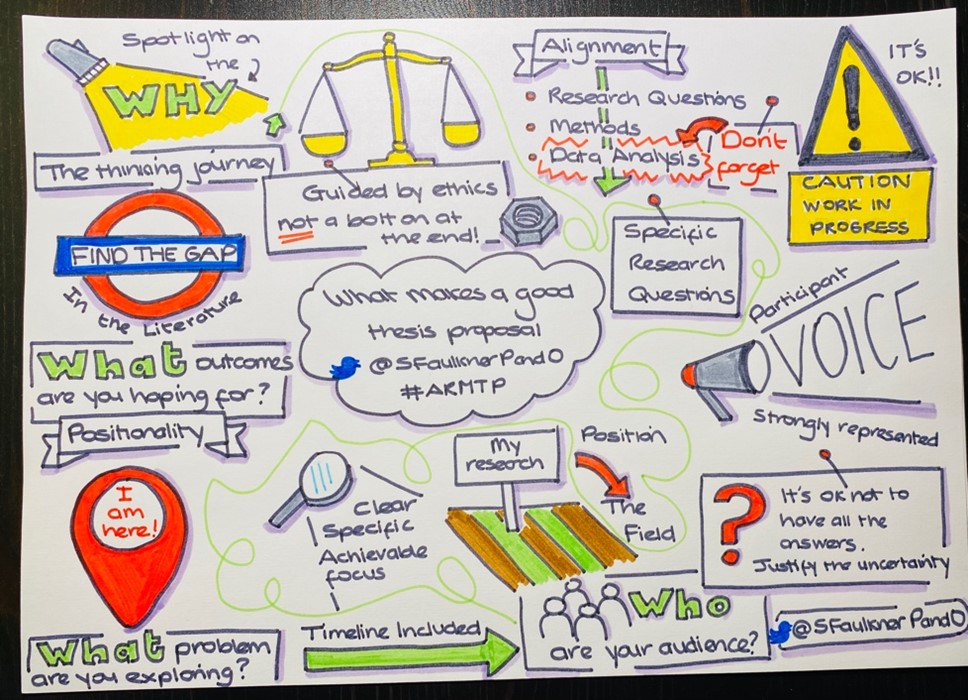
The sketchnote illustrated in figure 2 below was created in real time capturing information in relation to the elements identified as those that make a good thesis research proposal. Sketchnotes created in real time requires the person sketching to actively listen to the auditory information, to synthesise the information identifying the key points and then capture those visually, to listen, think and draw. This requires high levels of concentration as such, results in active engagement with the lecture content. Like any practical skill, this becomes easier with practice.

With experience, those who sketchnote frequently soon build up a visual library in their head of icons, shapes, images, and arrows which helps to speed up the sketchnoting process.

Sketchnotes can be undertaken digitally, using a tablet and pen, or by analogue means with pen and paper.

Figure 2 Sketchnote of a presentation in relation to ‘what makes a good thesis research proposal’.

In the upcoming #LTHEchat, the aim is to explore the use of sketchnoting in education and to provide you with the option to practice and develop some basic skills, should you want to participate.

You do not need any fancy equipment to participate. Paper, some pens and a phone to capture and share your images/sketchnotes is recommended.

References:

Clark, R. and Lyons, C. (2010) Graphics for Learning. 2nd edn. Wiley. Available at: https://www.perlego.com/book/1014609/graphics-for-learning-proven-guidelines-for-planning-designing-and-evaluating-visuals-in-training-materials-pdf (Accessed: 14 October 2022).

Paivio, A. (1986) Mental Representations: A Dual Coding Approach. New York: Oxford University Press Inc.

Rohde, M.(2013). The Sketchnote Handbook. Peachpit Press.

Tidy, H., Burnham,R., Elkington, S. (2022) Using Sketchnoting as a revision aid with forensics students. Science & Justice. 62, pp. 822-826.

BIO

Suzanne Faulkner is teaching fellow in Prosthetics and Orthotics, within the department of Biomedical Engineering at the University of Strathclyde in Glasgow, she has been nominated for several teaching excellence awards and was recently awarded SFHEA.

With 16 years teaching experience at the National Centre for Prosthetics and Orthotics, Suzanne is passionate about enhancing the student experience by focusing on improving student engagement. With an increasing international cohort of students, she has employed various techniques to enhance communication and engagement with all students. These include using Snapchat as a tutorial tool, utilising social media in learning and teaching and playful learning. Suzanne is a facilitator qualified in the Lego Serious Play (LSP) methodology; she is currently undertaking an EdD where she is exploring the use of LSP to enhance participation of students with English as a second language in group work activities. During her taught EdD elements Suzanne has been using sketchnotes to document her learning. Suzanne participates regulatory in the #LTHEchats, loves anything and everything to do with the amazing #SocMedHE community, . . . . and probably uses Bitmoji’s too much! She can be found on Twitter as @SFaulknerPandO  

Twitter: @SFaulknerPandO LinkedIn: https://www.linkedin.com/in/suzanne-faulkner-2b29aa15/

The Wakelet for this chat is available via this link: https://wakelet.com/wake/17jCLxOgni9l1KSTOpvcZ

Posted in announcement | 2 Comments

#LTHEChat 265: ‘Professionals Teaching Professionals’ with Dr Claire Stocks @DrClaireStocks Dr Peter Alston @DrPeteAlston Professor Dawne Irving-Bell @belld17

image of professionals teaching professionals

Professionals Teaching Professionals

In this #LTHEchat, we want to explore the ways in which previous (or, indeed, concurrent) professional experience impacts on learning, teaching and/or scholarship in Higher Education. Whether that experience is as a barrister, fashion designer, police officer or purveyor of antiques and curiosities(!), professionals moving into HE have a huge amount to offer to the student learning experience, academic culture and the scholarship of teaching and learning.   

Our interest is partly based on the fact that we all currently work together in an institution that is wholly focused on ‘professionals teaching professionals’. But our collective experience in public universities also tells us that the relationship between HE and the professions has become increasingly intimate as higher education institutions seek to improve employability outcomes, increase ‘educational gain’ by aligning academic qualifications with professional recognition and qualifications, deliver effective apprenticeship and/or degree programmes, and prepare professionals of the future. 

In response to aligning academic qualifications with professional recognition and preparation, many universities employ ‘dual professionals’ (also called practitioner-academics, pracademics, and a range of other terms – see “What’s in a name? The rise of the practitioner academic and time to reconsider standardised induction support” for more on this). Nevertheless, our understanding of the range of potential benefits that these professionals bring to HE, and the challenges that they face as they move into academia from other contexts remains relatively limited, despite the argument that “career academics and pracademics need to perceive each other as equals to fully benefit from their shared skills, experience and knowledge pools” (Willis 2016, cited by Dickinson et al., 2020). Much of the literature on dual professionals has tended to focus on the experience of staff within specific professional fields such as policing (Willis, 2016), nursing and healthcare (Duffy, 2013 and Boyd and Smith 2016), accountancy (Lindsay, 2020) or management (Simendinger, 2000), although more recent work also starts to explore the range of potential benefits that dual professionals think they bring to their academic roles (Dickinson, 2020).

In our #LTHEChat we aim to build on Dickinson’s work and invite participants to consider how previous professional experience can be harnessed to positively impact HE contexts. We hope that the chat will give participants an opportunity to reflect on their own journey into and through HE, and a chance to consider how experience in other professional contexts can/should impact on learning, teaching, and scholarship. 

Following the chat, if you want to connect with a network of colleagues who are interested in supporting professionals who move in to HE, join the Supporting Professionals in(to)HE Network (SPiHE) by contacting Claire on Twitter (@DrClaireStocks) or at ClaireStocks@bpp.com

References and recommended reading

Boyd, P. & C. Smith (2016) “The contemporary academic: orientation towards research work and researcher identity of higher education lecturers in the health professions”, Studies in Higher Education, 41:4, 678-695.

Dickinson, J., A. Fowler and T. Griffiths (2020) “Pracademics? Exploring transitions and professional identities in higher education” Available from Sheffield Hallam University Research Archive (SHURA) at: http://shura.shu.ac.uk/25992/ (Accessed 12th May 2022)

Duffy, R. (2013) “Nurse to educator? Academic roles and the formation of personal academic identities” Nurse Education Today, 33:6, 620-4.

Kitchener, M. (2021) “What’s in a name? The rise of the practitioner academic and time to reconsider standardised induction support” BERA Blog. https://www.bera.ac.uk/blog/whats-in-a-name-the-rise-of-the-practitioner-academic-and-time-to-reconsider-standardised-induction-support  (Accessed 12th May 2022)

Lindsay, H. (2020) “From fledgling to fledged: how accountants in academia develop their research capabilities”, Accounting Education, 29:4, 409-430.

Simendinger, E., Puia, G.M., Kraft, K. and Jasperson, M. (2000), “The career transition from practitioner to academic”, Career Development International, 5:2, 106-111.

Willis, James J. (2016) “The Romance of Police Pracademics”. Policing: A Journal of Policy and Practice 10:3, 315-321

BIO

Dr. Claire Stocks is an Associate Professor of Educational Practice at BPP University. 

Claire’s background is in English and American Literature, and she has been an academic developer since finishing her PhD in 2005. She has presented and published work on American Literature and in relation to academic development, and she has worked in a range of universities including research-intensives, teaching-focused and currently in a private provider. She is particularly interested in how to support novice academics to become successful HE professionals, and in the pedagogy of professional Higher Education. She leads BPP University’s Postgraduate Certificate in Learning and Teaching, and the Headway CPD scheme. 

Claire has been a Senior Fellow of the HEA since 2016, and has recently convened a network for colleagues who are interested in supporting professionals who move into Higher Education.

Twitter: @DrClaireStocks LinkedIn: https://uk.linkedin.com/in/claire-stocks-a5230227

Pucture of Dr Claire Stocks

Dr. Peter Alston is an Associate Professor of Educational Practice and the Interim Dean of Education Services at BPP University. 

Peter has a background in information systems and web development/programming, and a PhD in eResearch & Technology Enhanced Learning. Previously, he was Director of Learning Solutions at Laureate Online Education with responsibility for cultivating relationships with partner institutions, and providing strategic vision and oversight for the design and development of academic programs. Prior to joining Laureate, Pete was a Lecturer (Learning Technology) in the School of Life Sciences at the University of Liverpool where he worked on the development of new ways of using learning technologies, social media and other web-based technologies within education. He also held a Senior Lecturer position in the Department of Computing at Edge Hill University, contributing to the teaching and project supervision on the Web Systems Development pathway, and serving as a Senior SOLSTICE Fellow, leading the development and impact of technology enhanced learning across the University.

Twitter: @DrPeteAlston LinkedIn: https://uk.linkedin.com/in/alstonp

Picture of Dr. Peter Alston

Dawne Irving-Bell, PhD, is a Professor of Learning and Teaching at BPP University. 

Dawne established The National Teaching Repository, a platform where colleagues can share interventions that lead to real improvements in teaching and learning in a way that secures recognition for their practice, making it citable, sharable, and discoverable. 

Dawne enjoys lecturing on visual thinking and advocates for technology and design education, for which she received a National Award in recognition of her outstanding contribution to re-shaping Teacher Education. 

Dawne is a National Teaching Fellow (NTF), Principal Fellow of the Higher Education Academy (PFHEA) and proud recipient of a Collaborative Award for Teaching Excellence (CATE).

Twitter: @belld17 LinkedIn: https://www.linkedin.com/in/dawne-irving-bell/

Picture of Professor Dawne Irving-Bell

The Wakelet is available here: https://wakelet.com/wake/wgOcUn6tO8VRNXqSF_d-Z

Posted in announcement | 1 Comment

#LTHEChat 264: Confident Assessment with Rachel Forsyth @rmforsyth

A lightbulb radiating sympols of education instead of light. The variety of symbols represent different disciplines such as microscopes for biology as well as more general icons such as a graduation cap.
Image by Harush Sharma on Pixabay

Assessment of student learning is a key aspect of all forms of education that lead to a qualification or other recognition of achievement. It can be a complex and fraught topic, associated with anxiety and pressure for both teachers and students. Boud (1995) considers the ways in which assessment is used as a control mechanism in assessment; while he focuses on the control of student behaviours, it also has a powerful effect on teachers. The current marketing and assessment boycott in the UK, and universities’ responses to it, expose the challenges of managing fairness, reliability and validity and maintaining expertise and confidence in the assessment process.  

For the individual involved with assessment, confident assessment starts with understanding enough about assessment processes to know that it is impossible to be 100% sure, or confident, about any part of them. This sounds counterintuitive, but fully understanding your own limits can be strangely liberating. A confident assessor understands that there is no perfect way to assess: there should be a good way for the context at hand, which is worth finding, but there is no magic formula.  

You don’t have to be actually managing the assessment to contribute to it: successful assessment needs the contribution of many university colleagues, as well as students’ active participation. The Assessment Lifecycle (adapted from Forsyth et al, 2015) shows the different stages of an assessment, and it requires many colleagues in departments and professional services to contribute for everything to work. 

An 8 stage cycle, titled the Assessment Lifecycle.  
Stage 1: Specifying  
Stage 2: Setting  
Stage 3: Supporting  
Stage 4: Submitting  
Stage 5: Marking and production of feedback  
Stage 6 Recording grades  
Stage 7 Returning marks and feedback  
Stage 8: Reflecting
8-Stage Assessment Lifecycle (Adapted from Forsyth et al, 2015)

And yet traditionally, it is often considered as a solitary pursuit both for students and for their tutors. Students are mostly set individual assignments by which teachers judge their personal performance; talking to peers about these assignments is a sensible thing to do, in terms of personal and professional development, but there may be hint of collusion if this discussion becomes public. In some cases, there may be a competitive edge to the assessment which precludes sharing ideas with others. Or perhaps the assessment is being completed at the last minute, under pressure, and the student feels alone in this challenge.  

Once students have done their part and completed their assigned work, marking (grading) of assignments is largely done by individual tutors working alone. There are exceptions, such as when marking event-based activities such as presentations, performances, or exhibitions, but reviewing students’ work may be seen as something one locks oneself away to complete. It may also be presented by tutors as a difficult and unpleasant chore to be completed before other, more engaging, activities may ensue. This image of assessment as a practice which is carried out behind closed doors and endured by all parties is at odds with modern ideas of inclusive curriculum design, digital collaboration, transparency, authenticity, and professional practice.  

In this chat, we will try to gently explore some apparently fixed ideas about assessment and what it might take to aspire to feeling confident and creative enough to break out of some of the fixed ideas about assessment. A good place to start is to think about purpose: why is this assignment being set? This will help you to decide what elements of the assignment are most important, how to manage grading, and how to ensure that feedback is fit for purpose. Of course, any assignment may have multiple purposes, and some may be unintended: it is a good idea to think about which ones you value. Here are some possible purposes; maybe you can think of more: 

1. To judge current competence2. To judge current knowledge3. To judge capacity for future learning
4. To encourage focus on particular aspects of the curriculum5. To reward the meeting of teacher expectations6. To accredit a minimum level of professional competence
7. To differentiate performance among students8. To validate the effectiveness of teaching9. To permit progression on to the next level of study
10. To permit award of a final qualification11. To demonstrate maintenance of academic standards12. To identify areas for individual future development
13. To recognise an ability to follow instructions14. To recognise the ability to perform under pressure15. To confirm that intended learning outcomes have been achieved
16. To build student confidence17. To reduce the number of students on the course18. To judge teacher competence in preparing students for assessment
Table 1: multiple purposes of assessment (from Forsyth, 2022)

References and recommended reading

Boud, D. (1995). Assessment and Learning: contradictory or complementary? In P. Knight (Ed.), Assessment for Learning in Higher Education (pp. 35–48). Kogan Page. available at  http://www.education.uts.edu.au/ostaff/staff/publications/db_9_boud_seda_95.pdf  

Campbell, P. I. (2022). ‘Pray(ing) the person marking your work isn’t racist’: racialised inequities in HE assessment practice. Teaching in Higher Education, 1-15. https://doi.org/10.1080/13562517.2022.2119075  

Forsyth, R., Cullen, R., Ringan, N., & Stubbs, M. (2015). Supporting the development of assessment literacy of staff through institutional process change. London Review of Education, 13(34-41). 

Forsyth, R. (2022). Confident Assessment in Higher Education. SAGE. (Sorry – terrible self-promotion. For a discount: Go to the publisher’s site, add your book(s) to shopping basket, wnter discount code: UK23AUTHOR at checkout) 

Nieminen, J. H. (2022). Assessment for Inclusion: rethinking inclusive assessment in higher education. Teaching in Higher Education, 1-19. https://doi.org/10.1080/13562517.2021.2021395 

O’Donovan, B. M., den Outer, B., Price, M., & Lloyd, A. (2021). What makes good feedback good? Studies in Higher Education, 46(2), 318-329. https://doi.org/10.1080/03075079.2019.1630812   

Race, P. (2019). The lecturer’s toolkit: a practical guide to assessment, learning and teaching (5th ed.). Routledge.  

Simper, N., Mårtensson, K., Berry, A., & Maynard, N. (2021). Assessment cultures in higher education: reducing barriers and enabling change. Assessment & Evaluation in Higher Education, 1-14. https://doi.org/10.1080/02602938.2021.1983770   

Tai, J., Ajjawi, R., & Umarova, A. (2021). How do students experience inclusive assessment? A critical review of contemporary literature. International Journal of Inclusive Education, 1-18. https://doi.org/10.1080/13603116.2021.2011441 

Bio

Rachel Forsyth is an educational developer who works at Lund University in Sweden as a project manager, reviewing the pedagogic aspects of digital education development and the University’s framework for appointments and promotions of academic staff. Her recent book, Confident Assessment in Higher Education, is intended as a practical, theory-informed resource for anyone in the higher education sector. She is a Principal Fellow of the HEA and has taught on postgraduate programmes for teaching in higher education for twenty years, including leading a specialist module on assessment. She is a member of the Degree Standards Project team which has explored sector-owned processes for professional development of external examiners in the UK since 2017. As Editor-in-Chief of the Student Engagement in Higher Education Journal since 2017, she is an active member of the Researching, Advancing, Inspiring Student Engagement (RAISE) network.

Missed the chat?

No problem, here’s a curated collection of the tweets so you can review and participate at a time that suits you.

Posted in announcement | Leave a comment

#LTHEChat 263 Escape Rooms for Challenge-based learning led by Clare Thomson @slowtech2000, Deb Baff @debbaff, Coral Condeco-Dunachie @CDunachie and Rosemarie McIlwhan @RMc_LT

A mug with the text 'escape the ordinary' with an arrow pointing right underneath. The mug is situated on the edge of a table with water in the background which reflects trees.
Escape the ordinary

Escaping the ordinary; Escape Rooms for Challenge-based Learning 

Popular television shows in the UK in the 1980s and 1990s, such as The Adventure Game and The Crystal Maze, saw participants locked in futuristic locations where they were required to solve different puzzles to win prizes. Globally, this concept of a physical escape room began to emerge as entertainment in many other forms during the early 2000s, stemming from the USA and Japan (Nicholson, 2015). The overall premise is that a team of players work cooperatively to find the solutions to different puzzles to solve a code or find a key to ultimately escape the room within a specific time frame.

In recent years educators have employed escape rooms physically on campus, and online with the additional benefits of flexibility and scale as well as providing the option of being available to students synchronously or asynchronously (Fotaris and Mastoras, 2019; Lathwesen and Belova, 2021; Makri, Vlachopoulos and Martina, 2021; Taraldsen et al., 2022). These include discipline specific escape rooms as well as interdisciplinary projects, addressing wider academic skills such as digital/information literacies, through to staff development and conference activities.

Regardless of the situation, the collaborative nature of escape can encourage teamwork, critical thinking, problem-solving, communication skills and more in a fun environment. However, as with other game-based activities careful thought has to be given to the design and implementation of the room. For example, the level of challenge needs to be carefully balanced, to avoid being overly easy or frustratingly difficult to maintain engagement and interest throughout.

This chat is a precursor to an event hosted by the Learning and Teaching Academy, Heriot-Watt University, on Friday, 9th June 2023 – Escape Rooms in Education: Showcase and Celebration. This lead-up discussion is a chance for the #LTHEchat community to share their practice with and explore the use of escape rooms in learning and teaching.

Fotaris, P. and Mastoras, T. (2019) ‘Escape Rooms for Learning: A Systematic Review’, in Proceedings of the 12th European Conference on Game Based Learning. 2th European Conference on Game Based Learning, ACPI, p. 30. Available at: https://doi.org/10.34190/GBL.19.179.

Lathwesen, C. and Belova, N. (2021) ‘Escape Rooms in STEM Teaching and Learning—Prospective Field or Declining Trend? A Literature Review’, Education Sciences, 11(6), p. 308. Available at: https://doi.org/10.3390/educsci11060308.

Makri, A., Vlachopoulos, D. and Martina, R.A. (2021) ‘Digital Escape Rooms as Innovative Pedagogical Tools in Education: A Systematic Literature Review’, Sustainability, 13(8), p. 4587. Available at: https://doi.org/10.3390/su13084587.

Nicholson, S. (2015) Peeking behind the locked door: A survey of escape room facilities. White Paper. Available at: http://scottnicholson.com/pubs/erfacwhite.pdf (Accessed: 4 May 2023).

Taraldsen, L.H. et al. (2022) ‘A review on use of escape rooms in education – touching the void’, Education Inquiry, 13(2), pp. 169–184. Available at: https://doi.org/10.1080/20004508.2020.1860284.

Guest Bios

Clare Thomson, a white woman with blond hair and waering glasses is facing forward and smiling
Clare Thomson

Clare Thomson is an Assistant Professor of Digital Pedagogies & Course Design at Heriot-Watt University. Clare has worked in higher education for over sixteen years and within the field of education technology for over twenty years. She a PhD student at the University of Edinburgh researching reflective practice in medical education. Her interests focus on reflection, inclusion, digital accessibility, creativity and care. Clare is co-chair of the Association of Learning Technology (ALT) Northern Ireland members group, a Senior Fellow of AdvanceHE (SFHEA), Certified Member of ALT (CMALT) and AdvanceHE Collaborative Award for Teaching Excellence (CATE) 2022

Deb Baff, a white woman with blond hair has her head tilted slightly to one side and is smiling at the camera.
Deb Baff

Debbie Baff is a Subject Specialist (Leadership and Culture) focusing on the Digital Leaders Programme at Jisc and has over 25 years experience of working in Higher Education & the voluntary sector. An Open Educational Practitioner and PhD Student in E Research and TEL. Her research interests are in online social support and the impact on wellbeing for educators. She is co-chair of the Open Education Special Interest  Group and contributes to several committees and groups at the Association for Learning Technology. An open digital badge enthusiast and keen sketchnoter, Debbie has a creative approach to learning, teaching and building communities both online and in person. Debbie is a Fellow of Advance HE (FHEA) and a Certified Online Learning Facilitator (COLF) and a member of the Research in Learning Technology and the Journal of Social Media for Learning Editorial Board.

Coral, a white woman with long dark hair is wearing a white top with black spots and is smiling at the camera.
Coral Condeco-Dunachie

Coral is a Learning Technologist and Design Specialist who has worked in higher education for ten years, specialising in supporting organisations to develop their Technology Enhanced Learning practices. She recently completed her Masters in Online and Distance Education, with a focus on accessibility and use of AI technologies. Her expertise includes instructional design and the integration of technology to enhance the learning experience.   

Rosemarie, a white woman with long brown hair smiles at the camera.
Rosemarie McIlwhan

Rosemarie McIlwhan is an Associate Professor of Digital Pedagogies and Practices, at Heriot-Watt University. She leads on digital pedagogy across the global university and is also the Programme Director of the Postgraduate Certificate in Teaching and Learning. Rosemarie has an inter-disciplinary background encompassing law, education and development management. She has been teaching and researching in higher education for over 20 years, with a particular focus on equity, open and digital education and widening participation. Rosemarie is a member of the Research in Learning Technology Journal Editorial Board, co-host of the FutureTeacher webinar series and a Senior Fellow of AdvanceHE (SFHEA). 

Missed the chat?

No problem, here’s a curated collection of the tweets so you can review and participate at a time that suits you.

Posted in announcement | Tagged , , , , | Leave a comment

#LTHEchat 262 Phenomenon-Based Learning led by Dr Kate Cuthbert @cuthbert_kate, Sue Lee @SueLee99 and Emily Chapman-Waterhouse @cwaterhouse_e

Graphic of a human head with phenomena like stars and rainbows jumbled together and bursting out.

How do we harness the phenomenal?

We are working on a project exploring the possibilities of using Phenomenon-based learning in higher education (PHBL). In PHBL, learning is provoked and guided by given events or occurrence. The selected phenomenon is a constant for the students as they progress through a cyclical enquiry process of engage, explore, expand and execute. The phenomenon plants itself within all learning activities providing a place and justification for discipline knowledge.

As a team we have experienced many a furrowed brow trying to conceptualise this approach to learning, how it might be differentiated with other more well-known approaches and what it might look like to different students and different educators. How might it positively disrupt module constraints? How could it be effectively employed to offer impactful interdisciplinary learning? What is the place of content/ knowledge? Is it best for a student to engage with content and theory before, during or after the applied context? So, it isn’t without irony when we say that our PHBL project has mirrored inquiry-based learning by producing more questions than answers! But what we have been struck with is how PHBL has triggered students to appreciate and apply their discipline knowledge to real world issues. 

During 6 workshops students from a variety of discipline backgrounds, different stages in their study and at 2 contrasting universities gave us their take on PHBL. As part of the testing of PHBL, our students interacted with phenomenon such as AI in Healthcare, Food Sustainability and High-Speed Rail developments. All of these phenomenon were introduced with a “What if” proposition….

  • What if your next GP appointment was led by a robot? 
  • What if all food consumed had to be produced within a 500-mile radius?
  • What if a community had to be relocated as part of the HS2 development?

You can imagine that a multidisciplinary group engaged with these phenomena in very diverse ways. The students generated their own lines of enquiry which represented their course experience and learning needs. Importantly though these lines of enquiry built up into a meta exploration of a phenomenon, where discipline boundaries were challenged, and discipline knowledge was contextualised. 

We are looking forward to hearing from the LTHEchat community about their experiences of using phenomena to trigger learning experiences.

Guest bios

A portrait photograph of Dr Kate Cuthbert

Dr Kate Cuthbert – Pedagogic Projects Development Manager in the Staffordshire Centre for Learning and Pedagogic Practice

A portrait photo of Sue Lee.

Sue Lee – Senior Research Fellow in the Staffordshire Centre for Learning and Pedagogic Practice

A photo of Emily Chapman-Waterhouse

Emily Chapman Waterhouse – Associate Head of Department (Veterinary Nursing) Harper Adams

Missed the chat? No worries, here is a link to the wakelet for #LTHEChat 262

Posted in announcement | Leave a comment

#LTHEchat 261 Active Learning, led by Mary Jacob @MaryJacobTEL1 and Dr Wendy Garnham @DrWGarnham

The logo consists of a roundel of four figures representing people waving, in different colours. Underneath is written 'Active Learning Network;.
Active learning Network Logo

For anyone involved in teaching and learning in Higher Education, you won’t fail to have witnessed the proliferation of research advocating the value of “active learning”. Not only has it been held responsible for eliminating gender achievement gaps in some subjects (e.g. Theobald et al., 2020) and helping students to feel more engaged with their studies (Chiu and Cheng, 2017) but it has also been considered instrumental in reducing mental health issues associated with university level study such as anxiety (Adkins-Jablonsky et al., 2021) as well as reducing stress around assessments (e.g. Khan and Madden, 2018).

Wendy’s personal journey with active learning

One of the positive consequences of this focus on active learning has been the increasing development and availability of new tools to aid learning. The Global Festival of Active Learning for example, is due to have its 3rd annual run later this month with an international collection of contributions showcasing active learning methodology. I won’t hesitate to say that I am always keen to explore new methods and ideas to engage my learners. 

However, given the expansion of this field, it is thought-provoking to see that we still lack a clear definition of what active learning actually is. Is it synonymous with playfulness? When we try to identify what active learning might look like in practice, it becomes even more challenging. In many cases, we completely overlook the important question of whether there is a synergy between our assumptions about active learning and the experience of our students.  Our questions on #LTHEchat this week will explore some of these issues, stemming from a recent SEDA Focus book exploring the theoretical aspects of this pedagogical approach (Garnham and Gowers, 2023). 

Mary’s personal journey with active learning

I’ve long been an advocate, but have noticed that different people often have very different conceptions of what active learning actually is. I have been inspired by the Active Learning Network. When the pandemic began, I wanted to support our teaching staff in using active learning online, so I designed a training session drawing upon seminal work such as Bonwell & Eison (1991), Michelline Chi’s ICAP model (2009), and the online student engagement framework (Redmond, et al, 2018). In considering such sources, my own conception of active learning came into clear focus as Active Cognitive Tasks (ACTs). This became the basis for my contribution to the SEDA Focus book. Here is an outline of what I mean by ACTs:

A list of active cognitive tasks is divided in to three sections of Active, Cognitive and Task. Under 'Active': Active, not passive; Students own the learning process; Mutual trust and student agency. Under 'Cognitive': not just doing but thinking; Construct mental schemas by reinforcing connections; Meaningful long-term memory; 'Effortful learning' (Brown et al, 2014) or 'Desirable difficulty' (Bjork, 1994). Under 'Task': Carry out a task; Not just absorb information or perform an operation by rote; not the content but what they do with it that matters
Summary of active cognitive tasks

References

Adkins-Jablonsky, S. J., Shaffer, J. F., Morris, J. J., England, B., & Raut, S. (2021). A tale of two institutions: analyzing the impact of gamified student response systems on student anxiety in two different introductory biology courses. CBE—Life Sciences Education, 20(2), ar19.

Bonwell, C. C., & Eison, J. A. (1991). Active learning: Creating excitement in the classroom. Washington, DC: School of Education and Human Development, George Washington University

Bjork, R. A. (1994). ‘Memory and metamemory considerations in the training of human beings,’ Metacognition: Knowing about knowing, edited by Janet Metcalfe and Arthur Shimamura, Cambridge, MA: MIT Press, pp. 185–205.

Brown, P. C., Roediger, H. L., and McDaniel, M. A. (2014). Make it stick: the science of successful learning, Cambridge, MA: The Belknap Press of Harvard University Press.  

Chi, M. T. H. (2009). Active-Constructive-Interactive: A Conceptual Framework for Differentiating Learning Activities. Topics in Cognitive Science, 1, 1, 73-105. 

Chiu, P. H. P., & Cheng, S. H. (2017). Effects of active learning classrooms on student learning: a two-year empirical investigation on student perceptions and academic performance. Higher Education Research & Development, 36(2), 269-279.

Garnham, W. A., & Gowers, I. R. (Eds.). (2023). Active Learning in Higher Education: Theoretical Considerations and Perspectives. Taylor & Francis.

Khan, A., & Madden, J. (2018). Active learning: a new assessment model that boost confidence and learning while reducing test anxiety. International Journal of Modern Education and Computer Science, 10(12), 1.

Redmond, P., Heffernan, A., Abawi, L., Brown, A., & Henderson, R. (2018). An Online Engagement Framework for Higher Education. Online Learning, 22(1), 183–204.  

Theobald, E. J., Hill, M. J., Tran, E., Agrawal, S., Arroyo, E. N., Behling, S., … & Freeman, S. (2020). Active learning narrows achievement gaps for underrepresented students in undergraduate science, technology, engineering, and math. Proceedings of the National Academy of Sciences, 117(12), 6476-6483.

Bios

A photograph of Wendy, a white woman with fair hair smiling at the camera.
Dr Wendy Garnham

Wendy Garnham is a Reader in Psychology at University of Sussex. She is a National Teaching Fellow and co-founder of the Active Learning Network. Wendy is a Fellow of SEDA and co-hosts both a Community of Practice for both Transitions and more recently, Outdoor Learning. Wendy is currently Acting Head and Director of Student Experience for the Central Foundation Year programmes at Sussex.

Mary Jacob, white woman with bright blue hair and wearing glasses faces the camera and has a beaming smile.
Mary Jacob

Mary Jacob is a Lecturer of Learning and Teaching at Aberystwyth University. She is based in the Learning & Teaching Enhancement Unit where she runs the Postgraduate Certificate in Teaching in Higher Education (PGCTHE) scheme. She holds SFHEA and CMALT, and is a member of the Active Learning Network. Mary contributes to the broader community of practice through curating the Weekly Resource Roundup, presenting webinars at events such as the #DigiEduWebinars series, and participating on Twitter as @MaryJacobTEL1

Missed the chat? No problem! Here’s a link to the Wakelet of curated tweets for you to catch up with the chat.

Posted in announcement | Leave a comment