Thank you and festive wishes to you all #LTHEchat

Dear #LTHEchat community

We would like to thank you all for being with us this year and  creating such vibrant and rich professional development opportunities for all of us through the #LTHEchat tweetchats. For those not aware these chats happen on a weekly basis around learning and teaching in higher education. Thanks goes to the guests who have volunteered to lead chats and also to every one of you who have participated in the chats, ‘listened in’ or caught up with the conversations via Storify.

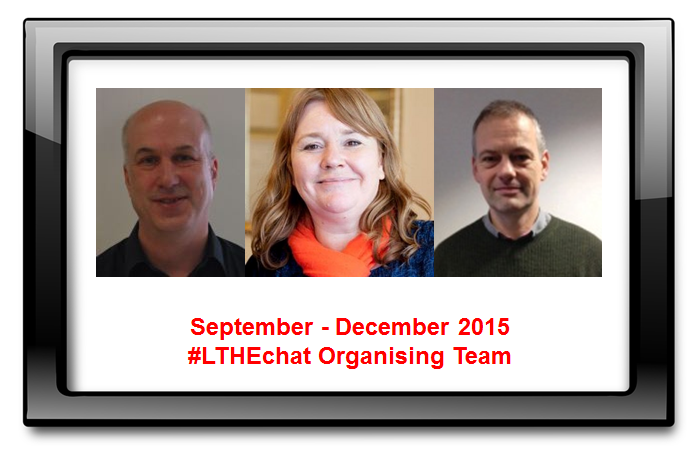
We would like to thank especially the three members of the first organising team during the academic year 2015/16: Dr Jenny Fisher, Neil Withnell and Chris Rowell for their hard work and strong commitment to the #LTHEchat community. They have worked hard behind the scenes facilitating the chats and producing the weekly Storify summaries of the chats.

Sept-Dec 2015 Organising Team

We are very excited about what 2016 will bring for all of us. There will be a new organising team helping to make #LTHEchat happen each week and we will communicate further news regarding this and more developments when we are back in January.

The first #LTHEchat in the New Year is on the 13th of January and it will be a joined-up chat with #BYOD4Lchat. If you are interested in participating in the 5-day BYOD4L event in January, feel free to have a look here.

We wish you all a special festive season and a…

happy-new-year-1063797_960_720

Image source here

The #LTHEchat steering group

Posted in announcement | Leave a comment

#LTHEchat 41 with Chris Rowell (@Chri5rowell) and Steve Dawes (@malkatraz) on Using Apps in Higher Edcuation #RUL12AoC #12AoC

We are delighted to have our very own Chris Rowell @Chri5rowell and Steve Dawes @malkatraz this week to discuss using apps in higher education.

The use of mobile apps in higher education is starting to change the way we research, learn and collaborate in higher education. Social networking apps like Twitter, LinkedIn, WordPress and Pinterest are all great for research, seeking teaching resources and developing your professional network. Mobile apps are enabling us to transform learning activities in ways that were inconceivable in the past. But there are still many issues to resolve; how can apps be integrated into our existing courses? How will lecturers become confident in their use? Do they actually improve the student learning experience?

Chris RowellChris Rowell is Deputy Learning Technology Manager at Regent’s University London. He is a Certified Member of the Association for Learning Technology (CMALT) and Assistant Editor of the Association for Learning Technology’s (ALT) newsletter. Previously he has been a  member of the Staff and Educational Development Association’s (SEDA) National Executive and Conference Committee and is also founding member SEDA’s Special Interest Group on Technology-Enhanced Practice. Currently he is doing a Doctorate of Education at UCL.

Steve DawesSteve Dawes is a Learning Technology Content Developer at Regent’s University London. Steve’s research interests are based around mobile technology and has recently presented his work at the Blackboard User Group and OER15. He is currently studying on a PGHE Certificate. For the last two years Steve and Chris have developed  and shared their online CPD course promoting apps in Higher Education called the ’12 Apps of Christmas’ http://tinyurl.com/12aoc 

The Storify will be made available here: https://storify.com/LTHEchat/using-apps-in-he

If you are reflecting on this specific #LTHEchat please share your post with us so that we can reblog.

If you participated/are participating in any way in the #LTHEchat, please complete our short survey and let us know if you have other suggestions on how we could make the #LTHEchat more valuable for you. Thank you.

See you Wednesday, same time, same place 😉 – 8-9PM GMT #LTHEchat

The LTHEchat team

Posted in guest | Tagged , , | Leave a comment

#LTHEchat 40 with Debby Cotton @ProfDcotton on ‘Unconscious Bias’

This week we are delighted to have Debby Cotton to discuss ‘Unconscious bias’

Unconscious Bias in teaching and learning in HE

Bias is one of those things that all of us think we don’t have! Other people are biased, they may make judgements about people based on stereotypes but not us. And yet, there’s fairly clear evidence that pretty much everyone does this: At some level or another and on some topic or another, we have unconscious associations between groups and characteristics – and this can influence our decision-making without us being aware of it. So at Plymouth we have been doing some thinking about what kind of impacts this might have on teaching and learning in higher education, on our relationships with students and also with our colleagues. In this tweet chat, we will explore the issues further, and discuss what can be done to mitigate the effects of unconscious bias in HE.

If you are not yet convinced that you are affected by unconscious bias, have a look at ‘Harvard Implicit’ and run some tests. The fast-paced responses required aim to access unconscious connections rather than consciously-held views. You may be surprised by what you find!  https://implicit.harvard.edu/implicit/education.html

Debby Cotton

Debby Cotton is Head of Educational Development and Professor of higher Education Pedagogy at Plymouth University. She is a Principal Fellow of the UK Higher Education Academy (PFHEA), and a National Teaching Fellow (NTF). Debby has a doctorate in Environmental Education from Oxford University, and has published widely on a range of higher education (HE) topics. Her main research area is sustainability and pedagogy in higher education, although she has also published on the gender and ethnicity attainment gap, the experience of care leavers in HE, and research-informed teaching. Her work on unconscious bias evolved from some of the findings of the gender and ethnicity research. For a full profile and list of papers, please see: http://www.plymouth.ac.uk/staff/dcotton#

For more resources on teaching and learning in HE, including mitigating unconscious bias, see: https://www.plymouth.ac.uk/your-university/teaching-and-learning/guidance-and-resources/7-step-series

The Storify is available here: https://storify.com/LTHEchat/lthechat-40-unconscious-bias/

If you are reflecting on this specific #LTHEchat please share your post with us so that we can reblog.

If you participated/are participating in any way in the #LTHEchat, please complete our short survey and let us know if you have other suggestions on how we could make the #LTHEchat more valuable for you. Thank you.

See you Wednesday, same time, same place 😉 – 8-9PM GMT #LTHEchat

The LTHEchat team

Posted in guest | Tagged , | Leave a comment

#LTHEchat 39 with Phil Newton @NewtonsNeurosci on ‘Academic Integrity’

This week we are delighted to have Dr Phil Newton to discuss ‘Academic Integrity’.

Phil_NewtonDr Phil Newton (@newtonsneurosci) is the Director of Learning and Teaching for the Swansea University Medical School. A self-confessed ‘plagiarism-nerd’, he has a long standing research interest in academic integrity.

Recent findings are that students are very confident that they know what academic integrity is when they start university, yet that confidence is misplaced and accompanied by a lenient view towards what should happen to students who ‘cheat’ (link).

His work on contract cheating with Dr Lisa Wallace has demonstrated that the academic ghostwriting business is a buyers market, with assignments available cheaply and quickly (link). He has also recently contributed a book chapter to the Springer Handbook of Academic Integrity in which he, along with Chris Lang, considered the legal status of ghostwriting companies around the world (link).

His recent keynote on Ghostwriting, from the European Plagiarism Conference, can be seen here.

This week’s LTHEChat will explore some contemporary issues in academic integrity – why do students get into difficulty, how would we know if students were using essay writing companies, who should quality assure the assessment procedures at UK HEIs to ensure that they consider contemporary issues in academic integrity?

The Storify is available here: https://storify.com/LTHEchat/lthechat-39-on-academic-integrity

If you are reflecting on this specific #LTHEchat please share your post with us so that we can reblog.

If you participated/are participating in any way in the #LTHEchat, please complete our short survey and let us know if you have other suggestions on how we could make the #LTHEchat more valuable for you. Thank you.

See you Wednesday, same time, same place 😉 – 8-9PM GMT #LTHEchat

The LTHEchat team

Posted in guest | Tagged , | 1 Comment

#LTHEchat 38 with Kate Wright @kateawright on ‘Normalising the Use of Technology’

This week we are delighted to have Kate Wright to discuss ‘normalising the use of technology’.

In the past Technology Enhanced Learning was treated as something set apart from the rest of teaching and learning. HEIs often had e-learning strategies which existed separately from their learning and teaching strategy. Things are changing and the use of TEL is becoming ‘business as usual’ with e-submission, e-marking, lecture capture and use of the VLE now a mainstream part of teaching. How far advanced is this process, and what does it mean for teaching staff, support staff and students? And how do we continue to innovate and change in an environment where technology is standard part of day-to-day life? This topic was originally suggested by, and the questions were developed with, Mary Jacob, E-learning Advisor at Aberystwyth University.

Kate Wright

Kate Wright is the E-learning Group Manager at Aberystwyth University. She has been working in the field of e-learning since 2003 and in that time has been involved in developing the use of a number of e-learning tools and systems, including Blackboard, Qwizdom and online assessment. She has been involved in the implementation of the institution’s E-learning Strategy, Benchmarking and Gwella projects. Kate has an interest in e-assessment and led the rollout of Questionmark Perception at Aberystwyth. She has presented papers at a number of conferences including the Questionmark Perception Users Conference (2009 and 2011) and the Blackboard Teaching and Learning Conference (2010 and 2012) and has recently co-written an article in the British Journal of Educational Technology (BJET) on online assessment for laboratory practicals.

The Storify is available here: https://storify.com/LTHEchat/lthechat-38-on-normalising-the-use-of-technology

If you are reflecting on this specific #LTHEchat please share your post with us so that we can reblog.

If you participated/are participating in any way in the #LTHEchat, please complete our short survey and let us know if you have other suggestions on how we could make the #LTHEchat more valuable for you. Thank you.

See you Wednesday, same time, same place 😉 – 8-9PM GMT #LTHEchat

The LTHEchat team

Posted in guest | Tagged , | Leave a comment

#LTHEchat 37 with Eric Stoller @EricStoller on Enhancing the Student Experience with Digital Engagement

This week we are delighted to have Eric Stoller to discuss ‘Enhancing the student experience with digital engagement’. In HE, social media channels are places for learning, engagement, teaching, community building, listening, “tip of the iceberg” to deeper conversations, promotion/marketing, customer service inquiries, alerts, and conversations. The chat will discuss how we can all make better use of these channels.

Eric StollerEric Stoller is a higher education thought-leader, consultant, writer, and speaker with an international reputation. He frequently gives keynotes on how educators can use social media for learning and engagement and is a proponent for teaching students about digital identity development. He has a background in student affairs, academic advising, wellness, technology, and communications. As the Student Affairs and Technology blogger for Inside Higher Ed, he generates conversations, answers questions, and provides insight about a variety of ‘tech topics’.

The Storify is available here: https://storify.com/LTHEchat/lthechat

If you are reflecting on this specific #LTHEchat please share your post with us so that we can reblog.

If you participated/are participating in any way in the #LTHEchat, please complete our short survey and let us know if you have other suggestions on how we could make the #LTHEchat more valuable for you. Thank you.

See you Wednesday, same time, same place 😉 – 8-9PM GMT #LTHEchat

The LTHEchat team

Posted in guest | Tagged , , | Leave a comment

#LTHEchat 36 with Dr Kirsten Jack @Heijinxs on the use of art in cross-discipline undergraduate education

This week we welcome Dr Kirsten Jack (RN, PhD) @Heijinxs to explore the use of art in cross-discipline undergraduate education. 

Kirsten_JackKirsten is Senior Lecturer Adult Nursing at Manchester Metropolitan University. Her contribution to teaching, learning and research is supported by a clinical career in adult nursing where she specialised in primary care nursing, before embarking on her academic career. She is committed to excellence in teaching and learning and was awarded a HEA National Teaching Fellowship and a Manchester Metropolitan University Outstanding Innovation in Teaching Award in 2014. She has a keen interest in pedagogical research specifically the exploration of the use of the arts in nurse education to support nurses’ emotional self-awareness development. She led on the development of a website www.caringwords.mmu.ac.uk which encourages health care professionals to write reflective poetry, as way to explore their thoughts and feelings about clinical practice.

The Storify is available here: https://storify.com/LTHEchat/lthechat-36-the-use-of-art-in-cross-discipline-und

If you are reflecting on this specific #LTHEchat please share your post with us so that we can reblog.

If you participated/are participating in any way in the #LTHEchat, please complete our short survey and let us know if you have other suggestions on how we could make the #LTHEchat more valuable for you. Thank you.

See you Wednesday, same time, same place 😉 – 8-9PM GMT #LTHEchat

The LTHEchat team

Posted in guest | Tagged , | Leave a comment

#LTHEchat 35 Pedagogic Innovators in Higher Education with #BETTchat

This week we are delighted to join two communities together, the #LTHEchat community and the #BETTchat community.

A few words about Bett from Bett

“The award-winning #BettChat continues in 2016 driving incredible conversations within the education community. We know that our visitors are located all around the world, so we’ve created an environment for them to interact before the show, through the wonderful world of social media. Centred on the topics and issues at the front of every educator’s mind, BettChat is dedicated to facilitating networking through the industry. Every Tuesday at 4.30pm, we are getting together on Twitter to debate and discuss the most pressing matters in education today. To find out more, please visit our Twitter at @Bett_show and our website at www.bettshow.com

Bett is a free to attend show! Use this excellent CPD opportunity.

So what is this week all about?

For this tweetchat we will discuss Pedagogic Innovators in Higher Education and  explore together the characteristics of pedagogic innovators, the people and the work they do? What enables them to innovate? Where are the challenges? How can we help pedagogic innovators to grow and spread their passion for innovation and how can we all become innovators? As you see there are loads of questions. Let’s explore these together in creative ways. 

Today’s chat is linked to Chrissi Nerantzi’s (@chrissinerantzi) #pin project and this particular tweetchat signalises its launch. To find out more about the study, please read the blog post here and study the related information sheet in advance of the chat.

Participating in the joined-up #LTHEchat & #BETTchat on the 4th of November 2015, means that you are in agreement with this. If you have any questions related this, please get in touch.

As some of the tweetchat activities will be visual, it would be useful to practise drawing and model making with any resources you have available in advance of the tweetchat. These could be:

The Pedagogic Innovators or short #pin logo

  • LEGO(R) bricks
  • play dough
  • pasta shapes
  • (cotton) wool or
  • a combination of these or anything else

Having some of these resources to hand during the chat will give your experience another dimension. 😉 Check out also the presentation below.

Chrissi Nerantzi @chrissinerantzi, MMU

Chrissi Nerantzi @chrissinerantzi, MMU

Sue Beckingham, @suebecks, SHU

Sue Beckingham, @suebecks, SHU

Chrissi (@chrissinerantzi) and Sue Beckingham (@suebecks), both members of the #LTHEchat steering group will be co-ordinating this chat.


The Storify is available here: https://storify.com/LTHEchat/lthechat-35-pedagogic-innovators-in-higher-educati

If you are reflecting on this specific #LTHEchat please share your post with us so that we can reblog.

If you participated/are participating in any way in the #LTHEchat, please complete our short survey and let us know if you have other suggestions on how we could make the #LTHEchat more valuable for you. Thank you.

See you Wednesday, same time, same place 😉 – 8-9PM GMT #LTHEchat

We can’t wait to see Simon Rae’s (@simonrae) #LTHEchat doodle in advance of the chat but also all your contributions during the chat. On Sunday evening Simon shared his doodle with us all via Twitter.

created by our very own Smon Rae @simonrae

Please remember to use both hashtags this Wednesday: #LTHEchat & #BETTchat when responding. Thank you.

The LTHEchat team

Posted in collaboration | Tagged , , , | Leave a comment

#LTHEchat 34 with Anne Nortcliffe (@anortcliffe) on ‘understanding neurodiversity’ (hidden disabilities)

This Wednesday we are delighted to have Anne Nortcliffe (@anortcliffe) with us for #LTHEchat to discuss ‘undrstanding neurodiversity (hidden disabilities)’.

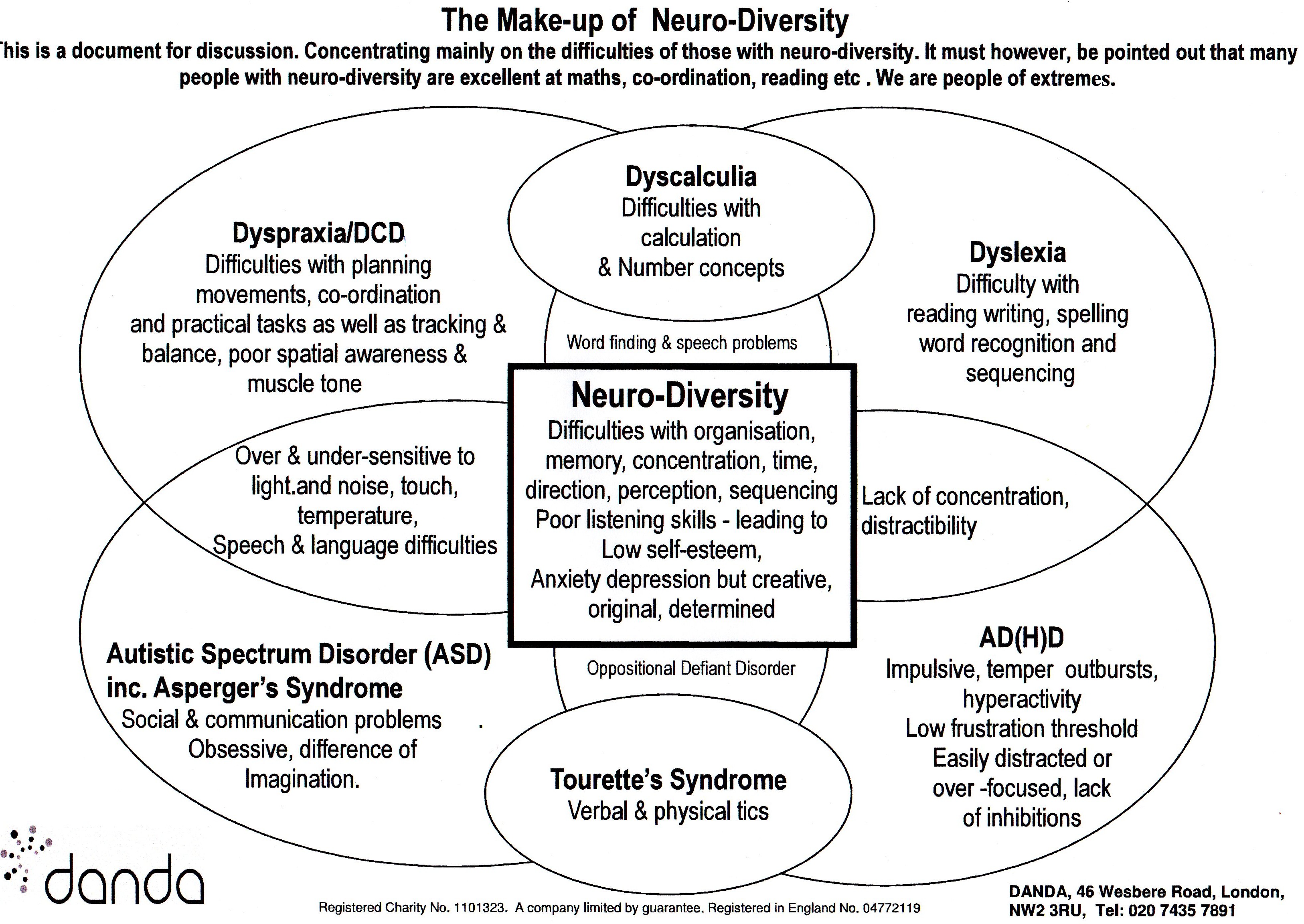
Neurodiversity is an umbrella term referring to a group of neurological development disorders which share common features, in particular differences in how people learn and process information. Definitions vary, but the term to refers to dyslexia, dyspraxia, dyscalculia, Attention Deficit Disorders (ADD/ADHD) and Autistic Spectrum (Autism / Asperger’s syndrome). Under the law these conditions are collectively known as ‘hidden disabilities’, a useful term for gaining and securing disability discrimination rights under the Equality Act 2010.

Cross-over-between-dyslexia-and-dyspraxia-and-other-Neuro-diversity-by-Danda


Anne Nortcliffe

Anne

Anne describes herself as an active leader, researcher and innovator of learning technology, and learning, teaching and assessment approaches for Higher Education. Anne disseminates locally, nationally and internationally in peer reviewed journals, book chapter contributions, seminars, workshops and conferences. In particular Anne supports academic staff and student development in audio feedback. Anne is neuro-diverse challenged, her background is in engineering, with experience in pre-92 and post-92 institutions.

You can connect with Anne on Twitter (@anortcliffe) and all major social networks.

The Storify is available here

If you are reflecting on this specific #LTHEchat please share your post with us so that we can reblog.

If you participated/are participating in any way in the #LTHEchat, please complete our short survey and let us know if you have other suggestions on how we could make the #LTHEchat more valuable for you. Thank you.

See you Wednesday, same time, same place 😉 – 8-9PM GMT #LTHEchat

The LTHEchat team

Posted in guest | Tagged , | 2 Comments

Debbie Baff’s @debbaff #LTHEchat story

The Stamp of Approval

Debbie Baff, soon to be working at Swansea University as a Senior Academic Developer, shared the following with us when we asked her about the Blue #LTHEchat Tweeter badge:

“For me, an open digital badge means several things.  It allows me to showcase skills that I have learnt including CPD that I have undertaken and learning experiences that I have engaged with. Many of the skills that I can evidence from my digital badges relate to cross domain ‘soft’ ‘T-shaped’ graduate skills such as communication or collaboration. They are a way of informally recognising my achievements and this is particularly useful for courses that don’t have an official certificate etc.  Where badges are peer reviewed this affords a ‘stamp of approval’ thus providing value. By having an open digital badge that links directly to the award criteria this allows me to provide evidence to this effect.

Displaying my #LTHEChat Badge with Pride

As I alluded to earlier though it is not just evidencing of skills that appeals to me in my love of open digital badges. I also love the fact that it makes me part of something and I get a sense of belonging to the open digital badge movement.  I am very proud to say that I take part in the Learning and Teaching in Higher Education weekly chat  #LTHEchat. Sadly I don’t manage to take part every week but nonetheless I still proudly display the #LTHEchat badge on my blog page.

Badge #LTHEchat

To me this says that I am part of the Learning and Teaching in Higher Education Community and I feel that I belong and having taken part in regular chats I have earned the right to display my badge. The #LTHEChat allows me the opportunity to engage with the wider L&T HE community synchronously and be part of a rich environment with such a range of voices. As a new comer to the community this is a lovely way of taking a leap of faith and finding my own voice. Being able to engage with others in this way allows me to reflect on my own experience and make sense of my own informal learning. It has also allowed my network to grow and offered the chance to participate in collaborative learning experiences such as the #LTHEchat Chat Poem for Open Education Week. This in turn enriched my relationships with my collaborative colleagues and I have gone on to do other things in collaboration which has again opened more doors for me such as the #BYOD4L Course and the #FOS4L Course.  Although I may have come across these opportunities without undertaking the #LTHEchat, I think that feeling part of the #LTHEchat community has given me more confidence to undertake further learning experiences.

I therefore feel that being able to showcase the #LTHEChat Badge on my blog demonstrates that I feel part of the community and also shows my commitment to the academic community and to the open agenda in general.  It also allows me to demonstrate that I undertake informal Continued Professional Development on a regular basis thus providing support for my commitment to lifelong learning.

As a regular participant of the #LTHEchat I self declare my participation and therefore copy and paste the badge into my site. In this way of course having this badge is different in that there is no explicit peer review to ‘award’ the badge although there is of course implicit peer review in the fact that my peers would if needed evidence my participation). With this in mind therefore I feel that this holds equal value to me personally as much as other badges that have incorporated peer review explicitly.”

Share your story with us!

Posted in community, story | 1 Comment