#LTHEchat 33 with Dr Hala Mansour @HalaMansour on Reflective Writing Spaces: Students’ Engagement and Challenges

Reflective writing in academic context involves reflective thinking of an event or idea happened to explore or to understand why and how it happened. It is quite challenging for students to stand back from a situation and evaluate their experience and feelings and reflect this on their writing.

How do you facilitate reflective writing for students? How using reflective writing spaces could help students to be engaged and to learn in an effective way?

Hala Mansour is Deputy Head of the DBA Programmes and the Programme Leader of MSc Management DL, Lecturer in HRM/OB at Northampton Business School, The University of Northampton http://www.northampton.ac.uk/directories/people/hala-mansour.
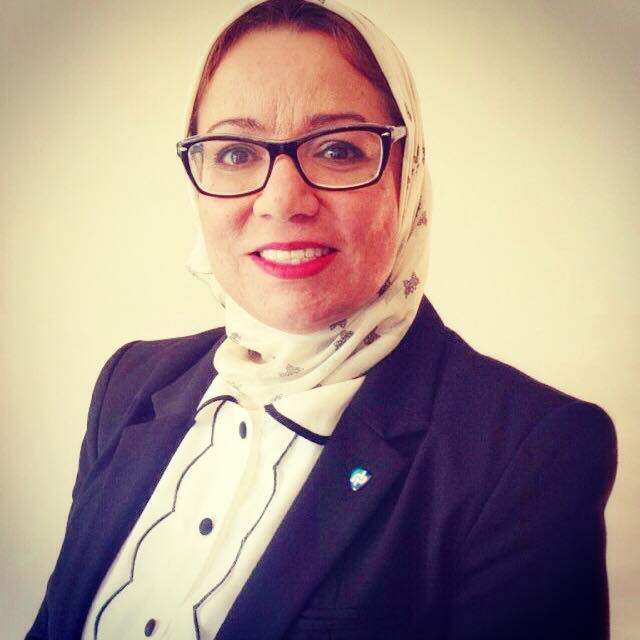
Hala MansourHala received her PhD in Management 2012 from Keele University and MA in Teaching and Learning in Higher Education 2013 from Keele University, UK. From 1995, Hala has held, also, research and teaching commitments at Cairo University and then Keele University. Her research focuses on Organisational Effectiveness, Organisational Culture, Organisational Change, Human Resource Management, Managerialism and New Public Management. She also interested in publishing from her teaching practices in Assessment and Feedback in Higher Education https://www.researchgate.net/profile/Hala_Mansour3

Dr Mansour won the prestigious Keele University Excellence Award in Teaching and Learning 2014:
https://www.keele.ac.uk/lpdc/learningteaching/keeleexcellenceawards/kea-previouswinners/

Hala recognises the importance of the student voice; she places value on effective student led classes. Hala has a robust focus on Teaching and Learning with Technology in Higher Education, namely, the ‘Digital Natives Perspective’.

The Storify is available here: https://storify.com/LTHEchat/lthechat-33-reflective-writing-spaces

If you are reflecting on this specific #LTHEchat please share your post with us so that we can reblog.

If you participated/are participating in any way in the #LTHEchat, please complete our short survey and let us know if you have other suggestions on how we could make the #LTHEchat more valuable for you. Thank you.

See you Wednesday, same time, same place 😉 – 8-9PM GMT #LTHEchat

The LTHEchat team
Posted in guest | Tagged , | Leave a comment

#LTHEchat 32 with Dr Kay Hack @hack_kay exploring ethical considerations in pedagogical research

This week we welcome Dr Kay Hack who will engage us in discussions exploring ethical considerations in pedagogical research.

As a community we are passionate about ensuring we are using effective methods for teaching, learning and assessment. Much of the evidence we need to inform our practice is generated by ourselves, evaluating our own teaching practice, in our own discipline, with our own students.   In this week’s tweetchat Kay Hack invites you to discuss the benefits and risks of scholarship and pedagogic research, and explore the need for ethical review.

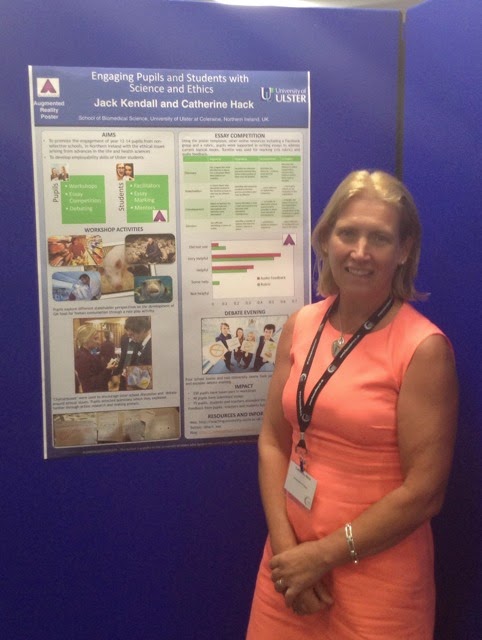
Kay Hack

Kay is a Consultant in Academic Practice, catherine.hack@heacademy.ac.uk), with the Higher Education Academy. She has chaired both University and Health Research Authority Research Ethics Committees. Her blog post, which explores the need for ethical review of  pedagogic research is available here:  https://www.heacademy.ac.uk/does-pedagogic-research-require-ethical-review#sthash.2l9JK7w1.dpuf

You can follow her on twitter @hack_kay, and catch up on her other projects via her personal blog: https://catherinehack.wordpress.com/

The Storify is available here: https://storify.com/LTHEchat/lthechat32

If you are reflecting on this specific #LTHEchat please share your post with us so that we can reblog.

If you participated/are participating in any way in the #LTHEchat, please complete our short survey and let us know if you have other suggestions on how we could make the #LTHEchat more valuable for you. Thank you.

See you Wednesday, same time, same place 😉 – 8-9PM GMT #LTHEchat

The LTHEchat team

Posted in guest | Tagged , , | 1 Comment

Ian’s story (@iwilsonysj ) #lthechat

We asked Ian Wilson, Senior Lecturer in Primary Education at York St John University, what the Blue Twitter badge means to him. Here is what he said:



“Do you remember your first day at university, college or even school? That feeling of walking into the classroom for the first time not knowing anyone or anything, searching around for someone who you remember from interview or vaguely recognise? Starting a new job can rekindle those similar feelings and before long many of us will venture onto the vastness of the internet to search for ideas, colleagues and information to support us in our professional development.

The internet is often perceived as a sterile inhuman place, inhabited by binary code, white space and images. But behind each of those pages there exists a person, a real person, entering in data and thoughts which are being shared with the world. Often we are searching for a sign, a lighthouse signal that we recognise or identify with.

Badge #LTHEchatThe LTHEchat blue bird icon, for me, is this lighthouse signal for people searching the internet, looking for a community to join and become part of. Whether they recognise the terminology on the symbol or even if they are just curious about the icon, they will hopefully click on the bird and be introduced to the LTHEchat community.

I have participated within the LTHEchats for some time now, and know that the community, which is behind the blue bird, is both supportive and welcoming. It is a community where people from a range of jobs and experiences come together to share and discuss ideas, collaborating and communicating with each other. Everyone is welcome. I know this and I want others to be aware of our existence and to join us. Why? Because I value being part of the community and recognise its strengths and so, I advertise the badge on my site. Arthur Ashe, American Tennis Player, once said – “Start where you are, use what you have and do what you can.”

For me, the badge is a starting point and I am doing what I can, with what I have, to share this with the internet and to encourage people to join the LTHEchat community.”

Visit Ian’s site by clicking here and follow him on Twitter at @iwilsonysj

Posted in community | Leave a comment

#LTHEchat 31 with David Hopkins @hopkinsdavid on the intrinsic and extrinsic value of academic blogging

This Wednesday we are delighted to have David Hopkins with us for #LTHEchat to discuss ‘the intrinsic and extrinsic value of academic blogging’.

David says that: “Blogging has, for me, been part learning, part informative, part catharsis, and part a pain in the proverbial! I started my own blog as an outlet for the things I was doing in my work, but couldn’t get any answers to actually work. I wanted to join the growing community of learning technology enthusiasts and professionals who were discussing, demonstrating, testing, writing, and proving their work in a public and open way. I was already engaging with them online, taking from the community, so it was only right I join them and offer something back.” 

This LTHEchat will be as much about blogging as the process of sharing. Do you blog and if so why do you blog? Are you blogging for yourself or for your professional profile? Indeed, is there a difference? Is it for reflection or progress? Join me and the LTHEchat community to share your ideas, experiences,  pleasures, pains, and purpose. 

David Hopkins

David Hopkins

David Hopkins is an experienced and respected eLearning Consultant at The University of Warwick. David has catalogued and reflected on various aspects of his eight year journey as a Learning Technologist and his growth and experiences in his second eBook ‘What is a Learning Technologist?’ (http://bit.ly/whatisLT) and edited and published ‘The Really Useful #EdtEchBook’ (http://bit.ly/EdTechBook) on the exploration and experiences of a Learning Technologists ‘identity’.

You can connect with David on Twitter (@hopkinsdavid) and all major social networks, as well as his TEL blog – www.dontwasteyourtime.co.uk – where he reflects on his work and the environment(s) of technology enhanced learning, including social and personal learning, MOOCs, etc. 

The Storify is available here:  

If you are reflecting on this specific #LTHEchat please share your post with us so that we can reblog.

If you participated/are participating in any way in the #LTHEchat, please complete our short survey and let us know if you have other suggestions on how we could make the #LTHEchat more valuable for you. Thank you.

See you Wednesday, same time, same place 😉 – 8-9PM GMT #LTHEchat

The LTHEchat team

Posted in guest | Tagged , | 1 Comment

#LTHEchat 30 with Peter Lumsden @PLumsden on Graduate Attributes

This Wednesday we are delighted to have Peter Lumsden with us for #LTHEchat to discuss ‘graduate attributes’.

Graduate attributes are the qualities, skills and understandings a university community agrees its students should develop during their time with the institution’ (Glasgow University)

In Graduate Attributes, Learning and Employability, edited by Hager and Holland (2006a) they characterised the relationship between the term ‘graduate attributes’ and learning and employability as being one of change: changing conceptions of learning as well as constantly changing opportunities and requirements for employment.  Although published nearly 10 years ago, that transition from a period of institutional specification of skills development, to a more student-centred focus to the design and direction of learning programmes is still incomplete. The argument that the focus on graduate attributes needs to be located as part of a lifelong learning framework is still current, and indeed timely, as at least some institutions appear to be looking afresh at identifying and reinforcing programme level outcomes as a driver for curriculum design.

Peter Lumsden

Peter Lumsden

Peter is a principal lecturer, until recently in the Learning Development Unit, at the University of Central Lancashire, now in the school of Medicine. Before that he classed himself as ‘a biologist’, having developed his research in the area of flowering and photoperiodism. Now he sees himself as an educational developer, involved in the teaching and coaching of staff, and carrying out educational research into feedback, and personal development. He also has an interest in career development of post-graduates, and has worked extensively with the Society for Experimental Biology in delivering career workshops both in the UK and in Europe.

He is a local preacher in the Methodist church, is interested in the public perception of science, and in the relationship between religion and science.

Twitter: @plumsden

The Storify is available here: https://storify.com/LTHEchat/graduate-attributes

If you are reflecting on this specific #LTHEchat please share your post with us so that we can reblog.

If you participated/are participating in any way in the #LTHEchat, please complete our short survey and let us know if you have other suggestions on how we could make the #LTHEchat more valuable for you. Thank you.

See you Wednesday, same time, same place 😉 – 8-9PM GMT #LTHEchat

The LTHEchat team

Posted in guest | Tagged , | 1 Comment

Two #LTHEchat stories from our Golden Tweeter Award winners

Hello dear colleagues,

We recently invited our two Golden Tweeter Award Winners to share with us what this means to them. What follows are their responses.

Prof. Simon Lancaster (@S_J_Lancaster)

Prof. Simon Lancaster, image source:  here

“I engage with the online personal and professional development twitter chat #LTHEchat because it is rewarding and fun. It has benefited my knowledge, my network and interestingly enough my skill set through attempts at facilitating the contributions of others. Participation has been its own reward. It was a complete surprise when I was awarded the communities inaugural Golden Tweeter award. It was honour to receive the first but at the time I imagined many more would quickly follow. I suspect the fact that there has only been one subsequent award has helped to hold the perceived value. The Golden Tweeter badge is a source of pride but I’d like to think its enhanced my loyalty to the community and not my arrogance.”

Simon Rae (@simonrae)

Simon Rae, image source: here

“The Golden Tweeter Award meant a great deal to me. It came as a very nice surprise that I wasn’t expecting although, to be honest, it was an honour that I did covert! To be awarded the Golden Tweeter Badge by a group of my peers for participating and taking part was very pleasing. My old school did School Colours as rewards to boys who did well, or tried hard…including one given out for speaking in the Sunday night Debating Club (…it was a boarding school). I was never the best speaker, always too nervous, but I was awarded half-colours at the end of the year mainly because I had forced myself to participate in all of the debates (albeit tremulously). Proud of that I was. Same with the Golden Tweeter badge – awarded by my peers for my contribution to a great activity. I’ve spent my working life giving to and taking part in education and #LTHEchats have afforded me the opportunity, now I’m retired, for continuing contact and a sense of involvement with HE – plus I like to think that sometimes I can contribute helpfully to the discussions. Plus I enjoy doing the cartoons and seeing them retweeted!

Did it have any value? To me personally, yes indeed (see above) – but as I’m out of the job market so to speak I don’t expect to gain anything by it. I would certainly have added it onto my CV, and I will do if I ever look to do consultancy work or external supervision or whatever, and I would expect it to be of value within HE.

From the perspective of a Lecturer in Professional Development at the Open University I see Twitter hashtag chats such as #LTHEchat offering fabulous fora for CPD. I wanted to insert a Venn diagram here made up of 3 overlapping circles. One circle would stand for Lave & Wenger’s Community of Practice, a second would represent the 70-20-10 mantra articulated within Learning & Development

(http://cdn.goodpractice.com.s3-eu-west-1.amazonaws.com/wp-content/uploads/764-GP-70_20_10.LR_.pdf) and the third circle would be for the whole TEF discussion that we recently explored. The centre, where the 3 circles overlap, is where #LTHEchat operates – a space for like-minded colleagues to share and exchange and learn and interact. Martin Weller’s book The Digital Scholar: How Technology Is Transforming Scholarly Practice (available at http://oro.open.ac.uk/29664/) describes this sort of academic behaviour that I think we should aim for and I am pleased to have been accepted into the #LTHEchat community that epitomises much of what the digital scholar is about.

A story that conditioned my whole working life/practice was reported by Gerald Weinberg in his book The Psychology of Computer Programming (http://www.goodreads.com/book/show/1660754.The_Psychology_of_Computer_Programming). Post-grad students employed at a US University in the ’60/70s to provide a computing helpdesk service to other student users complained to the administration that they had suddenly been inundated with work and that they couldn’t cope. On investigation it was realised that some time before, in a reorganisation and general tidying-up of the computer suite (probably driven by Health&Safety issues!), the coffee machine had been taken away. Students who collected their output would have stood untidily around the machine and chatted through any errors that the output showed up, and more often than not would have solved their own problems. But when they didn’t have the coffee machine to stand around they went straight to the helpdesk! Management had inadvertently deprived users from learning for themselves at the water-cooler/coffee machine. (Over the years my perspective on this story has changed, from that of someone employed on the helpdesk to someone involved in the pedagogy of learning and someone involved in the design and provision of the water-cooler/coffee machine/helpdesk/learning facilities!)

In a way we are all like those computer students of the ’60/70s … certainly we are all students of digital scholarship and #LTHEchat is the coffee machine in the corner of the computer suite. I am very proud of my #LTHEchat Golden Tweeter Badge.”

We will share further #LTHEchat stories here in the future. If you are displaying your Twitter badge on your site, we would love to hear from you as well. 

The #LTHEchat team

Posted in community | Tagged , , | Leave a comment

#LTHEchat No 29 with Prof Simon Lancaster @S_J_Lancaster – Measuring Learning Gains. Join us 23rd Sept 8pm

Simon LancasterWe are delighted to welcome Simon Lancaster, Professor of Chemical Education from the University of East Anglia (UEA, Norwich) as our #LTHEchat guest to lead the first tweetchat for the new academic year. This will take place on Wednesday 23rd September at 8pm BST.

Simon will lead a chat on ‘Measuring learning gains’.

Measuring learning gains is an integral part of Higher Education isn’t it? No, that’s assessment. The LTHEchat community will pool our collective wisdom and creativity to look for ways to get at that most elusive quantity: how much did our students actually learn on our course?

Simon Lancaster is an accomplished synthetic chemist. He now focuses on innovation in and evaluation of approaches to promote lasting conceptual understanding over rote memorisation in chemistry and more widely in Higher Education. He has been recognised by the Sir Geoffrey and Lady Allen Excellence in Teaching Award of the UEA (2010), the Royal Society of Chemistry Higher Education Award (2013) and he won a Higher Education Academy National Teaching Fellowship in 2013. In 2014 he was promoted to a chair in Chemical Education and appointed Pedagogical Innovation Ambassador. In 2014 Prof Lancaster became a distinguished educator for Turning Technologies. Simon is a committee member and external affairs officer for the Association of National Teaching Fellows. He is also vice-president of Education Council of the Royal Society of Chemistry. Simon was the first #LTHEchat participant to be awarded the Golden Tweeter Award and he frequently reminds us of this!

The Storify will be available here If you are reflecting on this specific #LTHEchat please share your post with us so that we can reblog.

If you participated/are participating in any way in the #LTHEchat, please complete our short survey and let us know if you have other suggestions on how we could make the #LTHEchat more valuable for you. Thank you.

See you Wednesday 23rd September, same time, same place 😉 – 8-9PM GMT #LTHEchat

The LTHEchat team

Posted in guest | Tagged | 1 Comment

EXTRA #LTHEchat about TEF with @ProfSallyBrown, join us on the 26 August, 8pm UK time

public domain image: pixabay

What are your thoughts? image source public domain image: pixabay

Dear colleagues,

We hope you are having a joyful and relaxing summer.  We have been following the conversations on Twitter and other social media channels and professional networks with great interest and we couldn’t resist a recent call by our colleague Ian Wilson.

Ian, suggested a few days ago that it would be useful to organise an #LTHEchat to discuss ideas around the Teaching Excellence Framework (TEF). Prof. Sally Brown was suggested via Twitter to lead this with Prof. Phil Race.

Prof. Sally Brown with Ruth Pickford recently initiated with colleagues an open exchange about the TEF, please see http://sally-brown.net/2015/07/teasing-out-the-nuances-of-the-teaching-excellence-framework/ which we would like to continue via a special #LTHEchat to engage the wider academic community.

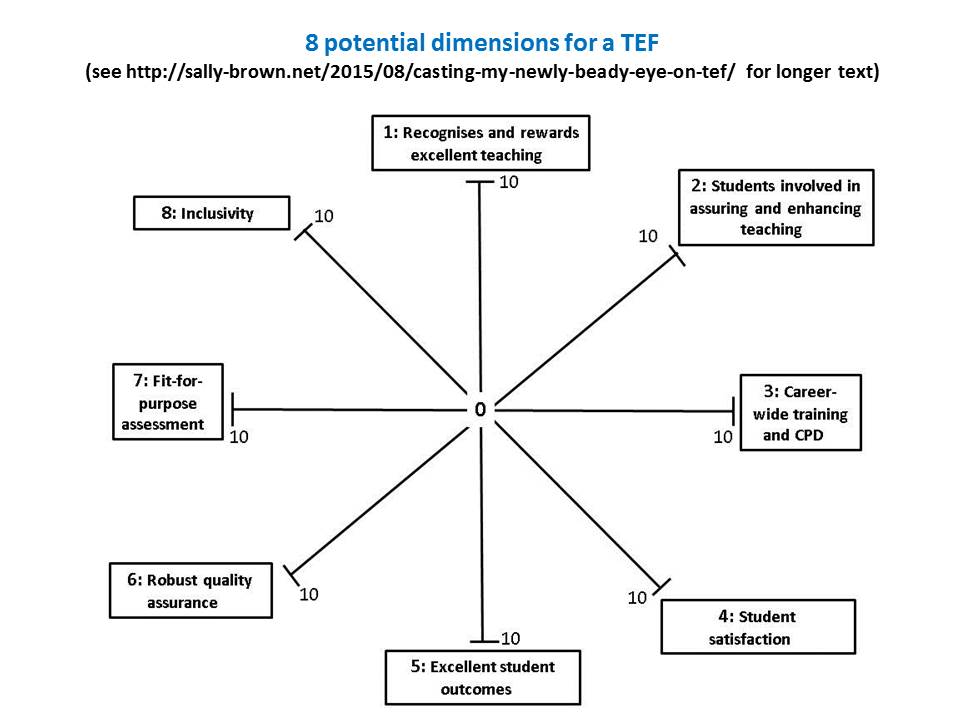
Sally (with help from Phil Race) with ideas derived from discussions on the SEDA, HEDG and ANTF mail base networks which were discussed by the NTF discussion on TEF convened by Ian Scott at Oxford Brookes has devised eight potential dimensions for a TEF. These can be used by a university to review the extent to which it provides a Teaching Excellence Framework. The idea is that using the grid below, HEIs can self rate against the eight dimensions, which Sally proposes are:

Prof Sally Brown and Prof Phil Race

1. The HEI recognises and rewards excellent teaching e.g. by supporting HEA Fellowship accreditation, appointing Teacher Fellows, offering Professorships for L&T, and valuing academic leadership

2. Students are involved in assuring and enhancing teaching at all stages from curriculum design through teaching to evaluation, there are robust systems for training, supporting, valuing and making good use of student representatives.

3. All New-to-HE staff are trained and supported through their early years of teaching (linked to probation) including GTAs, sessional and fractional staff , and career-wide CPD is provided for all who teach and take up is monitored

4. Students are satisfied with their learning experiences as indicated by a basket of measures, one of which will be NSS outcomes

5. Outcomes for students are excellent as indicated by retention and successful degree achievements and students are employed in graduate professions within three years of graduation

6. Quality assurance measures result in QAA & PSRB confidence

7. Assessment is fit-for-purpose, appropriate to subject and level and is integrated with learning, with robust moderation in place to assure standards

8. The HEI demonstrates a commitment to inclusivity and redressing all kinds of disadvantage, particularly in terms of Widening Participation and Fair Access.

Here is the link to Prof Sally Brown’s website: http://sally-brown.net/2015/08/casting-my-newly-beady-eye-on-tef/

If you are new to tweetchats, please access the following slideshare and get in touch with us via Twitter using the hashtag #LTHEchat

We hope you will be around on the 26th of August and able to join us at 8pm UK time for a lively discussion. Please feel free to share this invite with further colleagues who would be interested.

The #LTHEchat team

Update

Here is the storify of the archived tweets from the tweetchat https://storify.com/LTHEchat/lthechat-extra-on-the-teaching-excellence-framewor

Posted in guest | Tagged , | 2 Comments

#LTHEchat Summer News & Celebration of a Wonderful Year > Thank you all!!!

Dear #LTHEchat commuity,

It has been a truly fascinating year! There won’t be a tweetchat now until September. Yes, the #LTHEchat is on holiday during July and August and we look forward to swimming in the deep blue sea… at least some of us 😉 There will be opportunities to engage in Summer activities linked to the #LTHEchat, if you are interested and also feel free to organise community #LTHEchat while we are away.

We would like to thank you for all your support and engagement in the #LTHEchats since October 2014. Special thank yous go to our many guest facilitators who embraced the chats as a way to connect their thoughts and practices with the wider community. It has been a real pleasure to have such vibrant discussions with you all.

We would like to use this opportunity to share some facts about the #LTHEchats for 2014/15

  • Our first ever chat was on the 29th of October 2014
  • There have been 30 chats in total, 2 of which were organised by the #LTHEchat community
  • We had 22 guest facilitators
  • In some of the chat we had over 700 tweets within one hour.
  • 2 Golden Tweeter awards

The steering group decided that it would be useful to have a summer break so that we can all recharge our batteries in preparation for the next academic year.

The #LTHEchat steering group, decided to introduce a rotating #LTHEchat organising team. This new structure will enable the community to take a more active role in the #LTHEchats and co-shape future direction together with the steering group. Members of the organising team will work closely together during a semester to secure the smooth running of the #LTHEchats.

We would like to become more systematic in the following:

  • collecting data
  • evaluate the initiative
  • attract more students as participants and facilitators

The first organising team responsible for the #LTHEchats from Sep 15 to Jan 16 consists of the following members:

  • Sue Beckingham, Sheffield Hallam University, @suebecks
  • Dr Jenny Fisher, Manchester Metropolitan University, @jennycfisher
  • Neil Withnell, University of Salford, @neilwithnell
  • Chris Rowell, Regents University London, @Chri5rowell

A booklet of Year 1 of the #LTHEchat is in preparation.

There is also an opportunity to co-author an article about the #LTHEchats for a special issue around the use of Twitter in Education. If you would like to find out more and express interest to participate in this project, please access the related Google Doc.

Please complete our short survey if you haven’t done this already. Access this here.

A Summer Co-learning Opportunity

… and would you like to participate in a 5-day open learning event in July (13th-17th) where you will meet many colleagues from the #LTHEchat community?

Have a look at FOS! We will be using a playful enquiry-based approach to learn together more about flexible, open and social learningThe community space is already live.

image source https://farm6.staticflickr.com/5482/9622067329_3c5103a4a8_z.jpg

We wish you all a super (summer) break wherever you are and see you again on the 23rd of  September!

Chrissi, Sue, Peter and David

The #LTHEchat steering group

Posted in announcement | Tagged | Leave a comment

#LTHEchat No 28 with Helen Beetham @helenbeetham on Digital Wellbeing

Dear colleagues,

This coming Wednesday, we are delighted to have Helen Beetham with us for the next #LTHEchat to discuss Digital Wellbeing.

HelHelen Beetham is a writer, researcher and adviser on e-learning issues. She worked on the 2010 Beyond Current Horizons programme, commissioned by the UK government, and has written key national reports on e-portfolios, e-learning and pedagogy, digital literacy and open educational practice. A long-standing consultant to the Jisc e-learning programme, she recently completed a year-long study on the expectations and experiences of today’s ‘digital students’ and is now working on a national framework for staff digital capabilities. Her co-authored volumes Rethinking Pedagogy for a Digital Age and Rethinking Learning for a Digital Age (both Routledge) are standard texts on masters courses in Education.
Tweets: @helenbeetham.
Blogs: digitalstudent/jiscinvolve.org and digitalcapability.jiscinvolve.org.

Helen says: “The technologies we choose and refuse, the digital spaces we inhabit, and our use of digital media all touch deeply on who we are as a person. The term ‘digital identity’ is used to mean how we present ourselves in digital spaces through our profiles, connections, shared media and communications. It is a positive expression of who we are and how we want to be known. My interviews with staff and students in UK HE, however, suggest that even the most digitally proficient find some aspects of digital participation to be stressful, troubling, or detrimental. Staff tend to talk about workload, information overload and work-life balance. Students are more concerned about distraction, exposure, and the loss of face-to-face contact. Both worry about data, how aspects of our selves are construed by digital systems, and by changes in how we relate to one another – including in learning and teaching. This crosses with more conventional concerns about e-safety and cyberbullying – the need to respect others and to behave ethically online. The term ‘digital wellbeing’ is now (proposed to be) included with digital ‘identity’ in the new Jisc framework for digital capability as a way of framing some of these issues. Of course there are forces at work which individuals can’t address, particularly when it comes to inequalities of access and power in digital spaces, or the systemic impacts of the digital revolution on the economy, society and wider environment. But an awareness of these issues and their potential impact can be considered an element of individual capability, and an important means to thrive in a complex digital world. This LTHE chat will introduce six key questions for digital wellbeing. Further reading can be found here: http://digitalcapability.jiscinvolve.org/wp/2015/06/11/revisiting-digital-capability-for-2015/

The Storify is available here If you are reflecting on this specific #LTHEchat please share your post with us so that we can reblog.

If you participated/are participating in any way in the #LTHEchat, please complete our short survey and let us know if you have other suggestions on how we could make the #LTHEchat more valuable for you. Thank you.

See you Wednesday, same time, same place 😉 – 8-9PM GMT #LTHEchat

The LTHEchat team

Posted in guest | Tagged , | 2 Comments