
Join us on Bluesky for #LTHEchat on Wednesday 6th May at 8pm BST with guest Sarah Telfer (@stelfer.bsky.social) to discuss how storytelling can be used as an employability tool to help educators reflect on their teaching journey.
Introduction
Behind every effective teaching strategy lies a story, a moment of reflection, adaptation or innovation grounded in professional learning. When we think about storytelling in education, we often picture early years classrooms but storytelling isn’t just for children. Our recent research with trainee teachers in the Further Education (FE) sector suggests it may be one of the most powerful tools for professional development. We began with a simple question: What happens when trainee teachers are invited to tell the story of becoming a teacher? The answer was powerful.
Storytelling: More Than a Creative Add-On
Storytelling is a natural human practice. Gibson (2012) suggests it is central to how we make sense of experience. When trainee teachers tell stories about classroom moments e.g., the lesson that went wrong or the breakthrough with a learner, they are not simply recalling events. They are reflecting, interpreting and constructing meaning around their developing practice.
One trainee, Sabira, explained that storytelling ‘draws on the emotions of other people… really etching into people’s memories’. Her words highlight that storytelling is not just about creativity; it is about connection as emotion gives professional experiences weight, making learning memorable for both teller and listener. Storytelling, then, is not only reflective, it is demonstrative. When educators articulate their journeys clearly and confidently, they showcase communication, clarity of thought and emotional intelligence which are key employability skills valued across education.
Reflection sits at the heart of education, developing critically reflective, research-informed professionals who can justify their practice. Storytelling offers an accessible way of doing this, helping educators connect theory with lived experience and articulate who they are becoming as teachers.
Mapping the Teaching Journey
In a small-scale qualitative study conducted by our team at the University of Greater Manchester (UGM) (Telfer, Foster and Gamarra, 2026), trainee teachers were asked to create storytelling artefacts to map their journey across their teacher training programme and evidence how they met the nine duties of the occupational standard. The aim was to move beyond formulaic responses and encourage authentic reflection. The results were creative and diverse and included: storyboards, poems, vlogs, mood boards, origami models and digital posters. Some narrated slides; others used symbolic objects in online viva assessments.
When trainees used their artefacts in viva assessment conversations, something shifted. The artefacts became prompts, visual cues that unlocked pedagogic stories. Trainees spoke more naturally and confidently, drawing on real placement experiences rather than searching for the ‘right’ answer.
Many reported that having their story in front of them reduced anxiety and gave structure to their responses with the act of storytelling supporting strong communication, a core professional skill.
Why It Works
When a student shares a story about themselves it supports key skills of reflection, making meaning of experiences, understanding context and application and retaining information through cognitive engagement. Employers consistently seek communication skills, relational capacity, self-awareness and digital competence. Storytelling supports all of these. Smart and DiMaria (2018) argue that narrative skills enable individuals to articulate professional strengths and values. Narrative enquiry in teacher education (Clandinin and Connelly, 2000) has long supported reflective practice, while Boffo (2020) links storytelling to confidence and employability.
Beyond the literature, what we witnessed was simple: storytelling helped trainees feel ownership of their development. It moved them from completing standards to embodying them.
Digital and Inclusive Possibilities
In post-pandemic education, digital literacy is central. Creating narrated slides, videos or blogs allows trainees to develop editing and presentation skills alongside reflection. There is also scope for ethical use of AI tools to support idea generation or structure, while maintaining authentic voice.
Importantly, storytelling offers inclusive possibilities. Traditional written reflections do not suit everyone. Multimodal digital approaches can reduce barriers, particularly for neurodiverse trainees, aligning with the inclusive principles which foreground equity and recognition of diverse professional identities.
Beyond Assessment
An unexpected benefit was interview preparation. Trainees who had practised telling structured stories about resilience and problem-solving felt more confident discussing their strengths. They already had meaningful examples grounded in lived experience. Perhaps most importantly, storytelling supported trainees in answering a deeper question: Who am I becoming as a teacher?
So… What’s Your Story?
Teacher education is not only about meeting standards, it is about shaping identity, connecting theory and practice, and building confidence. Storytelling draws these elements together, deepening reflection, strengthening communication and leaves a lasting imprint. Behind every professional standard is a person and every person has a story worth telling.
References
Boffo, V. (2020) Storytelling and other skills: Building employability in higher education. Firenze University Press.
Clandinin, D. J. and Connelly, F. M. (2000) Narrative inquiry: Experience and story in qualitative research. San Francisco: Jossey-Bass.
Gibson, M. (2012) ‘Narrative practice and social work education’. Practice, 24(1), pp. 53–65.
Smart, K. L. and DiMaria, J. (2018) ‘Using storytelling as a job-search strategy’, Business and Professional Communication Quarterly, 18(2), 185–198.
Telfer, S., Foster, S. and Gamarra, E. (2026) [Forthcoming] ‘What’s your story? Building Further Education Sector trainee teachers’ employability skills through creative storytelling and digital technologies’, Research in Post-compulsory Education.
Speaker Bio
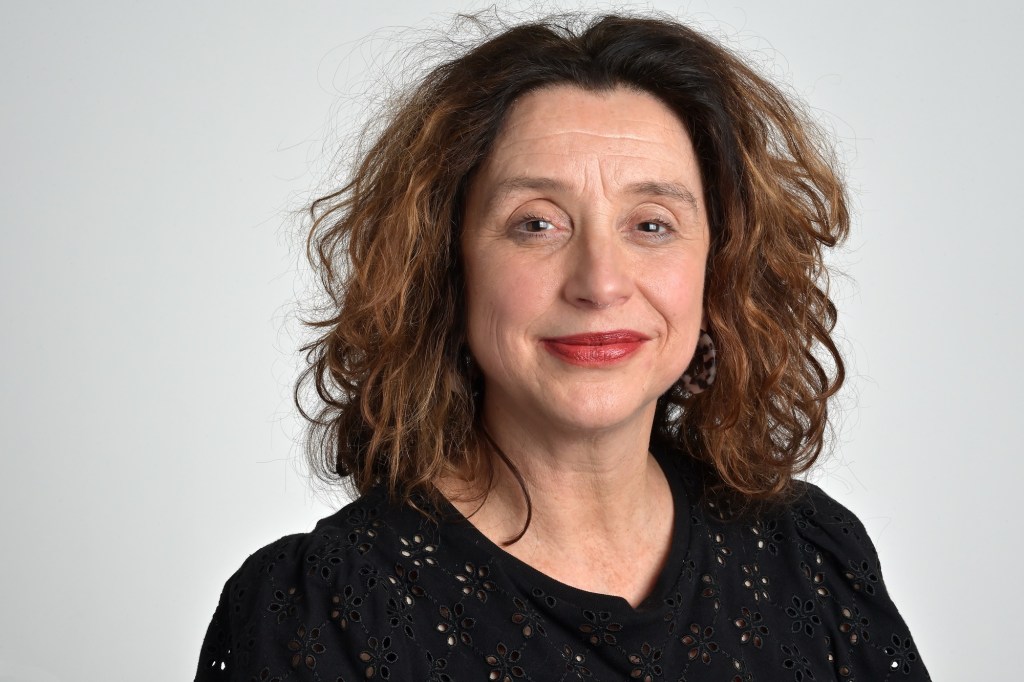
Sarah is an Associate Teaching Professor in Education at the University of Greater Manchester with over 20 years’ experience in Further and Higher Education, specialising in Initial Teacher Education, pedagogic leadership, and professional development. She provides strategic and operational leadership across the School of Education, including programme leadership for 14+ ITE provision, quality assurance, curriculum innovation, and academic staff development aligned with the University of Greater Manchester’s TIRIAE agenda.
Her nationally recognised pedagogic research focuses on storytelling as a scholarly and inclusive teaching practice to enhance learner engagement, assessment literacy, reflection, and employability, with an emerging strand exploring the role of generative AI within pedagogic practice. Her work demonstrates sustained impact across curriculum design, assessment, staff CPD, and professional recognition frameworks, and is disseminated widely through peer-reviewed publications, invited keynotes, practitioner outputs, and public scholarship (including a TED Talk).
Recent Publications
Telfer, S. (2026) Storytelling as a Reflective Tool in Teacher Education. What’s your Story? Autoethnography Book; The Classroom Within. (IN PRESS)
Telfer, S. and Preece, S. (2026) The Evolution of Education: Reimagining Pedagogy, Inclusion and Leadership in the Age of AI. Future-Ready Teachers: Integrating Gen AI into Teacher Education (IN PRESS)
Threlfall, S.J., King, G., Telfer, S., Adjei, L., Ogbeni, E. and Price, M.D. (2026) Transforming teacher preparation at the University of Bolton: Insights from the Triple M Mentoring Initiative. International journal of evidence based coaching and mentoring, 24(1), pp. 186-208.
Telfer, S. and Foster, S. (2025) ‘What’s your story?’ Post 16 Educator, 121, October pp. 10-12.
Learn more about Sarah’s work here: ORCID: 0000-0002-6307-9735
Questions
Q1. To what extent does storytelling genuinely deepen critical reflection in education?


