
Join us on Bluesky for #LTHEchat on Wednesday 29th April at 8pm BST with guest Jenni Rose (@jennirose21.bsky.social) to discuss how we can support students’ critical thinking through self-feedback.
Introduction
We all want our students to think critically. It’s embedded in our learning outcomes, our professional body requirements, and our assessment criteria. Yet, despite decades of focus on critical thinking, graduates consistently arrive in practice without these capabilities. Whether your students are training to become accountants, engineers, nurses, journalists, lawyers, or social workers, they need to move beyond seeking ‘right answers’ to exercising professional judgement in ambiguous situations. Perhaps part of the problem is that we do not always consider the intellectual development that must happen before students can demonstrate critical thinking.
What’s missing from our approach to critical thinking
Perry’s Scheme of Intellectual and Ethical Development (Perry, 1970; 1999) offers a crucial insight that critical thinking isn’t just a skill to be taught, it’s a capability that emerges when students reach particular stages of intellectual development (Rose and Moore, 2024). Before students can consistently demonstrate critical thinking, they must progress through earlier positions where they develop the foundational capacities for independent judgement.
Consider a typical first-year student who arrives seeking “the right answer”, a mindset Perry termed ‘dualism’ (position two). These students see knowledge as a collection of facts to be memorised, and view teachers as authorities who possess correct answers. This dualistic thinking appears across disciplines, whether students expect clear legal precedents, defined clinical procedures, single correct equations, or specific marking criteria. Students become passive receivers of knowledge, with teachers positioned as all-knowing authorities (Freire, 1996). In this environment, students naturally adopt dualistic thinking, seeing answers as simply right or wrong based on what their teacher has told them.
From dualism, students move to multiplicity (position three), where they recognise that multiple viewpoints exist but lack tools to evaluate them, creating what Evans et al. (2010) call disequilibrium in meaning-making. Critical thinking only emerges at pure relativism (position four) and contextual relativism (position five), where students construct evidence-based arguments, view teachers as sources of thinking frameworks rather than answers, and ultimately evaluate knowledge within context to exercise sophisticated professional judgement (Rose and Moore, 2024).
This developmental lens reveals why simply teaching critical thinking skills often fails. We’re asking students to demonstrate capabilities that depend on intellectual positions they haven’t yet reached. It’s like expecting someone to run before they can walk.
Are we measuring what we think we’re measuring?
This developmental framework also illuminates a troubling question about our assessments. Traditional assessments such as essays, exams or case analyses require students to demonstrate critical thinking within constrained formats and time pressures. But what if these assessment methods inadvertently prevent students from showing the intellectual development they’ve achieved?
A recent study with first-year accounting students revealed that 55% of students who completed formative assignments demonstrated higher intellectual positions in reflective tasks than in their academic essays (Rose and Stoner, 2026). Students capable of sophisticated evaluative thinking when reflecting on their own work reverted to more dualistic approaches when writing formal essays. While this research focused on accounting education, the implications extend across disciplines and asks if our traditional assessment formats are systematically underestimating students’ intellectual capabilities?
This matters because we make crucial decisions based on these assessments. We conclude students “can’t think critically” when perhaps they can’t demonstrate it within our particular assessment constraints. We design interventions to “teach critical thinking” when students may need support developing the intellectual foundations that enable critical thinking to emerge.
How self-feedback supports development
If intellectual development precedes critical thinking, how do we facilitate that development? One promising approach draws on Nicol’s (2021) theory of inner feedback, operationalised through structured self-feedback activities.
Self-feedback involves students comparing their work to information in resources such as exemplars, peer work, videos, AI-generated content and explicitly articulating their evaluative responses through guided prompts. It is more effective when students do something before comparing (Nicol and Rose, 2025), so that they can cope with the uncertainty of the blank page before refining. This process moves students from passive knowledge reception (characteristic of dualism) toward active evaluation and contextual judgement (characteristic of relativism).
The developmental power lies in what self-feedback requires students to do. They must:
- Articulate evaluative judgements rather than seek ‘the right answer’
- Justify their evaluations with evidence (position four)
- Make contextual judgements about quality (position five)
- Develop autonomy rather than relying on teacher authority
In the same study of 80 first-year accounting students, 86% progressed by at least one position on Perry’s scheme (Rose and Stoner, 2026) by using self-feedback pedagogy. More remarkably, 74% showed at least glimpses of pure relativism (the threshold for critical thinking) by the end of the intervention, compared to just 14% at the outset. This substantial development occurred autonomously, without direct teacher feedback and perhaps accelerating intellectual growth precisely because students weren’t relying on teachers as arbiters of correctness.
While this research was conducted in accounting education, the principles apply across disciplines. Self-feedback activities can be adapted to any field where students need to develop evaluative judgement whether comparing their laboratory reports to exemplars, evaluating rubrics, or looking at peers’ screen play writing (Rose et al., 2024).
Making thinking visible through dialogue
This approach resonates with Freirean dialogic pedagogy, where students develop knowledge through “invention and reinvention, the restless, impatient, continuing, hopeful inquiry human beings pursue with the world and with others” (Freire, 1996, p.53). Self-feedback enables this inquiry by creating structured opportunities for students to:
- Engage with diverse viewpoints (building comfort with multiplicity)
- Articulate their evaluative thinking (developing metacognition)
- Practice independent judgement (supporting autonomy)
- Build confidence in their reasoning (reducing reliance on authority)
When students complete self-feedback comparing exemplar essays, they encounter multiple valid approaches to the same question. When comparing their work to peers, they recognise their thinking as one perspective among many. These experiences support progression from dualism (seeking the single right answer) through multiplicity (overwhelmed by many answers) to relativism (confident in evaluating multiple answers contextually).
What this means for our teaching
If intellectual development precedes critical thinking, and self-feedback facilitates that development, several practical implications emerge.
We need to start early and scaffold carefully. Introducing self-feedback early can help establish trajectories of intellectual growth across a degree. Structured prompts can also help students articulate evaluative thinking that is only just beginning to emerge. These prompts can be drafted with generative AI (Rose, 2025) and then refined by the teacher.
We should diversify our assessment formats. If 55% of students demonstrate higher intellectual positions in reflective self-feedback than essays, we need assessment portfolios that capture development across contexts. Written self-feedback responses, reflective commentaries on peer work, and evaluative annotations of exemplars might reveal capabilities that traditional essays miss.
Finally, our pedagogy needs designing for autonomy. The intellectual development required for critical thinking involves moving from dependence on authority toward autonomous judgement. Pedagogical approaches that position students as active agents in their learning – comparing, evaluating, articulating judgements – support this shift more effectively than approaches that position teachers as answer-providers.
This focus on intellectual development connects to wider conversations about student empowerment and learning communities. We want students to develop the intellectual capacities that enable genuine participation in their disciplinary communities, including the capacity to question, evaluate, and exercise professional judgement.
References
Evans, N.J., Forney, D.S., Guido, F.M., Patton, L.D. and Renn, K.A. (2010) Student development in college: Theory, research and practice. San Francisco: Jossey-Bass.
Freire, P. (1996) Pedagogy of the oppressed. Translated by D. Macedo. New York: Continuum.
Nicol, D. (2021) ‘The power of internal feedback: Exploiting natural comparison processes’, Assessment and Evaluation in Higher Education, 46(5), pp. 756–778.
Nicol, D. and Rose, J. (2025) ‘When should students engage with exemplars? Comparing the impact of pre-task versus post-draft exemplar analysis on student performance and self-feedback quality’, Assessment & Evaluation in Higher Education. Available at: https://doi.org/10.1080/02602938.2025.2534870
Perry, W.G. (1999) Forms of intellectual and ethical development in the college years. New York: Routledge.
Rose, J. (2025) Teacher prompt for creating a self-feedback worksheet. Available at: https://zenodo.org/records/17611231
Rose, J. and Moore, W. (2024) ‘Encourage intellectual development in students to improve work readiness’, Times Higher Education.
Rose, J. and Stoner, G. (2026) ‘Measuring and enabling engaged first-year students’ intellectual development towards critical thinking’, Accounting Education (under review).
Rose, J., Dewsnip, H., McBride, J., McDonagh, L. and Walker, L. (2024) Active self-feedback guide for staff. Available at: https://assets.manchester.ac.uk/staffnet/files/itl/active-self-feedback-for-staff/
Speaker Bio
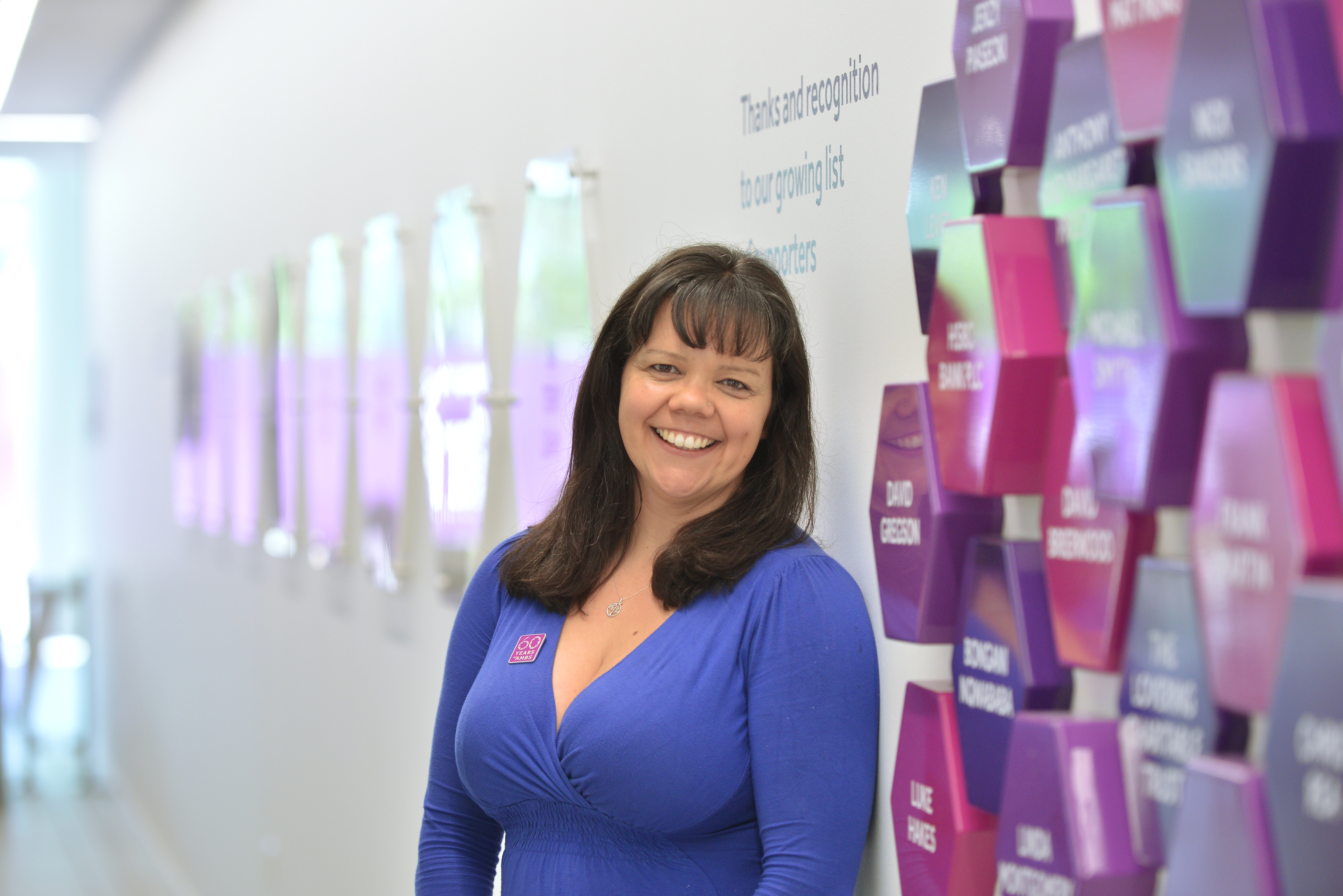
Jenni Rose is a Senior Lecturer in Accounting and Academic Lead for Employability at Alliance Manchester Business School, University of Manchester. Jenni was awarded a National Teaching Fellowship in 2025 (the first for AMBS) and holds Principal Fellowship of the Higher Education Academy. Her innovative work on self-feedback has trained over 1,000 educators across multiple continents. As Chair of the ICAEW Academia and Education Committee, she supports the professional development for 20,200+ accounting educators globally. Jenni co-founded the University of Manchester Teaching and Scholarship Network (450+ members) and co-edited the Accounting Streams open-access textbook (83k+ interactions across 131 countries). Her research focuses on intellectual development, active self-feedback methodologies, and dialogic pedagogy in accounting education.


 #LTHEchat