#LTHEchat and #HEAchat with Dr Kate Cuthbert. @cuthbert_kate. The rearview mirror: Embedding conference learning in your teaching practice

Its back on the 24th February – the HEA #HEAchat and the #LTHEchat combo!

Both hashtags will be used during this discussion.

We have all been there. Sat in a conference room hearing the great ideas streaming from the presenters; ideas that strike a chord with your teaching practice or perhaps an answer to the problem you and your colleagues are battling with. We scribble on the Powerpoint handouts, swap cards with the speakers and pledge to bring that idea to life once back home. And then we go home, emails kick in, so do the assessment boards and teaching. The euphoria and buzz that comes from being part of a conference can fade pretty quickly.

This blog post is about the conference rear-view mirror; a call for reflecting on and effectively actioning the learning you will harvest from the HEA Health and Social Care Conference . We will be discussing the ideas in this blog post in our next twitterchat on 24 February 2016 20.00 GMT. This twitter chat takes place at the end of the first day of our conference so hopefully you will be buzzing with ideas that are ripe for embedding into your practice once you are home but:

  • How do you optimise the conference experience to ensure enhancement of your practice?
  • How do you best engage colleagues back in your institution?
  • What are the crucial steps from a conference attendance to the sharing of ideas and ultimately the enhancement of your teaching practice?

To unpick these questions we not only need to consider practical issues when we return to work but also the cultural habits within organisations that facilitate or hinder the adoption of new ideas.

In 2004 a systematic review was commissioned by the Department of Health which investigated the processes of diffusion, dissemination and the elements that determined whether or not a good idea gained traction within an organisation (How to Spread Good Ideas, Greenhalgh et al 2004). So what can help the transition from inspired by a conference to applying the ideas into your practice?

  • Making use of the formal and informal channels. Diffusion and dissemination are key mechanisms for distributing ideas across an organisation, however they do need active attention. Talk about the ideas you heard during the conference and how it made you think/feel about what is happening in your workplace both in scheduled meetings and over coffee. Linking back up with the networks you developed during the event is a good way to stay inspired and to interrogate how they kicked things off. You could always continue the conversation on !
  • Framing your conference experience. Often the quickest way to get an idea off the ground is to share your enthusiasm with others. The School of Health Care Radicals, led by Helen Bevan advocates social movement principles as an essential part of the change process. To help others engage, you must frame your message through story-telling that is personal, emotive and creates a sense of urgency. What is the conference story you will tell colleagues? And how will you frame it to achieve buy-in of both hearts and minds? Pictures, a twitter storify or you may have been inspired by our keynote Dr Kirsten Jack to explore poetry as a medium. We are also capturing the conference discussions via a graphic artist, Simon Heath – a great way to strike up a conversation with those who may help get an idea into practice. The critical task here is the match your frame with the person you are garnering engagement from – know your audience!
  • Matching the ideas from others to your organisational context. What works in one place may not work in another. The idea invariably will not directly parachute into your practice and match perfectly with your learners or your faculty. But working out the readiness of your organisation to pick up and run with this idea is a key consideration. If the match isn’t in place then a process of adaption is needed both of the idea and context. Inadequate adaptation is often why a good idea fails when situated in another context. The Habits of an Improver by Bill Lucas and Hadjer Nacer (2015) sets out the characteristics, required tenacity and importantly the methodology for increased success in embedding improvements.

So while you are at the conference prime yourself to re-enter orbit back into your workplace and ensure you find some reflection time to help you reinforce the conference learning. Ride on the wave of enthusiasm you are experiencing at the conference to make a resolution to put at least one new idea into action. Why not book a slot in your diary when you can catch up on the conference papers, share the idea with your students or add a reflective tweet to

Join the conversation to share how you best take a purposeful look in the conference rear view mirror to ensure that good ideas take hold

The next #HEAchat, which will be a combined Twitter chat with , takes place after our first day at the conference at 20:00 on 24 February 2016. The chat will therefore provide an opportunity for delegates to make connections, capture learning from the first day and identify the sessions you want to attend on the second day. So whether you are twitter newbie or an experienced tweeter, coming to the conference or an interested observer, check out the Twitter chat on 24 February at 20:00.

You can read more about how to take part in the chat here but it is very simple; just log on to Twitter on 24 February at 20:00 and look for the hashtags and to join the discussion. We look forward to hearing about your experiences and sharing ideas.

– See more at: https://www.heacademy.ac.uk/blog/rearview-mirror-embedding-conference-learning-your-teaching-practice#sthash.maXHqAzY.dpuf

If you would like to join a future organising team, please get in touch with us via LTHE.tweetchat@gmail.com .

Chrissi and Sue on behalf of the #LTHEchat steering group and organising team.


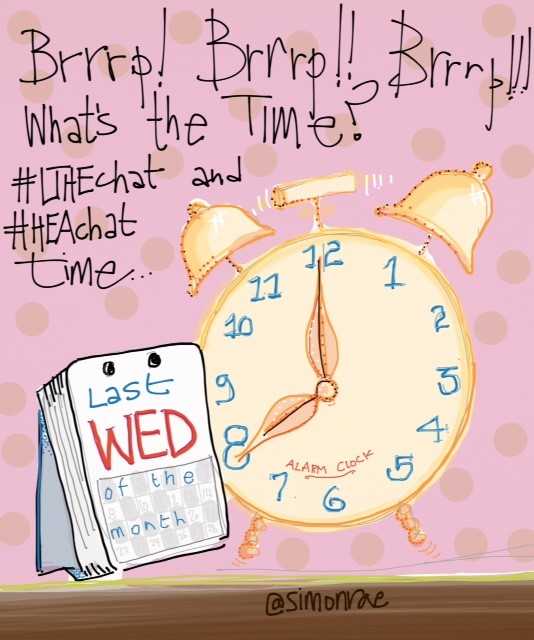
Remember to set your alarms!
Posted in Uncategorized | Leave a comment

#LTHEchat No 46 Sue Watling (@suewatling): Digital inclusion and accessibility

Sue WatlingI’m an Academic Technology Enhanced Learning Advisor in the Learning, Enhancement and Academic Practice (LEAP) Directorate at the University of Hull. Prior to this, I was Senior Lecturer in Education Development at the University of Lincoln. My current research is e-teaching; the missing element of e-learning and I support the pedagogical use of VLE and development of digital capabilities for staff and students. I’ve worked with educational technology since the 1990’s; the days of DOS, 5 ¼ inch floppy disks and dot matrix printers. For me, accessibility is about awareness of the diversity of ways people use computers and access the internet, and taking steps to avoid creating inadvertent barriers when uploading learning and teaching resources.

Digital inclusion and accessibility

It seems likely the proposed changes to the DSA will remove many existing support mechanisms for students who have previously benefited from digital assistance in their studies. Without the DSA payments, institutions will need to revisit their duty to make reasonable adjustments to ensure equality of access. The Digital Inclusion and Accessibility #LTHEchat invites suggestions for reasonable adjustments we can all make within our day to day digital practices. Inclusive design isn’t just about enabling people with disabilities to have equality of access. It’s about ensuring access for everyone, whether they’re using mobile devices, different screen sizes or lacking plug-ins such as Flash etc. It’s also about supporting a range of learning preferences. I often work with a high screen magnification so it helps if content creators have checked their documents still work on 200+ zoom (Ctrl + on your keyboard is a quick way to check this out). Using headings and styles in Word makes it easier to navigate through long documents. Reading online benefits from good colour contrast so avoid combinations like grey text on a white background. Little changes make big differences and this hour is about sharing tips and advice while reminding ourselves how important it is to keep accessibility in mind.

If you are reflecting on this specific #LTHEchat please share your post with us so that we can reblog.

If you participated/are participating in any way in the #LTHEchat, please complete our short survey and let us know if you have other suggestions on how we could make the #LTHEchat more valuable for you. Thank you.

See you Wednesday, same time, same place 😉 – 8-9PM GMT #LTHEchat

The storify is available here.

The visualisation will be available here

The LTHEchat team
ps. If you would  like to become part of a future organising team, please get in touch with us.


Posted in guest | Tagged , | 3 Comments

A new story from our latest #LTHEchat Golden Tweeter award winner Neil Withnell @neilwithnell

Golden Tweeter award

We invited Neil Withnell (@neilwithnell) who has just received his #LTHEchat Golden Tweeter award, to tell us what LTHEchat means to him and the significance of the award. Below is Neil’s response along with a video he created to share his story.

“I was extremely surprised, and greatly honoured, to receive the #LTHEchat Golden Tweeter Award. I always look forward to the Wednesday twitter chat as I find this to be both educational and fun. As an academic I enjoy the opportunity to engage with others and to discuss important topics that face both students and colleagues alike.

I thoroughly enjoyed being part of the organising team from September 2015 to December 2015 and hope to be part of this again, a great way to immerse yourself in the inner workings of the chats – they don’t just happen!

Always wanting to develop myself, the chats are a great resource that provide networking and research opportunities – this I see as part of my life so to be rewarded for this is truly amazing! Thank you for the award and I hope to make good use of it – see you on a Wednesday.”

We will share further #LTHEchat stories here in the future. If you are displaying your Twitter badge on your site, we would love to hear from you as well. 

The #LTHEchat team

Posted in community | Tagged | Leave a comment

#LTHEchat No 45 Julie Tardy @jtardy81: Integrating complexity in curriculum designs – Intégrer la notion de complexité dans le curriculum

s200_julie.tardyJulie Tardy (@jtardy81) is a Learning Technologist at Université de Technologie de Compiègne in France where she manages digital projects as well as a community manager for Unisciel , one of the 7 French Digital Thematic Universities. After several years teaching around East Africa and managing online digital courses, her research interests are based around evaluation and the development of adaptive tools. She is part of a Unisciel team working on setting up and testing an algorithm defining levels of complexity for basic sciences content (physics, maths, chemistry and biology coming up) on the grounds of Bloom’s taxonomy.

In preparation for the semester to come, the idea is to discuss the choices of content that teachers make in the context of complexity. The structure of a course curriculum entails providing a progression, targeting the acquisition or enhancement of skills knowledge and capabilities, so how does the magic happen?

And for our friends across la Manche…

Julie Tardy (@jtardy81) est ingénieure pédagogique à l’Université de Technologie de Compiègne où elle dirige différents projets numériques ; elle est également chargée de communication auprès d’Unisciel, et gère la coordination du MOOC Quidquam sur la culture scientifique. Après plusieurs années passées à enseigner et gérer des dispositifs de cours en ligne en Afrique de l’Est, elle s’intéresse désormais à la problématique de l’évaluation et au développement d’outils adaptatifs de contenus d’évaluation. Elle fait partie d’une équipe Unisciel qui développe et teste un algorithme définissant des niveaux de complexité pour des contenus en sciences fondamentales, basé sur la taxonomie de Bloom.

En lien avec la préparation du semestre à venir, cette session a pour objet la discussion autour du choix des contenus par les enseignants selon leur complexité. La structuration d’un curriculum implique la définition d’une progression, visant l’acquisition ou l’approfondissement de connaissances, capacités et compétences ; discutons de comment cela se passe chez vous !

Please note, this will be a bilingual chat, French and English.

If you are reflecting on this specific #LTHEchat please share your post with us so that we can reblog.

If you participated/are participating in any way in the #LTHEchat, please complete our short survey and let us know if you have other suggestions on how we could make the #LTHEchat more valuable for you. Thank you.

See you Wednesday, same time, same place 😉 – 8-9PM GMT #LTHEchat

The storify is available here.

The visualisation will be available here

Captured by Prof. Simon Lancaster:

879 Tweets
205 Re-Tweets
101 Users
33 HashTags
#LTHEchat

The LTHEchat team
ps. If you would  like to become part of a future organising team, please get in touch with us.


Posted in guest | Tagged , | 2 Comments

#LTHEchat No 44 with Chris Wiley @Chris_Wiley: Using music creatively to enhance non-music teaching

From the alphabet song to ‘The Elements”, music has the power to facilitate learning at all levels of study. It introduces an experiential, interactive component to a teaching environment that may otherwise be transmissive and unstimulating.

This #LTHEchat will explore how music may be used to enhance teaching even in non-music subjects (by which I mean subjects which – unlike, say, music performance, dance, or musical theatre – do not naturally include music). It will provide the opportunity for participants across the disciplines to share practices in which they have incorporated music creatively within their teaching or assessments, whether singly or in combination with other arts. Reciprocally, it will enable those who have not yet brought music to their classroom to gain ideas about ways in which they may seek to introduce this added dimension to their teaching.


If you are reflecting on this specific #LTHEchat please share your post with us so that we can reblog.

If you participated/are participating in any way in the #LTHEchat, please complete our short survey and let us know if you have other suggestions on how we could make the #LTHEchat more valuable for you. Thank you.

See you Wednesday, same time, same place 😉 – 8-9PM GMT #LTHEchat

The storify is available here

The visualisation is available here

The LTHEchat team
ps. If you would  like to become part of the next organising team, please get in touch with us.

Posted in guest | Tagged , | 6 Comments

#LTHEchat and #HEAchat with Prof. Simon Lancaster and Sue Beckingham

We are delighted to collaborate with the HEA chat for the first time this Wednesday on the topic of  ‘The four dimensional conference: using social media at conferences’.

Taking us through the evening will be Professor Simon Lancaster and Sue Beckingham.

Whether it is for networking, impact or CPD, twitter can add additional dimensions to the conference experience. In this blog post Professor Simon Lancaster, National Teaching Fellow and keynote at the forthcoming HEA STEM conference, and Sue Beckingham, HEA Fellow and prolific advocate for using social media for learning and teaching, explore how using twitter can leverage the value of conferences. We will be discussing this topic in our next #HEAchat at 20:00 on 27 January.

The academic conference format has endured largely unchanged for decades. Despite the affordances of the internet, the opportunity to physically meet colleagues remains highly prized.

The format of the conference and the role of the lecture within that form have been hotly debated both on Twitter and between popular bloggers in the STEM community1. In practice the majority of conference presentations adopt a rather traditional style with all that entails. If the speaker has raced through quickly enough and / or is firmly steered by the chair then there will be time for questions. And of course we all know what the potential pitfalls of the conference question session are2. Whether it is a “good question” or a self-indulgent rant, it is still only one person’s question, the format will never permit everyone a voice. The conference, at least the formal sessions, might then be described as a linear experience.

Nowadays we all want to be heard, and we struggle to justify attending a conference unless presenting at least one paper. Conference organisers know this and so we have a proliferation of parallel sessions. Interesting choice of the word ‘parallel’, implying that the linear threads are never intended to cross; the result is a two-dimensional plane on which all we can do is touch the surface. Choices between sessions have to be made and the grass is always greener on the other side.

Our final observation is that the traditional conference is ephemeral and exclusive. You had to have been there. The networks you form might endure but will the handwritten notes you scribbled on the freebie notepad?

Given the authors, many of you will have guessed this blog post was always destined to arrive at Twitter. Sue has written extensively on the value of social media to academics3 while Simon can tell you exactly what he thought of every lecture he attended at the 2013 HEA STEM conference4. Twitter can add additional dimensions to the conference experience:

1. Presenter and audience interactions

Twitter can render any presentation a communal event where the presenter encourages participants to tweet answers, comments, corrections and to engage in discussion. The participants themselves are able to use Twitter to crowd-source a rich and lasting record of the session.

2. Interconnected audience interactions

Twitter can thoroughly intertwine the threads of parallel sessions creating interconnected collections of stories across the conference. Analogous information between different sessions can be picked up and synergies formed to take the discussions forward online and arrange face to face meetings. Imagine a set of threads constantly colliding in a ball of twine.

3. In person and virtual interactions

The use of an event hashtag means that Twitter can facilitate the participation of people who could not attend the physical venue. By following the aggregated tweets, anyone can respond, raise questions, and provide links to associated information. Even the passive observer has an opportunity to develop their network by following interesting contributors to the conference Twitter stream.

4. Multiplicity of pre and post event interactions

The conference does not need to end after the closing remarks. Twitter can keep the discussion going and through tools like Storify keep it accessible and alive for years to come. Presenters can tweet links to their presentations uploaded to Slideshare and indeed openly share via other social networks. Participants may choose to blog about the event and embed key Tweets to emphasise points made. Within this space readers can be encouraged to interact with the blog post by ending with a question or call for feedback/opinion using the comments.

Twitter can deliver interconnectedness and timelessness to the traditional conference experience. What would you rather experience a two- or a four-dimensional conference? You know how to prepare for .

The next #HEAchat, which will be a combined Twitter chat with #LTHEchat, takes place the night before the conference at 20:00 on 27 January. The chat will therefore also provide an opportunity for those attending to make connections, identify the sessions you want to attend, or get an idea of what is happening in Learning and Teaching in STEM disciplines. So whether you are twitter newbie or an experienced tweeter, coming to the conference or an interested observer, check out the Twitter chat on 27 January at 20:00.

You can read more about how to take part in the chat here but it is very simple; just log on to Twitter on Wednesday 27 January at 20:00 and look for the hashtags  and to join the discussion. We look forward to hearing about your experiences and sharing ideas.

Prior to the session

It would be helpful to have two or three examples in your mind of where (if) you have tried to use social media at conferences – what was your experience?

If you are reflecting on this specific #LTHEchat please share your post with us so that we can reblog.

Outputs after the session

First joined #LTHEchat & #HEAchat Visualisation created by Stephen Powell using Martin Hawksey’s tagsexplorer.

The storify has been created and contributed by Kandy Woodfield (HEA) https://storify.com/jess1ecat/heachat-lthechat-27th-january-2016

If you participated/are participating in any way in the #LTHEchat, please complete our short survey and let us know if you have other suggestions on how we could make the #LTHEchat more valuable for you. Thank you.

See you Wednesday, same time, same place 😉 – 8-9PM GMT #LTHEchat

The LTHEchat team
ps. If you would  like to become part of the next organising team, please get in touch with us.

Posted in guest | Tagged , , | 6 Comments

#LTHEchat No 43 with Prof. Norman Jackson

We are delighted to have Prof. Norman Jackson @lifewider1 with us this week to “Explore Creativity in Development” together.

norman2

Prof Norman Jackson (image source)

Norman Jackson (@lifewider1) is Emeritus Professor at the University of Surrey and is Founder of the ‘Lifewide Education’ and ‘Creative Academic‘ (@academiccreator) educational networks and resource hubs. His interest and involvement in creativity in higher education began in 2001 when he established the ‘imaginative curriculum network’ to connect people who were interested in supporting students’ creative development; this cause has now been taken up by Creative Academic.

Norman provided the following introduction for the tweetchat:

Development  is the fundamental process that enables everyone to change themselves and to bring about significant changes in the world around them. As an intentional act it involves a process to achieve or master certain things and a trajectory along which certain things change, including ourselves. Our developmental projects through which we try to accomplish new things, provide the host for much of our individual and collective creativity and this LTHEchat explores how, what, why and when creativity emerges from and through our own developmental projects – be they personal, professional and/or organisational. The conversation is formed around our experiences of development but we want to use any insights gained to inform our educational and professional development designs and practices.

Prior to the session

1) Please complete this short survey which you can access at https://www.surveymonkey.co.uk/r/FQVQX82

2) It would be helpful to have two or three examples in your mind of experiences where you have tried to develop something and/or innovate in your own practice.

The Storify has been kindly contributed by Chris Jobling and is available here

Visualisation made possible by Martin Hawksey.

If you are reflecting on this specific #LTHEchat please share your post with us so that we can reblog.

If you participated/are participating in any way in the #LTHEchat, please complete our short survey and let us know if you have other suggestions on how we could make the #LTHEchat more valuable for you. Thank you.

See you Wednesday, same time, same place 😉 – 8-9PM GMT #LTHEchat

The LTHEchat team
ps. If you would  like to become part of the next organising team, please get in touch with us.


Posted in guest | Tagged , | 2 Comments

We are back #LTHEchat No 42 with #BYOD4Lchat

Hello everybody and welcome back to the #LTHEchat,

We  hope you enjoyed your first week back to work and are getting ready for our first tweetchat of the year with Stephen and Ian, the new organising team until March 2016:^)

Every last Wednesday of the month, we are joining up with the #HEAchat and we are looking forward to doing this for the very first time at the end of January.

This Wednesday, we have linked up with the BYOD4Lchat which will be running everyday next week and it is another great opportunity to bring the two communities together. If you want to participate in the 5 day BYOD4L course, just jump in! No registration is required.  The discussion will be around how we can use smart devices for learning and teaching with a specific focus on curating.

Questions will be posted by the BYOD4L organising team and supporters from the @BYOD4L account on Twitter and retweeted by @LTHEchat.

If you are new to tweetchats, please visit our help page. You might wish to try out the Tweetdeck app or web version to make following and managing tweets easier https://tweetdeck.twitter.com/.

Please remember to use both hashtags this Wednesday.

#LTHEchat and #BYOD4Lchat

The storify can be accessed here.

If you are reflecting on this specific #LTHEchat please share your post with us so that we can reblog.

If you participated/are participating in any way in the #LTHEchat, please complete our short survey and let us know if you have other suggestions on how we could make the #LTHEchat more valuable for you. Thank you.

See you Wednesday, same time, same place 😉 – 8-9PM GMT #LTHEchat

The LTHEchat organising team.
ps. If you are interested in joining the next organising team, please get in touch with Chrissi at c.nerantzi @ mmu.ac.uk (without the spaces) to discuss this possibility.

Posted in announcement | Tagged | 1 Comment

We have (more) news for you!!! Together is better! #lthechat #heachat

Hello everybody and Happy New Year!

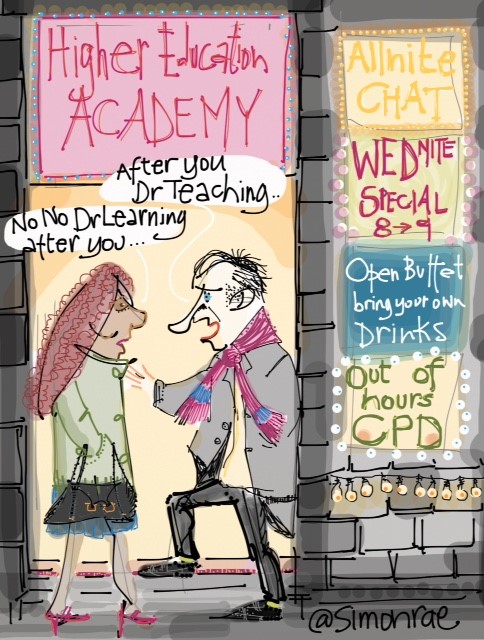
In the spirit of collaboration and to strengthen the reach and impact of both tweetchats, Simon Rae HEAthe #HEAchat and the #LTHEchat have agreed to unite from January 2016. These are very exciting news for all of us!

On the 27th January the two chats will combine with #HEAchat moving into the #LTHE timeslot of 8-9pm on the last Wednesday of each month. Both hashtags will be used during this discussion.

Yes, the chat just got even bigger – together is better!

Bringing together the two communities will extend
the range of voices heard, the issues discussed and widen the networks of participants in both chats.

WE would like to thank the HEA and especially Kandy Woodfield for embracing this idea and making this collaborative adventure happen.

We are also delighted to welcome Dr Stephen Powell @stephenp and Ian Tindal @iantindal to the brand new #LTHEchat organising team and wish them the very best in their new roles.

If you would like to join a future organising team, please get in touch with us.

Chrissi and Sue on behalf of the #LTHEchat steering group and organising team.

Simon RaeRemember to set your alarms!

(graphics by Simon Rae @simonrae)

Posted in announcement | Leave a comment

#lthechat 2015 in review, thank you all

Hello everybody,

We just received the following 2015 annual report from WordPress.com for the LTHEchat blog and would like to share it with you.

Here’s an excerpt:

A New York City subway train holds 1,200 people. This blog was viewed about 7,000 times in 2015. If it were a NYC subway train, it would take about 6 trips to carry that many people.

Click here to see the complete report.

We thank you all for being part of the #LTHEchat community and your strong commitment to sharing, learning and development.

None of this would have been possible without you!!!

Happy New Year,

The #LTHEchat steering group

Posted in review | Tagged , | Leave a comment