Welcome back to #LTHEchat and welcome to Sue and Adam who are taking on the challenge of organising the forthcoming chats between now and the end of March 2024. The schedule is looking really healthy, plenty to keep us tweeting right into Spring!
More about Sue
Sue Lee (SFHEA) is a Senior Research Fellow in the Staffordshire Centre of Learning and Pedagogic Practice. Sue’s current research is on innovative pedagogies with a focus on Phenomenon-Based learning. In her previous role, leading a team of learning technologists for 10 years, Sue gained considerable experience running pedagogic and technical workshops including formal accredited courses at postgraduate level. Sue is currently studying for a PHD looking into the intangible assets that influence the student journey. Heavily involved in the Inclusion agenda at the University since 2004, her masters’ research was focused on the impact that technology has for students with disabilities.
Over the years, Sue has joined in many LTHEChats and led 2.
“I have followed many of the leads that this generous group has highlighted taking me to places I may never have found on my own. I am looking forward to helping organise and join in some fantastic discussions.”
and here’s Adam!
Adam Tate (SFHEA) is a Senior Lecturer in Academic Practice. He joined NTU’s Academic Practice team in March 2021 and is Co-Course Leader of the Academic Professional Apprenticeship (APA) and the Postgraduate Certificate of Learning & Teaching in Higher Education (PGCLTHE). He is passionate about effective education, utilising appropriate pedagogies for the educational setting, and removing barriers to participation. Alongside his work at NTU, he is studying for a PhD in Education at Oxford Brookes University; his PhD looks at how full-time undergraduate students’ behaviours are influenced and shaped by universities as an extension of the soft power of the State.
“LTHEChat is a highlight of the week, coming together with other members of the international Learning & Teaching community, it is a catalyst of thought and fertile ground for discussion on established and emerging matters in learning and teaching in higher education. I am delighted to be a member of the LTHEChat Organising Group, to help facilitate timely and important conversations, but importantly to give back to this amazing LTHE community.”
Get ready for the first chat of the season- 10th January 2024 8pm GMT
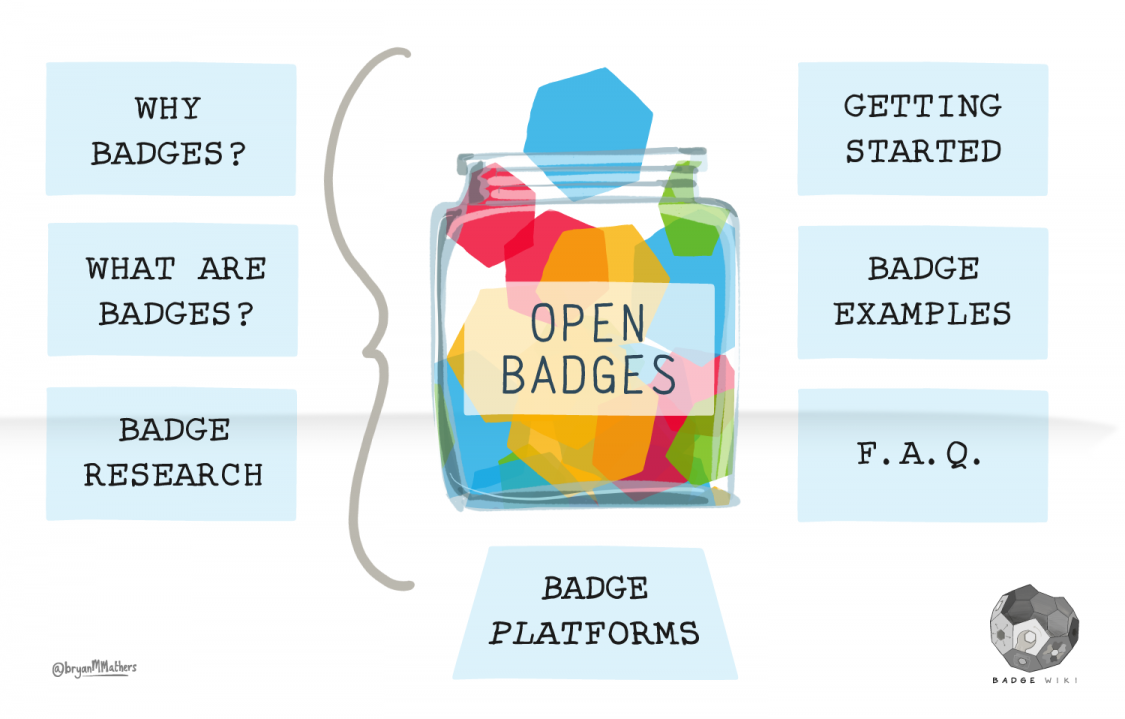
An open digital badge can provide evidence of engagement in professional development activity.
Image by @bryanMMathers
Although #LTHEchat have been issuing open digital badges since 2014, we have now undertaken a project to redevelop a suite of open digital badges to recognise #LTHEchat community involvement in a more formal way, giving the opportunity for contributors to include their badges as part of their evidence of involvement in a professional community.
Read more about open badges . We recommend using a free account with Open Badge Passport to collect, manage and display your badge.
Our first steps to badging #LTHEchat team members since 2014 will happen in December 2023 with the following badges:
#LTHEchat Organising Team Member
The #LTHEchat Organising Team Member badge will issued in December 2023 and periodically throughout the coming years at the end of your serving term. If you have been a member of a previous Organising Team look out for an email (sometimes they get filtered as spam) or contact us via the #LTHEchat blog or X (formerly Twitter).
#LTHEchat Mentor
The #LTHEchat Mentor badge is issued to colleagues who provide support for new Organising Team Members throughout their three monthly term. This will be issued automatically at the end of the first term served and we will issue to all those who have served as mentors so far on December 21st 2023.
If you have not received your Mentor badge after your term please contact us!
The badging initiative for the #LTHEchat community is being organised by Deb Baff and Teresa MacKinnon. The Open Badge Factory have supported this initiative up to 2025.
Debbie Baff is a Subject Specialist (Digital Leadership and Culture) at Jisc and has extensive experience of working in Higher Education & the voluntary sector. An Open Educational Practitioner and PhD Student in E Research and TEL she is a passionate advocate for the importance of online social learning and collaboration. An open digital badges enthusiast and keen sketchnoter, Debbie has a creative approach to learning , teaching and building communities both online and in person. Debbie is a Fellow of Advance HE, a Certified Online Learning Facilitator and a CMALT holder.
Teresa MacKinnon has now retired from her role as Associate Professor at the Language Centre, University of Warwick. She is a Senior Fellow of the Higher Education Academy and an Honorary Life Member of the Association for Learning Technology (ALT). Teresa has extensive experience of the integration of computer mediated communication in learning design and continues to maintain a professional presence online as she enjoys connecting educators internationally across sectors. She advocates open educational practice and is active in the areas of virtual exchange and open badges.
This week’s chat is led by the newly formed Durham University Creative Pedagogies Research Group. We warmly invite you to join us, beside the crackling festive fire, with a warm drink for a chat where will explore creativity together, and ask you to challenge yourself to really think about and explore your role as a practitioner and ponder on what creativity means to you in your context.
Creativity may be interpreted in different ways and is often associated with some disciplines more than others. Dance is an example used a lot, this is understood as a creative discipline and it would come as no surprise that students of dance would be creative and would learn in creative ways. But what about science. Is chemistry as a discipline creative? We’d say yes! There is space for creativity in any subject, at any level, it just depends on your perspective.
Creative pedagogies exist at the intersection of the art and science of teaching and they can be used in an education context to teach learners how to learn creatively, problem-solve, take risks and to become creators of themselves and their future (Cremin and Chappell 2021).
We are advocates of using creative pedagogies with our students at Durham University and some examples of ways in which we do this are:
Asking students to explore their teaching philosophy by creating a playlist of songs that each represent an aspect of it
Teaching about generative AI through developments of educational bots (using Cody) for example a bot to write learning outcomes
Using escape rooms to teach about key disciplinary concepts in chemistry and sports science
Teaching about art through a Sotherby’s style auction including valuation of artefacts, validation of artefacts and logistics
In this week’s chat we will explore creativity and what it means to you as a practitioner, with a festive twist! We are really interested in understanding your role within education because we ourselves are a collection of interdisciplinary educators and support staff who have experience of and exposure to multiple teaching disciplines.
We hope you will have some time to explore and reflect on strategies to teach creatively (promoting creative thinking in students) as well as teaching with creativity (developing new approaches to teaching) and that you will share this with us.
We will be using this chat as an opportunity to start the process of evaluating and investigating educators perceptions of creativity and creative practices and invite you to join us for a further conversation about any of the topics discussed. Please do get in touch with rachelle.e.obrien@durham.ac.uk if you are interested to be further involved.
References:
Teresa Cremin & Kerry Chappell (2021) Creative pedagogies: a systematic review, Research Papers in Education, 36:3, 299-331, DOI: 10.1080/02671522.2019.1677757
Guests biography
The Durham University Creative Pedagogies Research Group is a group of educators from across Durham University. The aim of the Creative Pedagogies Research Group is to explore, validate and disseminate strategies that academics can use creatively to elevate and use student voice to enhance their learning.
Objectives
To explore alternative contexts and environments
To explore different discipline and phases.
To explore fostering a creative disposition and mindset
Building on my recent article on digital nudging, I call for a need for the Learning Designers and Educational Developers to have a more nuanced discussion on digital nudging (Tate, 2023).
As a starting point, Thaler & Sunstein (2009:6) state that a nudge is “any aspect of the choice architecture that alters people’s behavior in a predictable way without forbidding any options or significantly changing their economic incentives.” Weinman et al. (2016: 433) provide a helpful further explanation that a digital nudge “is the use of user-interface design elements to guide people’s behavior in digital choice environments”.
If this principle is carried forward to digital nudging in Higher Education, there could be multiple angles such as marketing and financial choices. However, for this LTHE Chat, I will take a focus on the use of digital nudges for learning (engagement and outcomes) in Higher Education. Since, the move to online learning in response to the Covid-19 pandemic there has been a shift of focus on the importance of learning in the online domain. Virtual Learning Environments are much more consciously designed to enable student progress, in particular shaping student online experience to enhance motivation and ability (Plak et al., 2023). Increasingly, data is being utilised to help predict and nudge students’ online behaviours.
I nudge you to come and join me for amy #LTHEchat on digital nudging for the purpose of learning in the Higher Education sector.
References:
Plak, S., Klaveren, C. & Cornelisz, I. (2023) ‘Raising student engagement using digital nudges tailored to students’ motivation and perceived ability levels’, British Journal of Educational Technology, 54, pp.554– 580. Available: https://doi.org/10.1111/bjet.13261
Tate, A. (2023) “A nudge for positive behaviours: digital nudging in higher education”, Journal of Learning Development in Higher Education, (28). Available: https://doi.org/10.47408/jldhe.vi28.1026 .
Thaler, R. & Sunstein, C. (2009) Nudge: Improving decisions about health, wealth and happiness. London: Penguin Books
Adam is a Senior Lecturer in Academic Practice. He joined NTU’s Academic Practice team in March 2021 and is Co-Course Leader of the Academic Professional Apprenticeship (APA) and the Postgraduate Certificate of Learning & Teaching in Higher Education (PGCLTHE). He is passionate about effective education, utilising appropriate pedagogies for the educational setting, and removing barriers to participation. Alongside his work at NTU, he is studying for a PhD in Education at Oxford Brookes University; his PhD looks at how full-time undergraduate students’ behaviours are influenced and shaped by universities as an extension of the soft power of the State.
Against the backdrop of a dynamic HE environment that has seen a proliferation of digital learning technologies, a rapid transition to hybrid teaching approaches, and changing students’ needs and preferences around learning, we identified a need for a radical rethink of the possibilities for the location, design, and use of learning spaces and the potential for weaving in the technologies available. In response, and drawing on Wang et. al.’s work (2011) around a Kaleidoscope of Notions, we brought together leading thinkers in the field and invited them to take part in one of three symposia that were themed around Networks, Flexibilities, and Assemblages. Each symposium included a keynote speaker, a series of presentations, a panel Q&A, live social media discussion, and sketch notes, to stimulate reflection and debate.
Through the series, we also sought to engage as many voices as possible to help drive forward meaningful conversations, both within and in between each Symposium, around the potential for the future of learning landscapes within HE. To do this, we developed a programme of multimodal, synchronous, and asynchronous, in-person and online, opportunities. The scope and impact of the series were further enhanced through international contributions from Marguerite Koole, Pippa Yeoman, and Peter Goodyear each of whom provided valuable critical reflective insight on the core themes and emerging ideas from the series.
Together the insights and learning generated through the SRHE series speak to a significant and pressing need to (re)consider, and even (re)imagine, contemporary learning spaces less in terms of singular spaces and much more in terms of a person-environment system for inter-connected, physical, and virtual learning experiences in which digital tools, resources and places are an integral aspect of pedagogic design. A challenge for educators when taking a broader person-environment view is how best to utilise and arrange material, digital, and hybrid tools and resources to devise pedagogic patterns and assemblages that help students (re)connect what they are learning – ideas to thinking, principles to problems, theory to practice, and learning to live.
We look forward to engaging colleagues in a conversation about the design and associated practices involved in shaping future spaces for learning in HE.
References:
Wang, J., Lin, E., Spalding, E., Klecka, C. L., & Odell, S. J. (2011). Quality teaching and teacher education: A kaleidoscope of notions. Journal of teacher education, 62(4), 331-338.
Guests biography
Dr Jill Dickinson is a Reader of Law at Leeds Beckett University; a Recognised Practitioner in Academic Advising with UKAT; and a non-practising solicitor. As an SFHEA, she was appointed as a Reviewer for the Advance HE Global Teaching Excellence Awards, and she has been shortlisted for NTF. Her research explores both place-making and professional development and has been recognised in the Emerald Literati Awards. Jill sits on a number of editorial boards including Teaching in Higher Education: Critical Perspectives, and she recently co-edited a collection that was published by Springer, entitledProfessional Development for Practitioners in Academia: Pracademia.Switzerland: Springer Nature.
Professor Sam Elkington is Professor of Learning and Teaching at Teesside University where he leads on the University’s learning and teaching enhancement portfolio. Sam is a PFHEA and National Teaching Fellow (NTF, 2021). He has worked in Higher Education for over 15 years and has extensive experience working across teaching, research and academic leadership, and policy domains. Most recently Sam worked for Advance HE (formerly the Higher Education Academy) where he was national lead for Assessment and Feedback and Flexible Learning in Higher Education. Sam is also an executive committee member and pedagogic research lead for the Association of National Teaching Fellows. Sam’s most recent book (with Professor Alastair Irons) explores contemporary themes in formative assessment and feedback in higher education: Irons and Elkington (2021).Enhancing learning through formative assessment and feedback. London: Routledge.
This #LTHEchat post and associated tweetchat aims to explore how you might use non-written ‘creative’ approaches to support reflection on learning and/or as pieces of formative or summative assessment. In particular I’d like to explore issues of degree of comfort, choice, student and facilitator preparation and robustness in marking various creative forms. And I end in a plea for any specific examples of approaches that you’d be willing to share.
Creative approaches to support reflection on learning
First, what is creativity? The Cambridge dictionary defines it as ‘the ability to produce or use original and unusual ideas”. Sir Ken Robinson says creativity is ‘applied imagination’ – the process of having original ideas that have value”. It requires process, originality and determining if the work is any good.
The CreativeHE website notes the goal of its community is to ‘support pedagogical rebels and free-thinking innovators in experimenting with, developing, sharing and getting support for novel learning and teaching ideas’. I have learnt a lot from my rebellious peers in engaging in their sessions!
Given that a more experienced colleague has often told me that there are very few ‘new’ ideas in education – just a rehash of previous concepts and activities – are there any truly creative ideas out there? Ken Robinson recognises that there are few original concepts and ideas – but the important thing is that they might be new to you, your peer group or your participants and so there IS creativity and originality in their application. And you don’t have to be ‘arty’ – scientists exist who apply their intelligence to explore developing products or testing concepts in a new creative way.
Can you teach people to be creative? Well if you view teaching in a strict interpretation as direct instruction on a topic, then probably not. Again referring to Ken Robinson, he reminds us that teaching, and especially in fostering creativity, is about enabling, providing opportunities, encouragement, facilitation and mentoring. Previous LTHEChats on sketchnoting and #CreativeHE sessions have for example adopted exactly that approach and that’s what I tried to adopt in the approach I outline below.
What is reflection?
This blogpost isn’t about the various models about reflection and reflective practice, so I’m going to simply draw on this definition “a deliberate and conscientious process that employs a person’s cognitive, emotional and somatic capacities to mindfully contemplate past, present or future actions in order to learn and to better understand and potentially improve their actions” (Harvey, Coulson and McMaugh, 2016 quoted in the Advance HE (2020) publication authored by Harvey et al in the references at the end.)
Reflection and being a reflective practitioner is key to the development of the practice of an educator at all levels of compulsory, further and higher education. Its often “taught” explicitly within PG Cert programmes and common in professional disciplines such as Medicine, Health Care and Social Work.
Where my ‘creativity’ exploration started
In 2018, I was particularly inspired when one of the programme leaders of a HE fellowship programme shared her use of visual metaphors to help prompt staff to reflect on their teaching philosophy. I incorporated this imagery, along with ‘bring a significant thing – object/picture/music/ etc’ – to the first session of the module I taught on our PG Cert HE where we examine the development of educator identity.
That approach was successful, with many participants finding that being able to visually represent their teaching approach to be quite liberating and guiding for their future development. After a period of CPD learning from peers, I engaged in the international Active Learning Conference in July 2022 where Jamie Heywood from Anglia Ruskin University facilitated a fabulous workshop sharing several creative ways to reflect. I decided to research various approaches, gain examples where I could and incorporate this further into my session.
I offered participants the choice of reflecting on their teacher identity and journey to date using one of the following:
The final reflective assignment for the module I teach could use written or non-written approaches (e.g. podcasts, presentation, development of a video, pathwork text using collage, MS Sway etc) and so it seemed at odds to me that I did not use such approaches earlier in the module as preparation.
Scaffolding Learners (and facilitators!) for the creative task
The pattern of synchronous teaching on the module, means that there was no opportunity to practice or provide a session on these approaches so I decided that the production and discussion that ensued would not be assessed.
I had considered asking participants to reflect using only one particular approach. In doing so, it might result in a more ‘consistent’ output for individuals to discuss. However I felt this was not appropriate and not inclusive. Instead, I referred to the original sources for the above ideas (see references) and provided examples for each, where I could. Above all, they needed to choose an approach they were comfortable with, and had the time to complete.
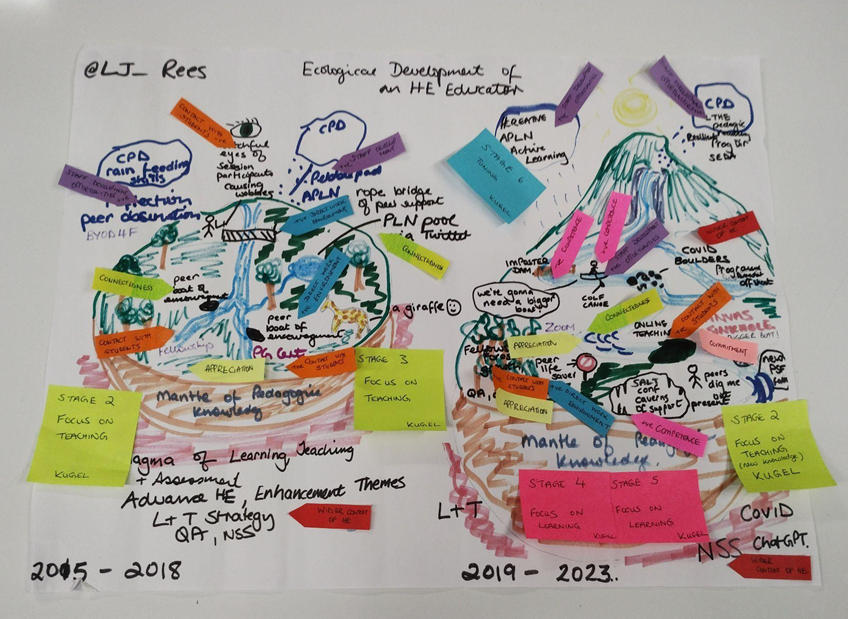
It was important for me to consider how long it might take me to produce my teacher journey using one of these options. I’d previously produced a timeline which I shared in a slidedeck, so I chose the Academic Island concept. (As a geographer this resonated with me, so I represented my ‘educator journey and identity’ through a series of volcanic islands, developing as the tectonic plates shifted and succession of plants took place. I annotated it with reference then to the theories of development which they were encouraged to do AFTER bringing their creative output to the session for discussion. Doing the activity was vital to see how long this would take and if I was expecting them too much and so I shared my output with them, emphasising that I was NOT considering artistic competency – as you can see from below!
[Image credit: Louise Rees, 2023]
As a music lover I could find individual pieces of music that reflected my mood or approach at a particular time, but could not find a music playlist that encompassed my journey without considering issues of inappropriate lyrics later in the song or being limited by my own musical preferences and genres.
The opportunities creative reflective approaches provide
Providing a range of creative approaches that participants can choose addresses issues of inclusion, student choice, fosters deeper, richer reflection (in my experience) and can also address concerns about the authorship that a written reflection might present in the age of AI (because I coupled it with in-class ‘presentation and explanation’ of what the image holds for that individual). Additionally it made it far more interesting for me to look at the variety of what each person produced to tell their story.
Two participants shared their reflection on the activity at our internal conference, and commented that the activity, while initially reluctant to engage with, provided freedom of expression and diversity of approach. They noted it ended up being a relaxing and enjoyable activity, provided a relatability to common issues with peers and for one member of staff, inspiration to apply something similar with her own students.
Some of the pitfalls to consider
After the session, I sought feedback from the cohort and reflected on it as an approach. Here are some of my tips;
Ensure that you provide time for participants to undertake the activity. Some of this required deep thinking, preparation and sourcing of drawing materials, for example.
Ensure that you have sufficient examples to use to offer variety, and where possible do as many as you are able. (I was missing some – see my plea below!)
Consider assigning some marks to completion and participation. I didn’t include this as a piece of formative assessment and only a handful of participants actually included any of their visual output within their written assignment. I wondered if some might entirely adopt a ‘creative’ approach to their final submission, but only a couple did – a podcast and a ThingLink. If marks had been assigned from the start, would they have put more effort into it with the anticipation of developing it for their final submission?
Be prepared for attendees to NOT have done the activity and think about how you might re-jig any pairings so that at least one person has done something to share. Consider then some ‘back up’ reflective prompt questions for those who haven’t done the pre-session preparation.
Consider if you have the time to sit with each small group to meaningfully help facilitate their learning and linking to the literature – if that’s a goal later on. I would have liked to have more time with each group.
A plea for musical examples
No-one presented a musical approach. They brought drawings of their development as rivers, islands, a ladder, some ‘sketchnotes’, a timeline and a ‘table’ which they discussed with me moving between groups.
Resulting from the 2022 LTHEChat #232, there is a great playlist reflecting music that was significant for those engaging in the chat that evening which I encourage you to listen to – you may need to sign up for a free Spotify account though!
But as I prepare to teach the module again in 2024, I would like to respond to some of the feedback from the participants by providing more examples. Can you help fill that gap? Have you asked your ‘students’ for a music or video playlist that represents their learning or “journey”? And perhaps this post may inspire to dabble a little bit in ‘creativity’ also.
References & Further Reading / Viewing / Listening
Harvey, M, Coulson, D, and McMaugh, A (2016). Towards a theory of the ecology of reflection: reflective practice for experiential learning in higher education. Journal of University Teaching and Learning Practice, 13(2). ro.uow.edu.au/jutlp/vol13/iss2/2
van Lankveld, T., Schoonenboom, J., Volman, M., Croiset, G., & Beishuizen, J. (2017). Developing a teacher identity in the university context: a systematic review of the literature. Higher Education Research and Development, 36(2), 325–342. https://doi.org/10.1080/07294360.2016.1208154
We are currently putting together our SoTL advent calendar blog, and we asked authors to choose a song to represent their attitudes to#SoTL # LTHEChat
Santanu Vasant (@SantanuVasant)
A6 Mention of Music, reminded me of#LTHEChat 100th I was host, December 2017 Christmas special, used a Spotify Playlist to play whilst running the tweetchat https://t.co/2XgWl6iVeZ
Looking for a great PGCertTHE activity? Then look no further – An Island of Academic Identity.. Thank you for sharing@hintondm !!! Access this brilliant resource here:https://doi.org/10.25416/NTR.21354156
Louise has worked at Swansea University since 2000, initially in the area of quality assurance/enhancement overseeing the QA functions for taught programmes and coordinated the preparations for Institutional Review Preparations and was secretary to the University’s Learning and Teaching Committee and sub groups. It was during that time, in writing policies for learning teaching and assessment and in trying to guide programme directors through their challenging role, that Louise’s attention turned towards academic development.
In 2015, Louise took on the role of Senior Academic Developer at Swansea University’s Academy for Learning and Teaching (SALT). She leads on the internally accredited programme for HEA Fellowship recognition for experienced staff and teaches on their PG Cert in teaching in Higher Education regarding professional identity for HE educators and in assisting participants reflect on their PG Cert journey.
Initially a self-confessed technophobe, Louise has (largely) embraced technology enhanced learning solutions for students and her own professional learning whilst still valuing more traditional CPD forms, e.g. reading groups and use of POSTIts! She enjoys active approaches to support student learning and is developing confidence in using creative approaches. She is a certified online learning facilitator with the Learning Performance Institute, which was very helpful during 2020! She also gained her Senior Fellow recognition in October 2023!
Louise loves giraffes and often uses their imagery in her slidedeck, in messaging students and in online sessions. In terms of creativity, she enjoys dance and is learning to salsa, is an avid Strictly Come Dancing watcher, sings in the University staff choir and enjoys embroidery – but to a pattern!
The Learning Management System (LMS) or Virtual Learning Environment (VLE) has been a fundamental part of the Higher Education landscape for well over two decades. These platforms have provided educators with powerful tools to deliver content, manage courses, engage with students and so on. They have been hailed as the cornerstone of 21st-century learning. But as technology and pedagogy requirements and expectations evolve, we must ask ourselves:
Is the LMS/VLE still the robust cornerstone it once was, or is it showing signs of strain?
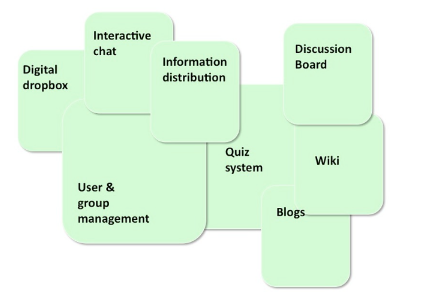
When considering the title of my LTHE chat, I must admit that my starting point was a nod to Martin Weller’s 2007 Blog entitled “The VLE/LMS is dead”, adding the caveat that “but we’ll probably take five years to realise it” (Weller, 2007). Given the affordances of Web 2.0 technology, it made perfect sense to ask the question: ‘why on earth pay for all the features that you get in an LMS/VLE when they can be effectively unbundled’? As the image from David Jones (2009) identifies, the tasks associated with communication, interaction and content management, etc. can all be effectively provided by a range of other providers.
Expanded LMS abstraction, buy David Jones. 2009, One ring to rule them all: Limitations and implications of the LMS/VLE product model, CC BY-NC-SA 2.0
But therein lies one of the issues about the LMS/VLE- namely what do we use it for; and why do you use it? The benefits have been well documented in terms of providing a framework that facilitates many of the roles and benefits afforded (Caprara & Caprara, 2021). I would suggest that for the often overstretched educator, the VLE/LMS provides one comprehensive framework that does not require the educator to learn and become proficient in many alternative platforms – comfort blanket if you will. The chief benefit, one could argue, of the VLE/LMS was at the height of the COVID-19 pandemic and ensuing lockdowns, the VLE/LMS effectively became the de-facto campus (Farrelly, Costello & Donlon, 2020), facilitating the continuation of teaching at all levels. However, edTEch, along with the wider Higher Education landscape is changing with new expectations and technologies, such as, a call for Openness, Inclusivity, Sustainability, the incorporation of AR, VR and AI to name just a few.
During this LTHEchat, we will of course chat about LMS/VLE, what is, what it can be!
References:
Caprara, L. and Caprara, C. (2021). Effects of virtual learning environments: A scoping review of literature. Education and Information Technologies (2022) 27:3683–3722
Farrelly, T., Costello, E., & Donlon, E. (2020). VLEs: A metaphorical history from sharks to limpets. Journal of Interactive Media in Education, 2020(2), 1-10. https://jime.open.ac.uk/articles/10.5334/jime.575
Tom Farrelly of Munster Technological University is an Academic Developer/Senior Lecturer having worked in Irish Higher Education for over twenty years, recently becoming a Senior Fellow of Advance HE. Describing himself as a ‘critical technophile’, his doctoral dissertation about the use of VLE/LMS in support of lifelong learning has led to many publications and presentations on the subject. He has been one of the editorial team of the Irish Learning Technology Association’s (ILTA) Open Access Journal the IJTEL for several years. You may also know him as his alter ego – The GastaMaster 😀
Neurodiversity is a catch-all term for a range of learners’ experiences. It is a term used to encompass the variety seen in how human brains operate. It is associated with diagnosed conditions including ‘autism, attention deficit disorder (ADHD), dyslexia, developmental language disorders’ (Hamilton and Petty, 2023, p.1). It is a term that does not view these differences as a deficit but instead looks to embrace the different ways of thinking, learning, and behaving. One of our students articulates their understanding as:
“neurodiversity may be different in relation to social preference, ways of learning, ways of communicating and perceiving the environment.”
One of our internally funded bids where academics can work with undergraduate students on a research idea was successful. Our student Sam was conducting his dissertation on the lived experiences of children diagnosed with ADHD in their physical education lessons. Along with Sam, we decided to repurpose his survey to expand the topic and population involved. The aim was to understand the preferences, strategies, and methods that neurodiverse learners find helpful in developing their learning journey and to use this understanding to share effective practice and suggest strategies that might enhance the neurodiverse student experience across the university.
Our findings revolve around the ways in which neurodiverse students experience their learning, notably the physical and emotional factors that impact learning. Physical factors encompass a range of environmental factors that can impact learners such as noise, smell, and seating position (Hamilton and Petty, 2023). While emotional factors are a complex issue, feelings of stress and anxiety can have adverse effects on neurodiverse learners (Clouder et al., 2023). Many participants experienced anxiety, overstimulation, or panic where they could not have regular breaks, ask questions, move around, or take extra time to consolidate shared information.
Our study concluded that accessibility by design, such as: through the Universal Design for Learning (CAST, 2018), use of anticipatory approaches, and building positive relationships, may be used to better understand the nuances and strengths of neurodiversity.
During our LTHEchat, we will explore with your experiences, challenges, and resources a bit in more detail.
Acknowledgements: Thank you Sam for sharing this journey with us.
References:
Clouder, Karakus, M., Cinotti, A., Ferreyra, M. V., Fierros, G. A., & Rojo, P. (2020). Neurodiversity in higher education: a narrative synthesis. Higher Education, 80(4), 757–778. https://doi.org/10.1007/s10734-020-00513-6
Emma Whewell is an Associate Professor in Learning and Teaching at the University of Northampton. She is responsible for the Sport and Exercise department and leads the Physical Education and Sport degree. She is an experienced teacher educator whose research focusses on teacher identity, mentoring, and digital pedagogies. She co-leads the Centre for Active Digital Education.
Helen Tiplady is a Senior Lecturer in Education at the University of Northampton and is currently the Curriculum Lead for Science and Design and Technology. Her research activities have included the co-creation of training videos using IRIS Connect software and researching how children use evaluation tools in well-being music workshops. Her background is in primary school leadership, teaching, and learning.
By Adesewa Adebisi, Amara Anyogu, Nick Freestone, Gillian Knight, Aranee Manoharan, James McEvoy, Prachi Stafford (on behalf of The Bioscience Awarding Gap (BAG) Network Steering Group)
The awarding gap, previously referred to as the attainment gap, is often defined as the difference between how many students of one demographic group get a ‘good degree’ (a First or 2:1) compared with those of another group. This is mainly discussed in relation to the ethnicity awarding gap, which has been found across the HE sector, but awarding gaps can also affect other groups, such as mature students and students from lower socioeconomic backgrounds. The factors that can impact awarding gaps are diverse, and can be positively and negatively influenced by some of the institutional environments detailed below.
Transition to HE and belonging
With the increasingly diverse student population entering HE, it is important to create a university environment where all students feel able to access, engage with, and contribute to their learning and development. However, students affected by awarding gaps have been shown to be at a disadvantage as soon as they enter HE. Although it is usually accepted that contemporary students come from diverse backgrounds, the impact of their societal, economic, and cultural capital on their learning is often underestimated. To compound this, once enrolled, many students can feel they do not belong and do not see themselves reflected in the faculty or curriculum. Students can also be affected by unconscious bias, microaggressions and, in the worst cases, overt prejudice.
Teaching and assessment
Awarding gaps can be reflections of students’ classroom experience and their associated assessment results. Teaching that allows students to play an active role in their learning helps to form an inclusive community, while clear assessment instructions and marking criteria make assessments accessible to students from different cultural backgrounds. Student/academic co-creation of activities and materials is a powerful way of including students in their education which allows them to see themselves represented in their curriculum.
Mentors and role models
The impact of mentorship on addressing awarding gaps is an area of HE focus, with visible role models and support networks known to improve student retention and success. In a recent study, final-year peer mentors addressed an awarding gap in first year STEM students and built fruitful peer networks of mentors and mentees. In another example, the progression rate of first year students with low tariff HE entry qualifications improved when mentored by second year students.
UUK and NUS recommendations
The UUK and NUS recommends five steps to help close the ethnicity awarding gap: strong university leadership, conversations about race and racism, supporting racially diverse and inclusive environments, obtaining and analysing data, and understanding what works. To achieve this it is important that institutions analyze their own data, since different universities attract students with different demographics.
Don’t know where to start?
Commit to building an inclusive learning environment: Student-centred approaches that foster a sense of belonging for learners are at the core of eliminating awarding gaps. Resources including the Inclusive Curriculum Framework and Self-Evaluation Tools provide prompts for reflection and examples of good practice.
Evaluate how awarding gaps exist in your local context: Collate and analyse quantitative and qualitative data. This will help identify which groups of students are impacted and help explain why these awarding gaps exist.
Biographies
The Bioscience Awarding Gap (BAG) Network is an advisory group to the Heads of University Biosciences (HUBS). The group promotes the communication, discussion and adoption of practices that are shown to reduce demographic awarding gaps in the biosciences through an online library of resources and organising regular network events.
Meet the team:
Adesewa Adebisi, University of Manchester (@sewa_adebisi)
Adesewa Adebisi served as the 2019/20 Education Officer and Trustee of the Huddersfield Students’ Union, where she was actively involved in liaising with the University and external bodies on education matters, teaching quality and student experience. Adesewa has a strong interest in cancer immunology and is a current PhD candidate at The University of Manchester. Adesewa is passionate about addressing the attainment gap in Higher Education and has worked on various projects with the National Union of Students to tackle this.
Dr Amara Anyogu, University of West London (@intentionalacad)
Amara is a widening access educator passionate about building spaces that support inclusive and impactful learning experiences in Higher education. Drawing on her experiences of accessing HE as a mature learner with ‘non-traditional’ qualifications, her teaching is focused on supporting students in developing the academic and employability skills required to successfully transition into HE and achieve their academic and career goals. Amara is fascinated by microorganisms and her research centres on their interactions in food as producers, spoilers, and agents of disease. Amara is a Senior Lecturer at the University of West London and a Fellow of Advance HE.
Dr Nick Freestone, Kingston University (@nfreestone1)
Dr Nick Freestone is an Associate Professor of Physiology and Pharmacology and Course Director for undergraduate Pharmaceutical Science degree courses at Kingston University. He researches both calcium handling in isolated cardiac myocytes and the nature of learning itself at university via pedagogic research. As a pedagogical researcher, he has run national workshops on teaching and learning for AdvanceHE and HUBS and has recently been awarded a National Teaching Fellowship by AdvanceHE. Nick is a Senior Fellow of the HEA, a Fellow of the RSB and was UK Education Theme Lead for the Physiological Society. He is the holder of the UK HEA Bioscience Teacher of the Year Award 2014/15 and is now Chair of the judging panel for this award.
Professor Gillian Knight, Royal Holloway University of London
Gillian is a Fellow of the Royal Society of Biology and a member of the RSB Head of Biosciences (HUBS) Executive. She was awarded Principal Fellow of the Higher Education Academy in 2019 and became a National Teaching Fellow in 2021, in recognition of her commitment to inclusive STEM education. She is the Director of Education at Royal Holloway and is currently leading on developing the institution’s new Access and Participation plan.
Aranee Manoharan, King’s College London (@AraneeM)
Aranee Manoharan is a Senior Fellow of the HEA specialising in inclusive curriculum design to prepare students with knowledge, skills, and experience to achieve their aspirations. A keen advocate of equity, inclusion, and social mobility, Aranee is an Athena SWAN panelist, and having contributed to the Race Equality Charter (REC) for a number of years, is now a member of Advance HE’s REC Governance Committee. She also serves as a Board Director for AGCAS, leading the organisation’s social mobility, widening participation and regional inequality portfolio.
Dr James McEvoy, Royal Holloway University of London (@mcevjp)
Dr James McEvoy is a Professor (Teaching Focused) at Royal Holloway, University of London, where he is the Head of the Department of Biological Science and researches various things, including antibiotic resistance in bacterial biofilms. In his pedagogical work he is particularly interested in the way that active and group-learning teaching methods can help to reduce demographic attainment gaps. James has won several institutional teaching awards and is a Senior Fellow of the HEA.
Dr Prachi Stafford, Sheffield Hallam University (@dodoscientist)
Dr Prachi Stafford is a Senior Lecturer in Biological Sciences in the Department of Biosciences and Chemistry at Sheffield Hallam University. Her research focusses on host-pathogen interactions with an emphasis on how oral pathogens may contribute to systemic diseases. Prachi is also the Departmental Equality/Diversity & Inclusivity lead and has a keen interest in promoting student engagement. She is looking at inclusive curriculum as a means to increase engagement and address the ‘Degree Awarding Gap’. Prachi is a Fellow of the HEA.
The pedagogical impact of Generative AI tools like ChatGPT in higher education has been a topic of interest for researchers and practitioners since the launch of ChatGPT in November 2022. According to a recent article by Harvard Business Publishing, generative AI tools like ChatGPT have shown considerable promise in helping teachers improve classroom outcomes and reduce workload (Mollick and Mollick, 2023). Another article by HEPI highlights how generative AI tools like ChatGPT, GitHub Copilot, and Mid Journey are transforming the way students learn and the way universities and workplaces operate. The article also emphasizes the need for institutions to assess how Gen AI tools can be harnessed to enhance the educational experience and align their integration with the overarching educational goals of higher education institutions (Riddle, 2023). Considering the integration of Generative Artificial Intelligence (Gen AI) tools in higher education is a topic of increasing relevance, driven by the rapid advancement of AI technologies and the transformative potential they hold for teaching and learning, it is imperative to critically examine the implications and challenges of incorporating Gen AI tools into higher education contexts drawing attention to the pedagogical, ethical, organisational, and technical dimensions of the subject.
I feel this perspective from Lim et al. (2023) skillfully captures the current state of Gen AI in higher education:
‘‘At their extremes, current discourse on Gen AI and its impact on education views Generative AI as a form of Ragnarök, bringing about the destruction of the education system, while on the opposing end, some sees it as a reformation, bringing a new dawn of accessible information and automation to enhance the footprint and quality of education. These two views highlight the inherently paradoxical nature of Generative AI and its role in education; it could destroy some education practices while at the same time supporting them’’.
According to Jeen Ha et al., (2023) Gen AI tools have many promising educational uses, but they are general purpose tools. The affordances of a product like ChatGPT and the specific needs of educators are not always aligned. More importantly, ethical considerations loom large in the integration of Gen AI tools in higher education. Issues related to academic integrity, data privacy, and the potential for algorithmic bias in grading and decision-making processes necessitate rigorous examination.
In addition, the technical and infrastructure requirements for the effective integration of Gen AI tools in higher education is important to assess. These technologies may impose unique demands, such as specialised hardware, software, and robust support systems. Not every academic discipline may have the same needs for Gen AI integration and as such institutions need to discern where Gen AI tools hold the most promise within the multifaceted landscape of higher education. Recognising areas of potential innovation and improvement is vital for guiding strategic and optimal infrastructural investment in integration of Gen AI tools.
Lastly, continuous professional development and adaptability among faculty and staff in response to the integration of Gen AI tools must be cultivated. In the absence of adequate training and upskilling, the potential benefits of these tools may remain untapped, and educators may struggle to effectively employ and adapt to Gen AI tools as they continue to evolve.
Lim, W. M., Gunasekara, A., Pallant, J. L., Pallant, J. I. and Pechenkina, E. (2023) ‘Generative AI and the future of education: Ragnarok ¨ or reformation? A paradoxical perspective from management educators’. The International Journal of Management Education. Vol. 21 (2). Pp 1-13. https://doi.org/10.1016/j.ijme.2023.100790.
Nurun Nahar is an Assistant Teaching Professor based at the Greater Manchester Business School(GMBS), University of Bolton. Nurun’s responsibilities include driving excellence in pedagogical practices institutionally and within her department. Nurun is a published scholar and has presented her research work widely at several international conferences alongside invited guest talks on the topics of pedagogical partnerships, digital literacy and technology enhanced learning in Higher Education. Nurun recently launched TIRIgogy professional development initiative with an aim to promote research informed pedagogic practices across the University of Bolton. TIRIgogy brings together higher education practitioners, leaders, policy makers and researchers to engage in interactive continuing professional development discussions through engaging seminars, workshops and podcasts whilst fostering collaboration and networking through community of practice. Nurun is also the Deputy Director for the Centre of Digital Innovation and Accounting in GMBS where she is responsible to co-lead her team on research projects with a particular focus on digital pedagogy.




















 #LTHEchat