#LTHEChat 275: Neurodiversity in university students – recognising and supporting achievement.

Led by guests Dr Emma Whewell @UoNPEemma & Helen Tiplady @helen_tiplady

Background - picture of white puzzle pieces with one red puzzle piece.
Foreground - text "#LTHEChat 275: Neurodiversity in university students- recognising and supporting achievement. Led by guests Dr Emma Whewell & Helen Tiplady"

Neurodiversity is a catch-all term for a range of learners’ experiences. It is a term used to encompass the variety seen in how human brains operate. It is associated with diagnosed conditions including ‘autism, attention deficit disorder (ADHD), dyslexia, developmental language disorders’ (Hamilton and Petty, 2023, p.1). It is a term that does not view these differences as a deficit but instead looks to embrace the different ways of thinking, learning, and behaving. One of our students articulates their understanding as:

“neurodiversity may be different in relation to social preference, ways of learning, ways of communicating and perceiving the environment.” 

One of our internally funded bids where academics can work with undergraduate students on a research idea was successful. Our student Sam was conducting his dissertation on the lived experiences of children diagnosed with ADHD in their physical education lessons. Along with Sam, we decided to repurpose his survey to expand the topic and population involved. The aim was to understand the preferences, strategies, and methods that neurodiverse learners find helpful in developing their learning journey and to use this understanding to share effective practice and suggest strategies that might enhance the neurodiverse student experience across the university.

Our findings revolve around the ways in which neurodiverse students experience their learning, notably the physical and emotional factors that impact learning. Physical factors encompass a range of environmental factors that can impact learners such as noise, smell, and seating position (Hamilton and Petty, 2023). While emotional factors are a complex issue, feelings of stress and anxiety can have adverse effects on neurodiverse learners (Clouder et al., 2023). Many participants experienced anxiety, overstimulation, or panic where they could not have regular breaks, ask questions, move around, or take extra time to consolidate shared information. 

Our study concluded that accessibility by design, such as: through the Universal Design for Learning (CAST, 2018), use of anticipatory approaches, and building positive relationships, may be used to better understand the nuances and strengths of neurodiversity.

During our LTHEchat, we will explore with your experiences, challenges, and resources a bit in more detail.

Acknowledgements: Thank you Sam for sharing this journey with us.

References:

Clouder, Karakus, M., Cinotti, A., Ferreyra, M. V., Fierros, G. A., & Rojo, P. (2020). Neurodiversity in higher education: a narrative synthesis. Higher Education, 80(4), 757–778. https://doi.org/10.1007/s10734-020-00513-6

CAST (2018) Universal Design for Learning  UDL: The UDL Guidelines (cast.org) [Accessed 23.10.23] 

Hamilton, L. G. & Petty, S. (2023) Compassionate pedagogy for neurodiversity in higher education: A conceptual analysis. Frontiers in psychology. [Online] 141093290–1093290.Available at: https://www.frontiersin.org/articles/10.3389/fpsyg.2023.1093290/full

Guests biography

Profile picture of Emma Whewell

Emma Whewell is an Associate Professor in Learning and Teaching at the University of Northampton. She is responsible for the Sport and Exercise department and leads the Physical Education and Sport degree. She is an experienced teacher educator whose research focusses on teacher identity, mentoring, and digital pedagogies. She co-leads the Centre for Active Digital Education.

Profile picture of Helen Tiplady

Helen Tiplady is a Senior Lecturer in Education at the University of Northampton and is currently the Curriculum Lead for Science and Design and Technology. Her research activities have included the co-creation of training videos using IRIS Connect software and researching how children use evaluation tools in well-being music workshops. Her background is in primary school leadership, teaching, and learning.

Posted in announcement | Tagged , , , , | 1 Comment

#LTHEchat 274: Mind the (awarding) gap!

Photo credit: Bruno Figueiredo on Unsplash

By Adesewa Adebisi, Amara Anyogu, Nick Freestone, Gillian Knight, Aranee Manoharan, James McEvoy, Prachi Stafford (on behalf of The Bioscience Awarding Gap (BAG) Network Steering Group)

The awarding gap, previously referred to as the attainment gap, is often defined as the difference between how many students of one demographic group get a ‘good degree’ (a First or 2:1) compared with those of another group. This is mainly discussed in relation to the ethnicity awarding gap, which has been found across the HE sector, but awarding gaps can also affect other groups, such as mature students and students from lower socioeconomic backgrounds. The factors that can impact awarding gaps are diverse, and can be positively and negatively influenced by some of the institutional environments detailed below.       

Transition to HE and belonging

With the increasingly diverse student population entering HE, it is important to create a university environment where all students feel able to access, engage with, and contribute to their learning and development. However, students affected by awarding gaps have been shown to be at a disadvantage as soon as they enter HE.  Although it is usually accepted that contemporary students come from diverse backgrounds, the impact of their societal, economic, and cultural capital on their learning is often underestimated. To compound this, once enrolled, many students can feel they do not belong and do not see themselves reflected in the faculty or curriculum. Students can also be affected by unconscious bias, microaggressions and, in the worst cases, overt prejudice.

Teaching and assessment

Awarding gaps can be reflections of students’ classroom experience and their associated assessment results. Teaching that allows students to play an active role in their learning helps to form an inclusive community, while clear assessment instructions and marking criteria make assessments accessible to students from different cultural backgrounds. Student/academic co-creation of activities and materials is a powerful way of including students in their education which allows them to see themselves represented in their curriculum.

Mentors and role models

The impact of mentorship on addressing awarding gaps is an area of HE focus, with visible role models and support networks known to improve student retention and success. In a recent study, final-year peer mentors addressed an awarding gap in first year STEM students and built fruitful peer networks of mentors and mentees. In another example, the progression rate of first year students with low tariff HE entry qualifications improved when mentored by second year students.

UUK and NUS recommendations                    

The UUK and NUS recommends five steps to help close the ethnicity awarding gap: strong university leadership, conversations about race and racism, supporting racially diverse and inclusive environments, obtaining and analysing data, and understanding what works. To achieve this it is important that institutions analyze their own data, since different universities attract  students with different demographics.

Don’t know where to start?

  • Commit to building an inclusive learning environment: Student-centred approaches that foster a sense of belonging for learners are at the core of eliminating awarding gaps. Resources including the Inclusive Curriculum Framework and Self-Evaluation Tools provide prompts for reflection and examples of good practice.
  • Evaluate how awarding gaps exist in your local context: Collate and analyse quantitative and qualitative data. This will help identify which groups of students are impacted and help explain why these awarding gaps exist.

Biographies

The Bioscience Awarding Gap (BAG) Network is an advisory group to the Heads of University Biosciences (HUBS). The group promotes the communication, discussion and adoption of practices that are shown to reduce demographic awarding gaps in the biosciences through an online library of resources and organising regular network events.

Meet the team:

Adesewa Adebisi, University of Manchester (@sewa_adebisi)

Adesewa Adebisi served as the 2019/20 Education Officer and Trustee of the Huddersfield Students’ Union, where she was actively involved in liaising with the University and external bodies on education matters, teaching quality and student experience. Adesewa has a strong interest in cancer immunology and is a current PhD candidate at The University of Manchester. Adesewa is passionate about addressing the attainment gap in Higher Education and has worked on various projects with the National Union of Students to tackle this.

Dr Amara Anyogu, University of West London (@intentionalacad)

Amara is a widening access educator passionate about building spaces that support inclusive and impactful learning experiences in Higher education. Drawing on her experiences of accessing HE as a mature learner with ‘non-traditional’ qualifications, her teaching is focused on supporting students in developing the academic and employability skills required to successfully transition into HE and achieve their academic and career goals. Amara is fascinated by microorganisms and her research centres on their interactions in food as producers, spoilers, and agents of disease. Amara is a Senior Lecturer at the University of West London and a Fellow of Advance HE.

Dr Nick Freestone, Kingston University (@nfreestone1)

Dr Nick Freestone is an Associate Professor of Physiology and Pharmacology and Course Director for undergraduate Pharmaceutical Science degree courses at Kingston University. He researches both calcium handling in isolated cardiac myocytes and the nature of learning itself at university via pedagogic research. As a pedagogical researcher, he has run national workshops on teaching and learning for AdvanceHE and HUBS and has recently been awarded a National Teaching Fellowship by AdvanceHE. Nick is a Senior Fellow of the HEA, a Fellow of the RSB and was UK Education Theme Lead for the Physiological Society. He is the holder of the UK HEA Bioscience Teacher of the Year Award 2014/15 and is now Chair of the judging panel for this award. 

Professor Gillian Knight, Royal Holloway University of London

Gillian is a Fellow of the Royal Society of Biology and a member of the RSB Head of Biosciences (HUBS) Executive. She was awarded Principal Fellow of the Higher Education Academy in 2019 and became a National Teaching Fellow in 2021, in recognition of her commitment to inclusive STEM education. She is the Director of Education at Royal Holloway and is currently leading on developing the institution’s new Access and Participation plan. 

Aranee Manoharan, King’s College London (@AraneeM)

Aranee Manoharan is a Senior Fellow of the HEA specialising in inclusive curriculum design to prepare students with knowledge, skills, and experience to achieve their aspirations. A keen advocate of equity, inclusion, and social mobility, Aranee is an Athena SWAN panelist, and having contributed to the Race Equality Charter (REC) for a number of years, is now a member of Advance HE’s REC Governance Committee. She also serves as a Board Director for AGCAS, leading the organisation’s social mobility, widening participation and regional inequality portfolio.

Dr James McEvoy, Royal Holloway University of London (@mcevjp)

Dr James McEvoy is a Professor (Teaching Focused) at Royal Holloway, University of London, where he is the Head of the Department of Biological Science and researches various things, including antibiotic resistance in bacterial biofilms. In his pedagogical work he is particularly interested in the way that active and group-learning teaching methods can help to reduce demographic attainment gaps. James has won several institutional teaching awards and is a Senior Fellow of the HEA.

Dr Prachi Stafford, Sheffield Hallam University (@dodoscientist)

Dr Prachi Stafford is a Senior Lecturer in Biological Sciences in the Department of Biosciences and Chemistry at Sheffield Hallam University. Her research focusses on host-pathogen interactions with an emphasis on how oral pathogens may contribute to systemic diseases. Prachi is also the Departmental Equality/Diversity & Inclusivity lead and has a keen interest in promoting student engagement. She is looking at inclusive curriculum as a means to increase engagement and address the ‘Degree Awarding Gap’. Prachi is a Fellow of the HEA.

Posted in announcement | Tagged , , , , , | Leave a comment

#LTHEChat 273: How do we embed Gen AI tools in teaching and learning preparation?

#LTHEchat 273 18th October 2023 8:00 pm BST @MandrakeNoor on a background of a brain as a circuit board

Image credit: Steve Johnson on Unsplash

Led by Nurun Nahar @mandrakenoor

The pedagogical impact of Generative AI tools like ChatGPT in higher education has been a topic of interest for researchers and practitioners since the launch of ChatGPT in November 2022. According to a recent article by Harvard Business Publishing, generative AI tools like ChatGPT have shown considerable promise in helping teachers improve classroom outcomes and reduce workload (Mollick and Mollick, 2023). Another article by HEPI highlights how generative AI tools like ChatGPT, GitHub Copilot, and Mid Journey are transforming the way students learn and the way universities and workplaces operate. The article also emphasizes the need for institutions to assess how Gen AI tools can be harnessed to enhance the educational experience and align their integration with the overarching educational goals of higher education institutions (Riddle, 2023). Considering the integration of Generative Artificial Intelligence (Gen AI) tools in higher education is a topic of increasing relevance, driven by the rapid advancement of AI technologies and the transformative potential they hold for teaching and learning, it is imperative to critically examine the implications and challenges of incorporating Gen AI tools into higher education contexts drawing attention to the pedagogical, ethical, organisational, and technical dimensions of the subject.

I feel this perspective from Lim et al. (2023) skillfully captures the current state of Gen AI in higher education:

‘‘At their extremes, current discourse on Gen AI and its impact on education views Generative AI as a form of Ragnarök, bringing about the destruction of the education system, while on the opposing end, some sees it as a reformation, bringing a new dawn of accessible information and automation to enhance the footprint and quality of education. These two views highlight the inherently paradoxical nature of Generative AI and its role in education; it could destroy some education practices while at the same time supporting them’’.

According to Jeen Ha et al., (2023) Gen AI tools have many promising educational uses, but they are general purpose tools. The affordances of a product like ChatGPT and the specific needs of educators are not always aligned. More importantly, ethical considerations loom large in the integration of Gen AI tools in higher education. Issues related to academic integrity, data privacy, and the potential for algorithmic bias in grading and decision-making processes necessitate rigorous examination.

In addition, the technical and infrastructure requirements for the effective integration of Gen AI tools in higher education is important to assess. These technologies may impose unique demands, such as specialised hardware, software, and robust support systems. Not every academic discipline may have the same needs for Gen AI integration and as such institutions need to discern where Gen AI tools hold the most promise within the multifaceted landscape of higher education. Recognising areas of potential innovation and improvement is vital for guiding strategic and optimal infrastructural investment in integration of Gen AI tools.

Lastly, continuous professional development and adaptability among faculty and staff in response to the integration of Gen AI tools must be cultivated. In the absence of adequate training and upskilling, the potential benefits of these tools may remain untapped, and educators may struggle to effectively employ and adapt to Gen AI tools as they continue to evolve.

References:

Jeen Ha, Y., Hendrickson, S., Nagy, A. Sylvan, E. and Zick T. (2023) ‘Exploring the Impacts of Generative AI on the Future of Teaching and Learning. Internet and Society’. [Online] Available from: Exploring the Impacts of Generative AI on the Future of Teaching and Learning | Berkman Klein Center (harvard.edu)

Lim, W. M., Gunasekara, A., Pallant, J. L., Pallant, J. I. and Pechenkina, E. (2023) ‘Generative AI and the future of education: Ragnarok ¨ or reformation? A paradoxical perspective from management educators’. The International Journal of Management Education. Vol. 21 (2). Pp 1-13. https://doi.org/10.1016/j.ijme.2023.100790.

Mollick, E. and Mollick, L. (2023) ‘Let ChatGPT Be Your Teaching Assistant: Strategies for Thoughtfully Using AI to Lighten Your Workload’. Harvard Business Publishing. [Online] Available from: https://hbsp.harvard.edu/inspiring-minds/let-chatgpt-be-your-teaching-assistant

Riddle, M. (2023) ‘Exploring Generative AI in higher education’. Higher Education Policy Institute. [Online] Available from: https://www.hepi.ac.uk/2023/02/28/exploring-generative-ai-in-higher-education%ef%bf%bc/

Guest biography

Nurun Nahar is an Assistant Teaching Professor based at the Greater Manchester Business School(GMBS), University of Bolton. Nurun’s responsibilities include driving excellence in pedagogical practices institutionally and within her department. Nurun is a published scholar and has presented her research work widely at several international conferences alongside invited guest talks on the topics of pedagogical partnerships, digital literacy and technology enhanced learning in Higher Education. Nurun recently launched TIRIgogy professional development initiative with an aim to promote research informed pedagogic practices across the University of Bolton. TIRIgogy brings together higher education practitioners, leaders, policy makers and researchers to engage in interactive continuing professional development discussions through engaging seminars, workshops and podcasts whilst fostering collaboration and networking through community of practice. Nurun is also the Deputy Director for the Centre of Digital Innovation and Accounting in GMBS where she is responsible to co-lead her team on research projects with a particular focus on digital pedagogy.

Posted in guest | Tagged , , , , | Leave a comment

#LTHEChat 272: Integrating compassion, contemplation, coaching and community into academic development.

Led by guest Sarah Wolfenden @SarahWolfenden

Banner with text
LTHEchat 272, 11th Oct 2023 8pm BST, @SarahWolfenden, with a background of stacked pebbles

After presenting at the SEDA conference in May 2023, I was asked to widen the conversation to include the LTHE Community via the Wednesday Twitter Chat.  I am honoured to do so; while I have been using Twitter since 2013 recent changes in ownership have meant it is now trickier to maintain our social networks,  so this is a lovely opportunity to continue to build community.

To teach well we must know ourselves, be authentic, and inspire others with our passion and continued desire to learn (hooks, 2003; Brown, 2018). We must support each other by sharing information and working collegiately and collaboratively. In addition, as we move to a world where increasingly roles are being replaced by automation, we need to focus on what makes us individual, personalised humans (Gleeson, 2018).

This can be challenging when the university sector is described as an anxiety machine (Morrish, 2019). University staff have been found to have significantly lower well-being, motivation, and energy to spare than the rest of the population (Wray & Kinman, 2021). As an academic developer, coach, and yoga teacher, I think it is important that we not only teach our academics the knowledge, skills, and behaviours to teach and research but to also maintain their well-being during and after the process. The Academic Professional Programme, which culminates in the Advance HE Fellowship, at Brunel University London attempts to do just that.

In the programme, participants are introduced to government priorities and regulations and assess these affect their own practice. They are encouraged to compare these with their own teaching philosophies and identify where compromises have been made. They contemplate what universities and education are for and they identify their own values and overall purpose. To support them with this, they experience individual coaching in progress meetings and informal group coaching through action learning sets.

Inspired by Kathryn Waddington’s (2021), The Compassionate University, in which she declares we are now seeing a move towards compassion as “a response to the ..tyranny of neoliberalism” (p. 5), compassion and community are key themes running throughout the programme. For example, participants are introduced to key people whose liberationist pedagogical works inspired its design – bell hooks, Henry Giroux, Nel Noddings, and Paulo Freire, amongst others, and are encouraged to find their own role models and in the final session participants take part in a loving-kindness meditation and are introduced to contemplative pedagogies.

Throughout the programme, self-compassion (Neff, 2003) is encouraged and modelled as is the importance of setting boundaries where possible (Brown, 2018). By accepting that we are enough as we are, we can move to continually develop our whole self so we can continue to support others. This often means recognising and bringing our whole self to our practice. It means encouraging others to do so too in a union of mind, body, and spirit (Hanh & Weare, 2017). Participants on the programme have told us that not only have they enjoyed the course – they have also learned to become reflective practitioners and learned to connect with themselves, their students, and staff across the university.

I look forward to engaging in a conversation about compassion universities and the methods we can employ to encouraging them.

References

Brown, B. (2018). Dare to lead: Brave work. Tough conversations. Whole hearts. Random house.

Gleeson, N. (Ed.). (2018). Higher Education in the era of the Fourth Industrial Revolution. Palgrave Macmillan

hooks, b. (2003). Teaching community: A pedagogy of hope. Routledge

Nhất Hạnh, T and Weare, K (2017) Happy teachers change the world: a guide for cultivating mindfulness in education. Parallax Press.

Morrish, L. and Higher Education Policy Institute (HEPI) (United Kingdom) (2019). Pressure Vessels: The Epidemic of Poor Mental Health among Higher Education Staff. Occasional Paper 20, Higher Education Policy Institute.

Neff, K. (2003). ‘Self-compassion: An alternative conceptualization of a healthy attitude toward oneself’. Self and identity, 2(2), 85-101.

Waddington, K. (Ed.). (2021). Towards the compassionate university: From golden thread to global impact. Routledge.Wray, S. and Kinman, G., (2021) Supporting staff wellbeing in higher education.

Guest biography

Photo of Sarah Wolfenden

Sarah Wolfenden is a Senior Lecturer in Academic Development; an ILM qualified performance coach; a Senior Fellow of Advance HE; an Aurora mentor; a 500hr YAI accredited vinyasa, nidra and yin yoga teacher, a co-opted primary school wellbeing governor, and a chartered information professional. She has worked in the UK Further and Higher Education sector since 2004. She is also a part-time doctoral researcher, looking at coaching and staff wellbeing in universities.

Posted in announcement | 2 Comments

#LTHEChat 271: Learning and Teaching Focused Network: Recognising & Celebrating Diversity 

Led by guests from the network: Prof Emmajane Milton @EmmajaneMilton1, Prof Hannah Cobb @ArchaeoCobb, Earle Abrahamson @earleabrahamso2, Prof Julie Hulme @JulieH_Psyc & Heather Pennington @PenningtonPGCE

Banner with text: LTHEchat 271, 4th Oct 2023 8pm BST @ArchaeoCobb, @JulieH_Psyc, @EmmajaneMilton1
With title "learning and teaching focused networking, recognising and celebrating diversity".
Background: coloured pencils and a group of sky divers

Are you in a learning and teaching focused role? Do you have an unconventional background, perhaps coming from industry or professional practice? Maybe you are an educational or academic developer or maybe you just feel like a lone voice in a seemingly research-dominated context?   

Have you ever felt like you are different from colleagues in your institution and wondered, ‘Am I supposed to be here? Do I fit?’. We have too!  

At Advance HE’s 2022 and 2023 EDI conferences we ran sessions to explore this. These examined how learning and teaching focused colleagues, who can feel like they are different and are often in the minority, actually bring richness to the academy and the institutions they work for. They can often feel misunderstood and are typically underrepresented in senior roles within UK HE. We are not alone in these observations; Smith and Walker (2021, 2022), for example, have highlighted how a confused sectoral understanding of scholarship can work to exclude teaching focused colleagues from overarching (research-driven) institutional narratives and pathways to reward and recognition. Others have highlighted broader trends in issues around promotion that arise from the diversity of learning and teaching focused colleagues (Bennett et al. 2018).

For us, what started as a few learning and teaching focused individuals expressing feelings of ‘not fitting’ has snowballed into a national conversation, and from this, we have established a Learning and Teaching Focused Network.

For LTHEchat #271, members of the network invite you to join us to celebrate the diversity of learning and teaching focused colleagues, but also to explore the challenges and misconceptions and to examine positive strategies for addressing these and bringing about change in the sector.

A National Network

Beyond the chat, we invite you to join us in our network which aims to develop inclusive ways of working to help learning and teaching focused colleagues flourish.  

The network aims to have:  

  • Reach – we are inclusive of all colleagues in learning and teaching focused roles, whilst not excluding any colleagues who are interested in engaging with the network’s work.  
  • Value – we will raise the visibility of the diversity* of colleagues in learning and teaching focused roles, valuing the expertise they bring to HE and the breadth in nature of their roles.  
  • Impact – we will enable the diversity of colleagues in learning and teaching focused roles to be recognised, feel valued, have a sense of belonging, voice and agency to flourish in HE.  

(*Diversity in this context means background, professional roles and expertise, career path, career levels and status as well as protected characteristics from the Equality Act.)  

The network also works to enable colleagues to share good practices, helpful tips, and information about promotion, publications, webinars, conferences, and more. Providing a space to:   

  • highlight perspectives, experiences, and understandings related to learning and teaching focused roles,  
  • identify successes and barriers for learning and teaching focused colleagues and,
  • help inform the development of these roles across our sector.  

At the moment the network exists as an email discussion list which you can join here, and through a variety of online events. Our next event is entitled “Developing Scholarship in your context” and will take place online on Friday 17th November 10.30-12.30 GMT. You can sign up to this free event here. 

References

Bennett, D., Roberts, L., Ananthram, S. et al. (2018) What is required to develop career pathways for teaching academics?. Higher Education 75, 271–286. https://doi.org/10.1007/s10734-017-0138-9

Smith, S. & Walker, D. (2021) Scholarship and academic capitals: the boundaried nature of education-focused career tracks, Teaching in Higher Education, 1-15, DOI: 10.1080/13562517.2021.1965570

Susan Smith & David Walker (2022) Scholarship and teaching focused roles: An exploratory study of academics’ experiences and perceptions of support, Innovations in Education and Teaching International, 1-12, DOI: 10.1080/14703297.2022.2132981

Guest biographies

Who is in the National Network?

The National Network is a growing network of colleagues – check out bios of the members (and if you join the network feel free to add your own bio!).

The network arose from conversations amongst colleagues from eight UK HEIs (Birmingham City University, Cardiff University, Leeds University, University of Manchester, Nottingham Trent University, University of East Anglia, University of Hertfordshire, and the University of Kent) and has since then grown to include a much wider group of UK HEIs.

The main people from the network who will contribute to LTHEChat #271 are: Emmajane Milton, Hannah Cobb, Earle Abrahamson, Julie Hulme, and Heather Pennington

Posted in announcement | 2 Comments

#LTHEChat 270: Professional identities and professional development: Pracademia

With Dr Jill Dickinson @jill_dickinson1

Both the concepts of ‘pracademia’ and ‘pracademic’ have been attracting growing interest around the world in the context of contemporary policy developments across the Higher Education (HE) sector (Hollweck et al., 2021). Yet, there is considerable debate about the value of these terms and their operation in practice. For example, the Hechinger Report recently published an article that referred to pracademics and asked ‘What’s in a word? A way to help impatient college students better connect to jobs’ (Marcus, 2023). In response, commentary in WonkHE questioned whether ‘staff with professional and industry expertise proper academics?’ (Hodgson and Garner, 2023).

Working with my former colleague, Teri-Lisa Griffiths from Sheffield Hallam University, we have recently published a multidisciplinary, edited collection with Springer. Entitled Professional Development for Practitioners in Academia: Pracademia, the book draws on insights from 29 contributors from both the UK and internationally. It is organised into three parts: Pracademic Identities, Professional Development, and Teaching practice, and draws on a variety of reflective, empirical and theoretical approaches to explore contemporary issues and develop deeper understandings of the contributions that pracademics can make within HE alongside those who have taken more traditional academic career paths.

Whilst we use the expression ‘pracademic’ (Volpe and Chandler, 1999; Posner, 2009) for the book to refer to former or current practitioners who are academics within Higher Education, Kitchener notes how there are a multitude of terms that are used to describe academics from professional backgrounds. These include ‘in-betweeners’, ‘practitioner-academics’, ‘practitioner-teacher’, ‘practice-based professional practitioner’ and ‘practice-based academic’ (2021, para. 2). Whatever the particular designation, our research (Dickinson and Griffiths, 2023; Dickinson et al., 2022), has explored the valuable contributions that pracademia can make to establishing a diverse academic community.

Both of us would describe ourselves as pracademics; I was a practising solicitor and Teri-Lisa is a former Careers Advisor. Through working together on careers and employability projects, we noticed how we were continuing to draw on the skills, knowledge, and experience that we had developed whilst in professional practice albeit within the context of academia; for example, through our approach to our academic advisor roles, scenario-based teaching, supporting students with developing their employability, and our approach to research. This led to this multidisciplinary research stream.

References

Dickinson, J, Fowler, A., and Griffiths, T. (2020). Pracademics? Exploring transitions and professional identities in higher education. Studies in Higher Education, 47(2), 290-304. DOI: 10.1080/03075079.2020.1744123

Dickinson, J. and Griffiths, T. (2023). Professional Development for Practitioners in Academia: Pracademia. Springer. DOI: 10.1007/978-3-031-33746-8  

Hodgson, R. and Garner, I. (2023, 4 August). Are staff with professional industry expertise proper academics? Wonkhe, https://wonkhe.com/blogs/are-staff-with-professional-and-industry-expertise-proper-academics/

Hollweck, T., Netolicky, D.M., and Campbell, P. (2021). Defining and exploring pracademia: identity, community, and engagement. Journal of Professional Capital and Community, 7(1), 6-24. DOI: doi.org/10.1108/JPCC-05-2021-0026

Kitchener, M. (2021). What’s in a name? The rise of the practitioner academic and time to reconsider standardised induction support. British Educational Research Association, https://www.bera.ac.uk/blog/whats-in-a-name-the-rise-of-the-practitioner-academic-and-time-to-reconsider-standardised-induction-support

Marcus, J. (2023, 31 July). What’s in a word? A way to help impatient college students better connect to jobs. The Hechinger Report, https://hechingerreport.org/whats-in-a-word-a-way-to-help-impatient-college-students-better-connect-to-jobs/

Meet the team:

Dr Jill Dickinson @jill_dickinson1

Dr Jill Dickinson is a Reader of Law at Leeds Beckett University. A former solicitor, Jill is an SFHEA, she has been shortlisted for NTF, and was selected to review the Advance HE Global Teaching Excellence Awards. Her multidisciplinary research explores place-making and professional development, and her work has received an Emerald Literati Award for Excellence. She enjoys working with students, colleagues, and external organisations to co-create collaborative projects. These include communities of practice around pracademia and learning landscapes.

Teri-Lisa Griffiths

Teri-Lisa Griffiths is a Senior Lecturer in Criminology at Sheffield Hallam University. Her teaching is focused on the development of student employability and academic skills, working with external partners to provide relevant and high-quality experiences for students. Her research interests are student engagement and professional development, in particular how atypical spaces support emergent learning and development. . She is also a co-founder of the pracademia community of practice.

Posted in identity | Tagged , , , , | 1 Comment

#LTHEChat 269: Digital student interns and inclusive digital learning – support for all

With John Brindle @johnbrindletel Stuart Feltham @stupot42 and Scott Farrow @scottfarrow88

At Edge Hill University (EHU) we’re coming to the end of a four plus year Virtual Learning Environment (VLE) review and implementation project, which has seen us migrate all our online course provision from Blackboard Original Course View to Anthology’s latest incarnation of Blackboard, Ultra Course View. This latest version of the VLE has a range of improvements, informed by extensive research from Anthology with institutions across the globe, including simplification, usability and accessibility developments which collectively greatly improve the student experience. 

The Learning Technology Development (LTD) team at EHU have been able to use this project to drive the continuous improvement of accessibility and the student experience for both staff and students at the institution.  

Bolton and Hubble (2021) identified an increasing number of students presenting at universities with a declared disability, year-on-year, and our own University statistics reflect this. The trend puts an increasing significance on the accessibility and inclusivity of our provision for students (supported by the Ally tool), but it must also follow that there is a corresponding increase in the number of graduates (and non-graduates) entering employment with a disability or accessibility requirement. It’s therefore just as important that our support for academic colleagues, support staff, external examiners etc is also accessible and that equal importance is put on these areas of provision. 

In the process of our VLE project we have implemented several strategies to improve our support for both students and staff and improve accessibility along the way. Some of the highlights include: 

Blackboard Ultra Training for all staff
We have developed a bespoke, hands-on training session which is available for all staff working on Ultra and includes technical training, accessibility, creating aesthetic experiences and incorporating best practice, elements of Universal Design for Learning (UDL) (CAST 2021), and practices borrowed from Carpe Diem (Salmon n.d.). Sessions are targeted at departmental groups so that colleagues can collaborate and feel able to have more open and frank discussions than they may in interdisciplinary groups. The sessions have been very successful, tend to be tailored to the needs of the attendees, and continue to develop as we learn what works best. We also found that gatecrashing departmental team meetings is one of the best ways to promote the move to Ultra and the support we have on offer. 

A Blackboard Ultra Familiarisation Course
In addition to (and supporting) the Ultra training that we offer, we have created a Blackboard Ultra Course which takes staff through the process of building a course in Blackboard Ultra and covers all the native and third-party tools available.

Whilst it could be completed as a standalone course, we use it more as a one-stop-shop where staff can search for guidance and instruction for a particular task. This has again been very successful, with positive user feedback, and it allows us to demonstrate good practice and the potential of Ultra as well as keeping everyone up to date with the latest updates that Anthology release on a monthly basis. All of this content is accessible and utilising the Ally tool can be adapted to the users needs which helps us to support users and demonstrate good accessibility practices. 

Digital Student Internship
Our remote internship returned for the third consecutive year this summer with an emphasis on supporting staff and departments to migrate their content from Blackboard Original to Ultra. Twenty EHU students joined the LTD team for a ten-week paid internship designed to be mutually beneficial for all involved. The interns started with an intensive training week with the LTD team where they learn all of the skills necessary to assess course areas, make resources accessible, and move them to Ultra. Most interns were placed with a department that was not the same discipline as their area of study and were encouraged to share their student experiences, ideas, and feedback with the academics they were working with to help incorporate their student voice and facilitate cross pollination of ideas and practice between departments. Our interns were encouraged to develop skills that would be useful in their studies and future careers and reflected regularly on their development against the University Graduate Attributes, giving them valuable evidence to reference in future. 

These are just a few of our initiatives to support staff and students and improve the overall student experience. Join us for the #LTHEchat on the 13th September to share how you support staff and the student experience.    

References:
 
Bolton, P. and Hubble, S. (2021). Support for disabled students in higher education in England. commonslibrary.parliament.uk. [online] Available at: https://commonslibrary.parliament.uk/research-briefings/cbp-8716/

CAST (2021). About Universal Design for Learning. [online] http://www.cast.org. Available at: https://www.cast.org/impact/universal-design-for-learning-udl

Salmon, G. (n.d.). Carpe Diem – A team based approach to learning design. [online] Gillysalmon.com. Available at: https://www.gillysalmon.com/carpe-diem.html

Meet the team

John Brindle @johnbrindletel

John Brindle is Learning Design Manager at Edge Hill University. He has worked for 7 years in the fields of Learning Technology, Educational Development and Learning Design in both the HE and private sectors, previously he worked in FE for 10 years as a course leader for Music and Music Technology. John is a PhD student at Lancaster University where he is researching Inclusive Practice and the experiences of third space professionals. He is a fellow of Advance HE and a CMALT holder. 

Stuart Feltham @stupot42

Stuart Feltham is Senior Learning Technology Officer, leading the team of Learning Technologists at Edge Hill University to support academic colleagues on their digital journeys and cheerleading for the effective use of technology in Learning and Teaching. Stuart has spent over 15 years in HE supporting digital technologies and content development working as a Learning Technologist, Software Engineer, Web Developer and Head of Digital Resources. He has also worked as Software Development Manager for the Civil Service, where he was able to champion accessibility and inclusivity in Government Digital Services, and Digital Learning Officer at Chester Zoo, where he pursued his passions for sustainability, conservation, and biodiversity education. Stuart is an Associate Fellow of Advance HE.

Scott Farrow @scottfarrow88

Scott Farrow is head of digital learning at Edge Hill University where he provides strategic leadership on digital learning technologies for learning and teaching. He has worked in digital education for 14 years and in higher education for over 10. During this time, he has worked as a learning technologist and educational developer supporting a variety of course level and modalities. He is driven by a commitment to enhancing students’ learning experiences, widening access and enabling access and inclusivity. Scott is a senior fellow of Advance HE and also committee member for association for learning technology (ALT) North West England members group.

Posted in announcement | Tagged , , , , , , | Leave a comment

Happy new (academic) year! Something old and something new.

An image of a person stood off to the side of a path looking out over a lake and hills in the distance
Photo by Maxio Aeson on Pexels.com

We hope you have had a restful summer and are raring and ready to go for the academic year ahead. We have a really exciting programme coming up this term and are looking forward to connecting with old friends and hopefully meeting new friends as the term progresses! One of the best things about this wonderful LTHEchat community is the way in which it grows and evolves.

As well as preparing an exciting programme for you this term, we’ve decided to be creative and explore some new options for hosting our chats, you will see these pop up as the weeks progress, of course we’ll always seek your feedback on this to see how you find the experience. We’re excited to see how things evolve over time and with old technologies making way for new technologies and new ways of working, we think it’s important to explore and experiment to find a good fit, and hopefully give people different ways of engaging!

For example, the first chat this year, we are collaborating with the wonderful Edge Hill LTD team to move away from Twitter and host their chat on Padlet. We have pre-prepared the Padlet board as you’ll see, we are just putting some finishing touches to usage instructions for those of you who are new to the tool and these will be populated over the coming days.

Rather than the chat taking place on Twitter, we will share the link to the Padlet board and the questions will be released on Wednesday 13th September from 8pm on Padlet itself, we will be giving plenty of directions and instructions as this happens, don’t worry. We’re really excited for this creative experiment and trying something new and we hope that you will join us to try it out!

I (Rachelle) am back to mentor the team this term, and just in case we haven’t met before I thought I’d introduce myself!

I’m Rachelle O’Brien, I work at Durham University as a Senior Learning Designer. I’m a remote worker and actually live on the opposite side of the country right on the coast not far from Liverpool. I’m really passionate about digital education, playfulness and inclusivity and have recently been awarded an NTF for my work in this area. I’m a PhD student transitioning at the minute to Northumbria University in Newcastle where I’m researching Escape Rooms. On social networks you’ll likely find lots of pictures of my dogs Luna and Stella and me sharing my love of gardening.

An image of two dogs a labrador (Luna) and golden retriever (Stella) sitting on a black deck. The image looks out over a garden but the dogs are looking to the same side showing their side profiles.

More information will be shared about the organising team as the term progresses, I’m excited to be able to introduce them to you.

We can’t wait to see you on Wednesday and get stuck into a new term.

Posted in announcement | Tagged , , , , | Leave a comment

ALT 30th Anniversary LTHEChat – Remembering 30 years of educational / learning technology #altc23 ALT @ 30 #LTHEchat

On Wednesday 30th August at 8pm LTHEchat will host a summer special chat led by #altc23 Conference Chairs Santanu Vasant and Lawrie Phipps. Dual hashtags will be used #altc23 and #LTHEchat.

This special summer special takes a look back at 30 years of educational technology as the Association for Learning Technology (ALT) celebrates 30 years, as do Jisc, and the Staff and Educational Developers Association (SEDA). 

Educational or Learning Technologies have shaped higher education, especially in recent years during the pandemic, but the history of educational technology goes way back. 

In this LTHEchat, we ask you to remember your first experiences of learning technology in a work setting, what learning technology might be, if we had unlimited financial resources, what new ‘next big things’ didn’t take off and what do you remember from previous ALT Conferences?

If this is making you nostalgic, then don’t forget to register for the 30th Anniversary ALT Conference – 5 – 7 September at the University of Warwick. We have a great programme including 2 great keynotes for anyone interested in educational / learning technology! 

Register Today


Santanu Vasant is the Head of Educational Development and Digital Education at London Metropolitan University with over 16 years of experience in higher education including 4 years in senior management roles. He is a Principal Fellow of the Higher Education Academy and a trained Agile Project Management Practitioner. Santanu is also the driving force behind the “Talking HE podcast” providing insights from a range of roles across the higher education sector. @santanuvasant

Lawrie Phipps is the Senior Research Lead at Jisc and a Professor of Digital Education and Leadership at Keele university. His portfolio includes research into institutional digital practices, digital leadership, and issues impacting digital experiences in education and digital transformation. Lawrie is a qualified executive coach who has worked with various individuals and teams to support change initiatives in universities for over 25 years. @lawrie

About the conference

The ALT Annual Conference is back and it’s bigger and better than ever! Join us and over 500 learning technologists for our first fully-fledged Annual Conference since 2019. This year, our Annual Conference will be held from 5-7 September 2023 at the University of Warwick.

The ALT Annual Conference is the UK’s foremost conference for Learning Technologists and one of the largest conferences of its kind, attracting around 500 participants each year. This year, we are celebrating three decades since ALT was established in 1993 with our 30th annual conference.

This year’s conference theme, “Looking through the digital lens: 30 years of Leading People, Digital and Culture”, will celebrate our 30th anniversary and the phenomenal changes in the sector over this time.

The conference will critically examine the organisations and practices we work in through a digital lens, fostering a community of future leaders and innovators in the digital space, who come together to exchange ideas, collaborate, and drive change.

Community in this context also means thinking about what expertise is needed – well beyond the educational technology and technical expertise: organisational change leadership and management, business analysis, and the student voice.

This year’s conference themes:

  • Leading People in a time of complexity: How have individuals and teams driven change to solve complex and difficult problems?  How have individuals and teams been rewarded and recognised in their institutions for being experts and leaders in digital learning?
  • Diversity and Inclusion: How are the most precarious and disadvantaged people being supported and empowered through technology? What future exclusions must we fight? 
  • Sustainability and Social Justice: How green is your educational technology? How will we model green and sustainable practices in the field of educational technology and what does it mean for institutions? How do you make decisions about tech that proactively care for the most vulnerable people among us?  How should we model practices that account more for the health and well-being of people than that of businesses trying to sell technology to the education sector?  
  • Emerging technologies and behaviours: How are emerging technologies, or new uses for existing technologies changing behaviours and practices? What do emerging technologies mean for learning, teaching and assessment? How do we prepare students and staff to critically face the hype cycles around tools such as Machine Learning, and teach them to sift through what companies are claiming, to find the truth?

You can meet the full 2023 Conference Committee here

Posted in announcement | Leave a comment

#LTHEChat 268: Getting the recognition you deserve with Debbie Baff @Debbaff and Teresa MacKinnon @WarwickLanguage

A bitmoji (cartoon avatars) of Debbie pinning a rosette that reads "#1" to Teresa's chest.

“How we feel when we experience any activity is widely accepted to have a bearing on our learning experience” (Hauck and MacKinnon, 2016). In the days of computer-mediated learning, hugely expanded since the covid pandemic, keeping a track of what you have learned and how that learning has impacted upon our professional skills can pose a serious challenge. Where were you in cyberspace when you had that last lightbulb moment, acquired a new skill or found a helpful network?

In our #LTHEchat this evening we would like to discuss how webinar attendance, open sharing and contribution to informal learning such as this chat can be recognised using open badges and how such badge use could facilitate the task of evidencing learning. According to Halavais (2012) the implementation of digital badges can be “a clear way of expressing what is valued by a community” 

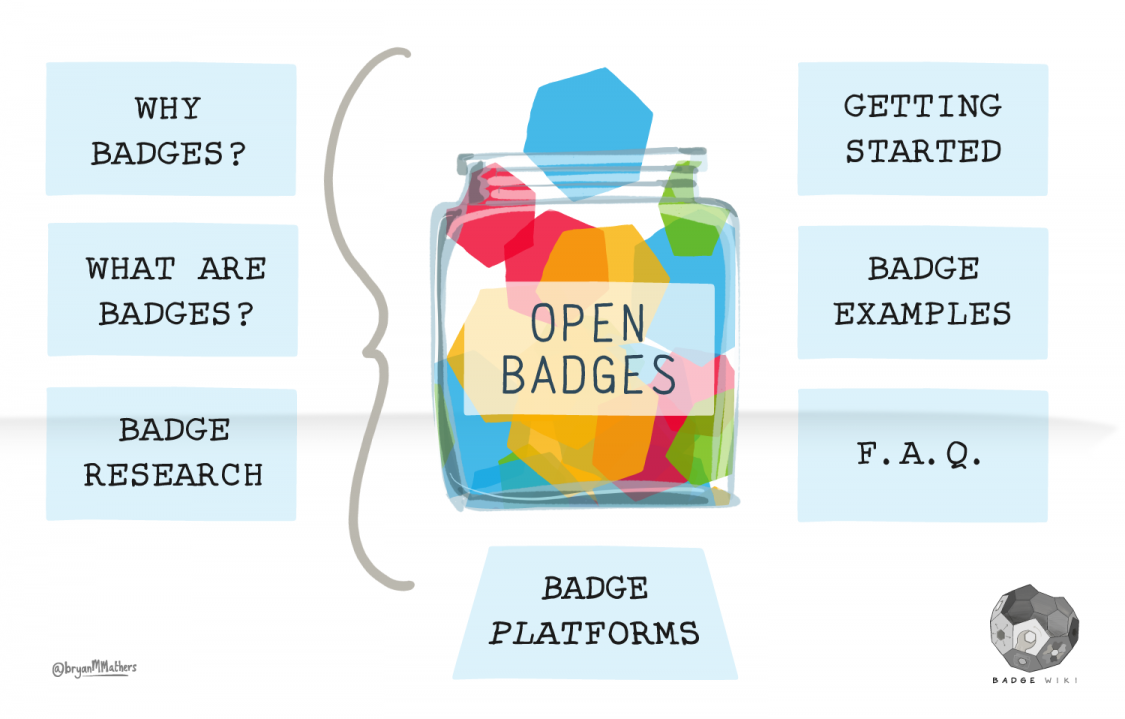
Open badge use has become more widespread of late, especially in the area of professional development in education. If this is not an area that is familiar to you check out the Badge Wiki. Creating and issuing an open badge from one of the many platforms that exist offers the chance for the awardee to take ownership of their evidence, curating their collection and annotating to make explicit the value of the learning experiences they have engaged in. The badges carry data about how, where and when the activity happened and can easily be shared online, though social media and reflected upon using an e-portfolio or personal website/blog. Further evidence or reflection can easily be added to contextualise that experience. 

This session’s leaders Debbie Baff @debbaff and Teresa MacKinnon @warwicklanguage have long advocated for greater awareness of the potential of open badges and strongly support a call for open recognition which can build our learning networks and empower us to reflect upon our experiences. Recognition which reflects both formal and informal learning. Check out their video “There’s a badge for that” and their Open Badge profiles in their bios!

Teresa maintains that open badges are more than just an opportunity for collection, to realise their potential for your professional development you have to get active. At the heart of badge earning is the agency of the badge owner, the more one actively curates and intentionally makes use of one’s badges the more one takes control of one’s digital presence and learning. Activity is a vital part of the process. As Nardi put it (1996): “you are what you do.” Seen through the lens of Activity Theory as Vygotsky interpreted it, the use and construction of artefacts are part of human development: the mind is developed through activity (Vygotsky, 1978). Intentionally collecting, curating and contextualising one’s badges online supports double-loop learning and is particularly suited to online and distance education as explained by Blaschke (2012) 

Join us to share your experiences and help shape the future of #LTHEchat.

References

Blaschke, L. M. (2012). Heutagogy and lifelong learning: A review of heutagogical practice and self-determined learning. The International Review of Research in Open and Distributed Learning, 13(1), 56-71. Available 

https://www.irrodl.org/index.php/irrodl/article/view/1076/2113

Hauck, M., & MacKinnon, T. (2016). A new approach to assessing online intercultural exchange: soft certification of participant engagement. In Online Intercultural Exchange (pp. 209-232). Routledge.

Halavais, A. M. (2012). A genealogy of badges: Inherited meaning and monstrous moral hybrids. Information, Communication & Society, 15(3), 354-373. 

Nardi, B. A. (Ed.). (1996). Context and consciousness: Activity theory and human-computer interaction. MIT Press. Vygotsky, L. S., & Cole, M. (1978). Mind in society: Development of higher psychological processes. Harvard university press.

Bios

Profile photo of Teresa McKinnon.

Teresa MacKinnon @WarwickLanguage

Teresa is an open educator, an award-winning language teacher with a wealth of expertise in online delivery. Experienced in education management and course design in secondary and higher education, Senior Fellow of the Higher Education Academy and Certified Member of the Association for Learning Technology (ALT).

Teresa has extensive experience of the integration of computer-mediated communication in learning design. She retired in January 2021 from her post as Associate Professor at the University of Warwick but remains active online as @WarwickLanguage where she enjoys connecting educators internationally across sectors. She advocates open educational practice, and is active in the areas of virtual exchange, professional development and open badges. You can see a collection of her open badges here.

A profile photo of Deb Baff.

Deb Baff @Debbaff

Debbie Baff is a Subject Specialist (Leadership and Culture) at Jisc focusing on the Digital Leaders Programme and has over 25 years experience of working in Higher Education & the voluntary sector. An Open Educational Practitioner and PhD Student in E Research and TEL. Her research interests are in online social support and the impact on wellbeing for educators. She is co-chair of the Open Education Special Interest Group and contributes to several committees and groups at the Association for Learning Technology. Debbie is a Fellow of Advance HE (FHEA), a Certified Online Learning Facilitator (COLF) and a Certified Member of the Association for Learning Technology (CMALT). She is also on the editorial board for the Research in Learning Technology Journal and the Journal of Social Media for Learning.

An open digital badge enthusiast and keen sketchnoter, Debbie has a creative approach to learning, teaching and building communities both online and in person. She has been involved with open digital badges since 2014 and was a member of the planning committee for the first Open Badges in Higher Education conference held at the University of Southampton in 2016. She has implemented open badge initiatives at the University of South Wales, Swansea University and the Association for Learning Technology. She is now working on a project at Jisc to review the use of badges across the organisation. A badge earner herself, Debbie’s badges are available on her Open Badge Passport. She blogs at debbaff.com.

Here is the Wakelet where you can revisit the tweets from this chat. Enjoy!

Posted in announcement | Tagged | Leave a comment