Join us on Wednesday 4 November at 8.00pm (GMT) with our guest contributors Dr Gladson Chikwa (@gchikwa.bsky.social), Professor Josephine Deguara (@josephinedeguara.bsky.social) and Dr Daniella Spiteri Cornish (@meddspi.bsky.social). This #LTHEchat on Bluesky will explore inclusive collaborative practice.

Launching a professional network is one thing and sustaining a vibrant, engaged, and supportive community is quite another. Since the launch of the International Teaching and Learning Special Interest Group (ITLSIG) in 2021, our aim has been to create a space where colleagues across higher education can come together to share experiences, learn from one another, and enhance their professional practice. While we established a steering committee to help coordinate activities, we have been intentional about maintaining a flat, non-hierarchical structure in which all members are encouraged to contribute, lead, and learn. This approach, underpinned by values such as inclusion, respect, collaboration, openness, and mutual support, has enabled the network to develop into a thriving and effective community.
Over time, our experiences within ITLSIG have prompted us to reflect on what makes collaborative professional communities successful. We have seen how inclusive ways of working can strengthen relationships, amplify diverse perspectives, encourage participation, and create opportunities for collective learning and growth. These reflections have inspired us to explore the idea of Inclusive Collaborative Practice (ICP) and the role it can play in fostering meaningful engagement within higher education and beyond.
In this blog post, we set out what we mean by Inclusive Collaborative Practice and consider why it matters in contemporary professional settings. Drawing on our experiences within ITLSIG, we also share a number of the values and principles that have guided our work as a network and helped create the conditions for productive collaboration, shared ownership, and a strong sense of belonging. We hope these reflections will offer practical insights for others seeking to build and sustain inclusive communities of practice in their own contexts. Figure 1 below shows how ITLSIG is built on the foundations of communities of practice.
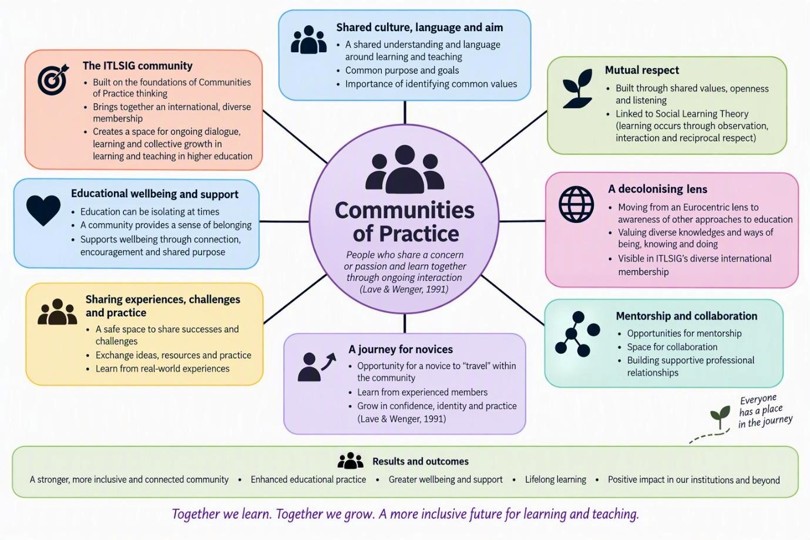
Figure 1: A brief overview of ITLSIG’s vision & underlying values and aspirations
What is Inclusive Collaborative Practice?
Our understanding of inclusive collaborative practice (ICP) draws on scholarship and practice relating to inclusion, equity, collaboration and belonging, which emphasise valuing diverse voices, ensuring equitable participation, and fostering environments where individuals feel respected and able to contribute meaningfully. For the purposes of this blog, we define ICP as the intentional process of working with others in ways that value diverse perspectives, distribute opportunities fairly, and create environments where everyone can contribute, belong, and thrive (Shore et al., 2018; Wenger, 1998). This understanding reflects our commitment to creating a community where participation, mutual respect, shared learning, and collective growth are actively encouraged (Nembhard and Edmondson, 2006).
Why does Inclusive Collaboration Matter?
In an increasingly diverse and interconnected world, ICP matters. Arguably, it is the cornerstone of effective learning, professional development, working, and problem-solving. At its heart, ICP is about creating environments where people from different backgrounds, experiences, identities, and perspectives can contribute meaningfully, feel valued, and participate equitably in shared activities. Rather than simply inviting people to the table, inclusive collaboration ensures that all voices are heard, respected, and able to influence outcomes. In our view, ICP matters because it creates the conditions for individuals to feel valued, engaged, and able to contribute meaningfully, enhancing belonging, learning, wellbeing, and confidence (Nembhard & Edmondson, 2006; Shore et al., 2011). In turn, organisations and professional networks such as ITLSIG benefit from greater innovation, stronger decision-making, trust, and performance, while society gains through reduced inequalities and more representative systems. When we applied this understanding in ITLSIG, we have been able to create tangible outputs including publishing two edited books and organising a successful international symposium which brought together colleagues from 26 universities (16 UK universities & 10 International universities) at Manchester Metropolitan University in April 2026. ITLSIG has got more than 130 registered members drawn from more than 35 universities in more than 15 countries across the globe. Inspired by previous successes, we are currently organising an online international conference in 2027, and a 2-day international conference in Malta in 2028.
Our two edited books are:
• Innovations in Pedagogical Practice and Curriculum Development in Higher Education: Contemporary Global Perspectives
• Innovations in Assessment, Student Experience and Professional Development in Higher Education: Contemporary Global Perspectives.
Despite our differences, including those arising from our disciplinary backgrounds and cultures, we work together harmoniously by adhering to the values highlighted above and the principles outlined below.
The Barriers to Inclusive Collaboration
It is worth reflecting on the factors that stifle efforts to embrace inclusive collaborative practice. Here we share some examples of factors that can undermine inclusive collaboration such as unequal access to opportunities, hierarchical power structures, and institutional biases, as well as interpersonal challenges including stereotypes, unconscious bias, mistrust, and poor communication. These can be compounded by personal experiences of exclusion, imposter syndrome, and fear of speaking up, limiting meaningful participation and shared learning. From our own ITLSIG experience, we have picked up a number of issues that can be barriers:
- Language fluency – we still use mainly English within academic circles
- Differing academic cultures – with different assessment priorities or education setup
- Differing pedagogical traditions – teacher-centred vs student-centred approaches
- The mobility friction – some participants had a lot of hoops to consider to attend our international symposium
- The resource divide
Lastly but not least we would like to share some principles that are critical for successful inclusive collaborative practice.
Principles of Inclusive Collaborative Practice
Based on our Inclusive Collaborative Practice in ITLSIG, we would like to share some principles that we find useful for effective inclusive collaboration.
Listen Actively
Seek to understand rather than respond.
Value lived experience alongside professional expertise.
Share Power
Involve others in decisions that affect them.
Move from consultation to co-creation.
Respect Difference
View diverse perspectives as strengths.
Embrace constructive disagreement.
Create Psychological Safety
Enable people to contribute without fear.
Encourage questions, challenge, and learning.
Ensure Equity
Recognise that people may need different forms of support to participate fully.
Concluding remarks
We hope this blog inspires colleagues to explore how Inclusive Collaborative Practice can strengthen their own communities and professional relationships. At its heart, ICP is about creating the conditions for every individual to contribute, influence, learn, and belong. By fostering genuine partnership and shared ownership, collaboration becomes a catalyst for innovation, inclusion, and meaningful positive change.
References
Lave, J., & Wenger, E. (1991). Situated Learning: Legitimate Peripheral Participation. Cambridge: Cambridge University Press.
Nembhard, I. M., & Edmondson, A. C. (2006). Making it safe: The effects of leader inclusiveness and professional status on psychological safety and improvement efforts in health care teams. Journal of Organizational Behaviour, 27(7), 941-966.
Shore, L. M., Cleveland, J. N., & Sanchez, D. (2018). Inclusive workplaces: A review and model. Human Resource Management Review, 28(2), 176-189.
Wenger, E. (1998). Communities of Practice: Learning, Meaning, and Identity. Cambridge: Cambridge University Press.
Bio
Dr Gladson Chikwa
Dr Gladson Chikwa is a Principal Fellow of the Higher Education Academy, and a Reader in Academic Development in the University Teaching Academy (UTA) within the Centre for Learning Enhancement and Educational Development (LEED) at Manchester Metropolitan University. He teaches on the Postgraduate Certificate in Learning & Teaching in Higher Education and MA in Higher Education. He also leads work around working with international students. His research interests are varied, with numerous publications in areas such as Technology Enhanced Learning, Assessment & Feedback, Belonging, and learner autonomy. He is currently a Guest Editor for a special issue focusing on ‘Advancing Student Wellbeing and Mental Health in Higher Education’. He is also the Founder and co-Chair of the International Teaching and Learning Special Interest Group (ITLSIG).

Professor Josephine Deguara
Josephine Deguara is a Senior Lecturer in Early Childhood and Primary Education at the University of Malta. Her research explores curriculum philosophy and pedagogy, play and learning, children’s rights and voices, policy and practice, and children’s meaning-making through drawing. She is also interested in language use in diverse early years settings. Josephine has contributed to several funded projects. She has authored and co-authored numerous book chapters, journal articles, book reviews, and research reports, and regularly presents at international conferences. Her recent co-authored book with Professor Dame Cathy Nutbrown, Children Making Meaning Exploring Drawings, Narratives and Identities (Routledge, 2025) examines how children use drawing to communicate meaning and construct their identity – offering insights into their understandings, thought processes, knowledge and emotions. Josephine serves as the Research Coordinator of the International Teaching and Learning Special Interest Group (ITLSIG) and is co-editor of two books developed by ITLSIG: Innovations in Pedagogical Practice and Curriculum Development in Higher Education: Contemporary Global Perspectives, (Emerald, 2025), and Innovations in Assessment, Student Experience and Professional Development in Higher Education: Contemporary Global Perspectives, (Emerald, 2025).
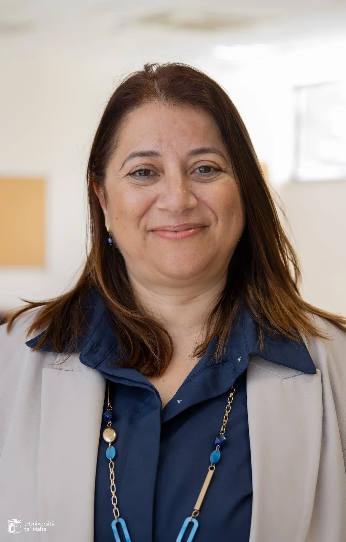
Dr Daniella Spiteri Cornish
Daniella Spiteri Cornish is an Associate Professor in Healthcare Professions Education at the University of Leeds, with a professional background spanning medicine, paediatrics, healthcare education and academic leadership. She has extensive experience in curriculum and programme development across undergraduate and postgraduate healthcare education, with particular interests in authentic assessment, inclusive learning, educational technology and supporting learners from diverse professional backgrounds. Daniella is passionate about creating educational experiences that connect theory with practice and encourage learners to develop confidence, curiosity and professional identity. Her work is underpinned by a commitment to collaboration, evidence-informed education and continuous improvement in how we prepare healthcare professionals for an evolving healthcare environment.Daniella is the Membership Coordinator in the International Teaching and Learning Special Interest Group (ITLSIG).