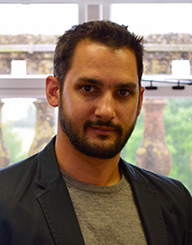
Join us on Wednesday 18 November at 8.00pm (GMT) with our guest contributor Dr Giles Martin (@gilesdrmartin.bsky.social). This #LTHEchat on BlueSky will explore the Scholarship of Teaching and Learning.

One of the delights of working in educational development and on a PGCert is working with people over every discipline in the university. Aside from a rather eclectic range of knowledge gained, perhaps one day useful in a very weird pub quiz, you can see both the similarities and differences in pedagogies in the disciplines and in the discussions about teaching. In 20 years, working across science, engineering, medicine, humanities, social sciences and the arts, I’ve yet to find a subject that doesn’t have some variation on the theory-practice (or application) challenge that we end up discussing for that discipline’s teaching and learning.
Staff are also learners, most clearly perhaps when on a course e.g. a PGCert in Higher Ed, or similar, but also ongoing as professionals. The same challenge exists here as well, this time with the Scholarship of Learning and Teaching as the theory, and the application being their own professional practice. With the obvious exception, we aren’t trying to turn all HE teachers into Education Academics (even for those, such as colleagues in my own School of Education and Humanities, their interests and background in education are very rarely HE and on the specific challenges in their teaching), but SoTL is a major part of the underlying theory and knowledge for our profession. Quite what we mean by SoTL and pedagogic research or other distinctions may be worth a discussion as well, and I’d be interested in how people introduce this to staff. I’ve taken a fairly broad approach here and with staff, and that’s been part of our approach in expanding engagement.
How do we best support our colleagues to engage with SoTL and what should that engagement look like? This question is very common for education development teams whilst planning PgCerts, in exam boards looking at varied work and outcomes achieved. This will be at the heart of my questions for the community during our #LTHEChat. However, it is also time for us to look beyond PgCerts and initial engagement – that should seek to develop skills and approaches for use into the future, so we need an idea of what that looks like, but also support it when that future becomes the present. A course might be a start though I doubt many programme teams feel they’ve had enough time to get beyond a foundation. So, what’s next in development? There are also other staff (non-lecturers or non-teaching staff, engaged in L&T and support still) to consider.
As initial qualifications and courses are now more established in many places than 20 years ago, can our focus also shift to ongoing CPD, as professional teachers in HE, and to other people. This is our profession, education, teaching or learning, so we should be engaged with the community, engaged as a community, in advancing the basis of knowledge and understanding that underpins our work. At a time when there is a growth in teaching-only or teaching and scholarship contracts as well, some staff are wondering what engagement and advancement looks like for that aspect of their role.
To start us off, below I share some my own team’s foci over recent years, from identified challenges, where we’ve been gradually trying to build engagement and pathways. This isn’t held up as the answer, or finished work, rather a set of challenges and starting examples.
Relevance: There’s a balance for the more general/foundational ideas, theories and model, and the more context specific work from a wide field, for engagement by practitioners for their practice. There will be things we decide are useful to introduce to all, be it say constructive alignment, threshold concepts, or even warnings about various edu-myths. However, as with other subjects, relevance is a key challenge. Given the variety of context and experience levels, we’ve had some success combining this with a focus on ownership of their development focus. Therefore, whilst introducing some ideas in an environment that is intended to discuss relevance, we now follow this up with participants choosing a theme/topic based on their feedback and reflections from the first term and have a few months to explore, with help from librarians, and bring back (a) what they’ve found of interest (what) and (b) their reflections on how this links to their practice (so what), to share and discuss then build back into their work. (In this case we also use asynchronous discussions on shared work, something with pros and cons to reflect on, but allowing time to discuss over a period).
Criticality: It’s one thing having some literature present, even relevant and informing reflections and planning, but more recently to build on that an external examiner pushed us to enhance the criticality of that engagement. This is a challenge for many introductory courses and given the lack of time often present. Whilst there are various active exercises to consider and use, one interesting additional approach has been producing podcasts with internal experts, discussing specific issues. These were originally a way for added guests on topics of interest to some, but listening to how experts think and speak about topics, more naturally adding critical elements into their discussions, is one way to understand what this ‘looks’ like. Being able to listen whilst travelling and doing other things doesn’t hurt either! Criticality is one of the clear patterns of variation in assessment you see, so as with every challenge, I hope we hear more ideas in the chat I can steal!
Dissemination: There’s a lot of learning that is useful for that person but not disseminated. Several authors argue that sharing and dissemination are at the heart of SoTL and part of a shift from scholarly practice to scholarship. Looking at many assessments, they were excellent, but not much use beyond that assessment. So we’ve made a shift in the project Pg Certificate in Higher Education and follow up MA CPD modules for the assessments to be dissemination outputs, and expanded the formats (the MA modules being open format). This took time slowly to bring in, then more for a shift to a culture of default sharing (whilst still voluntary). Seeing those from before was important and that collection has built up over time, and now it’s starting to help with the next challenge…
Missing middle: Linked to dissemination and the end of the Pg Certificate in Higher Education is ‘what next?’ For many, with good ideas and engagement, the next step available has been international peer reviewed journals or conferences. Great, if possible, a good aim where suitable, but too high a jump for many due to experience, time, skills or confidence. What are the in-between options? Recently we’ve focused on two: and internal site for sharing case studies, commentaries, even tips and an externally facing peer reviewed institutional journal. Ensuring other outputs, modules, funded projects, internal conference presentations, flow into these, is in progress and one way to build a large resource and also a feel of this being normal! Enabling stepping stones up the ladder we hope will bring more work out into the open (including that which wouldn’t be suitable for ‘higher’ steps). SoTL is a broad church.
Community discussion: In a hybrid working world, we’ve lost some serendipitous and regular conversation, though the disappearance of many a common room started before that. For that discussion to be more scholarly, both more informed as CPD and the genesis of other work, can be supported by developing expertise generally, but helped by little and often nudges. Over time our reading group has thus changed, from an education academics’ critique of the paper of the month, to suggested reading as a prompt or provocation for a more open discussion, with many more people engaged, where interested in the topic. This doesn’t stop the more critical discussion (though some has been lost on methodology vs relevance), but has enabled more people to join in, prompted by a little regular reading, and do that key thing we encourage from the beginning: talk about your teaching and learn from others.
Time and Expertise: I thought I’d finish the challenges on one we’re still looking for better solutions. Our MA programme, and EdD, provide increasing numbers with more substantial research method skills that are relevant, but colleagues are still lacking time or all the experience and expertise for projects. We have people with ideas and people with expertise, but we need good ways to match them up. This would also fit well into SoTL as more of a community and shared endeavour.
Ultimately questions should just be about how we engage in SoTL activities but also what is appropriate, relevant, and leaving aside our non-existent perfect HE world, what level of engagement is suitable for limited time/resources in a competition considering return on investment. Most of the later examples given above I have far more in theory interested than in practice able to do – so one last theory and practice/application challenge for us to consider.
Bio
Dr Giles Martin is the Subject Leader for Higher Education Practice in the School of Education at Bath Spa University, and also programme leader for the PGCHE and the MA in Professional Practice in Higher Education. He leads the HE strand of the Policy, Pedagogy and Practice research centre and is focussed on enhancing engagement within scholarship of learning and teaching and sharing practice. Originally, his background was in mathematical physics, including research in astrophysics, particle physics and primarily in quantum field theory. He has been teaching in various roles in Higher Education since 2003 and previously led educational development courses at both Queen Mary, University of London and the University of Bath. Giles has a PhD in Mathematics, MSci Mathematical Physics and MEd Educational Research, and a PGCert in Online and Distance Education. He is a Senior Fellow of the Higher Education Academy (SFHEA), a Fellow of the Staff and Educational Development Association (FSEDA), just having finished his term as co-chair of SEDA’s Professional Development Framework Committee and on the SEDA Executive Committee, and is an external examiner, reviewer, and accreditor, and a consultant on educational and professional development topics. His educational professional interests are around the development of university teaching and teachers, student transitions in higher education, mathematics education, and technology in education. Reach Giles on Bluesky: https://bsky.app/profile/gilesdrmartin.bsky.social