
Welcome to a new term of #LTHEChat! Join us on Wednesday 9th September at 8:00pm (BST) with our guest contributors, Dr Tünde Varga-Atkins (@tundeva.bsky.social) and Dr Vicki Dale (@vickidale.bsky.social) for a fascinating and innovative BlueSky chat entitled ‘Islands of Hope’. We will explore how we can use the Five Elements of Chinese philosophy to help create our own Islands of Hope to give us hope for the future of education.
Introduction
Higher education can feel like navigating uncertain waters. Financial pressures, changing student needs, rapid technological developments and increasing demands on staff can sometimes make it difficult to see beyond the immediate challenges. Yet, even in difficult times, educators continue to create, experiment, care, adapt and imagine better possibilities. Perhaps hope is not something we need to find somewhere else. Perhaps we can create our own Islands of Hope.
From Islands of Innovation to Islands of Hope
Islands of Hope is the 2026 online festival held between 9-11 September and hosted by the Islands of Innovation committee for its fifth year (this year including members from Brunel University, University of Glasgow, University of Liverpool’s Centre for Innovation in Education, University of Warwick and XJTLU, China). The event brings together educators, learning technologists, academic developers and third-space professionals to share innovative approaches to teaching and learning. Islands of Innovation has won the ALT Team Award and ALT Community Choice Award in 2025.
Across three days of synchronous and asynchronous encounters, you’ll drift between experiences, discover new ideas, and co-create with a global community of academics, academic developers, learning technologists, and third-space professionals. Whether you dip in for the synchronous opening or closing keynote or immerse yourself in the full voyage, there’s a place for you on this island. For our full event schedule, please consult the Islands of Hope 2026 website.
During the #LTHEchat, we invite you to take part – either synchronously or asynchronously – focusing on the question: how can our practice give us (and those around us) hope for the future of education?
Finding Our Five Elements
Our Islands of Hope are inspired by the Five Elements of traditional Chinese philosophy: wood, fire, earth, metal and water. The Five Elements describe how nature, life and energy continually change, connect and find balance. We are using them as prompts to explore the different qualities that can sustain us as educators.

Wood — Growth and Creativity
Wood represents growth, spring, creativity and new beginnings. It encourages us to remain curious, try something different and imagine what might be possible—even when the future feels uncertain.
What new opportunities are we curious to explore in our teaching or leadership?

Fire — Passion and Energy
Fire represents passion, warmth and energy, and summer. Innovation needs more than good ideas; it needs the enthusiasm and human energy to bring those ideas to life.
What kind of work or learning really energises us, and how does that spark show up in our professional practice?

Earth — Stability and Care
Earth represents stability, grounding and care, and late summer. It reminds us that education is ultimately about people—and that caring for ourselves, our colleagues and our learners is fundamental to creating spaces where everyone can flourish.
What’s our secret ingredient for staying grounded when everything around us is changing?

Metal — Structure and Focus
Metal represents structure, discipline and focus, and autumn. In a sector full of new technologies, initiatives and competing priorities, it reminds us that sustainable innovation needs purpose, clarity and thoughtful implementation.
What tools or approaches can help us turn our dreams or hopes into reality?

Water — Flow and Wisdom
Water represents flow, adaptability, rest and deep wisdom, and winter. It reminds us that resilience isn’t always about pushing harder. Sometimes, it means pausing, adapting and learning from the journey.
What have we learned from going with the flow when things didn’t quite go to plan?
Sharing Our Secret Ingredients
These questions are deliberately informal. We aren’t looking for perfect answers or polished case studies. We want to hear the little things that work: the unexpected idea, the lesson learned from something that went wrong, the colleague who inspired you, the teaching activity that transformed a learning experience, or the small practice that helps you keep going when things get tough.
Because sometimes the most valuable ideas aren’t found in formal frameworks or institutional strategies. They are found in the everyday experiences of educators—and in the stories we share with one another.
Connecting Our Islands
So, what if every innovative teaching practice is an island? What if every educator carries a little piece of hope with them? And what might happen when we connect those islands together?
Our wish is that Islands of Hope will give us an opportunity to pause, reflect, share and discover that we are not navigating these challenging times alone. By sharing our experiences and learning from one another, we can strengthen our individual islands—and perhaps build bridges between them.
Come curious. Come creative. Come hopeful. Bring your ideas, your experiences, your questions—and perhaps your secret ingredient for making education a little better.
Which element will you bring to your Island of Hope? And what will you take away to help nurture someone else’s?
Useful links and resources
- Islands of Hope 2026 Website (includes event schedule and registration)
- Trailer video for Islands of Hope
We hope (😀) to see you at #LTHEchat!
Islands of Hope 2026 (Islands of Innovation) Committee members, A-Z by surname
Laura Blundell FHEA is an Educational Developer specialising in digital education at the Centre for Innovation in Education at the University of Liverpool. She supports staff across the University with curriculum enhancement initiatives, including the use of digital tools for learning and teaching. Laura is passionate about creating the best possible learning opportunities for students and supporting academic staff in achieving this, with particular interests in critical digital pedagogy, learning design, and creativity in learning.
Nathalie Broun is an Associate Lecturer; Ed.D Candidate, Graduate Certificate in Tertiary Learning and Teaching, RMIT University Vietnam.
Dr Vicki Dale CMALT SFSEDA SFHEA is a Principal Academic and Digital Development Adviser at the University of Glasgow, teaching on the PGCert and MEd in Academic Practice. Her principal focus is on active learning, and she serves on the organising committee of the Active Learning Network. Vicki is also an editor for Open Scholarship of Learning and Teaching (oSoTL) and the Journal of Perspectives in Applied Academic Practice (JPAAP).
Peter Lin FHEA CMALT is a Learning Technologist at Brunel University of London, leading the development of innovative digital and immersive learning experiences. His work brings together technology, pedagogy and simulation to create engaging, authentic learning across disciplines, including through Brunel’s Immersive Learning Room. He champions collaboration, experimentation and evidence-informed educational practice.
Dr Charlotte Stevens FSEDA SFHEA is Assistant Professor (Digital Education) at the University of Warwick, UK, where she co-leads a postgraduate award in Digital Education and also leads on evaluation. Her interests include evidencing impacts of professional development, understanding the digital learning experience from different perspectives, and creative approaches to reflective practice. She is an active member of #creativeHE.
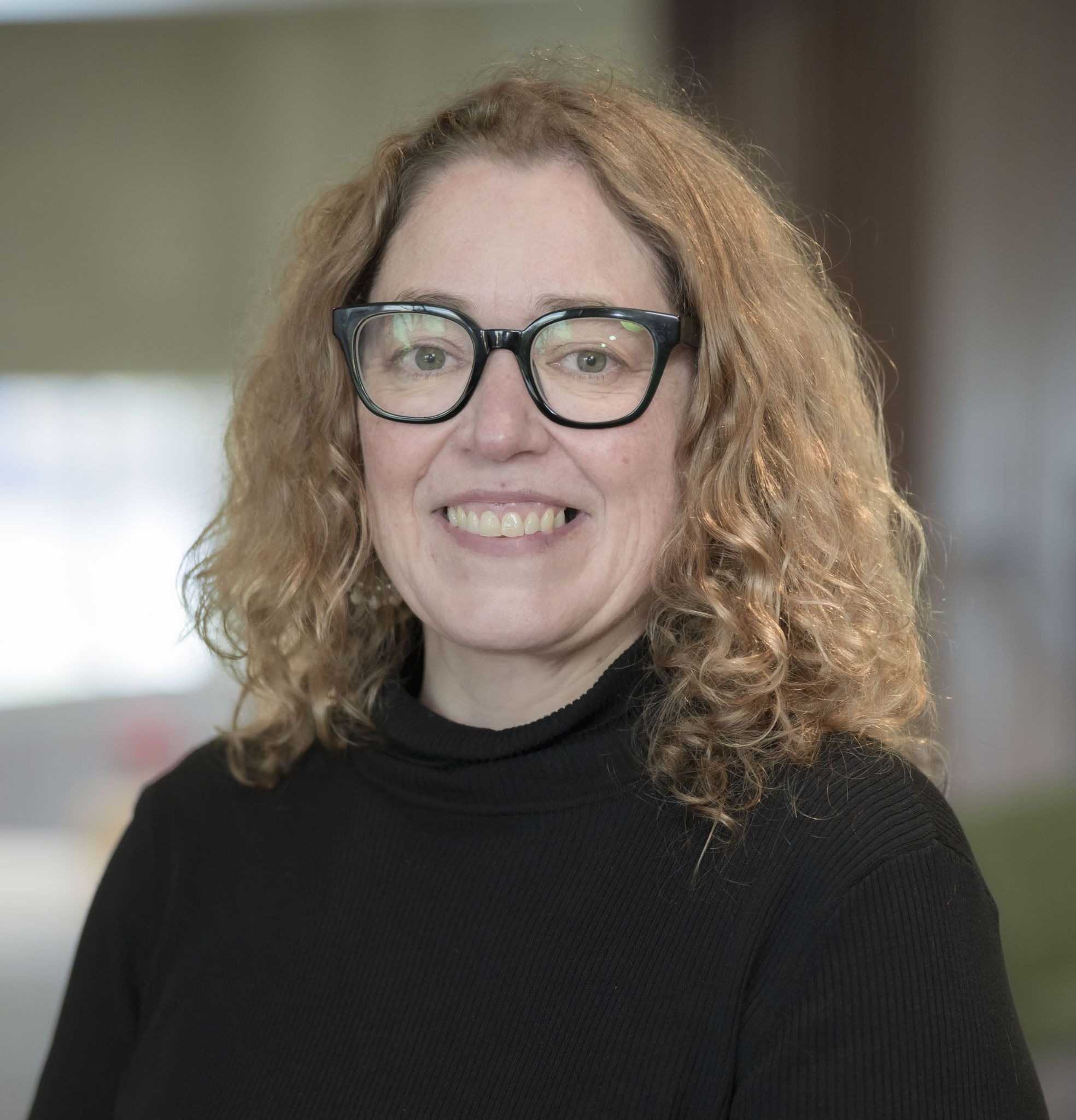
Dr Yiqun (Olivia) Sun is an Educational Developer and the Leader of the AI Working Group and the Technology-enhanced Learning Team at Xi’an Jiaotong – Liverpool University (XJTLU), China. She is also a certified ISW and Climate Flask facilitator. Her research focuses on blended learning, TEL, digital literacy, and AI in Learning and Teaching.
Dr Nathalie Tasler is an award winning Principal Academic and Digital Development Adviser (senior lecturer) at the University of Glasgow. She is internationally recognised and drives innovation in learning, teaching, and scholarship, championing inclusive and creative pedagogies. Recognised for extensive collaborations and impactful digital scholarship, Nathalie leads significant academic development initiatives. She also fosters ethical research environments and actively mentors and coaches colleagues.
Dr Tünde Varga-Atkins is a Senior Educational Developer in the Centre for Innovation in Education at the University of Liverpool. She is a National Teaching Fellow and a Principal Fellow of the Higher Education Academy. Her specific areas of research encompass areas in digital capabilities, signature pedagogies, curriculum design and evaluation, multimodal learning, generative AI, assessment and feedback, learner experience research and scholarship of learning and teaching. Tünde is associate editor of AJET.
David Watson is an Educational Developer specialising in digital education at the Centre for Innovation in Education at the University of Liverpool with 13 years’ higher-education experience in the UK and Asia. Previously a Learning Technologist at Edge Hill University and Instructional Design Specialist at Hong Kong Polytechnic University, he led blended and online learning and staff development in curriculum design and active learning. With PGCTHE, SFHEA, and CMALT recognition, David champions digital tools enhancing student learning. His expertise includes blended and online teaching, flipped classrooms, learning design frameworks, active-learning techniques, and open educational resources.
Questions
Q1 – What new opportunities are you curious to explore in your teaching or leadership?
Q4 – What tools or approaches can help you turn your dreams or hopes into reality?
Q5 – What have you learned from adapting your practice when circumstances did not go as planned?


