
Despite the increasing ubiquity of the term digital university, the concept of the digital university remains diffuse. Perceptions tend to slant in predictable directions: technological determinism; association within a particular account of education – open online learning for example; and concentrate on particular accounts of value and quality. We have noted a tendency to locate the digital in current institutional structures and processes within the university, instead of asking how the ‘digital’ challenges those structures and processes, and how in turn they can be reconfigured or reimagined.
We have been investigating, thinking and writing about how to create an alternative critique and narrative for discussion around the development of universities, with a particular slant on questioning the role of “the digital”. This has culminated in the publication of our book, Conceptualising the digital university: the intersection of policy, pedagogy and practice. In the book, we propose a more holistic, integrated account emerging from our exploration of theory and research. Central to our narrative are questions concerning the extent to which digital technologies and practices can allow us to rethink where the university, our curricula, and the educational opportunities the university provides are located and co-located, and how they can extend current thinking about the development of higher education as a publicgood. Our key areas of development include:
- Emphasising the human and social processes involved in organisational change and the development of digital practice in the university.
- Developing the notion of learning environments beyond a techno-centric perspective.
- Advancing academic practice with respect to learning and teaching, literacy and human development through the effective use of digital technologies.
- Redefining university participation, outreach and the common good in a digital age.
We critique the current neoliberal forces that seem to be driving the political agenda around the development of Higher Education. We question the widespread adoption of such terms as education as a service, the business of education and the notion of the student journey. Fee structures, loan repayments, AI and digital technologies seem to be the drivers of current discussions around the future of education. That technology will drive transformation seems to be a given. The actual human element needed for transformation, and the practice of learning and the potential of using Higher Education to bring about meaningful social change is rarely given prominence. In this week’s tweet chat we want to find out about your experiences and thoughts on the notion of the digital university. In particular we want to explore our notion of a digitally distributed curriculum. One in which core values of participation, praxis and public pedagogy are enabled through open scholarship, co-location, co-production and porosity. These enactment of such an open, distributed curriculum could be seen in variety of ways including: more explicit emphasis on the development of agency and personhood across all disciplines, more diverse pedagogical approaches, different uses of digital and physical spaces, more open community development, student work that is openly available and not bounded within institutional digital silos.
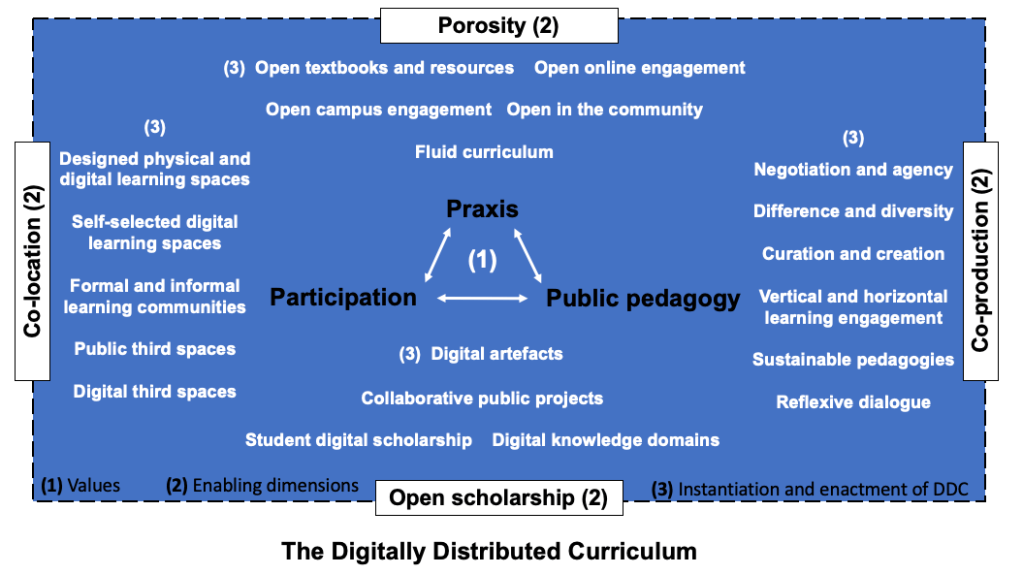
The Digitally Distributed Curriculum, Smyth, 2018

Sheila MacNeill is an independent consultant, open educator, writer and artist specialising in all aspects of supporting digital learning and teaching primarily within the UK HE sector. She has over 20 years experience within education working in a range of national and institutional roles covering curriculum design, assessment and feedback, learning analytics, developing digital capabilities, learning spaces and almost everything else in between. She is also the current Chair of ALT (the Association for Learning Technology), the UK’s largest membership organisation supporting the effective use of learning technology. In addition to her busy academic life, Sheila is active on a range of social media and has been blogging for over 13 years on her experiences and thoughts around various aspects of digital learning and teaching – She says it how she sees it!
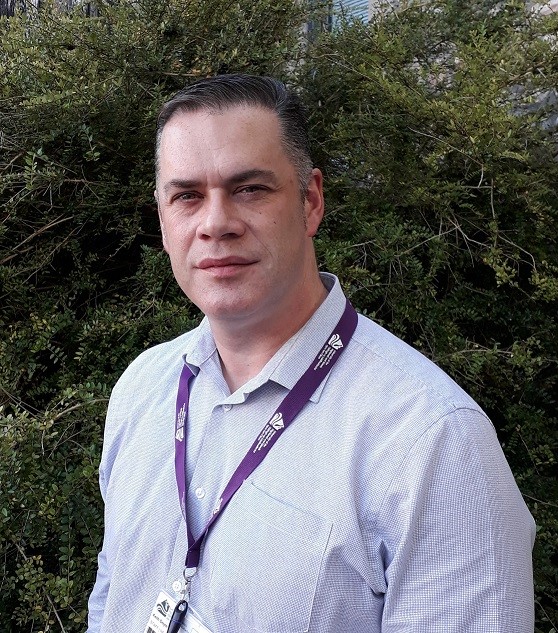
Keith Smyth is Professor of Pedagogy and Head of the Learning and Teaching Academy at the University of the Highlands and Islands. With a particular interest in digital education, Keith is known for developing the openly licensed 3E Framework for technology-enhanced learning and has been involved in a range of projects and initiatives focused on technology and inclusive educational practice, co-creative pedagogies and open education. Keith’s recent research with Sheila MacNeill and Bill Johnston explores the place of the digital in relation to the co-location of higher education and the curriculum beyond the physical and virtual confines of universities, and for extending Higher Education as a public good. These topics are explored in the newly published book Conceptualising the Digital University: The intersection of policy, pedagogy and practice. Keith blogs at http://www.3eeducation.org and is on Twitter @smythkrs “
The Wakelet for this chat is available here.










 Dr. Rossana Espinoza (


