#LTHEchat 74 What do you see? Using visual media to communicate our teaching and research

This week’s Tweetchat is kindly hosted by Alex Spiers and Tünde Varga-Atkins.

 alex


Alex Spiers                             

Alex is a Learning Technology Developer in the eLearning Unit at the University of Liverpool with over 12 years experience working in the learning technology field. He is the coordinator of the ALT North West England SIG which is a network that brings together learning  technologists with the aim of supporting the informed use of learning technologies in the region. He is also a member of MELSIG (Media Enhanced Learning SIG) organising group having presented and supported a range of events since 2008. His areas of interest include the use of social media to support authentic learning and develop digital literacies. He is also passionate about the use of personalised mobile devices to support learning and has co-facilitated the Bring Your Own Devices for Learning open online course for the past two years. He studied History of Art at the University of Glasgow and is a regular contributor to the music and art scene in Liverpool.

 tunde


Tünde Varga-Atkin

Tünde is a Learning Technology Developer and researcher at the eLearning Unit, University of Liverpool, developing a specialism in TEL (technology-enhanced learning) research and evaluation. She co-facilitates TEL Research @Liverpool which is aimed at building capacity around TEL research within the institution and also co-convenes a regional research group, ELESIG NW with colleagues from Manchester and LJMU. Her specific areas of interest include learner experiences of e-learning and the development of digital literacies. Her interest in visual research methods all feature in her research and evaluation work. She is currently studying on Lancaster University’s E-research and Technology-Enhanced Learning PhD programme, and embarking on a thesis that would like to focus on exploring the use of visualisation of TEL research activity to benefit organisational learning.

Tweetchat (Weds, 1st February)

What do you see? Using visual media to communicate our teaching and research

Taking up the baton of ‘seeing’  from last week’s #LTHEchat on park running and teaching on “Excellence…I know it when I see it”, we will share ideas this week on using visual media to communicate our teaching and scholarship.

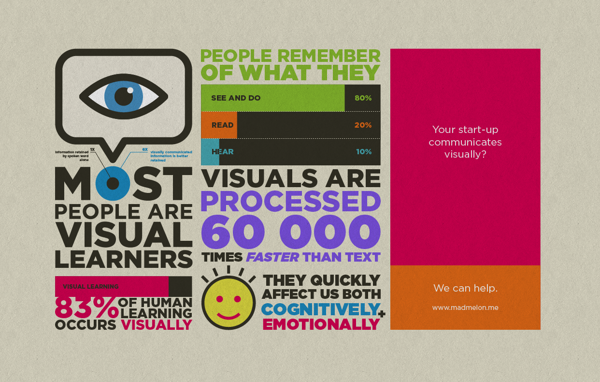
You know this quote is coming: yes, a “picture paints a 1000 words”! Why is this the case?

picture


http://themesdojo.com/metro/wp-content/uploads/portfolio14.png

What do we mean by visual media? There are certain ways of thinking about visuals: they can be ‘found’ or created images – although nowadays this binary has become quite blurred.  Banks (2001) distinguishes a verbal-visual spectrum, placing words and text on one end and images (photos, drawings) at the other end. Diagrams, for instance, are somewhere in-between, contain both textual and visual information. We have lots of sub-genres of visuals like maps, mind-maps, concept-maps. Then we have static and moving images!

Certain disciplines have special relationships with visuals. Art historians, archaeologists will be immersed in visual imagery of paintings, photos, drawings, sketches – visual representations of artefacts. Engineers and designers will be conversant with diagrams, 2D and 3D representations of spaces and objects. English and other writers will be fond of typography. Marketing and social media experts will be apt observers of how visual communication channels and artefacts work in different cultural contexts. What about when it comes to our teaching practice? Do we have the same relationship to visual communication as we do in our respective disciplines? Are we making best use of this mode of communication for meaning-making and learning (and helping others to learn)?

How? What works? What doesn’t? Have you got any practical tips for tools to use that help you creating – or finding – visual artefacts?  

Are pictures ‘just’ for illustration? (Madeleine Hallewell and Natasa Lackovic conducted a really interesting piece of research into the use of images within powerpoint slides in psychology lectures) Do you use them for learning and meaning-making? There is a whole body of literature on multimodality in social semiotics (Kress, Jewitt). This is concerned with different (hence multi) resources, or modes, that can be used for meaning-making. Examples modes are:

  • Written text

  • Spoken word

  • Audio

  • Visuals

  • Kinetics e.g. TOUCH etc.


What they argue, or interested in, is how the different modes can interact to create or enhance meaning, or when traversing between different modes, how different insights can be created during such a conversion process. You have all probably experienced how putting together a presentation slide or a poster of an academic article helped crystallise salient points – due to the fact that content or findings had to be converted and communicated in a visual form.


In preparation for this week’s #LTHEchat, we would love you to reflect on what visuals you work with, and how you use them in your teaching. We hope to share ideas, experiences or learning tasks in which you ask students to draw on the visual mode to help access, communicate their learning or leading them to insights in different (visual) ways.

See you soon!

Alex and Tunde

The Storify for #LTHEchat 74 can be found here.


References

Banks, Marcus. 2001. Visual methods in social research. London: Sage.

Hallewell, Madeline Jennifer (2013) Creatively re-mediating the integration of visual resources with spoken expositions during slideshows in undergraduate psychology lectures. PhD thesis, University of Nottingham. http://eprints.nottingham.ac.uk/14044/

Lackovic, Natasa. 2010. Creating and reading images: towards a communication framework for Higher Education learning. Seminar.net – International journal of media, technology and lifelong learning Vol. 6 – Issue 1 – 2010 http://eprints.lancs.ac.uk/70856/1/Lakovic.pdf


Posted in guest | 1 Comment

The challenge of defining excellence – I know what it is when I see it

parkrunphotoforheachat

Dr Kay Hack

Joint Tweetchat on Weds, 25th January 8pm – 9pm. 

This week’s joint chat with the HEA is hosted by Dr Kay Hack, Academic Lead for STEM with the Higher Education Academy – and regular parkrunner.

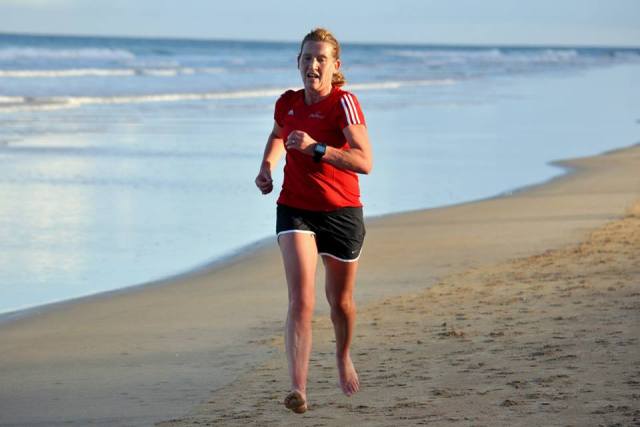
In her blog post, The challenge of defining excellence – I know what it is when I see it, Kay considers what excellence looks like within the parkrun community, and asks whether there are  lessons to be learnt for the TEF.

She hopes this will spark some  lively debate about what excellence is, and what it can look like in different disciplines. Hopefully this will help us all to develop a clearer picture of teaching excellence and how it can be evidenced.

Join both HEAchat and LTHEchat on Wednesday between 8pm – 9pm. It’s a joint effort on the last Wednesday of the month!

capture

Posted in Uncategorized | Leave a comment

#LTHEchat 73 Change, leadership and pedagogic research

A photograph of Dr Hala Mansour

Dr Hala Mansour @HalaMansour the winner of #LTHLEchat Golden Tweeter Award Senior Lecturer in HRM/OB.

This week’s Tweetchat is kindly hosted by Dr Hala Mansour, Senior Lecturer in Human Resource Management at the University of Northampton.

Hala received her PhD in Management 2012 from Keele University and MA in Teaching and Learning in Higher Education 2013 from Keele University, UK. From 1995, Hala has held, also, research and teaching commitments in different universities.

Her research focuses on Organisational Effectiveness, Organisational Culture, Organisational Change, Human Resource Management. She is also interested in publishing from her teaching practices in Assessment and Feedback in Higher Education. Dr Mansour won the prestigious Keele University Excellence Award in Teaching and Learning (2014).

Tweetchat (Weds, 18th Jan)

Change, leadership and pedagogic research.

This chat aims to develop a conversation around the impact of changes and leadership in HE on pedagogic research and practice.

Although profound changes redefining the role, mission and value of universities are sweeping through the HE sector, current conceptualizations of leadership and change management lean towards New Public Management’s high-level objectives and efficiency (Mansour, et al, 2015).

Alternative models, such as Whitchurch’s (2013) concept of ‘third space’, the strategic management of intellectual capital, primarily human resources (Devecchi and Petford, 2015), and notions of shared or even absent leadership (Laloux, 2015; Robertson, 2015) provide new ways to analyse how different stakeholders can create new and mutually effective ways of working together.

Teamwork 

A team from The University of Northampton @UniNorthants and Keele University @KeeleUniversity is working in a project funded by the Leadership Foundation in Higher Education @LFHE about Change and Leadership in Higher Education @LCTinHE.

Through a mixed method approach, this project develops an understanding of the dynamics of leadership practices and strategies, and how these impact on academics, professional services, managers, and formal leaders’ ability to cope with change.

capture

Dr Cristina Devecchi, Associate Professor in the Centre for Education and Research, Faculty of Education and Humanities.

Dr Cristina Devecchi @dmc_devecchi is an Associate Professor in the Centre for Education and Research, Faculty of Education and Humanities, at The University of Northampton where she is responsible for the PhD programme in Education.

She has carried out national and international research on various aspects and stages of education from the inclusion of children with disabilities to transition of young people with disabilities from secondary to further and higher education.

Her main interest is in how educational settings manage and foster collaboration between different members of staff. She was winner of the Outstanding Author Contribution Award at the Literati Network Awards for Excellence 2011) [Devecchi, M. C. and Nevin, A. (2010) Leadership for inclusive schools and inclusive school leadership. In. A. Normore (Ed.) Global Perspectives on Educational Leadership Reform: The Development and Preparation of Leaders of Learning and Learners of Leadership Advances in Educational Administration, Volume 11, 211–241]

LinkedIn profile Researchgate profile University profile 
Photo of Dr Jackie Potter

Dr Jackie Potter, Head of Learning and Professional Development at Keele University.

Dr Jackie Potter @Jac_Potter is the Head of Learning and Professional Development at Keele University.

A Fellow of the Staff and Educational Development Association since 2008, and more recently a Principal Fellow of the Higher Education Academy, she leads teams of professional services staff that deliver educational development, learning technology support,  researcher development, staff development and some organisational development for the University.

She maintains a research profile with her most recent activity focused on the scholarship of teaching and learning .

LinkedIn profile Academia profile  Researchgate profile

capture

Nick Allen, Executive Officer in the Office of the Vice Chancellor at the University of Northampton.

Nick Allen @NAllen1976 is Executive Officer in the Office of the Vice Chancellor at the University of Northampton.

In this role, Nick works with the Vice Chancellor and Chief Operating Officer to support, among other activities, strategic planning and risk management processes.

Nick has previously worked at The Open University and Sheffield Hallam University and is currently one of two Joint Midlands Regional Co-ordinators for the AUA.  His research interests relate to governance in higher education and the relationship between academic and professional services staff.

The Storify is available here. 

Posted in guest | Tagged , , | 1 Comment

#LTHEchat 72 Student Engagement – New year, new partnership: @RAISEnetwork

In the first of our partnering chats we’re joined by RAISE members around the globe for a chat led by two of the RAISE coordinating team: Tom Lowe and Amarpreet Kaur (‘Abs’) who will be tweeting from @RAISEnetwork.

RAISE (Researching, Advancing & Inspiring Student Engagement) is a network of academics, practitioners, advisors and student representatives drawn from the Higher Education Sector who are working and/or interested in researching and promoting student engagement. The network now includes over 1500 members, drawn from across the globe although the majority are based in the UK where the network is based.

http://www.raise-network.com/

Tom LoweTom Lowe is currently the project manager of the HEFCE catalyst funded REACT project, where he facilitates collaborative development between 15 UK HE institutions around Student Engagement with Educational Developments. Previously, Tom was Vice President, Education, at Winchester Student Union, sitting on The Steering Group for the Student Engagement Partnership (TSEP) and starting up the Winchester Student Fellows Scheme. Tom additionally sits on the Quality Assurance Agency Advisory Committee for Degree Awarding Powers and is the Acting Secretary for RAISE.

and

Amarpreet KaurAmarpreet Kaur is currently an MPhil student at the University of Cambridge where she is studying the Sociology of Reproduction and is the graduate Welfare Officer for her college. She was a course representative throughout her BA (Hons) in Sociology at Manchester Metropolitan University, and is now a student representative within her department. During her undergraduate years, Amarpreet was also a Peer Mentor, a Student Panelist for Review Boards, a Student Ambassador and a Chair of the Time to Change Society. She was elected to RAISE network as a student committee member and then co-opted to the role of SIG Coordinator in 2015.


What’s this week about?

In this chat we’ll be asking the community’s different perspectives of student engagement – perspectives which form the theme of the September 2017 RAISE conference.

We know that student engagement has an increasingly important role in institutions, and in student expectations but what does it mean – to students, to academics, to institutions? It is always the same thing to everyone? We want to think about how student engagement happens and what makes it effective.

Join us for a student-engagement-focused LTHEChat!

More about RAISE

Here are a selection of RAISE activities:

RAISE holds an annual conference in September which is expanding in 2017 to span 3 days as a result of increasing demand and interest in student engagement.

The network has now launched the peer reviewed Student Engagement in Higher Education Journal to which they extend an open invitation to LTHEChatters to submit relevant research papers and case studies. https://journals.gre.ac.uk/index.php/raise/index

A series of Special Interest Groups which meet at least twice a year in some form, organised by a coordinator or coordinators but led by members


The Storify is available here: https://storify.com/LTHEchat/lthechat-72.


If you are reflecting on this specific #LTHEchat please share your post with us so that we can reblog.

If you participated/are participating in any way in the #LTHEchat, please complete our short survey and let us know if you have other suggestions on how we could make the #LTHEchat more valuable for you. Thank you.

See you Wednesday, same time, same place😉 – 8-9PM GMT #LTHEchat

The LTHEchat team

Posted in RAISEnetwork | Tagged , | 1 Comment

#LTHEchat thank you to all & Happy New Year!

Dear colleagues,

teresa mackinnon

Teresa MacKinnon

We would like to take this opportunity to thank our current #LTHEchat organising team, Teresa MacKinnon, Dr Isobel Gowers and Hayley Atkinson and their helper Debbie Baff for all their hard work and commitment this term to the community and for organising a series of really interesting and thought provoking chats for all of us. The chats were all organised very smoothly and with great professionalism and autonomy. Thank you so much. We are grateful for your contribution. 

Isobel Gowers

Dr Isobel Gowers

This term and year is coming to an end. A new team and a new collaboration starts in January. We will share related information in the New Year. 

nmifgmsz

Hayley Atkinson

We would like to thank all members of all organising teams this year, the HEA and all  #LTHEchat guests and the community for their ongoing support and lively engagement. But also our very own illustrator Simon Rae and his unique creative contributions throughout this year. It has been a fascinating year with so many opportunities for sharing of ideas and practices and connecting with colleagues from nearby and further away. 

We wish you all a special festive season and a healthy and happy New Year. 

The #LTHEchat steering group

ps. If you wish to become a member of a future organising team and/or be a guest,  we would love to hear from you. 

Posted in announcement | 2 Comments

#LTHEchat 71: Christmas special with Daniel Scott

daniel

Our final chat of 2016 will provide an opportunity to get into the mood for the festive season through a range of fun digital activities mediated by Daniel Scott, @_Daniel_Scott. Daniel is an award winning learning technologist who recently received the learning technologist of the year award from the Association for Learning Technology. We will be asking you to share your christmas cracker jokes and join in the fun and games as we wind down for the end of the year.

Get into the festive spirit, exploring apps from the current activities in the 12 Apps of Christmas course, #12AoC  @12AoC and enjoying some seasonal silliness. We look forward to seeing you there!


Posted in community | 2 Comments

#LTHEchat 70: Linguistic diversity in the classroom and online.

Alastair Creelman works as an e-learning specialist at Linnaeus University in Kalmar, south-east Sweden. Originally from Dundee, Scotland, he has lived in Sweden and Finland since 1983. His main areas of interest are open education, the use of social media in education aalastair-creelmannd widening participation in adult and higher using digital media. He is involved in several national and international organisations and projects: eg committee member in the Swedish network for IT in Higher Education (ITHU), EDEN NAP steering group, Nordic Network for Adult Education, member of ISO standardisation committee PC288/WG1. See LinkedIn https://se.linkedin.com/in/alastaircreelman

He blogs regularly on educational technology in English at http://acreelman.blogspot.se/ and in Swedish at http://flexspan.blogspot.se/

On Twitter he is @alacre where he tweets on educational technology in English, Swedish, Norwegian and sometimes other languages.

In this #LTHE chat we will be discussing how we can enable more linguistic diversity in education. Today’s technology enables adequate translation between languages so maybe it’s time to learn to live with a multilingual environment both in the classroom and on line. Allowing students to use their full linguistic ability can be empowering and with the help of tools and multilingual students everyone can express themselves and translation is always available. How can we give everyone a voice rather than letting the confident native English speakers dominate the discussion? Tonight’s chat will also be part of the #ALTC winter conference programme.

The storify available here.


Posted in community | Tagged , , | 2 Comments

#LTHEChat 69: Student induction or information overload? With Clare Thomson @ClareThomsonQUB

clarethomsonphotoClare Thomson is a Learning Technologist in the School of Medicine, Dentistry and Biomedical Sciences at Queen’s University Belfast. Over eight years she has created the Medical Education Portal, a VLE ‘alternative’ meeting the complex needs of the undergraduate medical curriculum. The importance of visual design combined with usability and accessibility underpinned the development of the space. She was awarded a Queen’s University Belfast Teaching Award in 2014 for this work.

Her interests focus on student engagement, advocating the need for human presence within online environments/spaces and exploring how creativity can be integrated into formal learning. She has worked on HEA and Jisc funded projects on OER, deaf awareness, OSCE training and student engagement. An ALT member Clare is awaiting the outcome of her CMALT portfolio submission. She is also a student on the University of Edinburgh’s MSc in Digital Education.

This week’s topic was inspired by discussions during the #LTHEchat 63. Students begin their university journey on our campuses, physical and virtual, at induction events. Topics include; academic essay writing, plagiarism, referencing and information literacy to name but a few. However, technology has significantly added to this list with the need to add the Virtual Learning Systems, communication channels, eportfolios, student information systems and e-assessment software to the list. Recently, this has widened even further to cover online identities, social media and professionalism, copyright and critical analysis of online resources and information.

In this LTHEchat we will put induction under the microscope and explore participants’ thoughts on implementing different strategies to ease our students into higher education.

See you Wednesday 23rd November, same time, same place. 8-9PM (GMT) #LTHEchat

The storify is available here. 

The LTHEchat team


Posted in community | Tagged | 1 Comment

#LTHEchat 67:Using data and artificial intelligence to improve learning and teaching.

As you may be aware Jisc are running a sector wide consultation, #Codesign16, on six topics that we’d like to spark a sector discussion over the next few weeks to identify the most promising areas to explore. Two of these areas are the Intelligent Campus and How can we use data to improve learning and teaching. We are going to explore these two areas in the #LTHEChat this week with James Clay, @jamesclay on twitter. James will be joined by JISC colleagues Sarah Davies and Ruth Drysdale.
How can we use data to improve teaching and learning?
What does the imminent arrival of the intelligent campus mean for universities and colleges?
James Clay is a Senior Co-Design Manager at Jisc and has over twenty years experience working in education. He has been a teacher, a project director, an ILT manager and an IT director. He has managed a range of projects over the years in various roles, including mobile learning, e-books, IT infrastructure, learner analytics, copyright, institutional resources, VLEs and student records.
Posted in community | Tagged , , | 5 Comments